

12 Inspiring Sewing Room Ideas to Spark Creativity
Whether you’re a passionate hobbyist or a seasoned designer, a well-designed sewing room can make all the difference in your creative journey. From efficient storage to stylish décor, the right setup boosts productivity and keeps your projects running smoothly. Here are 12 inspiring sewing room ideas to help you transform your space into a cozy, functional, and beautiful creative hub.
1. Maximize Natural Light
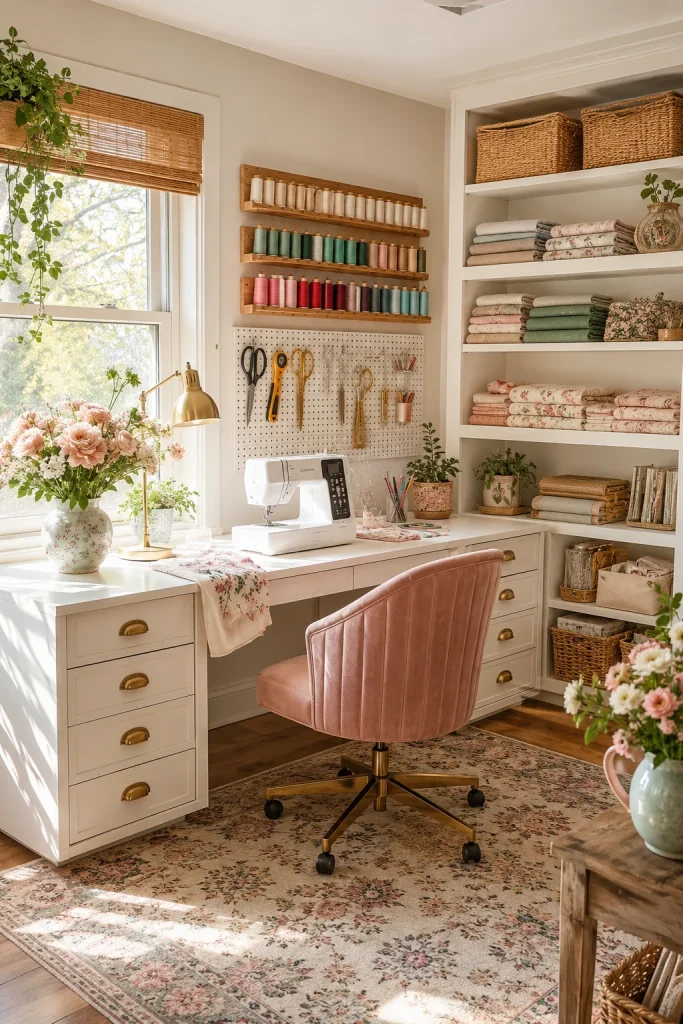
One of the most underrated sewing room ideas is positioning your workspace near a window. Natural light reduces eye strain and helps you see fabrics and thread colors more clearly. If you’re working in a basement or windowless room, opt for full-spectrum LED lighting to mimic daylight.
Pro Tip: Add a sheer curtain to soften the sunlight and keep your space bright without harsh glare.
2. Create a Dedicated Cutting Table
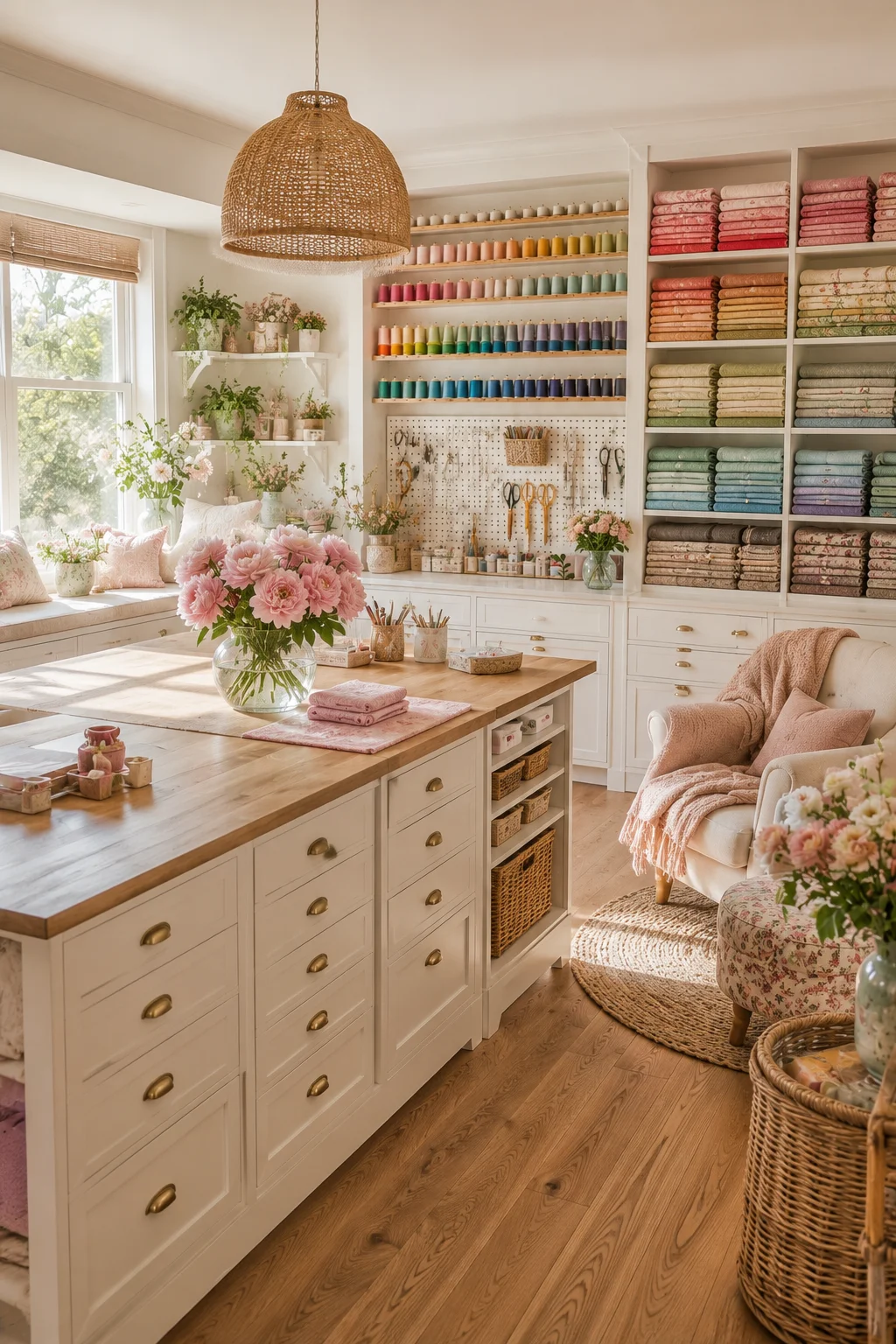
Cutting fabric on a kitchen table can be frustrating and straining. A proper cutting table at counter height (34-36 inches) reduces back pain and increases precision. Opt for one with built-in storage underneath or foldable sides to save space when not in use.
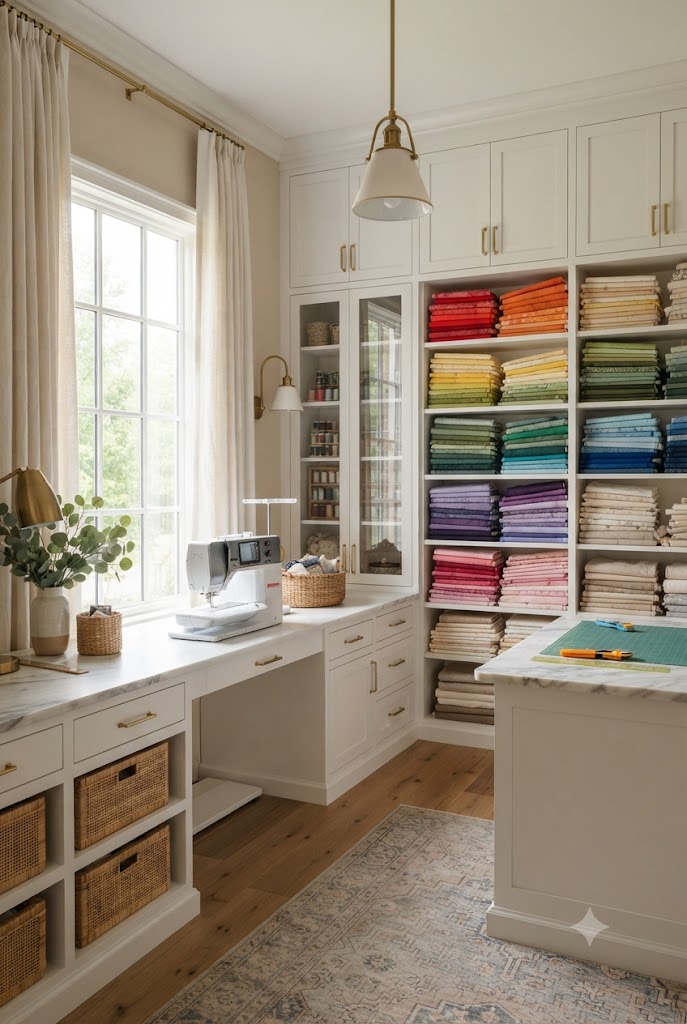
DIY Idea: Repurpose an old kitchen island or use two bookshelves with a sturdy tabletop.
3. Use Pegboards for Wall Storage
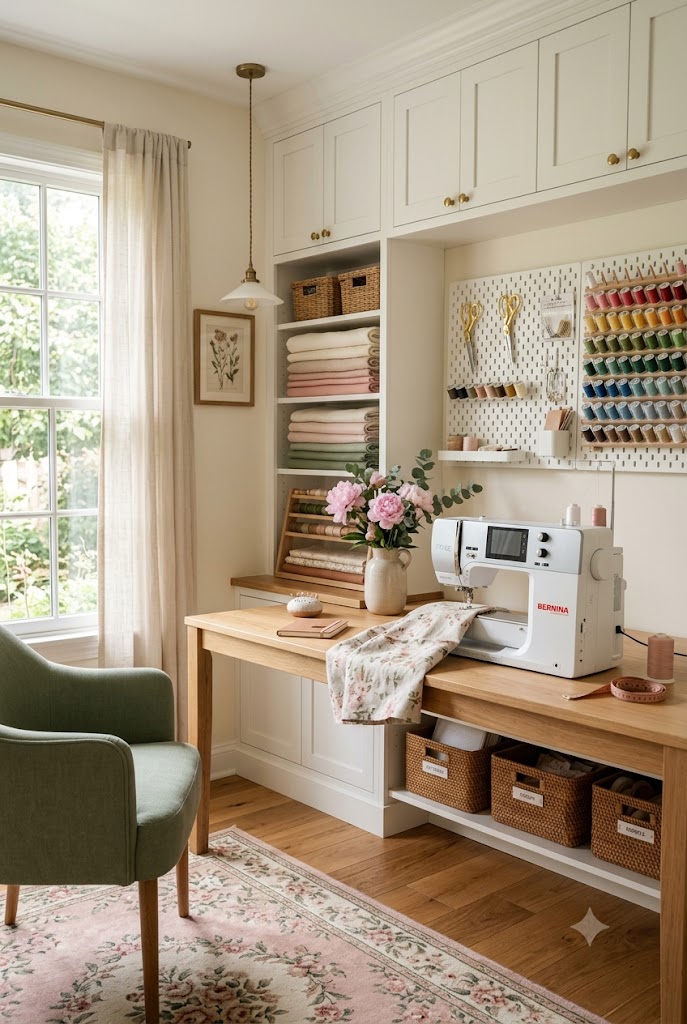
Pegboards are a game-changer in small sewing rooms. Mount one above your desk to hang scissors, measuring tape, rulers, rotary cutters, and threads. It keeps tools within arm’s reach and adds an industrial-chic vibe.

Style Tip: Paint the pegboard in a bold color to make it a decorative feature.
4. Install Thread Racks
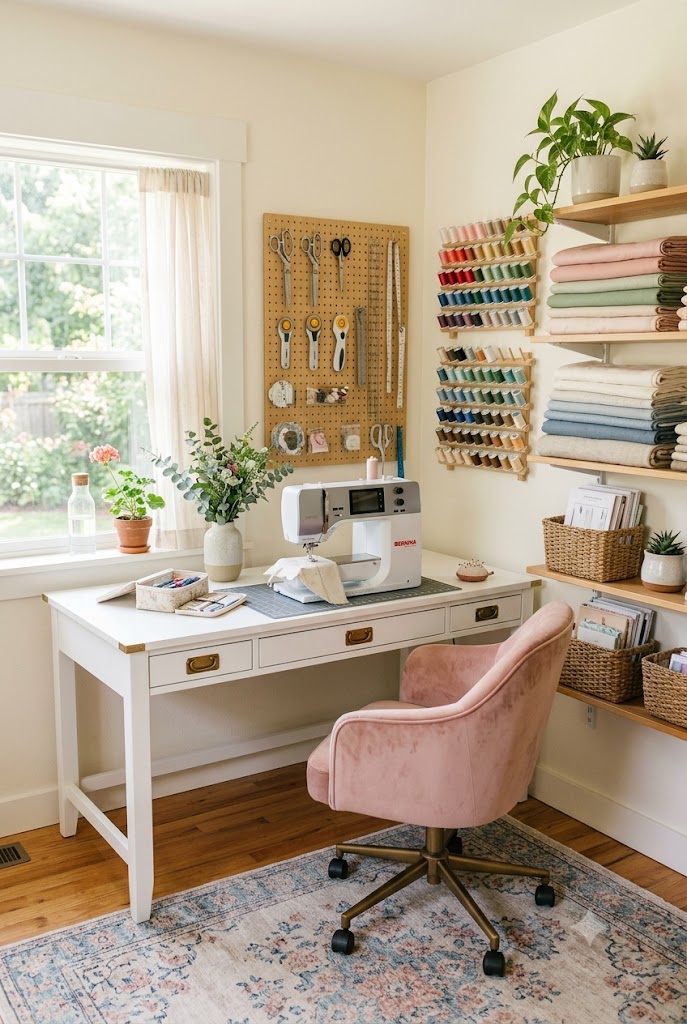
A thread rack isn’t just for organization—it’s a beautiful way to showcase your colorful spools. Wall-mounted thread holders save drawer space and keep thread tangle-free. Arrange by shade to create a rainbow effect on your wall.

5. Incorporate Fabric Storage Solutions
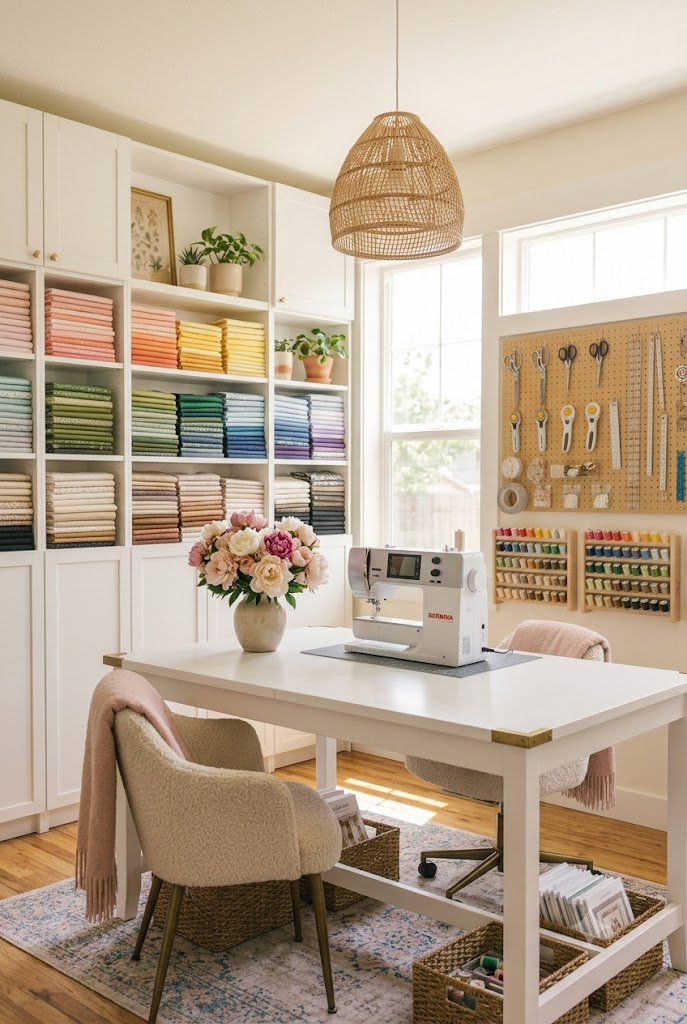
Storing fabric in a way that’s both functional and beautiful is key. Use open shelving with neatly folded fabrics, labeled bins, or clear drawers. Comic book boards can help fold fabric uniformly for easy stacking.

Alternative: Store fabric vertically in file folders in a filing cabinet — it makes browsing easier and keeps dust away.
6. Design a Comfortable Sewing Station

Your sewing machine deserves a comfortable, designated table. Choose a stable desk with enough space for both the machine and your hands to guide fabric. Consider an ergonomic chair with adjustable height and back support.
Bonus: Add a small rug under your chair for a cozy touch and floor protection.
7. Incorporate Vertical Shelving
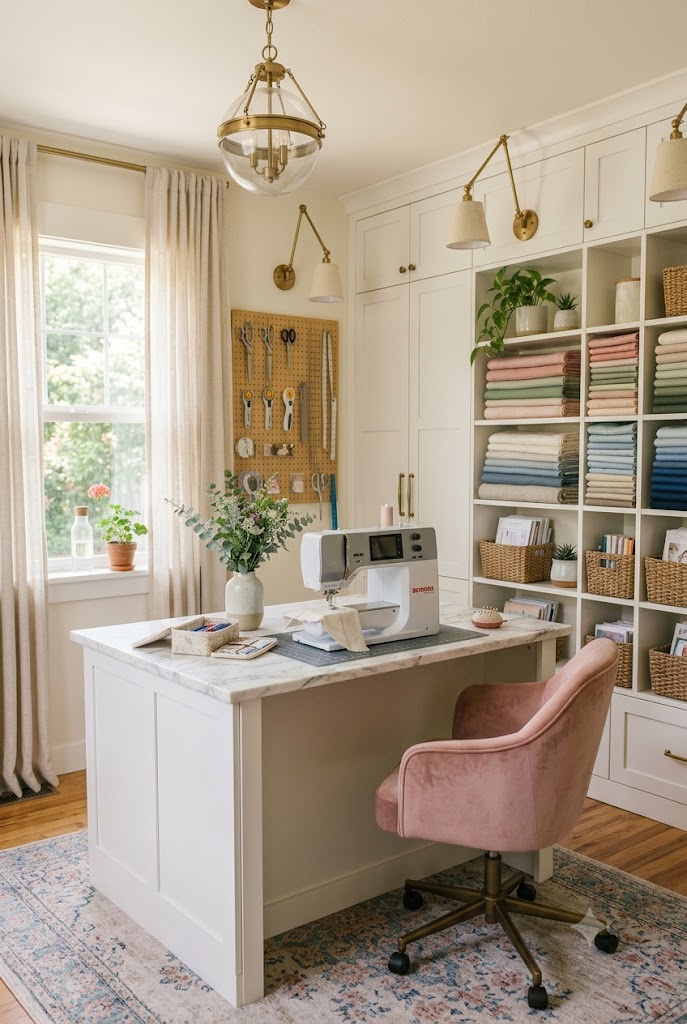
When floor space is limited, go up! Vertical shelves can hold books, sewing baskets, and decor without taking up valuable workspace. Use matching baskets for a cohesive look or mix styles for a playful, eclectic vibe.
8. Add a Mood Board or Inspiration Wall

Keep your creativity flowing by displaying sketches, fabric swatches, vintage buttons, or embroidery art. A corkboard or magnetic board above your workspace can hold your project plans or serve as a visual inspiration hub.
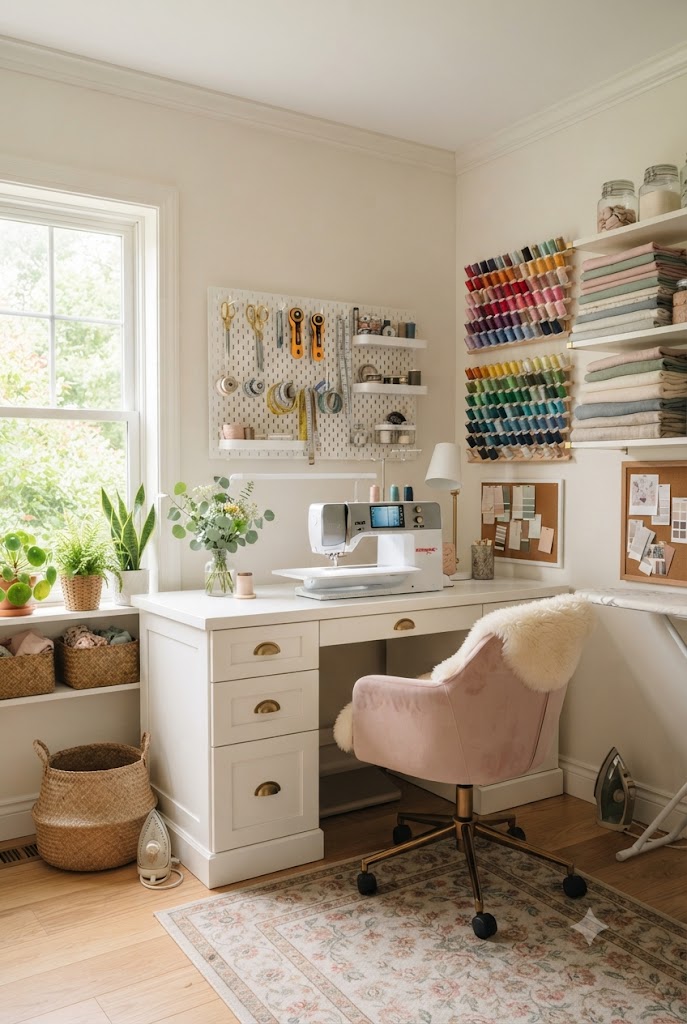
9. Create Zones for Each Task
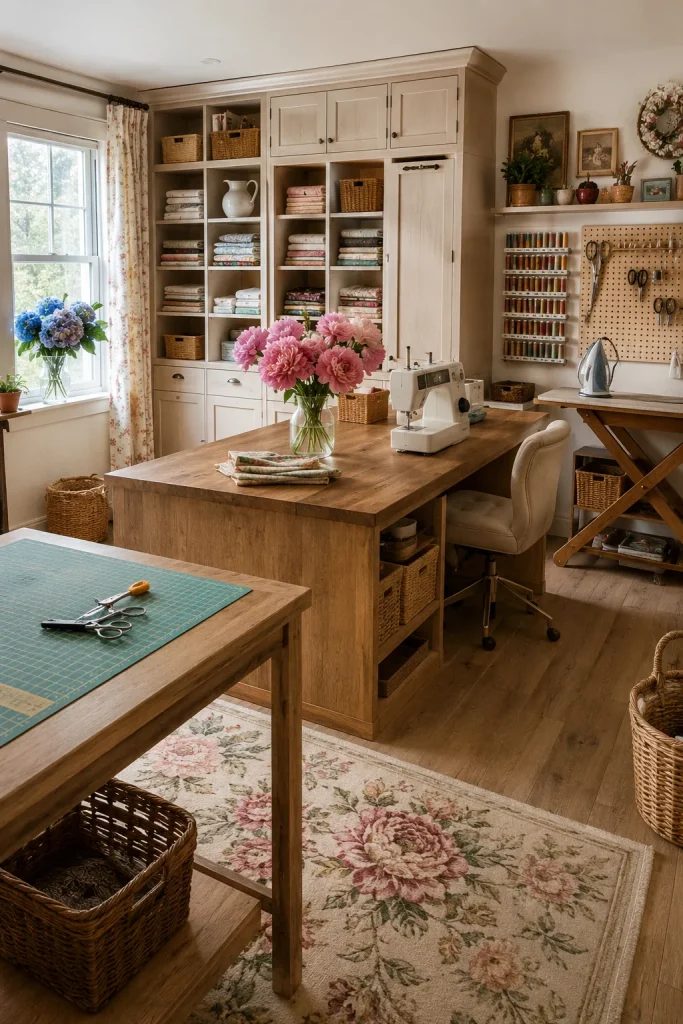
Divide your sewing room into distinct zones: one for cutting, one for sewing, one for pressing, and one for storing. It enhances workflow and makes your creative process more efficient.
Example Layout:
- Left wall: Cutting table
- Right wall: Ironing board
- Center: Sewing machine
- Back wall: Storage and fabric rack

Practical Tip: If you sew several times a week, keep your most-used tools—such as fabric scissors, clips, and seam rippers—within arm’s reach of your machine. This simple habit reduces interruptions and helps projects flow more smoothly.
10. Add Cozy Touches with Décor
Your sewing room should be practical—but also beautiful. Add artwork, throw pillows, a soft rug, or curtains to make it inviting. Include vintage sewing prints, floral wallpaper, or handcrafted signs that reflect your personality.
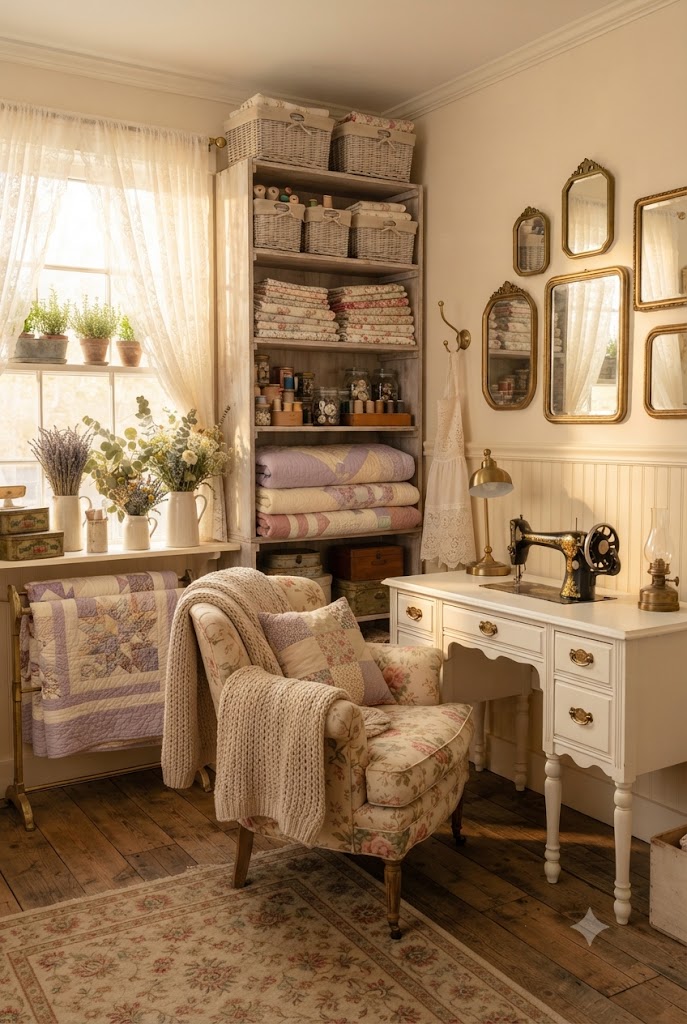
Style Ideas:
- Rustic farmhouse sewing room
- Vintage dressmaker’s atelier
- Bright and colorful modern maker space
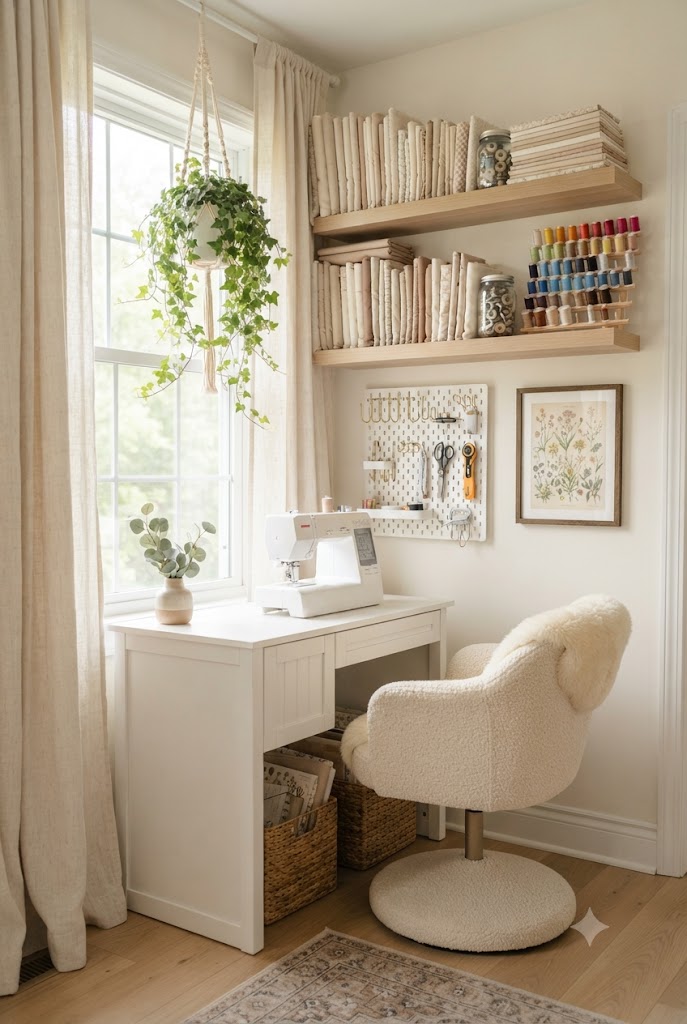
11. Use Rolling Carts for Flexible Storage
Rolling carts are perfect for small or multi-use spaces. Store tools, thread, and notions in a tiered cart you can roll next to you while sewing. When not in use, tuck it under the table or in a closet.
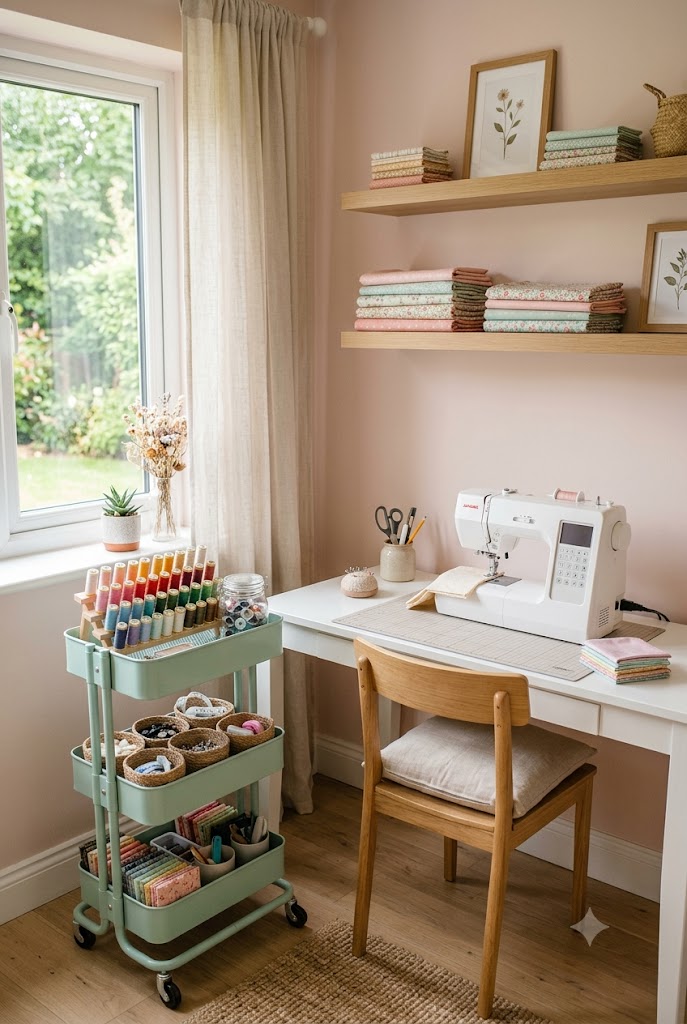
Top Pick: IKEA RÅSKOG cart – beloved by crafters and super functional.
12. Don’t Forget an Ironing Station
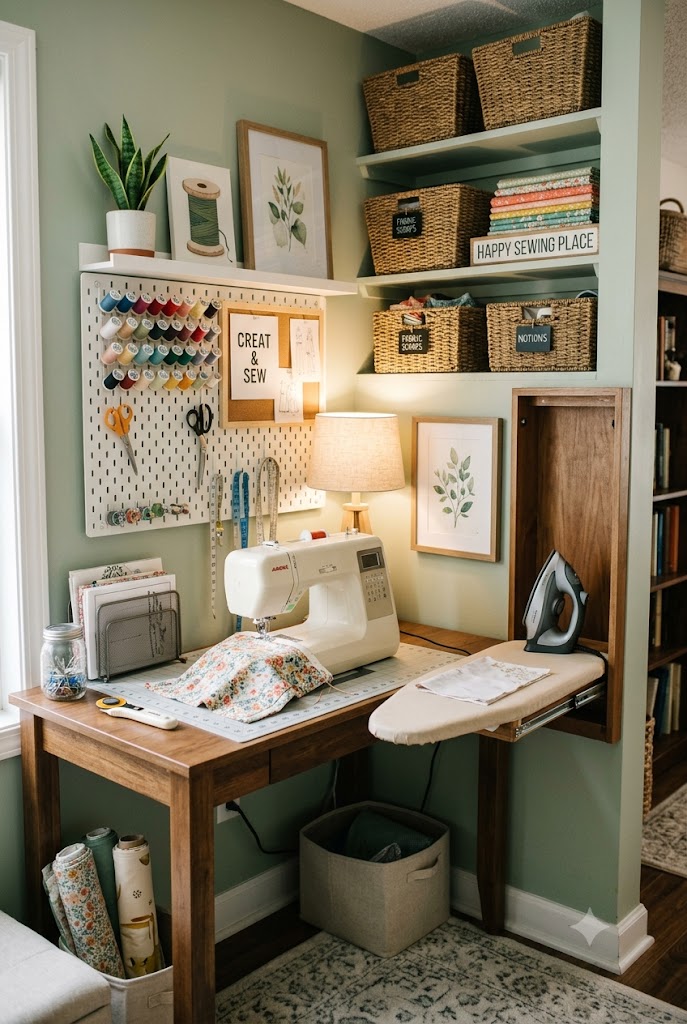
An ironing station is often overlooked but essential for a sewing setup. A compact fold-down ironing board or a tabletop version works well for small rooms. Store your iron and starch spray nearby in a basket or shelf.
Upgrade: Add a heat-proof silicone mat for safety and efficiency.
Shop the Look: Large Folding Sewing Table with Compact Design
Common Sewing Room Mistakes to Avoid
- Choosing style over functionality and ending up with too little workspace.
- Ignoring task lighting, which can lead to eye strain.
- Storing fabric in direct sunlight, causing colors to fade.
- Buying storage before measuring your room.
- Letting fabric scraps pile up instead of sorting them regularly.
Sewing Room Ideas for Every Budget
| Budget | Ideas |
|---|---|
| Under $50 | Add pegboards, storage bins, labels, and LED desk lighting. |
| $50–$200 | Invest in a rolling storage cart, ergonomic chair, or wall shelving. |
| $200+ | Upgrade to a dedicated sewing cabinet, large cutting table, and custom storage system. |
How to Choose the Right Sewing Room Layout
Choose your setup based on how you sew:
- Small Apartment: Foldable tables, vertical storage, and rolling carts.
- Quilters: Prioritize a large cutting table and fabric shelving.
- Garment Makers: Focus on an ironing station and dress form.
- Occasional Hobbyists: A compact sewing corner with hidden storage works perfectly.
Plan the Layout Around Your Sewing Workflow
A sewing room works best when the layout follows the order of the work itself. Fabric moves from cutting to the machine and then to pressing, so arranging those three zones in a simple path keeps projects flowing and reduces carrying, folding, and setting things down in the wrong place.
Before moving furniture, walk through a pretend project and notice where each step naturally wants to happen. Place the cutting surface near where fabric is stored, the machine where light and seating feel comfortable, and the pressing spot within easy reach of the machine. Small adjustments to this flow can save steps on every project that follows. Keeping tools for each stage inside its own zone also stops clutter from wandering across the room.
Lighting for Accurate Color and Comfortable Eyes
Good lighting matters in a sewing room because thread and fabric colors can look surprisingly different under warm or dim light. Natural daylight near the machine gives the truest sense of color, so placing the main work surface close to a window helps when matching fabrics and checking seams.
Layered light works better than a single bright source. An overhead light covers the whole room, while a focused lamp at the machine and another near the pressing area fill in shadows where detailed work happens. Adjustable lamps that can tilt and move make it easier to reduce glare on shiny fabrics and to rest the eyes during long sessions. Keeping light consistent across the room also makes evening sewing feel far less tiring.
Store Fabric So It Stays Clean and Easy to See
Fabric stays in better condition when it is stored away from dust and direct sunlight, in a spot where air can move around it. Clear bins, open shelves, and neatly folded stacks all work well, as long as the storage keeps fabric off the floor and easy to reach without digging. Airing cupboards now and then keeps stored fabric fresh.
Visibility matters just as much as tidiness. When fabric is sorted by color or type and stored where it can be seen at a glance, planning a new project becomes quicker and forgotten pieces get used instead of overlooked. Keeping current project fabric separate from the main stash also protects works in progress from being borrowed or buried.
Keep a Small Sewing Space Flexible
A small sewing space often has to share its room with other parts of daily life, and flexibility keeps that arrangement pleasant instead of cramped. Furniture on casters, a fold down table, and storage that can close behind doors all let the space shift quickly between sewing time and everything else.
Choosing pieces that serve more than one purpose helps as well. A sturdy table can host both cutting and everyday tasks, and baskets or rolling carts can hold supplies during a project and tuck away afterward. When setup and cleanup stay quick, even a shared corner can feel like a welcoming sewing retreat. Clear surfaces at the end of a session make the next visit inviting.
Final Thoughts: Make It Yours
There’s no one-size-fits-all solution for sewing rooms. The best spaces reflect your workflow and personal style. Whether you’re converting a closet or designing a full studio, these sewing room ideas will help you stay organized, inspired, and ready to tackle your next creative project.
Save or Pin It for Later!
Looking for future sewing room inspiration? Save this guide to Pinterest so you can refer back when you’re ready to set up or refresh your space.


