Kitchen Materials and Finishes: What Interior Professionals Are Choosing Now
If you’re planning a kitchen renovation or just love keeping up with design trends, this guide covers what interior designers and stylists are currently obsessed with — from tactile to trending Kitchen Materials and Finishes that give your kitchen that designer look without losing warmth or personality.
Whether you’re working with a full remodel or a simple update, the right mix of kitchen materials and finishes can instantly elevate your space. Let’s dive into what’s hot right now in modern kitchen design.
1. Natural Stone Countertops: Timeless with a Twist
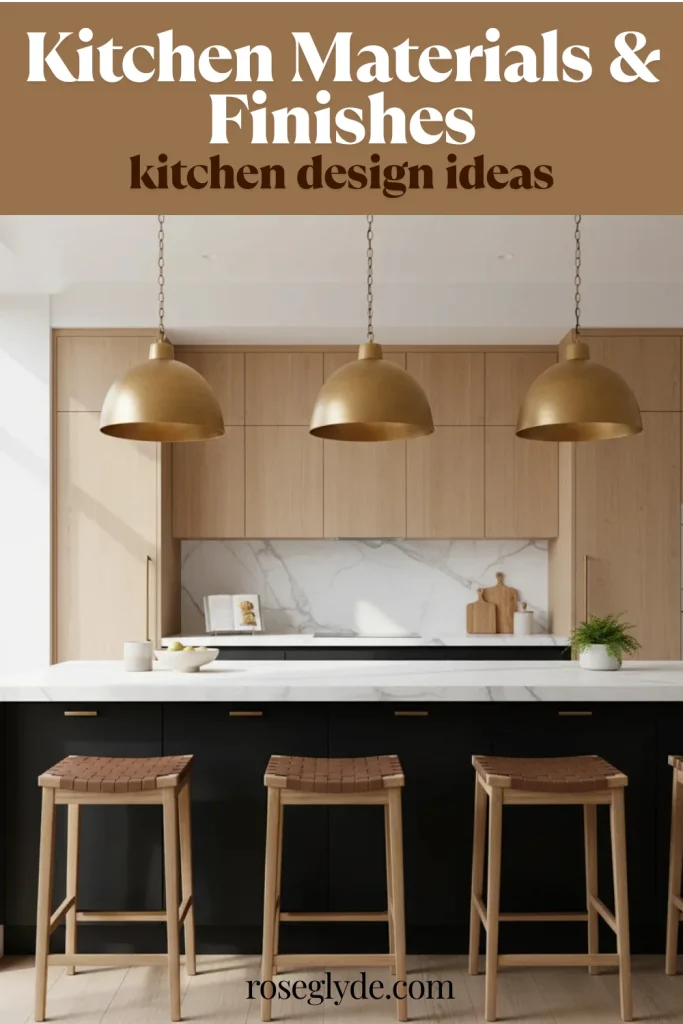
Marble, quartzite, and soapstone are topping every designer’s mood board this year. The move is away from ultra-polished surfaces and toward honest, organic textures.
Interior professionals love leathered and honed finishes — matte, tactile, and forgiving on fingerprints.
Pro Tip: Choose warm veining or creamy undertones instead of stark white marble for a cozy, lived-in vibe.
2. Wood Cabinetry Makes a Comeback
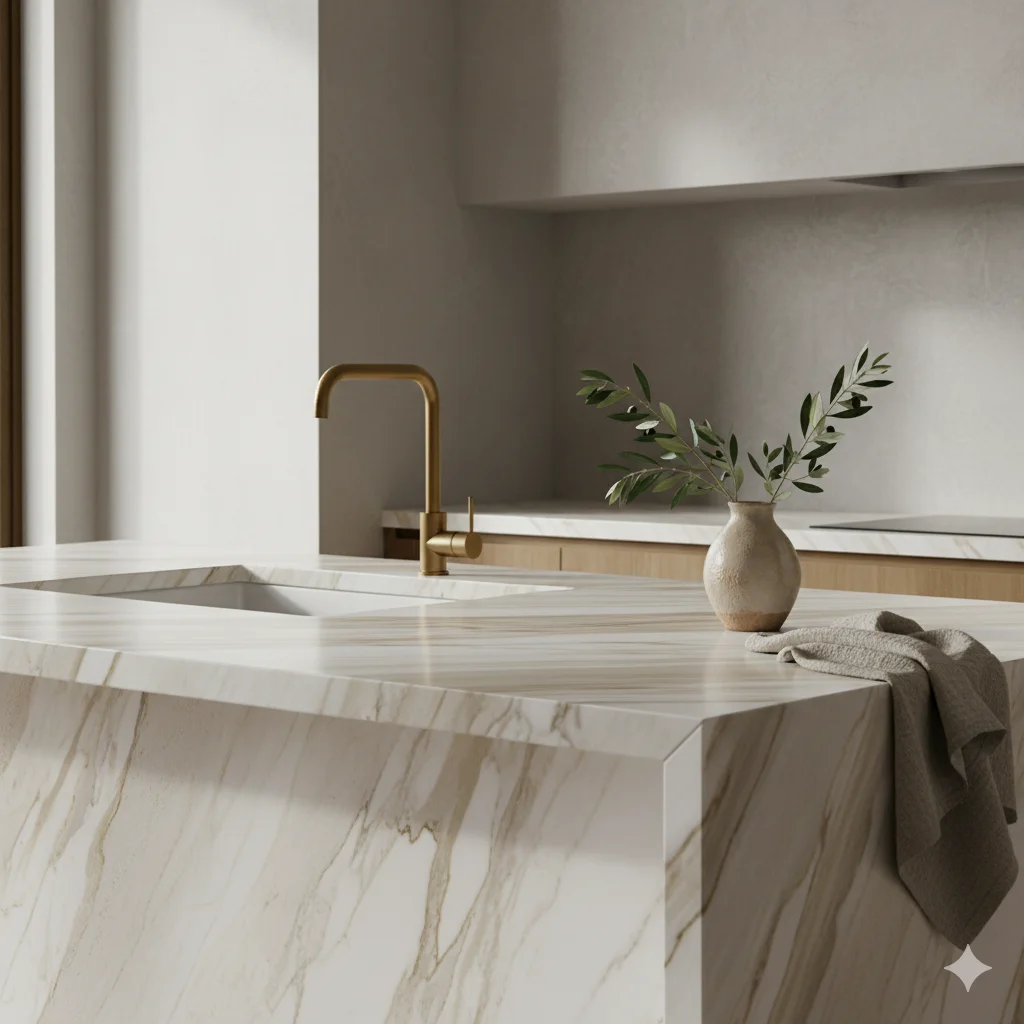
After years of glossy white cabinets dominating Pinterest, real wood tones are back in a big way. Designers are favoring walnut, oak, and ash — often with a natural stain or clear matte finish that lets the grain shine through.
Rift-cut oak cabinetry, in particular, gives a contemporary look with subtle linear texture. Interior stylists are pairing warm woods with stone backsplashes or brushed brass hardware for a balanced, modern-rustic aesthetic.
Designer tip: Mix painted lower cabinets with wood uppers for a layered, high-end look.
3. Bold Backsplashes: Statement Stone & Handmade Tiles
Goodbye minimal backsplash, hello texture and drama! Interior designers are opting for full-slab backsplashes — think marble veins running seamlessly up the wall — or handcrafted tiles with artisan charm.
Zellige tiles, terracotta, and mottled ceramic tiles are everywhere right now, adding that imperfectly-perfect handmade look.
Styling idea: Pair glazed zellige tiles with brushed nickel hardware and natural wood open shelves for a Mediterranean kitchen feel.
4. Mixed Metal Finishes
Designers aren’t matching every knob and faucet anymore — they’re mixing metals intentionally for a collected, layered look.
Popular combos:
- Brushed brass + matte black
- Chrome + warm bronze
- Pewter + antique gold
This finish layering makes kitchens feel curated, not catalog-perfect. The key is keeping one dominant metal and using others as subtle accents.
5. Textured Walls & Plaster Finishes
Softly textured plaster walls and limewash paints are the new backdrop trend. They offer a muted, organic feel that pairs beautifully with natural materials like wood and stone.
This finish gives a sense of timeless craftsmanship while staying light and airy — perfect for the Mediterranean modern or Scandi-inspired kitchen look that’s so in right now.
6. Matte & Brushed Metal Appliances
The shiny chrome fridge is out — matte, brushed, or colored appliances are the new status symbol. Interior designers are loving matte black ovens, brushed steel ranges, and even cream-toned retro fridges for a touch of personality.
These finishes blend more naturally with cabinetry and create a seamless, design-forward look.
Bonus tip: Choose hidden-panel dishwashers and refrigerators for a truly built-in aesthetic.
7. Sustainable & Recycled Materials
With eco-conscious living on the rise, designers are choosing sustainable kitchen materials like:
- Recycled glass countertops
- Bamboo or cork flooring
- Eco-friendly cabinetry finishes (low-VOC stains and paints)

These materials look beautiful and align with modern values of sustainability and wellness.
8. High-Contrast Finishes
Professionals are also playing with contrast — light vs dark, matte vs gloss, rough vs smooth. A deep navy island against white quartz counters or matte black fixtures with warm wood tones creates a bold yet balanced kitchen aesthetic.
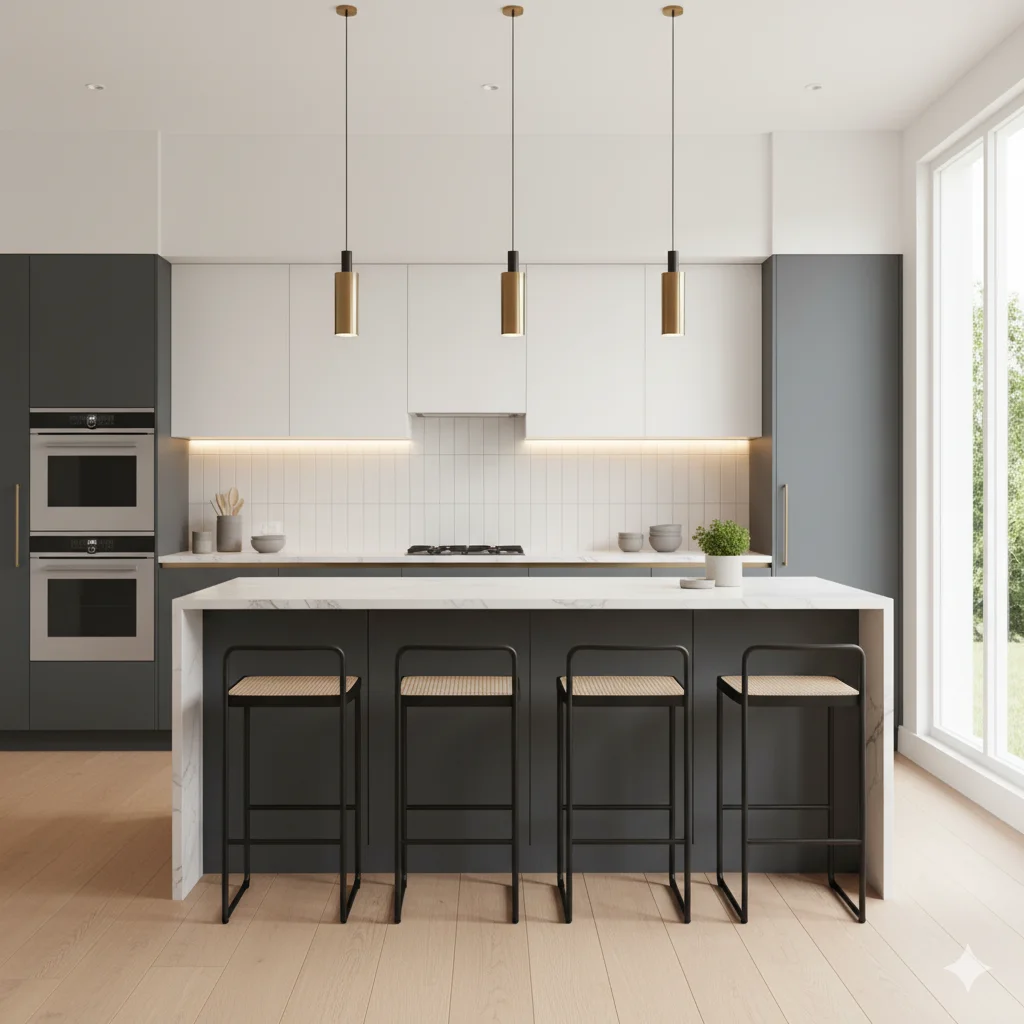
9. Glossy Touches Return — But Subtly
While matte finishes dominate, a hint of gloss is coming back — especially through lacquered cabinet doors or glazed tiles. It adds a light-reflective element without looking dated.
Designers use gloss in moderation — usually as an accent to catch light and add visual variety.

10. Designer-Approved Kitchen Palette for 2026
Interior professionals are leaning into earthy neutrals and muted tones:
- Mushroom beige
- Dusty sage
- Clay terracotta
- Soft greige
- Charcoal and sand

These colors work across materials — from plaster to stone to wood — making your kitchen timeless yet on-trend.
Choosing Kitchen Materials by Budget Tier
Kitchen materials come in a wide range of price points, and understanding the tiers helps you spend where it counts.
At the budget-friendly end, look for laminate countertops, stock cabinetry with quality hardware, and ceramic tile backsplashes. These choices keep costs down while still delivering a polished look, especially when you invest in good lighting and thoughtful styling. Start by deciding which surfaces take the most wear in your household, since durability matters more on hardworking surfaces than on purely decorative ones.
In the mid-range tier, you step up to quartz or butcher block counters, semi-custom cabinets, and handmade-look tile. This is the sweet spot for most renovations, balancing durability and design impact without pushing into luxury territory.
At the premium end, natural stone, custom millwork, and artisan finishes take center stage. These materials shine when the design is simple enough to let them speak. They also tend to age beautifully, developing character over time rather than wearing out.
Pro Tip: Mix tiers strategically. Pair a statement stone island with more affordable perimeter counters, or splurge on the backsplash while keeping cabinetry simple. A thoughtful mix stretches your budget and keeps the kitchen feeling intentional rather than compromised.
Everyday Care and Maintenance by Material Type
Natural stone counters need periodic sealing to resist stains, while quartz and other engineered surfaces are more forgiving of daily spills. Clean any stone with a pH-neutral spray and a soft cloth. Acidic cleaners and rough scrubbers wear down sealants faster than normal use ever will.
Wood and butcher block ask for gentle care. Wipe with a damp cloth and mild soap, then dry right away so water never sits on the surface. Rub in food-safe mineral oil every few months, or whenever the wood looks pale and dry. This keeps it smooth and helps prevent cracks.
Stainless steel looks best when you wipe with the grain using a soft microfiber cloth. On matte or brushed finishes, skip the polish and use warm water with a drop of dish soap. A quick daily wipe prevents the buildup that makes stainless look dull.
Pro Tip: Keep a small care kit under the sink with a pH-neutral spray, microfiber cloths, mineral oil for wood, and a gentle metal cleaner. When supplies are within reach, quick cleanups become effortless and your materials hold their beauty for years.
Material Choices for Small Kitchens
In a small kitchen, materials that bounce light make the space feel larger. Choose light-toned counters, glossy or satin finishes, and a cohesive palette that flows without visual breaks. When every surface relates to the next, the eye travels smoothly and the room feels open.
Keep cabinetry simple and receding. Flat-front doors in a soft neutral let the walls breathe, while busy patterns or high contrast can chop up a compact space. Limit yourself to one standout texture, such as a handmade tile or a veined stone, and let everything else play a supporting role.
Large-format tile and single-slab backsplashes reduce grout lines, which means fewer visual interruptions. A full-height stone slab behind the range creates a clean, expansive feel. On floors, wider planks or larger tiles with minimal grout make the footprint read as one continuous surface.
Pro Tip: Run the same flooring from the kitchen into the adjoining room. Eliminating the threshold between spaces tricks the eye into reading them as one larger area. This single choice can make a galley or compact kitchen feel noticeably more generous.
Testing Finishes in Your Light Before Committing
Always test finishes in your own space before committing. Borrow the largest samples you can, then live with them for a few days. A swatch that looks perfect in the showroom can shift dramatically under your lighting, next to your floors, and beside your existing furniture.
Check each sample in morning, midday, and evening light. Tape paint swatches and material boards to the wall where they will actually live, then step back and observe from across the room. Colors and textures reveal different undertones as the light changes through the day.
View samples alongside the other materials in your plan, not in isolation. Hold the countertop sample against the cabinet door and the backsplash tile together. A combination that sings on its own can clash when paired, so test the full palette as a group before you decide.
Pro Tip: Photograph your samples in place at different times of day. Photos flatten the scene and reveal undertones your eyes might miss in person. If a sample looks right in photos morning, noon, and night, you can commit with confidence.
Final Thoughts
The modern kitchen is less about perfection and more about texture, warmth, and authenticity. Interior designers in 2026 are mixing natural elements, soft finishes, and handmade details to craft spaces that feel both stylish and lived-in.
Whether you’re doing a total kitchen remodel or updating finishes on a budget, these trends prove that materials and finishes define the soul of your kitchen.
Related
- Rental-Friendly Kitchen Makeovers: Removable Décor, Affordable Hacks & No-Damage Approach
- Designing the Perfect Maximalist Kitchen: Bold Style Meets Functional Beauty