Temporary Flooring Ideas: Everything You Need to Know About Peel-and-Stick Kitchen Floor Tiles
If your rental kitchen floors feel outdated, dull, or impossible to decorate around, peel-and-stick kitchen floor tiles might be the upgrade you’ve been waiting for. Affordable, renter-safe, and surprisingly stylish, these temporary flooring solutions can completely transform a space without damaging a thing. From modern checkerboard patterns to warm wood planks and marble-look tiles, there’s a peel-and-stick option for literally every kitchen aesthetic.
In this guide, we’re diving into everything you need to know about peel-and-stick kitchen floor tiles — durability, installation, design ideas, product types, mistakes to avoid, and smart shopping picks for renters on a budget. Let’s make your rental kitchen look intentional, cozy, and beautifully styled without losing your security deposit.
Table of Contents
What Are Peel-and-Stick Kitchen Floor Tiles?
Peel-and-stick kitchen floor tiles are adhesive-backed tiles made from vinyl, gel epoxy, or composite materials that you can apply directly over most existing flooring. No power tools, no permanent glue, and no contractor required.
They’re especially loved by renters because:
- They cover old floors instantly
- They’re removable
- They’re budget-friendly
- They come in countless patterns, textures, and finishes
And unlike peel-and-stick options for bathrooms, kitchen-specific tiles prioritize heat resistance, spill protection, and higher foot-traffic durability, which we’ll break down in detail below.

Types of Peel-and-Stick Kitchen Floor Tiles
Not all peel-and-stick tiles are created equal — especially for kitchens. Here are the three main types you’ll see while shopping:
1. Standard Vinyl Peel-and-Stick Tiles
The most common and most budget-friendly option.
Best for:
Renters, low-traffic kitchens, quick makeovers.
Pros:
- Lightweight
- Easy to cut
- Huge variety of designs
- Very affordable (especially on Temu + AliExpress)
Cons:
- Can show wear sooner
- Corners can lift if not installed on a smooth surface
2. Thick Vinyl Planks (Luxury Vinyl Peel-and-Stick)
These mimic hardwood planks and feel more substantial underfoot.
Best for:
Cozy kitchens, farmhouse looks, modern wood floors, long-term renters.
Pros:
- More durable
- More realistic wood texture
- Better resistance to scratches and traffic
Cons:
- Slightly higher cost
- Requires more precise installation
3. SPC (Stone Polymer Composite) Peel-and-Stick Tiles
The premium option for kitchens.
Best for:
High-traffic kitchens, kitchens near entryways, long-term rentals.
Pros:
- Excellent durability
- Heat and water resistant
- More rigid and stable
Cons:
- Higher price
- Usually heavier and thicker
4. Gel + 3D Epoxy Look Tiles
These have a glossy, raised finish — more decorative than functional.
Best for:
Statement patterns, small areas, aesthetic upgrades.
Cons:
- Can be slippery
- Less scratch-resistant
- Not ideal for heavy appliances
Are Peel-and-Stick Kitchen Floor Tiles a Good Idea?
Here’s the honest truth: Yes — but with realistic expectations.
Pros
- Budget-friendly: Full kitchen makeover under $80–$150 in most rentals
- Renter-safe: Removes cleanly with heat or adhesive remover
- Huge style variety: Marble, stone, wood, checkerboard, geometric, terrazzo
- DIY-friendly: No grout, no contractor, no mess
- Great for small kitchens: Covers flaws instantly
Cons
- Heat exposure near ovens: Edges can shift if too close to heat
- Moisture at the sink: Tiles may need sealing for longevity
- Surface must be smooth: They don’t stick well to textured or uneven floors
- Heavy appliances: The weight of fridges can affect adhesion
But with the right prep and tile type, peel-and-stick kitchen floors can last 2–5 years in good condition — which is huge for a temporary solution.
How to Install Peel-and-Stick Kitchen Floor Tiles
A smooth, well-prepped surface is the secret to success. Here’s the rental-friendly guide:
1. Clean and Degrease Thoroughly
Kitchen floors collect grease and residue. Use:
- Warm water + dish soap
- Degreaser spray (essential near stove and sink)
Let dry completely.
2. Sand or Smooth Any Texture
If your existing floors are textured, lightly sand or use a thin underlayment sheet.
3. Remove Quarter Rounds (Optional)
This helps tiles sit flush and look finished — but only if allowed.
4. Plan Your Layout
Start from the center of the room or a visible line (like the hallway opening).
Dry-fit your first row.
5. Peel, Stick & Press Firmly
Use a rubber roller or the back of a wooden spoon to secure adhesion.
6. Cut Around Appliances
Vinyl cuts easily with a utility knife or scissors.
7. Seal High-Moisture Edges
Especially around:
- Sink base
- Dishwasher
- Entry door
Use a renter-friendly clear silicone bead to prevent lifting.
Kitchen-Friendly Design Ideas
Whether your home gives cottage vibes or a modern minimalist feel, peel-and-stick tiles can help define your kitchen aesthetic. Try these:
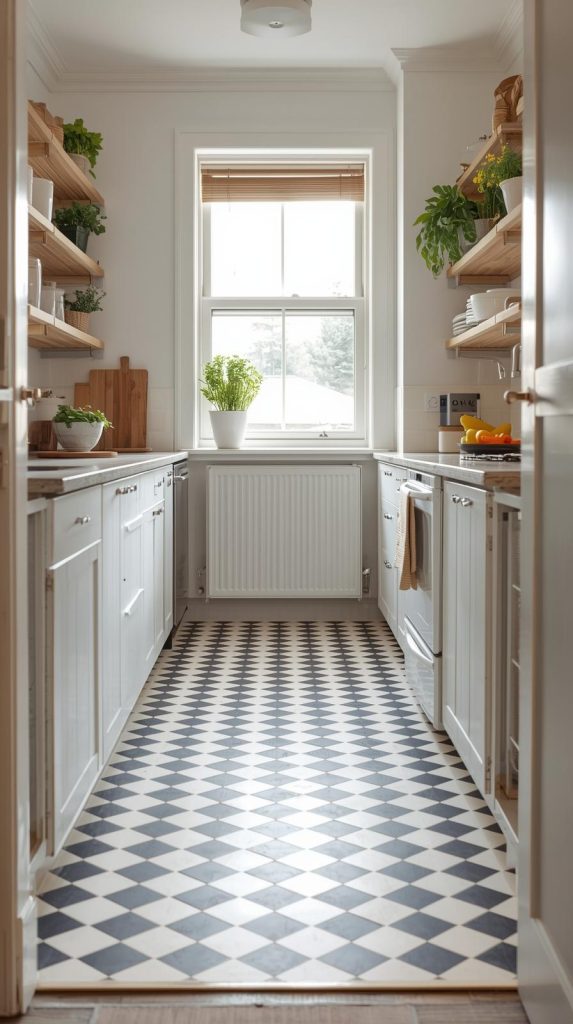
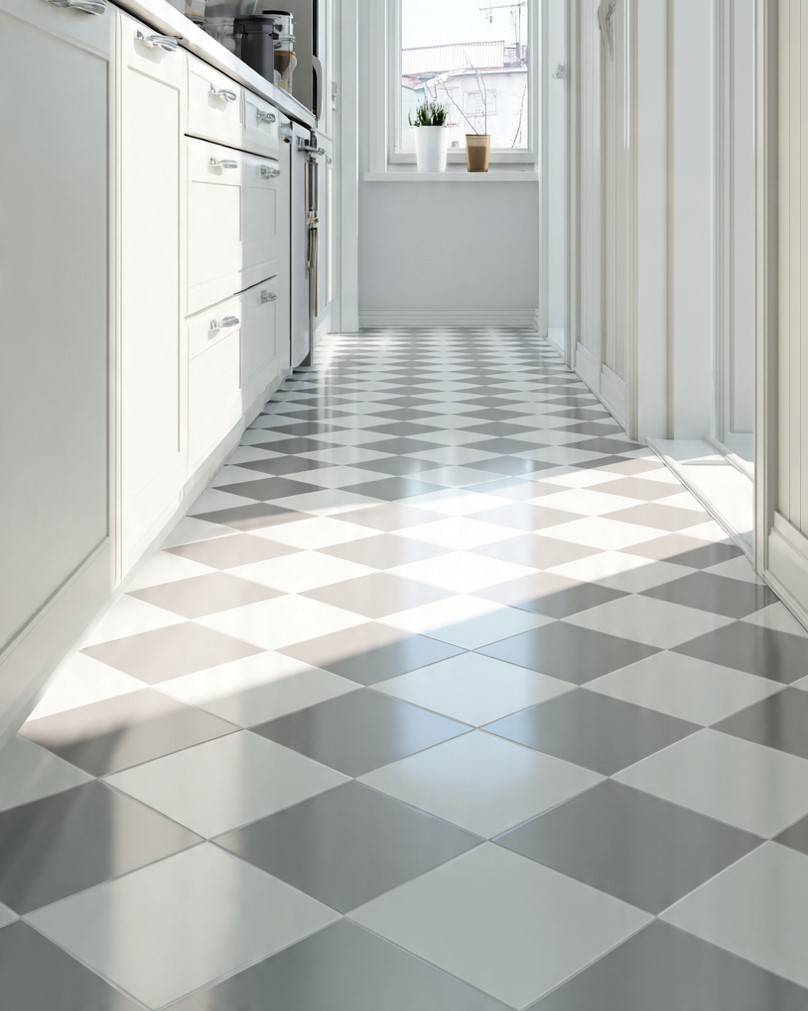
1. Classic Checkerboard
Black-and-white or beige-and-cream tiles for vintage kitchen charm.
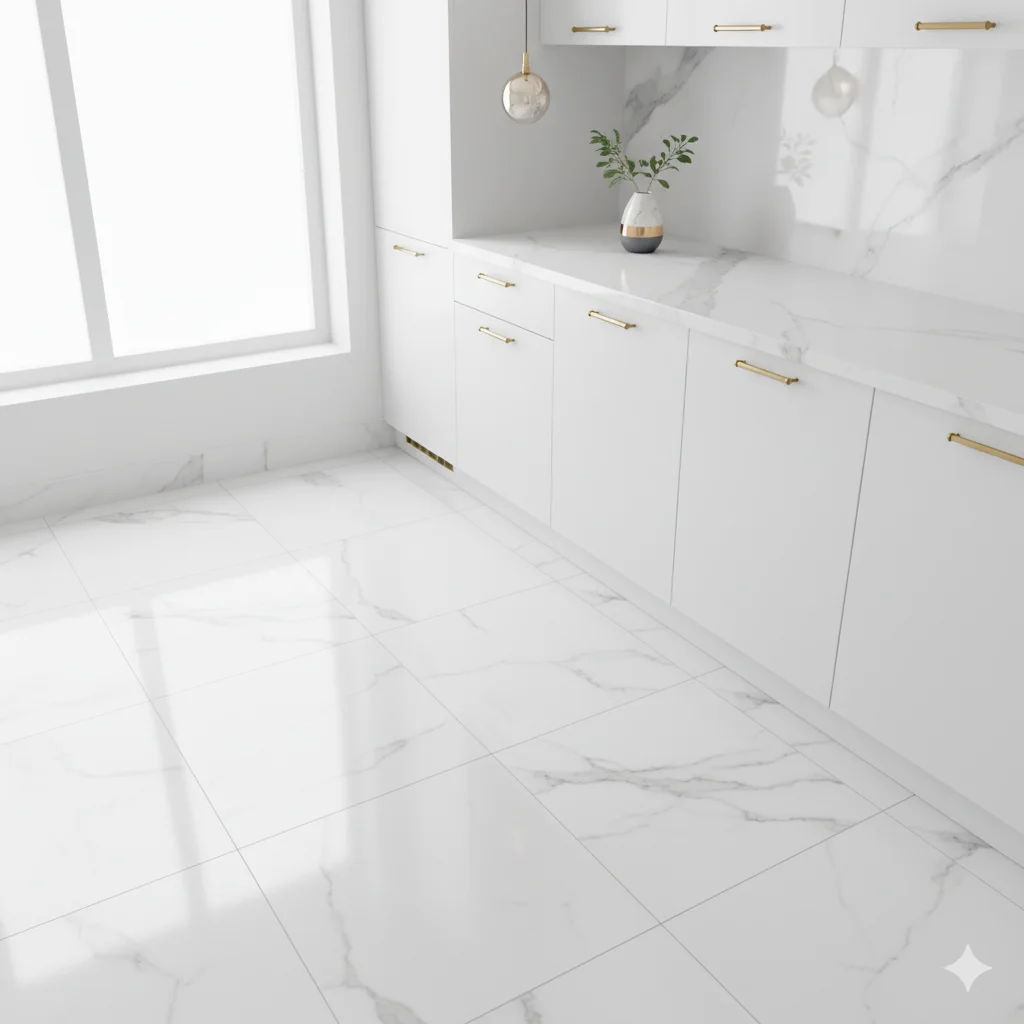
2. Faux Marble Tiles
Brightens small kitchens and pairs beautifully with gold accents.
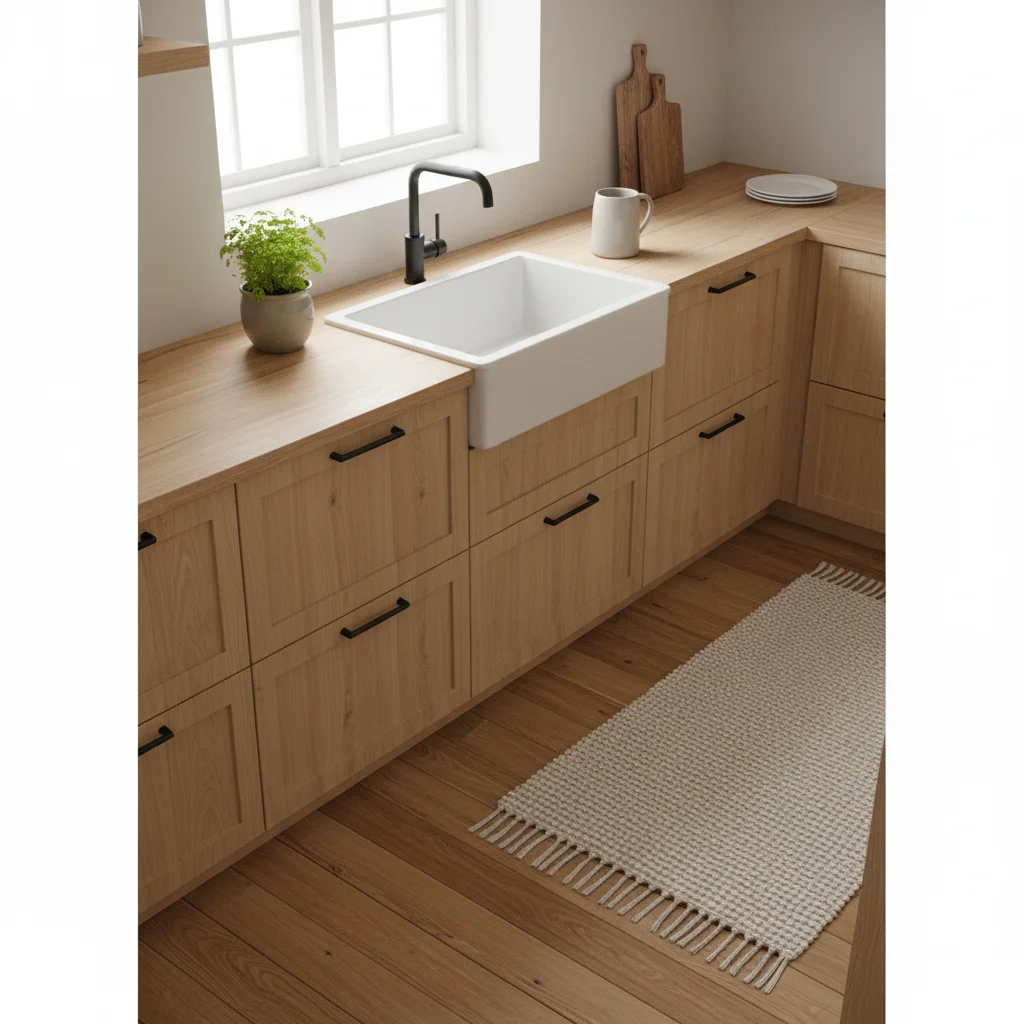
3. Warm Wood Planks
Perfect for cozy, Scandinavian, and farmhouse-style kitchens.
4. Terrazzo Peel-and-Stick
Trendy, playful, and ideal for neutral kitchens.

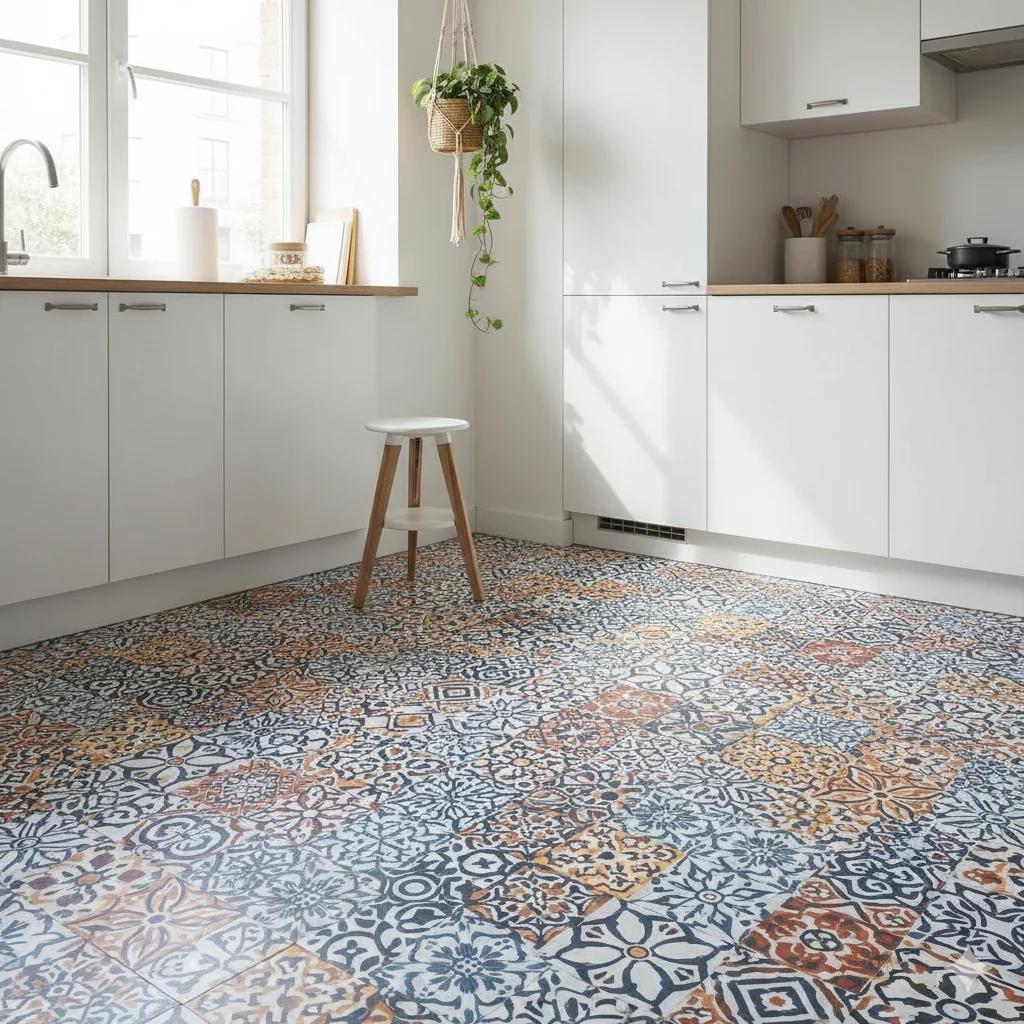
5. Bold Moroccan Patterns
Great for renters who want a statement floor.
6. Large Hexagon Tiles
Modern and clean with a luxury feel.

7. Diagonal Layout
Makes a small kitchen look instantly bigger.
Durability & Maintenance: What to Expect
Realistic lifespan:
- Standard vinyl: 1–2 years
- Thick vinyl planks: 2–4 years
- SPC composite: 3–5+ years
Maintenance Tips
- Mop with mild cleaners
- Avoid bleach (can fade patterns)
- Use felt pads on furniture
- Don’t drag heavy appliances
Cost Breakdown
Most renter kitchens are 35–65 sq ft.
Here’s an average price guide:
| Tile Type | Cost Per Sq Ft | Estimated Kitchen Total |
|---|---|---|
| Basic Vinyl | $1–$2 | $40–$120 |
| Thick Vinyl | $1.80–$3 | $70–$180 |
| SPC Composite | $2.50–$4 | $100–$250 |
| Gel/Epoxy | $2–$3.50 | $70–$200 |
Common Mistakes to Avoid
- Installing over oily, greasy floors
- Not allowing tiles to acclimate for 24 hours
- Laying tiles right up against heat sources
- Choosing glossy tiles for high-traffic kitchens
- Skipping edge sealing
Conclusion: The Rental Kitchen Glow-Up You Didn’t Know You Could Have
Peel-and-stick kitchen floor tiles give renters the creative freedom to turn outdated, dull, or mismatched kitchen floors into something truly beautiful. With the right prep, the right tile type, and a little weekend DIY energy, your kitchen can feel warm, modern, and uniquely yours — no renovation needed.
Temporary doesn’t have to mean boring, and peel-and-stick tiles prove that stylish upgrades shouldn’t require permission from your landlord.
Related
Pillar Post: Rental-Friendly Kitchen Makeovers: Removable Décor, Affordable Hacks & No-Damage Approach
Full Series:
- Renter-Friendly Backsplash Ideas
- Renter-Friendly Countertop Ideas
- DIY Cabinet Makeovers Without Painting
- Kitchen Lighting Upgrades for Renters
- Budget-Friendly Kitchen Organization
Other related Topics:
- Kitchen Materials & Finishes: What Interior Professionals Are Choosing Now
- 20 Beautiful Farmhouse Kitchen Color Scheme Ideas to Inspire You
- 12 Stylish Home Coffee Station Ideas to Elevate Your Daily Brew