Shoji & Fusuma: Japanese Sliding Doors as Elegant Interior Accents
Japanese design has a way of captivating us — calm light, clean lines, natural textures, and a softness that feels like a breath of fresh air. Among all the elements that define this aesthetic, Shoji and Fusuma sliding doors stand out as two of the most iconic features. They’re not just architectural components; they’re symbols of simplicity, harmony, and thoughtful living.
Today, more homeowners, interior designers, and even luxury hotels are incorporating Japanese sliding doors into modern spaces. In fact, global searches for Japandi interiors, minimalist Japanese homes, and Shoji doors have grown steadily over the last five years. According to Google Trends, queries for “Shoji door ideas” increased by over 40% from 2022 to 2024, showing a rising interest in calm, aesthetic living spaces inspired by Japan.
This blog dives deep into what makes Shoji and Fusuma timeless — from their origins and materials to real-world examples in famous Japanese architecture and easy ways you can bring their serene beauty into your home.
The Essence of Shoji: Light and Simplicity
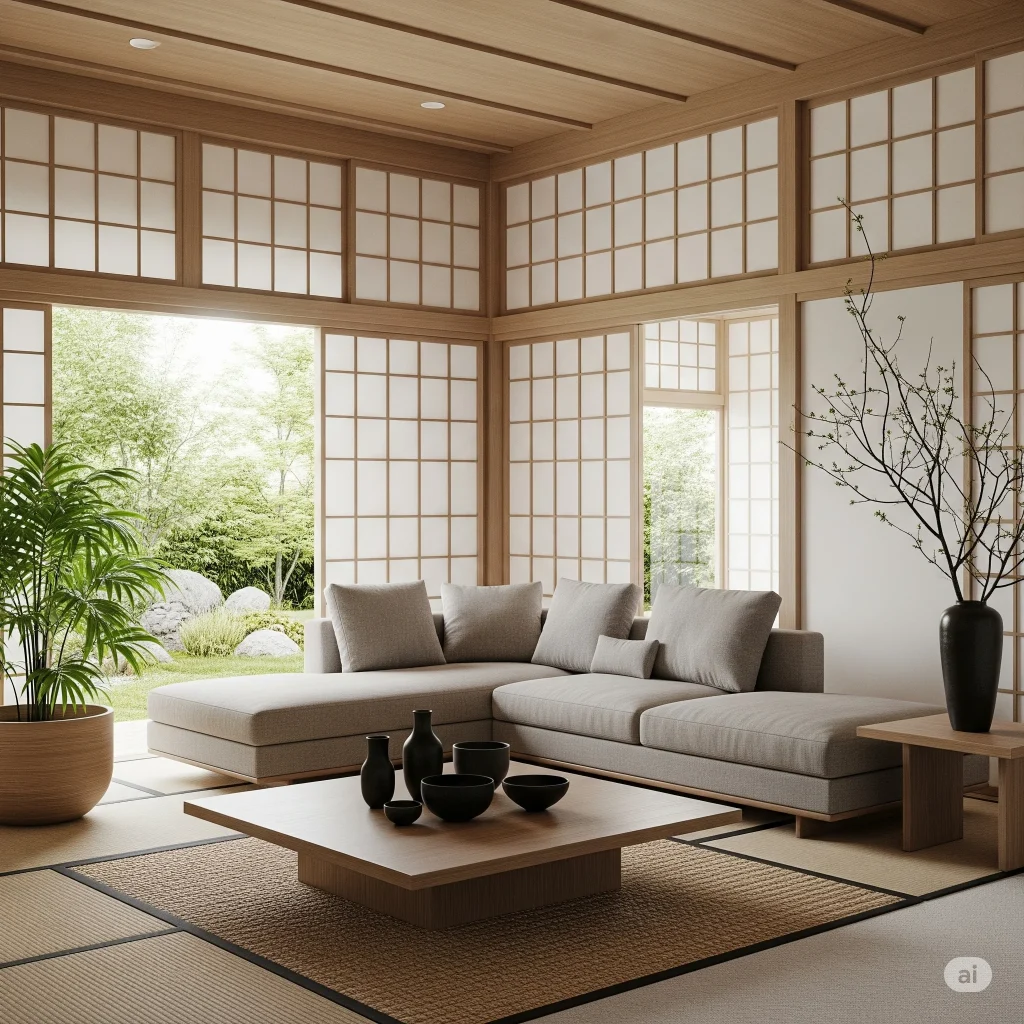
Shoji doors are known for their wooden lattice frames filled with translucent washi paper. The moment sunlight filters through them, the whole room transforms — soft, diffused, calming.
This is why Shoji panels are used in traditional machiya townhouses in Kyoto, inside the serene guest rooms of Hoshinoya Kyoto, and throughout many minimalist boutique hotels in Japan. Their purpose is always the same: to create a space where the light feels alive, gentle, and welcoming.
Stats That Add Value
- Homes using light-diffusing surfaces (like Shoji) have been shown to reduce indoor lighting needs by up to 30%, according to sustainable design research.
- A 2024 Pinterest interior trend report noted that searches for “Japanese minimalist homes” rose by 55%, making Shoji panels a highly “pinned” feature.
Why They Work So Well
Shoji sliding doors fit beautifully into:
- Small apartments (they save space compared to hinged doors)
- Modern Zen-inspired homes
- Japandi-style interiors
- Rooms with limited natural light
- Neutral, cozy, minimalist living rooms or bedrooms
The best part? Shoji creates a “glowing” effect that instantly makes a space feel peaceful and intentional, almost like a retreat.
Fusuma: Artistic and Functional Sliding Panels
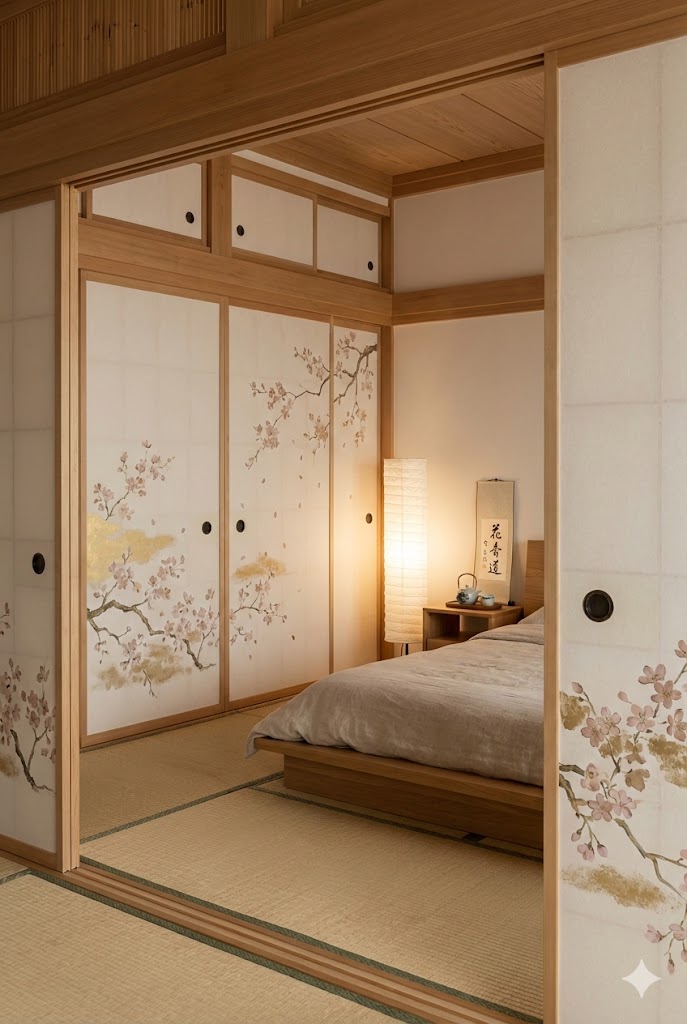
Unlike Shoji, Fusuma doors are opaque and often covered in artwork — delicate landscapes, cherry blossom scenes, cranes, soft mountains, or abstract wash-ink paintings.
These sliding doors are not just partitions; they are moveable artwork.
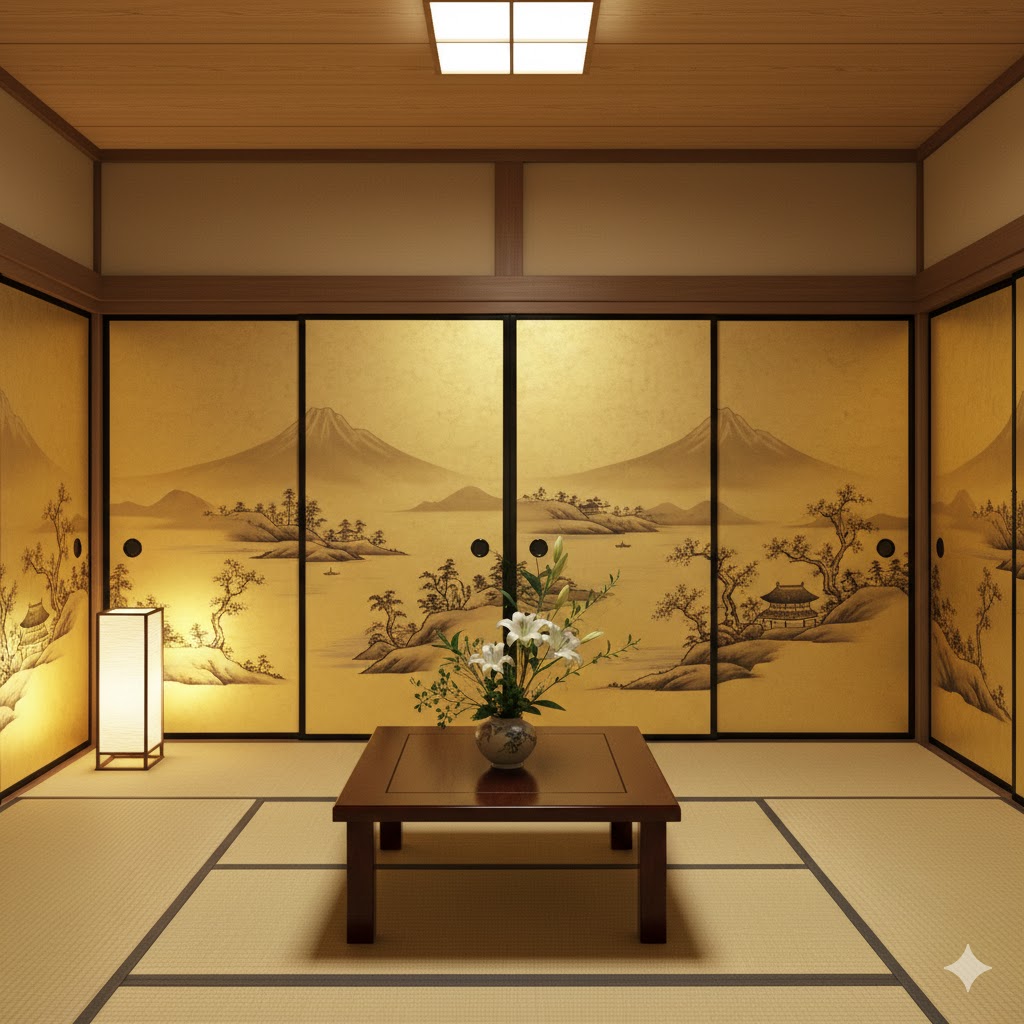
If you’ve ever visited the stunning Katsura Imperial Villa in Kyoto or the historic rooms of Nijo Castle, you’ve likely seen Fusuma panels covered in exquisite gold-leaf paintings. These doors shift and slide to expand or divide rooms, creating multifunctional spaces long before “open-concept living” was a trend.
Stats That Add Value
- Japanese architectural designs using sliding partitions improve spatial efficiency by up to 20%, according to architectural optimization studies.
- Museums and design archives show that Fusuma artwork has been preserved for over 300 years in historical buildings — proof of its lasting cultural value.
Fusuma in Modern Homes
Today’s homeowners love using Fusuma-inspired panels for:
- Bedroom closets
- Home office partitions
- Artistic statement walls
- Hallway sliding doors
- Meditation or tea corners
The soft patterns add warmth, charm, and cultural elegance without overpowering a space.
Real-World Inspiration: Famous Places Featuring Shoji & Fusuma
Here are some iconic architectural locations where Shoji and Fusuma truly shine:
1. Katsura Imperial Villa (Kyoto)
Often called a masterpiece of minimalist architecture, this villa uses Shoji doors to blur the boundary between interior and garden scenery. It’s the perfect example of indoor-outdoor harmony.
2. Tofuku-ji Temple
Known for its Zen gardens, its interior spaces use Shoji and Fusuma to complement the changing seasons outside.
3. Gion Machiya Townhouses
These traditional Kyoto houses use Shoji screens to illuminate narrow rooms, proving their efficiency even in compact urban homes.
4. Nijo Castle (Kyoto)
Fusuma panels here feature elaborate gold-leaf paintings of tigers, pine trees, and rivers — showing how these doors also served as storytelling canvases.
Shoji and Fusuma in Modern Interior Design
As open-concept living becomes more popular, Japanese sliding doors offer an elegant solution for creating privacy without compromising openness. Unlike bulky walls or hinged doors, Shoji and Fusuma glide effortlessly on tracks, allowing you to reconfigure your space in seconds.
Here are a few modern ways to incorporate them:
- Living Room Dividers:Shoji panels separate spaces without blocking light — ideal for small homes.
- Bedroom Closets: Replace traditional wardrobe doors with Fusuma panels. Fusuma makes closets feel like art installations.
- Sliding Door to the Garden: Shoji doors opening to a balcony or courtyard create a dreamy indoor-outdoor feel.
- Home Office Partition: Create a calm, private workspace without building new walls.
- Accent Wall: For smaller spaces, consider installing Fusuma panels as decorative sliding art — a mix of functionality and creativity.
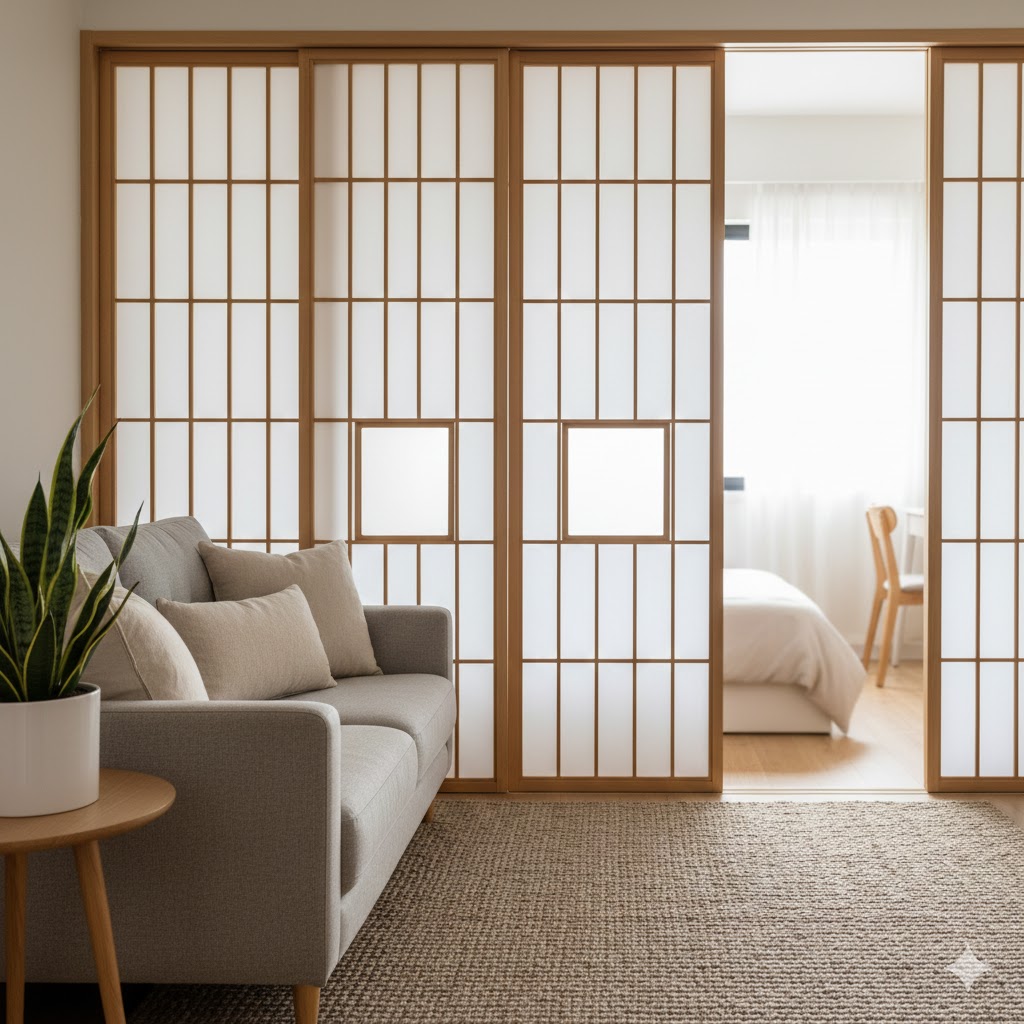
By combining traditional Japanese craftsmanship with modern interior trends, Shoji and Fusuma easily adapt to different design styles — from Japandi and Zen-inspired interiors to rustic modern or urban minimalist homes.
Materials and Design Options
When choosing Shoji or Fusuma for your home, you can opt for authentic materials or modern variations:
Shoji Materials
- Cedar, cypress, or pine wood
- Washi paper or frosted acrylic (modern)
- Kumiko woodworking lattice designs
Shoji doors come in various grid designs — simple vertical lines, square lattice, or intricate geometric patterns inspired by kumiko woodworking.
Fusuma Materials
- Wooden frame
- Washi or silk covering
- Artistic printed wallpaper
- Gold-leaf accents (traditional)
Natural wood tones (oak, bamboo, maple) create warmth, while black lacquered frames give a modern, bold touch.
Modern homes often blend Shoji and Fusuma designs — for example, translucent Shoji panels with a subtle printed motif inspired by Fusuma art.
Styling Tips for a Serene Japanese-Inspired Home
Integrating Japanese sliding doors into your home décor is more than a design choice — it’s about cultivating a sense of balance, calm, and connection to nature. Here are a few styling ideas to complete the look:
- Neutral Palette: Choose a neutral color palette (beige, sand, warm wood, off-white).
- Natural Light: Use soft, indirect lighting to complement Shoji glow.
- Low Furniture: Keep furniture low and simple — think Zen and airy.
- Greenery: Incorporate nature: bonsai, bamboo, peace lilies.
- Textures: Add organic textures (linen curtains, bamboo baskets, jute rugs).
- Minimalism: Keep décor uncluttered. Shoji and Fusuma shine best in calm, open environments.
If you prefer a more eclectic look, combine Japanese sliding doors with Scandinavian furniture and modern lighting fixtures — a blend known as Japandi style, loved for its cozy minimalism and natural textures.
The Symbolism Behind Shoji and Fusuma
Beyond aesthetics, Shoji and Fusuma carry deep cultural meaning. They represent adaptability, harmony, and respect for nature — key values in Japanese philosophy. The way they slide smoothly without swinging embodies efficiency and mindfulness in design.
In a world that feels increasingly fast-paced, these traditional features remind us to slow down, appreciate simplicity, and find beauty in everyday living spaces.
Why Choose Shoji & Fusuma for Your Home
Whether you’re redesigning your bedroom, creating a Zen meditation area, or looking for unique closet doors, Shoji and Fusuma bring a touch of artful calmness to any home. They’re ideal for:
- Small apartments where saving space is essential
- Homes that emphasize light, air, and flow
- Minimalist or Japandi-style interiors
- Artistic or nature-inspired settings
Their combination of functionality, flexibility, and timeless beauty makes them a favorite among interior designers and homeowners seeking both elegance and practicality.
Final Thoughts
What makes Shoji and Fusuma doors so inspiring is their emotional impact. They slow down the visual pace of a room, invite natural beauty indoors, and remind us that simplicity is powerful.
In a world where everything feels busy and digital, Japanese sliding doors bring a breath of calm — a reminder to live softly, intentionally, and surrounded by beauty that feels natural.
Whether you’re decorating a small apartment or designing a serene bedroom, Shoji and Fusuma offer elegance that lasts a lifetime.
Related
- Japandi Living Room Ideas: Zen Minimalism with Scandinavian Coziness
- Japandi Interior Design: How to Achieve the Perfect Zen Style