
Stunning Cape Cod House Interior Ideas: A Timeless Coastal Guide
A Cape Cod house interior has a relaxed quality that makes a home feel bright, comfortable, and effortlessly welcoming. But creating the look isn’t simply a matter of painting everything white and adding a few nautical accessories.
The best Cape Cod interiors balance classic architecture, practical furniture, natural textures, coastal colors, and comfortable details. They feel connected to the coast without looking like a themed beach house.
Whether you’re decorating an older Cape Cod cottage, updating a suburban home, or simply love the look of Cape Cod interior design, the key is knowing what to choose—and what to leave out.
This guide will help you create a Cape Cod style home room by room, including practical decisions about colors, furniture, materials, lighting, budget, and décor.
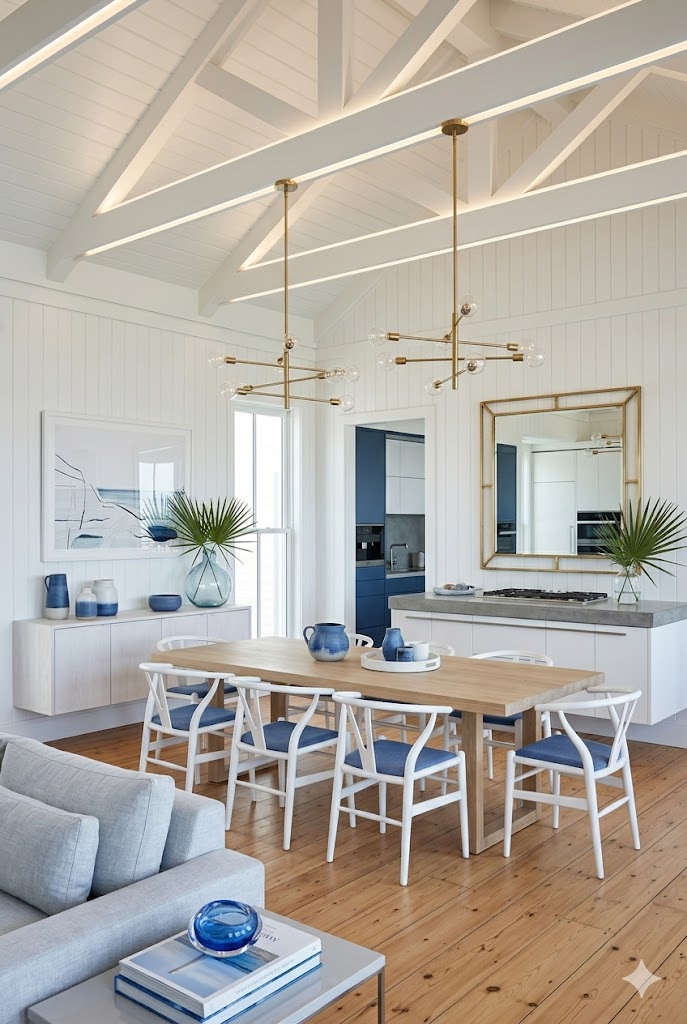
What Defines a Cape Cod House Interior?
Traditional Cape Cod homes are known for their simple architecture, practical layouts, steep roofs, dormer windows, and strong connection to New England coastal living. The interior style developed around the same idea: simple, functional, comfortable, and naturally beautiful.
A successful Cape Cod interior usually combines:
- Light and warm neutral colors
- Soft coastal blues
- Natural wood
- Linen and cotton fabrics
- Wicker, rattan, and woven textures
- Classic furniture silhouettes
- Simple architectural details
- Comfortable lighting
- Carefully chosen nautical accents
The important distinction is restraint. Cape Cod style is coastal without being overly nautical.
Instead of covering the room with anchors, shells, ropes, and sailboat prints, choose one or two subtle references to the sea and let the architecture and color palette do most of the work.
The 7 Essential Elements of Cape Cod Interior Design
Before buying furniture or accessories, establish these seven foundations.
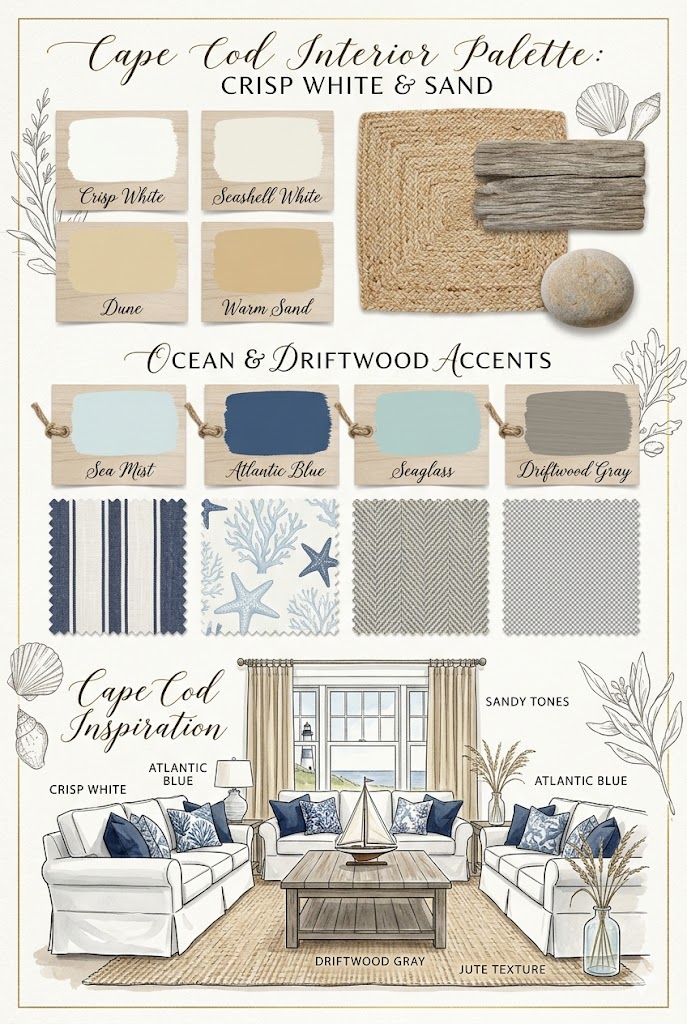
1. A Light, Layered Color Palette
White is the classic starting point, but you don’t have to use stark white everywhere.
Consider warm white, ivory, soft beige, pale gray, misty blue, or muted navy. The right combination depends on your home’s natural light and existing finishes.
2. Natural Materials
Wood flooring, woven baskets, jute rugs, linen curtains, cotton upholstery, and wicker furniture add the texture that prevents a light interior from feeling flat.
3. Classic Furniture
Choose comfortable furniture with simple shapes rather than pieces that look excessively modern or ornate.
Slipcovered sofas, wooden tables, upholstered armchairs, and traditional dining chairs work especially well.
4. Architectural Character
If your home already has beadboard, exposed beams, paneled walls, built-in shelving, or dormer windows, let those features become part of the design.
5. Coastal Textures
Texture is often more important than adding more color. Linen, rattan, seagrass, weathered wood, and cotton can create a coastal feeling without obvious beach motifs.
6. Practical Storage
Cape Cod homes can have compact rooms, so storage needs to be part of the decorating plan. Built-ins, baskets, window seats, and furniture with hidden storage can help keep the interior uncluttered.
7. Restrained Nautical Details
Use nautical elements as accents rather than the main theme. A vintage maritime print or simple lantern-style light can suggest coastal living without making the room feel like a souvenir shop.
How to Choose the Right Cape Cod Color Palette
One of the easiest mistakes in Cape Cod interior design is choosing a color palette before considering the room itself.
Instead, look at three things first: natural light, flooring, and the size of the room.
Choose White When…
Your room is small, receives limited sunlight, or has darker flooring. White walls can visually open the space and reflect available light.
Choose Warm White When…
Your home has honey-toned wood, beige upholstery, brass hardware, or warm natural materials. A creamy white will usually feel more cohesive than a very cool white.
Choose Pale Blue When…
You want a stronger coastal feeling but don’t want the visual weight of navy. Soft blue works particularly well in bedrooms, bathrooms, and smaller sitting areas.
Choose Navy as an Accent When…
You want contrast. Navy works beautifully on an island, built-in cabinetry, an occasional chair, Roman shade, or decorative textiles.
Practical tip: Don’t use the same shade of blue everywhere. Layering several muted blue tones usually creates a more sophisticated beach house interior.
Traditional or Modern Cape Cod: Which Style Is Right for You?
Not every homeowner wants a completely traditional interior. Modern Cape Cod design offers a cleaner interpretation while retaining the warmth of the original style.
| If You Want… | Choose… |
|---|---|
| Historic cottage character | Traditional Cape Cod |
| Cleaner, less decorative rooms | Modern Cape Cod |
| A warmer atmosphere | Cream + natural wood |
| A crisp coastal look | White + navy |
| A softer bedroom | White + pale blue |
| More sophistication | Muted blue + brass |
| A casual family home | Slipcovers + natural textures |
A useful rule is to match the interior to the architecture.
If you own an older Cape Cod home with original details, preserving some traditional character will usually feel more authentic. If you’re working with a newer home, simplified furniture and contemporary lighting can prevent the room from looking artificially old-fashioned.
You don’t have to choose one style completely. A traditional room can easily include modern lighting, while a contemporary Cape Cod home can use antique furniture.
How to Choose Furniture Without Making the Room Look Themed
Furniture should provide the foundation of your Cape Cod house interior—not the accessories.
For a living room, start with the sofa. A comfortable slipcovered sofa in white, cream, oatmeal, or light gray gives you a versatile base. Add one or two contrasting chairs rather than purchasing an entire matching furniture set.
For coffee tables and side tables, natural wood is an easy choice. Light oak, painted wood, or weathered finishes work especially well.
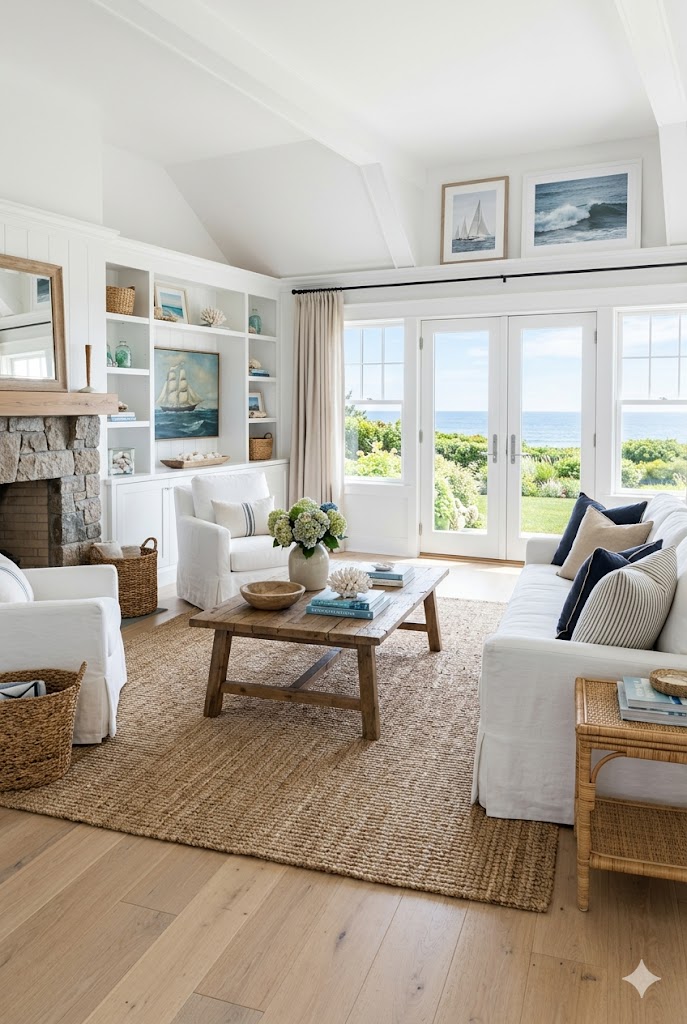
A Better Way to Mix Furniture
Don’t make everything the same color.
For example:
Cream slipcovered sofa + natural oak coffee table + navy accent chair + woven rug
is more visually interesting than:
White sofa + white chairs + white table + white accessories.
The goal is coordination, not matching.
What About Wicker and Rattan?
Wicker and rattan are excellent for adding coastal texture, but they don’t need to appear in every room. One rattan chair or woven pendant can be enough to introduce the material.
If your room already has several natural textures, skip another woven piece and introduce contrast through metal, glass, or painted furniture instead.
Cape Cod Living Room: What Should You Prioritize?
The living room is where the relaxed personality of a Cape Cod style home should be most visible.
Prioritize these elements in order:
- Comfortable sofa
- Correctly sized rug
- Functional lighting
- Natural wood furniture
- Window treatments
- Coastal artwork
- Small decorative accents
Don’t start with accessories.
A common decorating mistake is buying pillows, baskets, candles, and artwork before choosing the major furniture pieces. This can leave you with a beautiful collection of accessories but no cohesive room.
Example
For a small living room, I’d choose a compact cream sofa, light oak coffee table, medium-sized jute rug, linen curtains, and one navy accent chair.
For a larger room, you can add a second seating area, larger artwork, and a substantial wooden coffee table without making the room feel crowded.
Cape Cod Kitchen: Where Should You Invest?
The kitchen is one of the strongest places to establish a Cape Cod interior because classic cabinetry and natural materials naturally complement the style.
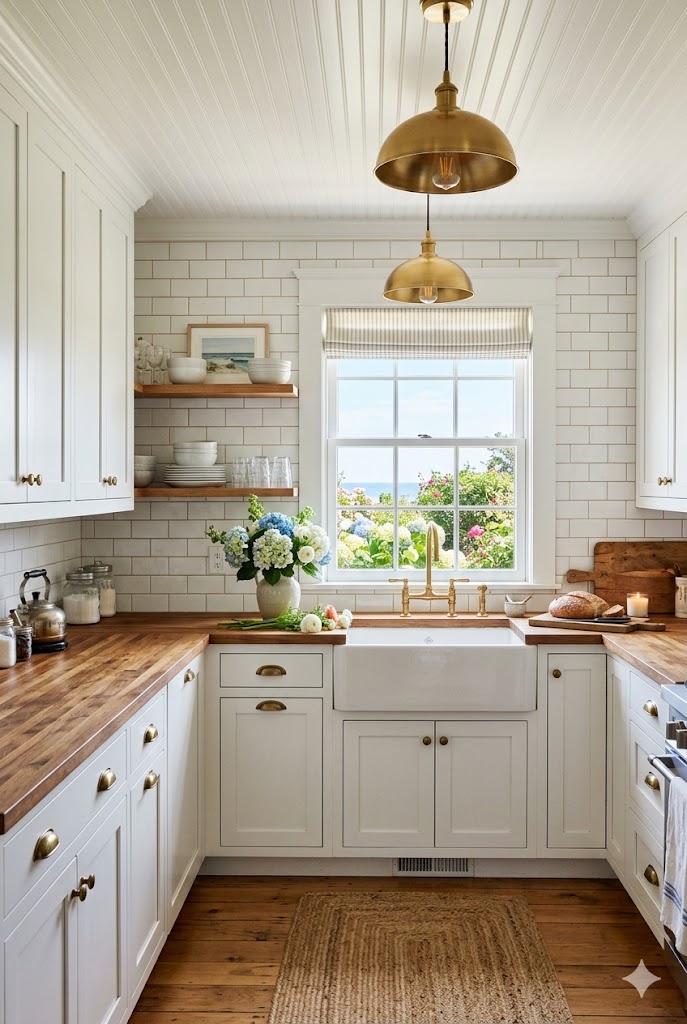
White or cream shaker cabinets are a dependable choice, particularly when paired with:
- Brass or brushed nickel hardware
- Subway tile
- Light wood
- Marble or quartz countertops
- Simple pendant lighting
- Open shelving
- Beadboard details
However, you don’t have to make every surface white.
A navy or muted blue island can provide contrast while keeping the rest of the kitchen light.
Where to Spend Your Kitchen Budget
If you’re renovating, prioritize durable elements that are expensive or difficult to replace:
Spend more on: countertops, cabinetry, flooring, and quality lighting.
Save on: decorative accessories, temporary textiles, and small countertop décor.
This approach gives you a kitchen that looks beautiful without spending your entire budget on styling.
Creating a Serene Cape Cod Bedroom
A Cape Cod bedroom should feel softer than the rest of the home.
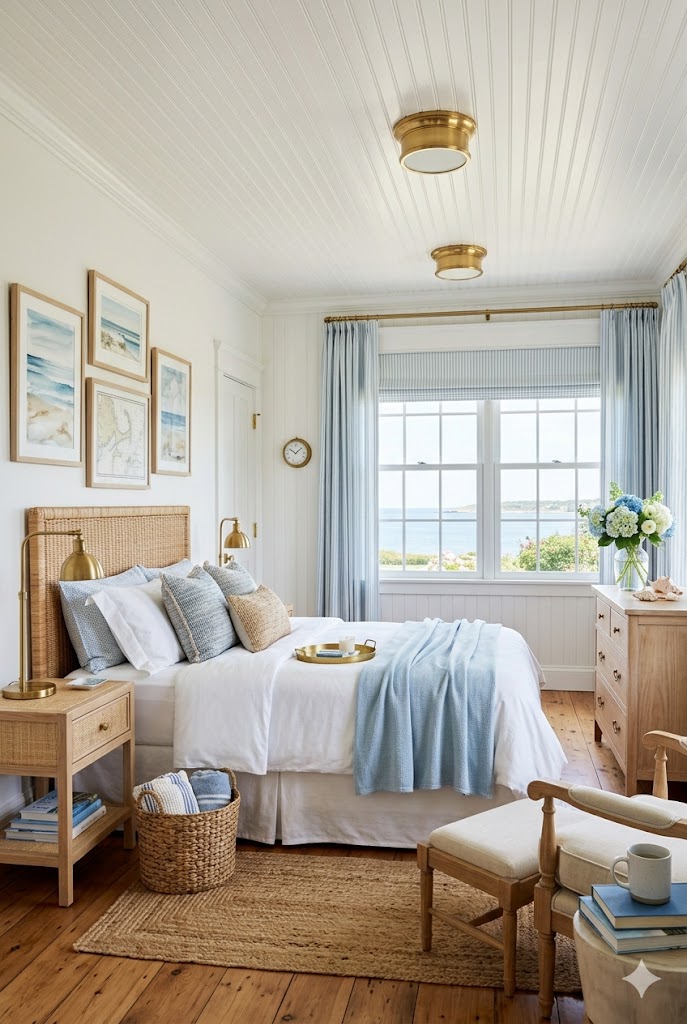
Start with a comfortable bed, white or ivory bedding, and natural textiles. Add pale blue, muted navy, or soft gray through a throw blanket or pillows.
If the room is small, avoid oversized furniture. A simple wooden nightstand and wall-mounted lighting can provide the necessary function without making the room feel crowded.
For a larger bedroom, a woven bench at the foot of the bed can introduce texture while providing useful seating.
A Simple Bedroom Formula
White bedding + natural wood + one soft blue accent + linen curtains + warm bedside lighting
This creates a coastal feeling without relying on obvious nautical décor.
How to Decorate a Small Cape Cod Home
Small rooms require a different approach.
Instead of trying to make the room look “full,” aim to make it look open but comfortable.
Choose furniture that fits the scale of the room and avoid blocking windows. Use light-colored walls, curtains hung close to the ceiling, and furniture with visible legs to create a sense of openness.
Built-in storage is especially valuable in smaller Cape Cod homes. A window seat with drawers underneath, shallow shelving, or a built-in cabinet can provide storage without adding bulky furniture.
Small Room Decision Guide
Room feels dark? Choose lighter walls and reflective surfaces.
Room feels crowded? Remove furniture before buying more storage.
Ceiling feels low? Use vertical curtains and avoid visually heavy overhead décor.
Room feels bland? Add texture before adding more color.
That last point is particularly important. If a white room feels boring, adding five more decorative colors isn’t necessarily the answer. A linen curtain, textured rug, woven basket, and natural wood table may solve the problem more effectively.
How Much Nautical Décor Is Too Much?
This is where many coastal interiors go wrong.
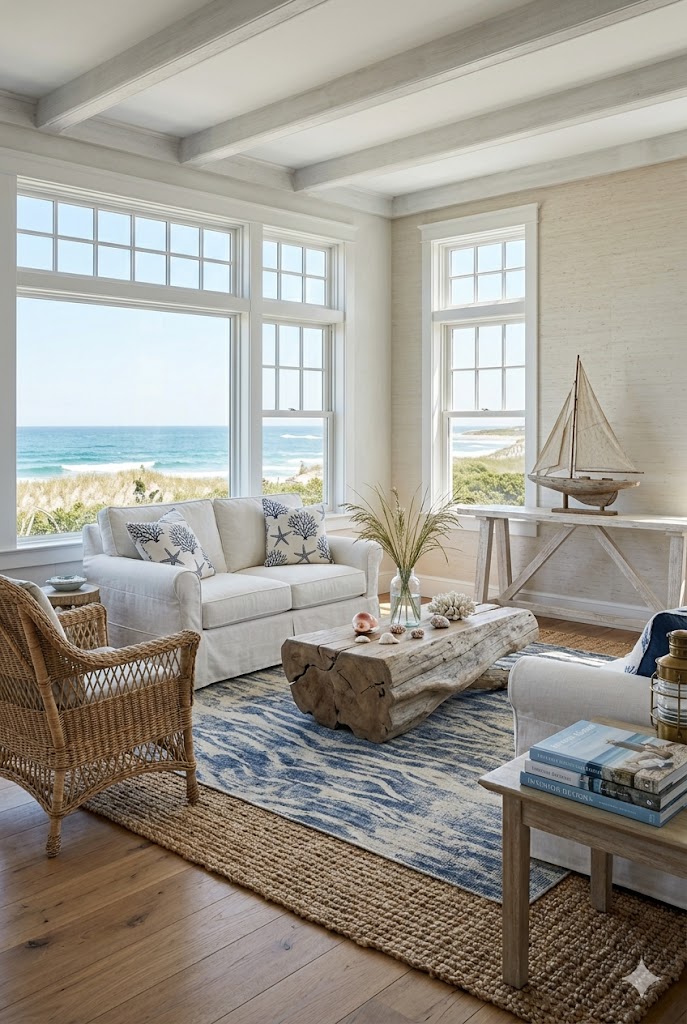
Cape Cod style doesn’t require a collection of anchors, ship wheels, seashells, ropes, and lighthouse decorations.
Instead, think about suggestion rather than imitation.
For example, choose:
- A framed vintage maritime map
- A simple glass lantern
- Blue-and-white striped textiles
- A weathered wood mirror
- A subtle ocean landscape
One strong coastal reference is often more effective than ten small nautical accessories.
If you can remove half of the beach-themed decorations and the room still feels coastal, you’ve probably achieved the right balance.
Common Cape Cod Decorating Mistakes to Avoid
Using Too Much Navy
Navy is a classic Cape Cod color, but using it on every major surface can make a room feel heavy.
Use navy strategically against lighter walls and upholstery.
Making Everything Match
A room filled with matching white furniture can feel flat. Mix painted pieces with natural wood, woven textures, and upholstery.
Overusing Beach Décor
A Cape Cod interior should feel like a home near the coast, not a themed vacation rental.
Ignoring Scale
Large furniture can overwhelm the compact rooms found in many Cape Cod homes. Measure before buying.
Forgetting Warmth
An all-white room with cool lighting can feel sterile. Warm wood, textured fabrics, and warm-toned lighting help make the space inviting.
Where to Spend and Where to Save
You don’t need to renovate everything to achieve a convincing Cape Cod house interior.
| Spend More On | Save Money On |
|---|---|
| Sofa | Throw pillows |
| Quality flooring | Small decorative pieces |
| Kitchen cabinetry | Seasonal accessories |
| Durable area rug | Baskets |
| Lighting fixtures | Artwork prints |
| Window treatments | Decorative objects |
The general rule is simple: spend on things you touch, sit on, walk on, or use every day.
Save on decorative elements that are easy to replace when your taste changes.
Practical Styling Advice: Start With the Largest Elements
If you’re starting from an empty room, don’t begin by shopping for décor.
I’d work in this order:
1. Architecture → 2. Wall color → 3. Flooring → 4. Main furniture → 5. Lighting → 6. Textiles → 7. Artwork → 8. Accessories
This prevents you from making expensive purchases that don’t work together.
For example, if you already own warm oak floors, choose warm white walls rather than a cold white. If your sofa is beige, introduce blue through artwork or textiles rather than buying another large blue furniture piece.
This approach makes Cape Cod home décor feel intentional rather than assembled from unrelated coastal products.
How to Refresh a Cape Cod Interior for Each Season
You don’t need to completely redecorate throughout the year.
Spring and Summer
Use lighter linen fabrics, fresh greenery, pale blue accents, woven textures, and simple floral arrangements.
Fall
Introduce oatmeal, muted navy, warm wood, textured throws, and natural seasonal elements.
Winter
Make the interior feel warmer with wool blankets, layered rugs, brass or antique-style lighting, evergreen branches, and soft ambient light.
The permanent elements of your room can remain the same while inexpensive textiles and accessories change with the season.
A Simple Formula for a Timeless Cape Cod House Interior
If you’re unsure where to begin, use this formula:
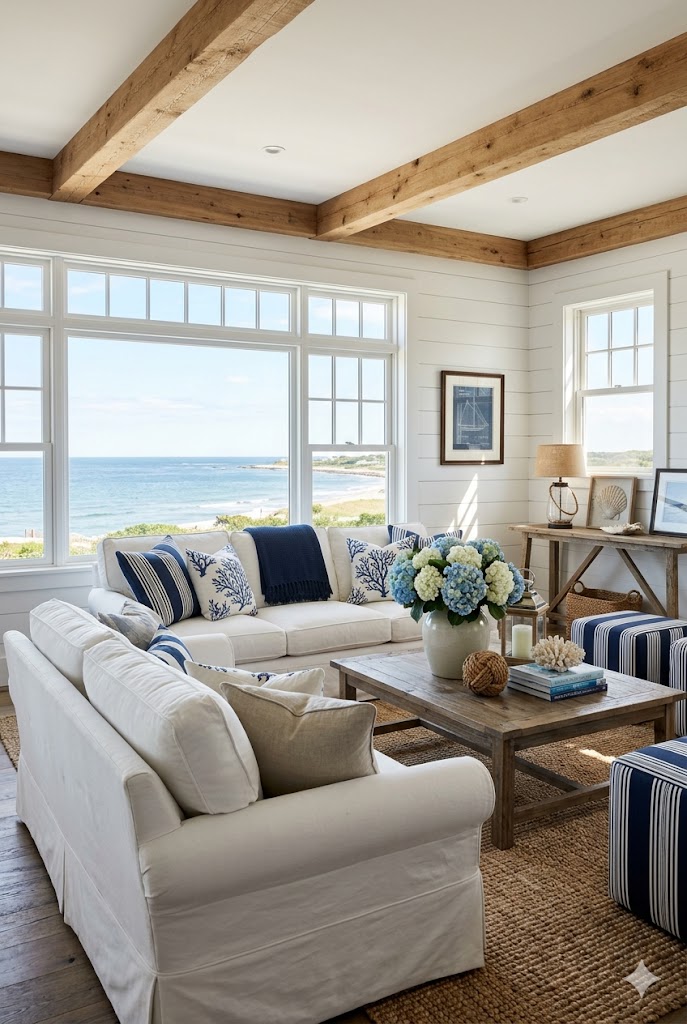
60% light neutral + 20% natural wood + 10% coastal blue + 10% texture and personality
It isn’t a strict decorating rule, but it’s a useful starting point.
For example, a living room could have cream walls and sofa, oak flooring and furniture, navy pillows and artwork, and woven accessories.
From there, add personality through objects you genuinely like rather than purchasing décor simply because it is labeled “coastal.”
Final Thoughts
The most successful Cape Cod house interior isn’t the one with the most coastal decorations. It’s the one that feels comfortable, bright, practical, and connected to its surroundings.
Start with the permanent elements—walls, flooring, furniture, lighting, and architectural details. Then add natural textures and a restrained coastal color palette. Use nautical décor sparingly, and don’t be afraid to combine traditional Cape Cod elements with modern pieces.
Most importantly, make decisions based on your actual home. A dark room needs a different solution from a sun-filled room. A compact cottage needs different furniture from a spacious open-plan home. And a family living room needs different priorities from a guest bedroom.
That’s what makes Cape Cod interior design so enduring: it provides a timeless foundation while still leaving plenty of room for your own lifestyle and personality.
Frequently Asked Questions
What colors are best for a Cape Cod house interior?
White, warm ivory, soft beige, pale blue, muted gray, and navy are classic choices. The best combination depends on your natural light, flooring, and existing furniture.
How can I make my home look Cape Cod without living near the coast?
Focus on the design principles rather than literal beach décor. Use light colors, natural wood, linen, woven textures, classic furniture, and a few subtle nautical references.
Is Cape Cod style the same as coastal style?
Not exactly. Cape Cod is a specific coastal-inspired style rooted in New England architecture and tends to be more traditional and restrained. Coastal design is a broader category that can include Mediterranean, tropical, modern, and other regional influences.
Can Cape Cod interiors be modern?
Yes. Modern Cape Cod interiors can combine traditional architectural details with clean-lined furniture, contemporary lighting, minimal accessories, and updated materials.
What is the biggest mistake when decorating a Cape Cod home?
Overusing nautical décor. The style works best when coastal influences are subtle and supported by natural materials, comfortable furniture, and a light color palette.
How do I make a small Cape Cod interior feel larger?
Use light wall colors, appropriately scaled furniture, uncluttered windows, vertical curtains, built-in storage, and natural light. Avoid filling small rooms with oversized furniture or excessive accessories.





5 Comments