Warm Pear & Cinnamon Crumble Recipe: A Cozy Dessert for Fall & Winter
When the air turns crisp and the evenings grow colder, nothing feels more comforting than a warm dessert straight from the oven. This Warm Pear & Cinnamon Crumble combines the natural sweetness of ripe pears with a buttery, spiced crumble topping that’s crunchy on the outside and soft underneath. It’s the perfect treat for cozy family gatherings, dinner parties, or even a quiet night in. Pair it with a scoop of vanilla ice cream or a dollop of whipped cream, and you’ve got a dessert that feels like a hug in a bowl.

Why You’ll Love This Recipe
- Seasonal & cozy – pears are abundant in the fall and winter months.
- Simple ingredients – everything you need is likely already in your pantry.
- Versatile dessert – enjoy it warm or cold, with cream, custard, or ice cream.
- Make-ahead friendly – prepare the filling and topping in advance, then bake before serving.

Ingredients
For the Pear Filling:
- 5 ripe pears (peeled, cored, and sliced)
- 2 tbsp brown sugar
- 1 tbsp lemon juice (to prevent browning)
- 1 tsp ground cinnamon
- ½ tsp ground nutmeg
- 1 tsp vanilla extract
For the Crumble Topping:
- 1 cup all-purpose flour
- ½ cup rolled oats
- ½ cup brown sugar
- ½ cup unsalted butter (cold, cut into small cubes)
- 1 tsp ground cinnamon
- Pinch of salt

Step-by-Step Instructions
Step 1: Prepare the Pear Filling
In a large bowl, toss the sliced pears with lemon juice, brown sugar, cinnamon, nutmeg, and vanilla extract. Mix well until the pears are coated in the spiced mixture. Transfer to a greased baking dish.
Step 2: Make the Crumble Topping
In another bowl, combine flour, oats, brown sugar, cinnamon, and a pinch of salt. Add in the cold butter cubes and rub the mixture with your fingertips until it resembles coarse crumbs.
Step 3: Assemble the Crumble
Spread the crumble topping evenly over the pear mixture in the baking dish, covering all the fruit.
Step 4: Bake to Perfection
Preheat the oven to 180°C (350°F). Bake for 35–40 minutes, or until the topping is golden brown and crisp, and the pears are bubbling underneath.
Step 5: Serve & Enjoy
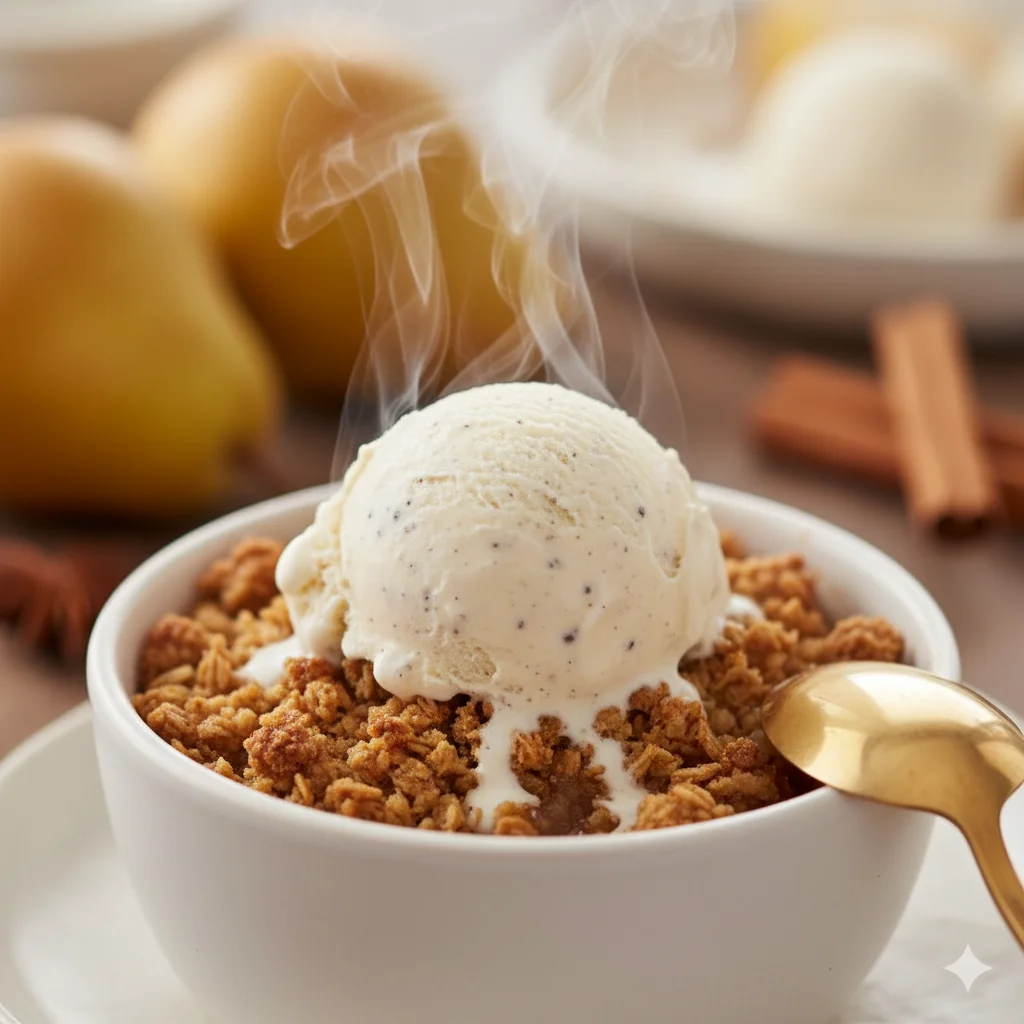
Serve warm straight from the oven. Add a scoop of vanilla ice cream, custard, or whipped cream for the ultimate indulgence.
Tips for the Best Pear & Cinnamon Crumble
- Choose the right pears: Bosc or Anjou pears hold their shape well when baked.
- Add crunch: Sprinkle chopped pecans or walnuts into the topping for extra texture.
- Make it gluten-free: Swap all-purpose flour with almond flour or gluten-free flour blend.
- Meal prep friendly: Store leftovers in the fridge for up to 3 days and reheat before serving.
Pairing Ideas
- Classic: Warm crumble + vanilla ice cream.
- Festive: Top with caramel sauce for a holiday touch.
- Light: Pair with Greek yogurt for a healthier option.
Final Thoughts
This Warm Pear & Cinnamon Crumble recipe is the kind of dessert that brings everyone back to the table. Its golden crumble topping, spiced pear filling, and cozy aroma make it a must-bake during fall and winter. Whether you’re hosting a holiday dinner or simply craving a sweet treat, this crumble will always hit the spot.
Choosing Pears That Bake Well
Pears behave differently in the oven depending on ripeness, and that choice shapes the whole dessert. Fruit that is ripe but still firm is the sweet spot: it softens into tender slices without collapsing into sauce. Very soft pears are lovely for eating fresh, but in a hot dish they can dissolve and flood the filling with juice.
Press gently near the stem to judge ripeness: a slight give means the pear is ready, while a hard pear needs more time on the counter. Firmer, denser varieties are the reliable bakers, because they keep their shape under the topping. If your pears are on the hard side, slice them a little thinner so they finish tender in the same time the topping takes to crisp.
A Crumble Topping That Stays Crisp
A crisp topping is mostly about moisture control and texture. The butter needs to go in cold and stay in small pieces through the flour and oats, because those pieces melt in the oven and leave little pockets that bake up crunchy. If the butter is soft or fully worked in, the topping turns dense and cakey instead of crisp.
Scatter the topping loosely rather than pressing it down, and cover the fruit right to the edges so the layer is even. A topping that looks rough and clumpy before baking is a good sign: distinct clumps bake into distinct crunchy clusters, while a smooth, packed layer tends to soften as the fruit bubbles beneath it. Let the finished crumble rest briefly before serving so the top can firm up as it cools slightly.
Troubleshooting: Watery Filling or a Pale Topping
A watery filling almost always traces back to the fruit. Very ripe pears release a lot of juice as they bake, and if that juice has nowhere to go, it pools under the topping. Tossing the fruit with its sugar and spice a little ahead of time lets you see how much liquid forms; if the bowl looks very juicy, tip the fruit into the dish and leave the excess behind.
A pale topping is usually a patience or position issue rather than a recipe problem. The top needs enough time in the heat to toast, so judge doneness by color and by bubbling at the edges, not by the clock alone. If the fruit is bubbling but the top still looks blond, a dish placed higher in the oven, closer to the heat, often deepens the color without changing anything else.
Flavor Twists in Words
The cinnamon base of this crumble welcomes small detours. Warm spices sit naturally beside pear: a pinch of ginger or cardamom in the filling shifts the flavor toward gentle heat, while a little citrus zest brightens the fruit without changing the recipe. Vanilla in the filling, or a touch of almond in the topping, adds a softer, rounder note.
Texture twists work just as well. A handful of chopped nuts folded through the topping brings crunch, and a scattering of oats left chunkier keeps the top rustic. Keep changes small and make one at a time: pear has a delicate flavor, and the goal is to support it rather than cover it. Taste the filling before the topping goes on, and adjust the sweetness while you still can.
Serving the Crumble: Warm, Room Temperature or Next Day
Warm is the classic way to serve this crumble, and for good reason. After a gentle rest out of the oven, the topping is at its crispest, the fruit is soft and jammy, and a cold scoop on top melts into the warm spices beautifully. If the crumble has cooled completely, a short return to a low oven brings back the contrast between crisp top and tender fruit.
Room temperature serving suits a relaxed table: the flavors feel settled and the topping stays pleasantly firm, which works well when the dish sits out while people help themselves. Next-day crumble is softer but still lovely; warm individual portions gently if you want to revive some of the crunch. Whichever way you serve it, spooning portions from the dish at the table keeps the moment cozy and informal.
Scaling a Crumble for a Crowd
Scaling a crumble up is mostly about surface area and layer thickness. A wider dish keeps the fruit layer at a similar depth, so it softens at the same pace and the topping still crisps across the whole surface. Two standard dishes often behave better than one very deep one, because deep fruit layers release more juice and can leave the middle underdone while the edges overcook.
Keep the balance between filling and topping as you scale: the topping should still cover the fruit in the same loose, even layer rather than a thick blanket. When you make a larger batch, mixing the topping in two goes helps keep the butter pieces cold and distinct. Bake the dishes side by side with a little space between them so hot air can circulate, and rotate them if your oven browns unevenly.
Assembling Ahead and Baking Later
Crumble is a friendly make-ahead dessert because its two parts wait well separately. The filling can be mixed ahead and kept covered in its dish, and the topping holds its texture best when it stays dry and cold, apart from the fruit. Keep the two separate until baking: moisture from the pears slowly softens the topping if they sit together, and a crisp top depends on that dry start.
When you are ready to bake, scatter the cold topping over the fruit straight from the fridge and get the dish into the oven without a long rest on the counter. If the filling was mixed well ahead, give it a quick stir first so the juices and spices are evenly distributed. This small bit of planning makes the crumble an easy dessert for guests: the work happens early, and only the baking remains.