The Psychology of Color in Eclectic Maximalist Interiors
Color has always been one of the most powerful tools in interior design — it’s emotional, expressive, and deeply personal. In eclectic maximalist interiors, color doesn’t just decorate a space — it defines it. Every shade tells a story, every tone evokes a feeling, and every combination turns a room into a living reflection of personality and mood.
Whether you love jewel tones, playful contrasts, or vintage-inspired palettes, understanding the psychology of color can transform your home from simply “busy” to beautifully balanced. Let’s dive into how color psychology shapes eclectic maximalist spaces — and how to use it to create your own vibrant, intentional sanctuary.
1. The Emotional Power of Color in Home Décor
Colors have the power to influence mood and perception in ways we often don’t consciously notice. For maximalist design lovers, this emotional connection is key — because eclectic spaces thrive on energy, emotion, and storytelling.
- Warm colors like red, orange, and yellow evoke passion, joy, and creativity. They make a space feel cozy, social, and inviting.
- Cool colors like blue, green, and violet create calm, depth, and reflection — grounding all the visual stimulation of a maximalist room.
- Neutrals — creams, taupes, blacks, and grays — provide rest for the eyes, offering contrast and sophistication among all the colorful chaos.
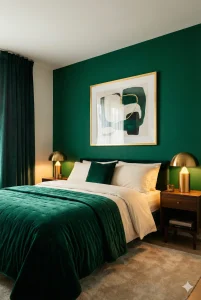
In maximalist interiors, the trick is not to avoid bold colors, but to balance emotional intensity with areas of calm. A rich emerald wall can feel elegant and restful when paired with warm wood tones, while a mustard sofa becomes a confident centerpiece surrounded by soft neutrals or lush plants.

2. Why Maximalists Love Color (and Why It Works)
Eclectic maximalism is often misunderstood as “too much,” but the truth is — it’s purposeful abundance. The beauty of maximalist interiors lies in layering, collecting, and contrasting — and color is the thread that ties it all together.
Color psychology helps explain why these spaces feel alive:
- Vivid colors stimulate the brain. They spark curiosity and creativity, making maximalist homes feel dynamic and joyful.
- Contrasting hues create visual interest. Pairing unexpected tones — like teal and marigold — gives a sense of movement and rhythm.
- Repetition creates harmony. Repeating a few accent colors throughout the space prevents chaos and builds cohesion.
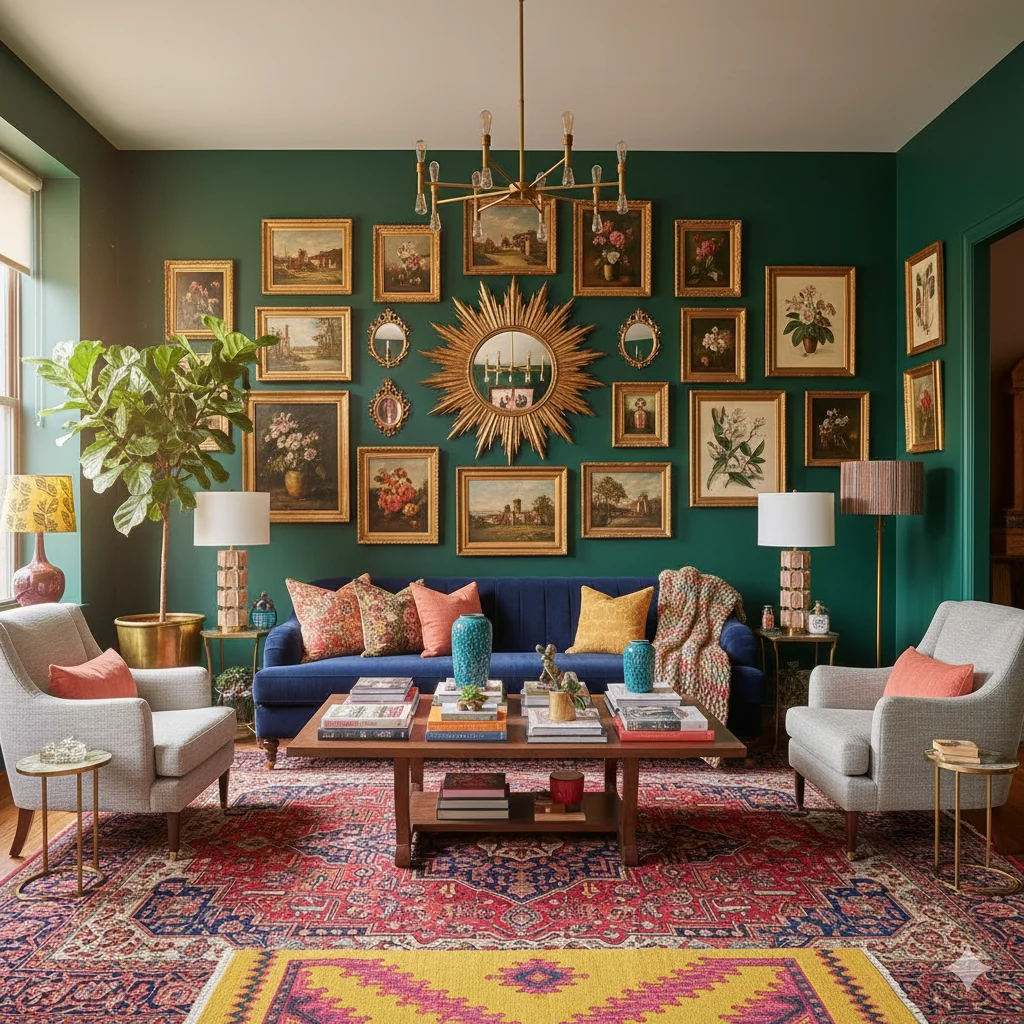
For example, an eclectic living room might feature a navy velvet sofa, coral cushions, a gold-framed mirror, and layered patterned rugs. Every hue speaks, but they all belong to the same conversation.
3. Exploring Color Psychology in Eclectic Design
Each color carries psychological meaning — and in maximalist design, these meanings amplify. Here’s how to use them intentionally:
Red: Passion, Energy, and Statement
Red is the color of confidence. It stimulates conversation and excitement — perfect for dining rooms or creative spaces. In eclectic interiors, crimson or cherry tones pair beautifully with jewel greens, golds, and vintage art for a luxe, bohemian mood.

Blue: Calm, Reflection, and Depth
Blue brings tranquility to the boldness of maximalism. A deep sapphire wall or indigo velvet chair can anchor an otherwise colorful room, balancing visual noise with serenity.

Green: Renewal and Connection
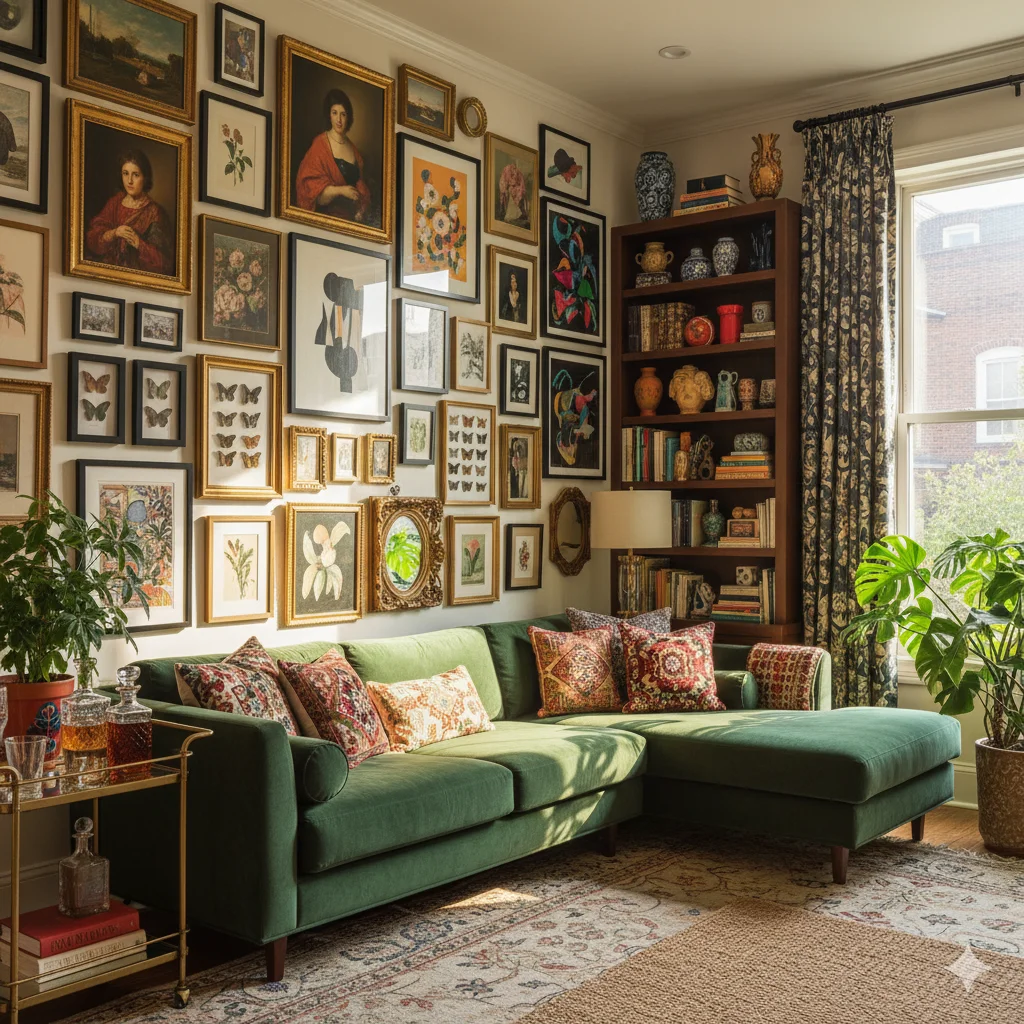
Green connects indoor spaces to nature — vital for grounding layered, ornate rooms. Olive, sage, or emerald tones complement everything from brass décor to bold patterned wallpaper.

Yellow: Optimism and Light
Yellow is happiness in color form. In maximalist interiors, mustard, ochre, or golden tones warm up dark walls or vintage furniture. They create a cheerful glow that feels timeless and cozy.

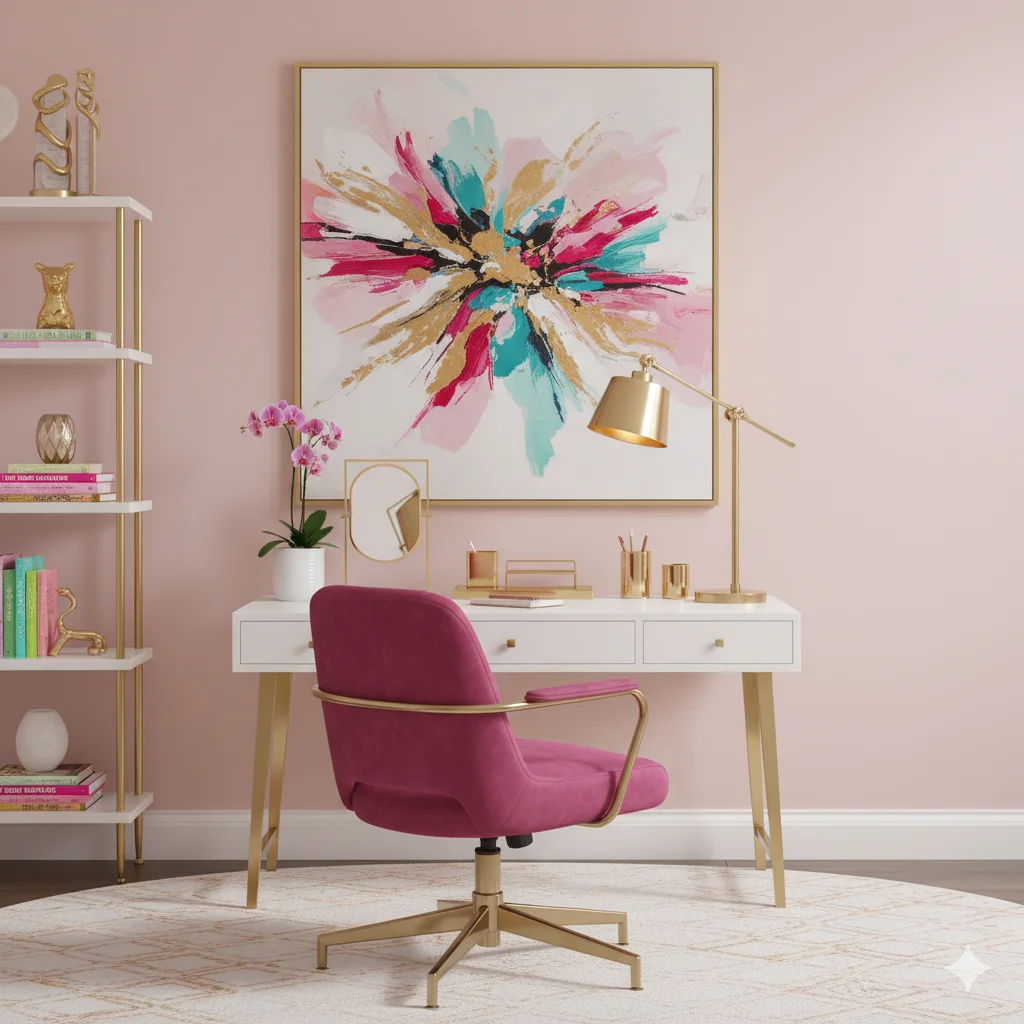
Pink: Creativity and Whimsy
Blush or magenta adds playfulness to eclectic styling. Pink pairs beautifully with deep blues, emerald greens, or metallics — perfect for bedrooms, reading corners, or statement furniture pieces.
Black: Drama and Definition
Black outlines, trims, or furniture frames give structure to maximalist chaos. It’s the secret to making mixed patterns and bold hues look intentional, not overwhelming.

4. Layering Color Through Décor and Textures
Color psychology isn’t just about walls — it’s about how color flows through your décor. In eclectic home styling, layering is everything.
- Textiles: Use color through patterned rugs, throw pillows, and curtains. They add depth and can easily be changed seasonally.
- Artwork: Gallery walls are a maximalist must-have. Combine vintage prints, modern art, and family photos in coordinating color tones.
- Furniture: Don’t shy away from painting a sideboard teal or reupholstering a chair in a bold floral pattern. Eclectic design celebrates the unexpected.
- Plants and natural elements: Greenery not only adds texture but also balances the visual saturation of colorful décor.
Mixing finishes — matte, gloss, metallic, velvet — also affects how colors appear. For instance, pairing a shiny brass lamp with a matte navy wall enhances contrast and depth.
5. Finding Harmony in Chaos
The secret to successful eclectic maximalist interiors lies in intentional harmony. To keep your space from feeling chaotic:
- Choose a core palette of 3–5 colors that repeat across rooms.
- Mix patterns and textures but keep one unifying element (like tone or style).
- Use white space or dark grounding to rest the eyes — such as dark wood furniture or neutral rugs.
- Let emotion guide you. If a space feels too intense, soften it with cool tones or natural textures.

When colors are chosen intuitively — based on how they make you feel — your home becomes a true reflection of you. That’s the heart of maximalism: it’s not about following rules but celebrating individuality through joyful, expressive design.
6. The Takeaway: Designing with Emotion and Intention
Color psychology gives eclectic maximalism its emotional depth. It explains why walking into a jewel-toned living room feels like entering a storybook, or why a mustard velvet chair makes a reading nook irresistibly cozy.
When you understand color’s emotional impact, you design not just for aesthetic appeal but for emotional experience. And in a world that often favors minimalism, a bold, colorful home is an act of self-expression — a visual love letter to creativity, comfort, and individuality.
So go ahead — paint that accent wall emerald, hang the patterned curtains, and mix your favorite vintage treasures. Let color guide you, not by trends, but by the way it makes you feel.
Related
- The Ultimate Guide to Color Psychology in Interior Design
- The Ultimate Cottage Color Palette Guide for a Cozy & Inviting Home
- How to Create a Hand-Painted Accent Wall That Looks Designer-Made