How to Build a Low-Maintenance Food Forest in Your Yard
If you’ve ever dreamed of stepping outside your back door and picking fresh fruit, herbs, and veggies without the daily hassle of traditional gardening — a low-maintenance food forest might be your dream come true. Designed to mimic natural ecosystems, a food forest practically takes care of itself once established, offering both abundance and beauty all year long.
What Is a Food Forest?
A food forest (also known as a forest garden) is a layered, self-sustaining garden that imitates a natural woodland ecosystem — but instead of wild trees, you plant edible species. It’s built around perennial plants that grow year after year, minimizing replanting and watering needs.
The seven layers of a food forest include:
- Canopy trees – fruit or nut trees like apple, pear, or almond
- Sub-canopy trees – dwarf fruit trees, fig, or pomegranate
- Shrubs – berry bushes such as blueberry, raspberry, or currant
- Herbaceous plants – herbs like mint, sage, oregano, and comfrey
- Ground cover – strawberries, creeping thyme, or clover
- Root crops – garlic, sweet potatoes, or Jerusalem artichokes
- Vines – grapes, passionfruit, or hardy kiwi
This layering technique ensures that every inch of your yard works together — capturing sunlight, building soil, and producing food year-round.

Why Choose a Low-Maintenance Food Forest?
Unlike a vegetable garden that demands constant watering, weeding, and fertilizing, a food forest is largely self-regulating after the first couple of years.
Benefits include:
- Less watering — deep-rooted perennials maintain soil moisture
- Natural pest control — biodiversity keeps pests in check
- Year-round yield — different layers produce at different times
- Carbon-friendly — improves soil health and captures CO₂
- Visually lush — doubles as an ornamental garden
If you’re a busy homeowner or eco-conscious gardener, this method is the ultimate “set it and forget it” food system.
Step-by-Step: How to Build Your Own Food Forest
1. Observe Your Space
Before planting, watch how sunlight, shade, and water move through your yard. Note where rain collects, how wind flows, and which areas get the most sun — these observations will guide plant placement.
2. Start Small
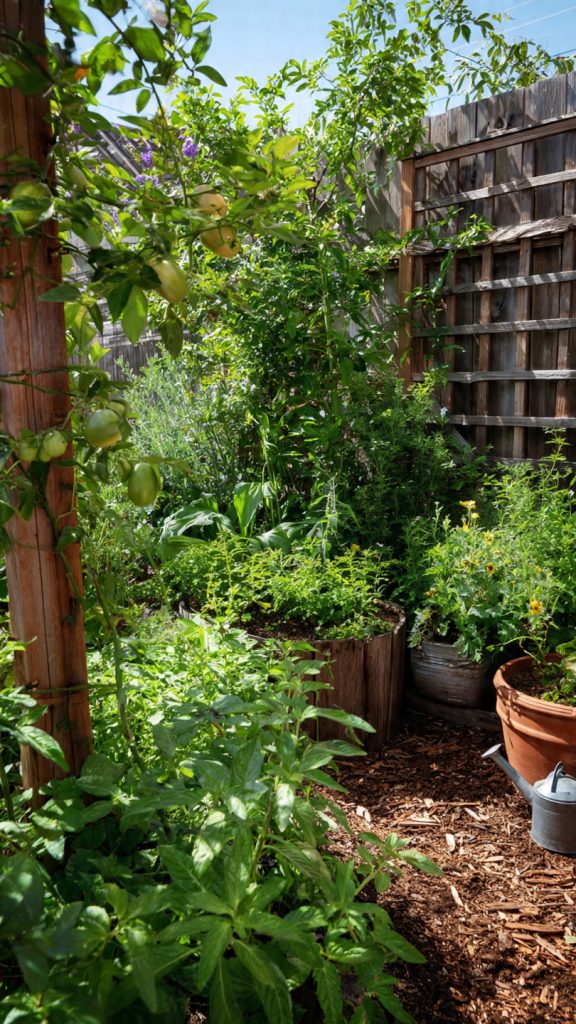
Even a 3×3 meter (10×10 ft) space can become a thriving micro-forest. Begin with one or two fruit trees and build outward over time. Starting small ensures you can maintain the ecosystem as it develops.
3. Choose the Right Plants for Your Climate
Opt for native or climate-adapted species that require minimal watering.
For example:
- Warm climates: figs, citrus, pomegranate, sweet potatoes, basil
- Cool climates: apples, currants, kale, garlic, mint
- Tropical climates: banana, papaya, taro, lemongrass
4. Build Soil Naturally
Skip the synthetic fertilizers. Instead, use compost, wood chips, and fallen leaves to enrich your soil. Over time, the layers of mulch and organic matter will encourage beneficial fungi and earthworms to thrive.

5. Plant in Layers
Mimic nature by planting your trees, shrubs, herbs, and groundcovers close enough to support each other. Taller plants shade the soil, while ground covers prevent weeds and retain moisture.
6. Add Water Management Features
Install a rainwater collection system or shallow swales (ditches that catch water) to reduce irrigation needs. Your plants will thank you during dry spells!

7. Let Nature Take Over
Once established, resist the urge to over-maintain. The beauty of a food forest lies in its natural balance — leaves become mulch, beneficial insects thrive, and your ecosystem flourishes with minimal intervention.

Design Tips for a Beautiful, Productive Yard
- Use curved paths made of gravel or stepping stones for a natural look.
- Integrate flowering herbs like lavender and calendula for pollinators.
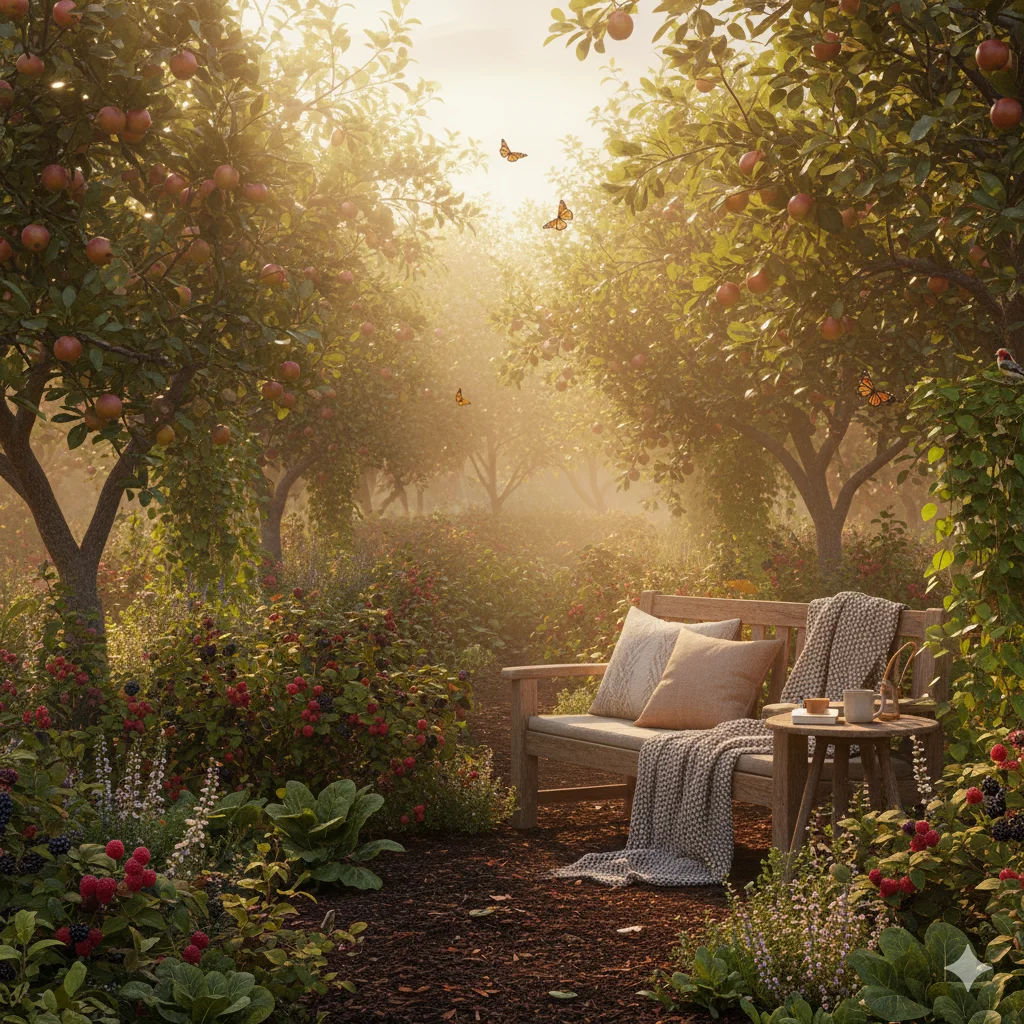
- Add a small seating nook or rustic bench to enjoy your mini forest.
- Surround the area with low wooden fencing or logs to define the space.
Your food forest can be both functional and aesthetic, blending beautifully with your home décor style — whether you prefer rustic, cottagecore, or modern minimalism.
Low-Maintenance Food Forest Plant List
Here’s a quick guide to easy-grow options:
| Layer | Plant Ideas |
|---|---|
| Canopy | Apple, Fig, Moringa |
| Sub-Canopy | Olive, Citrus, Pomegranate |
| Shrubs | Blueberry, Raspberry, Goji Berry |
| Herbs | Mint, Sage, Thyme, Lemon Balm |
| Ground Cover | Strawberry, Clover, Creeping Thyme |
| Root Layer | Garlic, Sweet Potato, Ginger |
| Vines | Grape, Passionfruit, Kiwi |
Maintaining Your Food Forest the Easy Way
- Mulch heavily each season to suppress weeds
- Prune lightly once a year to maintain balance
- Harvest regularly to encourage new growth
- Observe and adjust — nature will guide you
With time, your food forest will grow into a lush, living pantry — one that requires less effort and offers endless rewards.
Beginner Mistakes to Avoid When Building a Food Forest
Starting a low-maintenance food forest is exciting, but beginners often make a few common mistakes that can slow progress or increase upkeep. Avoiding these early will help your food forest thrive naturally with less effort over time.
1. Planting Too Much, Too Fast
It’s tempting to fill every space immediately, but overcrowding can lead to poor airflow, nutrient competition, and maintenance headaches. Start with a few key trees and shrubs, then add layers gradually as you observe how your yard responds.
2. Ignoring Sun and Shade Patterns
Many beginners plant without tracking sunlight throughout the day. Fruit trees, berries, and herbs all have different light needs. Observe your yard for at least a few days (or seasons if possible) to avoid placing sun-loving plants in shaded areas.
3. Choosing High-Maintenance or Non-Native Plants
Exotic plants may look appealing but often require extra water, fertilizer, or protection. Native and climate-adapted species are far more resilient, pest-resistant, and easier to maintain long term.
4. Skipping Mulch and Soil Preparation
A food forest depends on healthy soil. Neglecting mulch leads to dry soil, weeds, and frequent watering. Deep organic mulch—like wood chips or leaves—retains moisture, feeds soil life, and reduces maintenance dramatically.
5. Expecting Instant Results
A food forest is a long-term system, not a quick harvest garden. The first year focuses on root growth and soil building. Abundance increases naturally over time, especially in years two and three.
6. Overwatering and Overmanaging
New gardeners often intervene too much. Once plants are established, excessive watering or pruning can disrupt natural balance. Let nature guide the process—observe more, interfere less.
Final Thoughts: Let Nature Do the Work
Creating a low-maintenance food forest isn’t just about growing your own food — it’s about designing harmony between people and nature. Once established, your mini ecosystem becomes a living, breathing space that feeds you, supports wildlife, and regenerates the soil beneath your feet. Start small, stay patient, and let nature take the lead. Soon, you’ll have a lush, self-sustaining paradise right in your own backyard — one that thrives beautifully with minimal effort.
Realated
- Wildlife-Friendly Garden in Fall and Winter: A Seasonal Guide
- Guide to Sustainable Gardening and Landscaping: Creating Harmony with Nature