Santorini Coastal Garden: White & Blue Walls, Volcanic Stone, and Wind-Sculpted Serenity
A Santorini coastal garden is not simply a variation of a Greek garden — it is a distinct, place-specific landscape shaped by volcanic terrain, relentless winds, intense sunlight, and the iconic white-and-blue Cycladic architecture. Unlike lush Mediterranean gardens, Santorini gardens are minimalist, sculptural, and intentionally restrained.
This garden style mirrors the island itself: whitewashed forms rising from dark volcanic stone, hardy plants thriving against the odds, and terraces that step gently toward the sea. If you’re drawn to coastal calm, sun-bleached beauty, and low-maintenance outdoor spaces, a Cycladic coastal garden offers a timeless and practical approach.
In this guide, you’ll learn how to design a true Santorini-inspired coastal garden — not a generic Greek one — using authentic colors, materials, layouts, and plants adapted to coastal exposure.
What Makes a Santorini-Inspired Garden Unique?
Santorini’s gardens evolved in one of the harshest environments in the Aegean. Thin soil, volcanic rock, salty air, and strong winds mean every design choice is intentional.
A true Santorini-inspired garden includes:
- A strict white and Aegean blue palette
- Volcanic stone, lava gravel, and pumice
- Wind-resistant, drought-friendly plants
- Terraced or stepped layouts
- Minimal, sculptural planting rather than lush beds
This is not a garden of abundance — it’s a garden of balance and resilience.
White & Blue: The Core Santorini Color Language
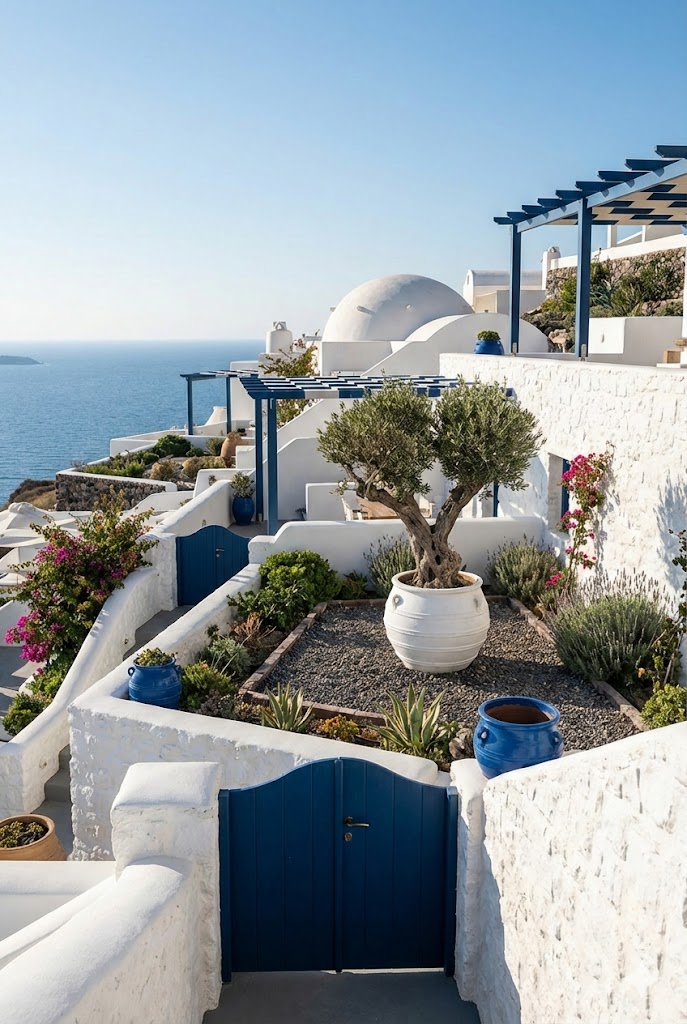
Unlike broader Greek garden styles, Santorini relies almost exclusively on pure white and deep Aegean blue. These colors are not decorative trends — they are functional responses to light, heat, and landscape.
How to use the palette correctly:
- White limewashed walls reflect intense sunlight and brighten small spaces
- Blue accents appear sparingly on doors, shutters, railings, or ceramic pots
- Avoid beige, cream, or terracotta dominance — those belong to other regions
In a Cycladic coastal garden, white should dominate at least 80% of visible surfaces, with blue used as a deliberate contrast rather than decoration.
Design tip: Keep blues deep and slightly muted — think sea-depth blue, not bright cobalt.
Volcanic Stone & Gravel: Santorini’s True Foundation

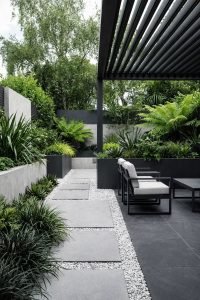
One of the most defining features of a Santorini coastal garden is its ground surface. Grass lawns are nonexistent here. Instead, the landscape is built on lava stone, pumice, and dark volcanic gravel.
Authentic Santorini hardscape materials:
- Black or charcoal volcanic gravel
- Rough lava stone blocks
- Pumice pathways
- White stone steps with worn edges
These materials create a dramatic contrast against white walls and require virtually no water or maintenance.
Why it matters: Volcanic stone absorbs heat during the day and releases it slowly at night, supporting plant survival in coastal conditions.
Terraced Layouts: Designing with the Landscape, Not Against It

Santorini gardens are rarely flat. Terracing is essential — both visually and structurally.
How to design a Santorini-style terrace:
- Use low whitewashed retaining walls
- Create stepped levels rather than one large platform
- Place one focal plant per level instead of dense planting
- Allow negative space between elements
This approach mimics Santorini’s cliffside villages and prevents erosion in windy or sloped gardens.
Even in flat backyards, raised platforms or split-level patios can recreate this Cycladic coastal rhythm.
Wind-Resistant Planting for a Coastal Climate

Santorini’s winds are constant, especially near the coast. Plants must be chosen for strength, structure, and drought tolerance, not softness.
Best plants for a Santorini-inspired garden:
- Olive trees (especially dwarf or sculptural forms)
- Caper bushes (a true Santorini native)
- Rosemary trained into low mounds
- Lavender for fragrance and structure
- Agave and aloe for sculptural form
- Sea thrift and coastal grasses in protected corners
Avoid delicate flowers, tropical plants, or anything that requires frequent watering.
Planting rule: Fewer plants, more impact. Each plant should feel intentional and sculptural.
Pots & Containers: Restrained and Purposeful

Terracotta exists in Santorini, but it is used sparingly. The dominant container style is whitewashed clay or stone.
Santorini container guidelines:
- Choose oversized pots with simple shapes
- Stick to white, stone, or muted blue finishes
- Avoid decorative patterns or bright glazes
- Place pots where walls or steps offer wind protection
Let plants spill naturally rather than trimming them into perfection — Santorini beauty lies in weathered imperfection.
Outdoor Furniture: Minimal, Built-In, and Wind-Aware
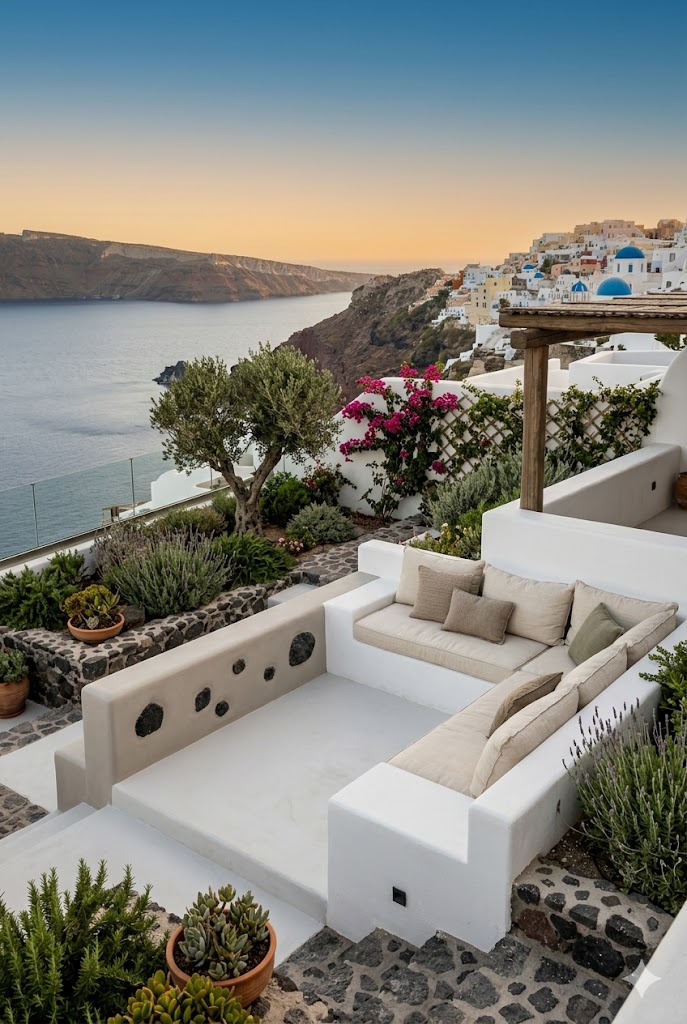
Furniture in a Santorini coastal garden is never bulky. Many traditional seating areas are built directly into the architecture.
Best furniture choices:
- Built-in white benches with linen cushions
- Low concrete or stone stools
- Simple wooden or metal chairs with weight
- Neutral textiles in white, sand, or soft blue
Avoid lightweight furniture that can tip or move in wind.
Styling note: One seating area is enough. Santorini gardens prioritize views and openness over multiple zones.
Lighting: Soft, Architectural, and Subtle

Santorini garden lighting should enhance architecture — not dominate it.
Lighting ideas:
- Recessed step lights along terraces
- Wall-mounted lanterns with warm bulbs
- Candles in stone or ceramic holders
- Solar lights hidden among gravel
Lighting should feel like a continuation of sunset, not an interruption.
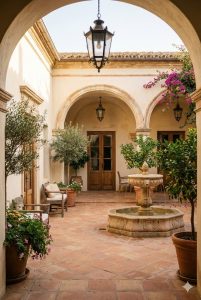
Santorini Coastal Garden for Small Spaces & Courtyards

This style works exceptionally well in courtyards, rooftops, and balconies.
For compact spaces:
- Use one olive tree or agave as the focal point
- Keep floors white or gravel-covered
- Add blue through a single door, pot, or cushion
- Leave empty space — it’s part of the design
A small Santorini courtyard should feel calm, not filled.
Why Santorini-Inspired Gardens Are Perfect for Modern Living
A Santorini coastal garden isn’t just beautiful — it’s practical.
- Extremely low water needs
- Minimal upkeep
- Timeless visual appeal
- Climate-resilient design
- Ideal for slow, intentional outdoor living
In a world of overdesigned landscapes, this approach feels grounding and sustainable.
Final Thoughts: Designing an Authentic Santorini Coastal Garden
A true Santorini-inspired garden is about restraint, resilience, and respect for the landscape. By focusing on white and blue architecture, volcanic materials, terraced layouts, and wind-resistant planting, you create a space that feels calm, coastal, and unmistakably Cycladic.
Design slowly. Edit often. And let the environment — not trends — guide your choices.
This Santorini coastal garden is one of the most architectural and climate-resilient styles within coastal landscaping. For a broader look at how this design compares with other seaside and Mediterranean-inspired gardens, explore our complete pillar post on [5 Coastal and Mediterranean Garden styles].
Related
- Mykonos Coastal Garden: White Terraces & Wind-Tolerant Blooms
- Mediterranean Marbella Garden: Spanish Tiles, Citrus Trees & Coastal Glamour
- Greek Outdoor Living Spaces: Courtyards, Pergolas & Seaside Patios
- Mediterranean Marbella Garden: Spanish Tiles, Citrus Trees & Coastal Glamour
- Caribbean Garden: Creating a Colorful Coastal Paradise at Home
- Stone House Interiors Croatia: Blending Heritage with Modern Comfort
- Serene Santorini Style Décor: Bring White & Blue Coastal Charm Into Your Home