
Moody Wedding Centerpiece Ideas: Deep Red, Plum & Burgundy Flowers
There is something incredibly romantic about a wedding table filled with deep burgundy roses, plum blooms, brown foliage, warm candlelight, and vintage details. Instead of feeling overly traditional, this color combination creates a tablescape that feels intimate, literary, and timeless.
For a Moody wedding Centerpiece, these rich floral colors work especially well. Deep reds bring passion, plum adds mystery, while brown foliage and aged textures give the arrangement a collected, old-world character.
The secret is balance. A moody centerpiece does not need to be completely dark. Mixing rich flowers with ivory blooms, muted greenery, antique brass, amber glass, and warm candlelight can create depth without making the reception table feel gloomy.
Whether you are planning an elegant autumn wedding, a vintage celebration, or a Dark Academia-inspired reception, these ideas can help you create floral centerpieces that feel intentional and personal.
Why Moody Flowers Work So Beautifully for Weddings
Traditional wedding flowers often lean toward white, blush, pastel pink, or soft greenery. Moody flowers take a different approach.
Deep burgundy, wine, plum, rust, and chocolate-brown tones create visual depth and work particularly well in venues with historic architecture, dark wood, vintage furniture, stone walls, libraries, or candlelit reception spaces.
They are also surprisingly versatile.
A burgundy rose arrangement can feel luxurious when paired with gold details, romantic with ivory flowers, vintage with antique vessels, or distinctly Dark Academia when styled with old books, brass candlesticks, velvet textures, and literary details.
The goal is not to make every part of the table dark. Instead, allow the flowers to become the dramatic focal point while lighter and reflective elements keep the overall design inviting.
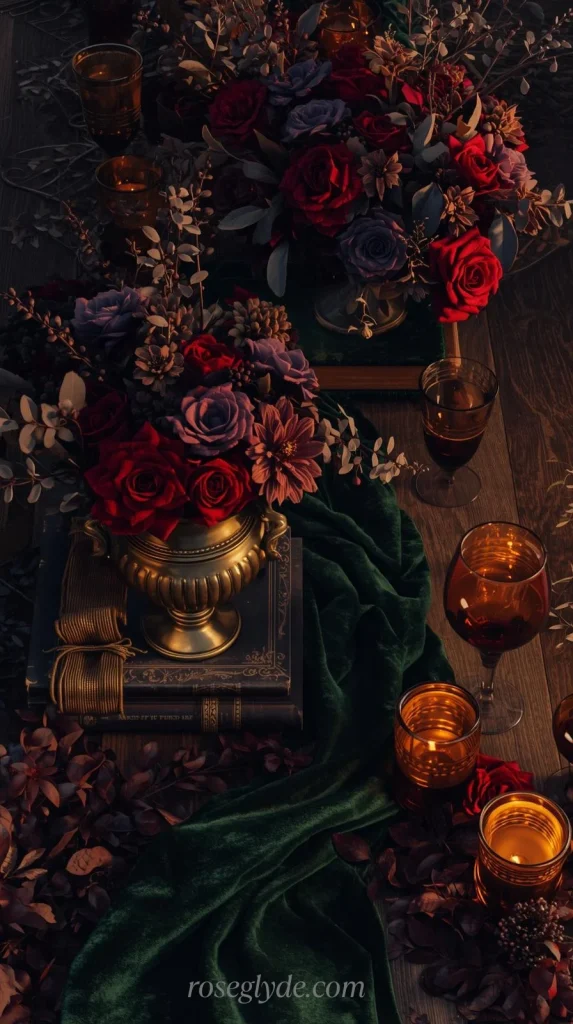
Choosing Deep Red, Brown & Plum Wedding Flowers
Start by choosing one dominant floral color and then build around it.
Deep Red and Burgundy
Burgundy roses are an obvious choice for a romantic centerpiece, but they are not your only option. Depending on the season and availability, you can also look for deep red dahlias, ranunculus, carnations, chrysanthemums, or other locally available blooms.
Use the darkest flowers as focal points rather than filling the entire arrangement with them.
Plum and Wine-Colored Blooms
Plum shades add a softer form of drama. Dahlias, scabiosa, lisianthus, and other flowers available in wine or purple tones can create beautiful variation without introducing a completely different color family.
Plum is especially useful when burgundy begins to feel too predictable.
Brown and Muted Foliage
Brown does not have to come from brown flowers. Dried foliage, seed heads, branches, preserved grasses, and naturally muted botanical textures can introduce earthy tones.
These details are particularly effective for a vintage or Dark Academia wedding because they make the arrangement feel collected rather than overly polished.
Add a Little Light
Deep flowers look even richer when contrasted with lighter tones.
Consider adding:
- Ivory roses
- Cream ranunculus
- Soft beige flowers
- Dusty greenery
- Warm white candles
- Amber glass
- Antique brass
Even a small amount of ivory can prevent a dark floral arrangement from becoming visually overwhelming.
The Dark Academia Centerpiece Formula
If you are creating your own arrangement, you do not need dozens of flower varieties.
A simple formula is:
1 focal flower + 2 supporting blooms + textured foliage + vintage vessel + candlelight + one literary detail
For example, imagine:
Burgundy roses + plum dahlias + cream ranunculus + brown foliage + antique brass urn + ivory taper candles + vintage books
The combination feels layered without looking chaotic.
This formula is also helpful if you are working with a florist. Instead of simply showing a Pinterest image, you can explain the colors, textures, proportions, and atmosphere you want.
7 Moody Wedding Centerpiece Ideas
1. Wild Library Garden Centerpiece
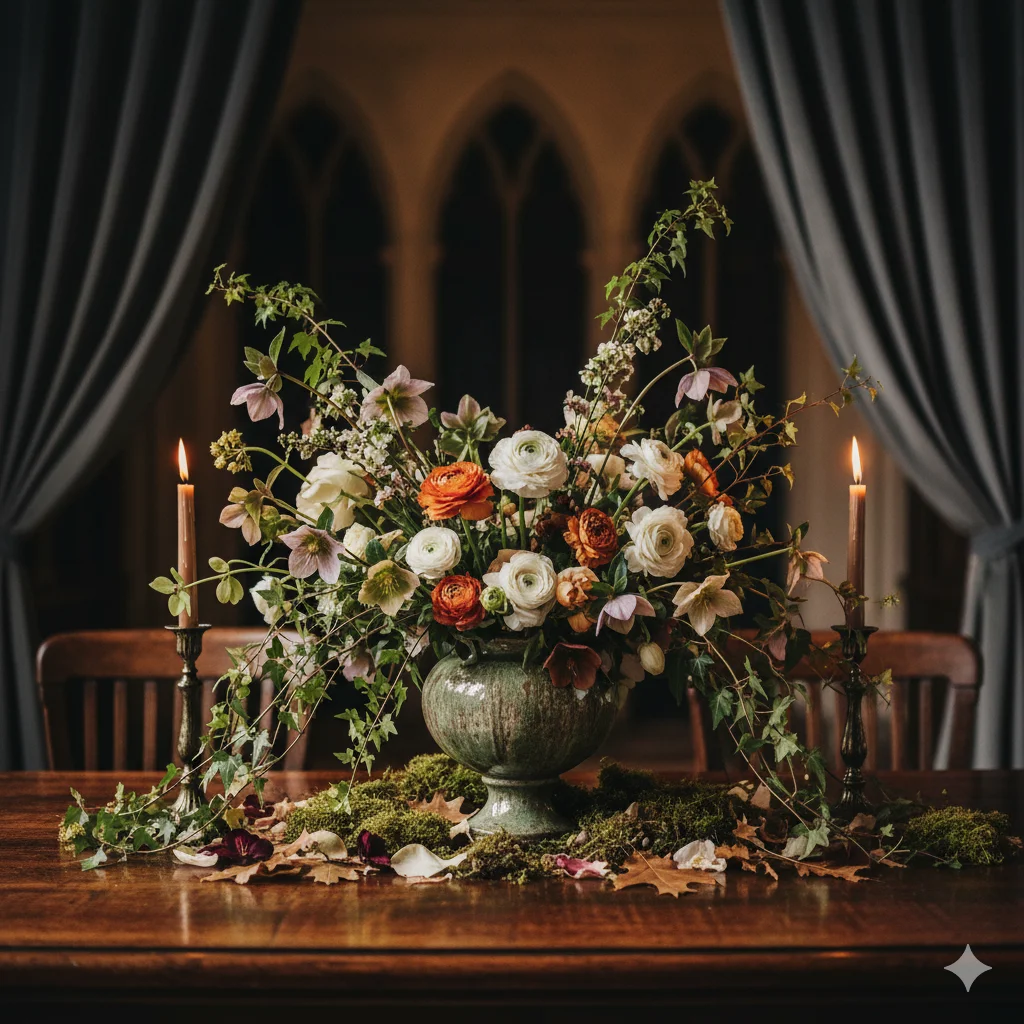
Create a lush wedding centerpiece that looks as though it was gathered from an old garden surrounding a historic library.
Use burgundy roses, plum blooms, trailing greenery, delicate vines, and a few dried botanical accents. Place the arrangement in an aged brass urn or vintage ceramic vessel.
Surround it with ivory taper candles, antique tableware, and a few carefully selected vintage books.
Keep the flowers slightly loose rather than perfectly symmetrical. That relaxed shape gives the arrangement a romantic, collected feeling.
2. Minimalist Burgundy Bud-Vase Centerpieces
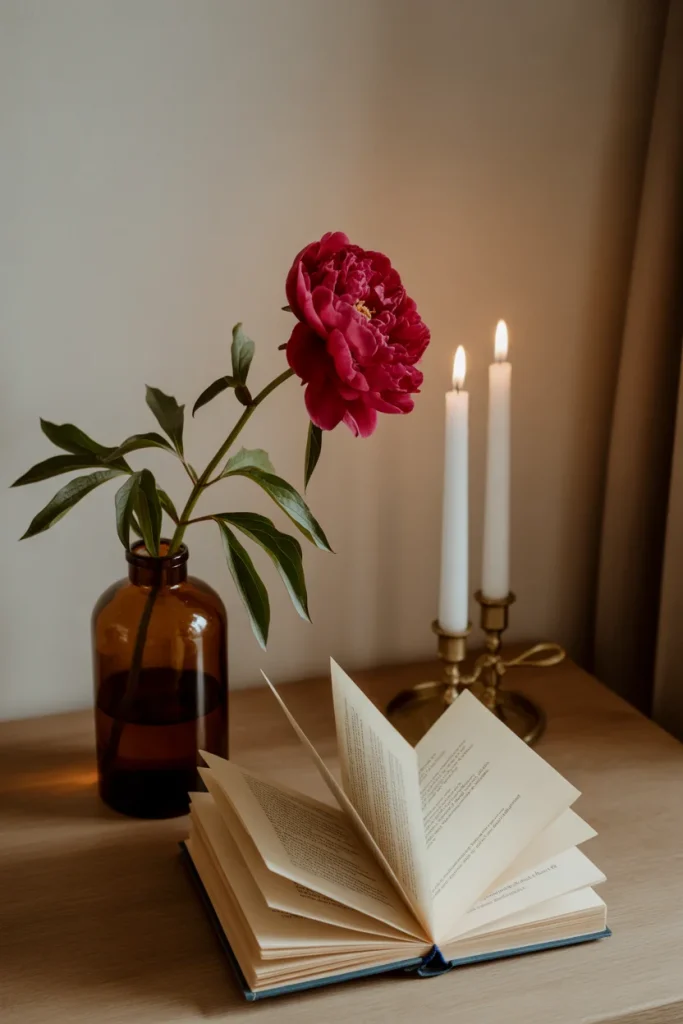
You do not need one enormous arrangement on every table.
For an intimate reception, place several small vintage or amber-glass bottles along the center of the table. Give each bottle one or two dramatic stems in burgundy, plum, or deep red.
Add small candles between the bottles.
This approach works particularly well for couples who want an elegant tablescape without spending their entire floral budget on large arrangements.
3. Victorian-Inspired Floral Urn
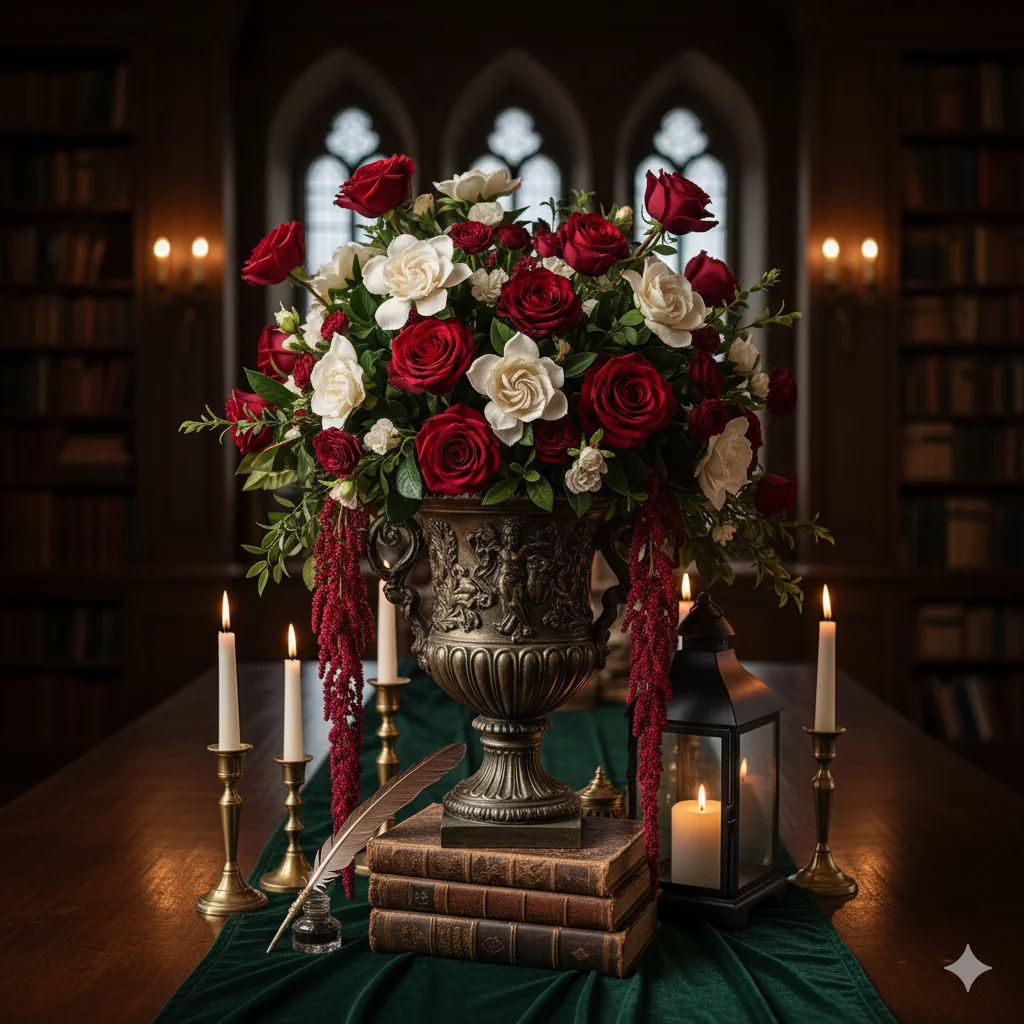
For a grand reception, make the centerpiece more dramatic with a vintage-inspired urn.
Fill it with deep red roses, plum dahlias, trailing foliage, and delicate cream flowers. Allow some stems to fall naturally over the sides rather than creating a perfectly rounded shape.
Place the urn on a long banquet table surrounded by brass candlesticks and warm ivory taper candles.
The result feels romantic and slightly theatrical without becoming overly gothic.
4. Burgundy and Plum Low Centerpiece
Low arrangements are one of the most practical choices for guest tables.
Create a wide, compact arrangement using burgundy roses, plum blooms, muted foliage, and a few lighter flowers.
The flowers should remain low enough that guests can comfortably see one another across the table.
This is particularly important for long wedding dinners where guests may spend several hours talking and dining.
5. Dark Florals with Amber Glass
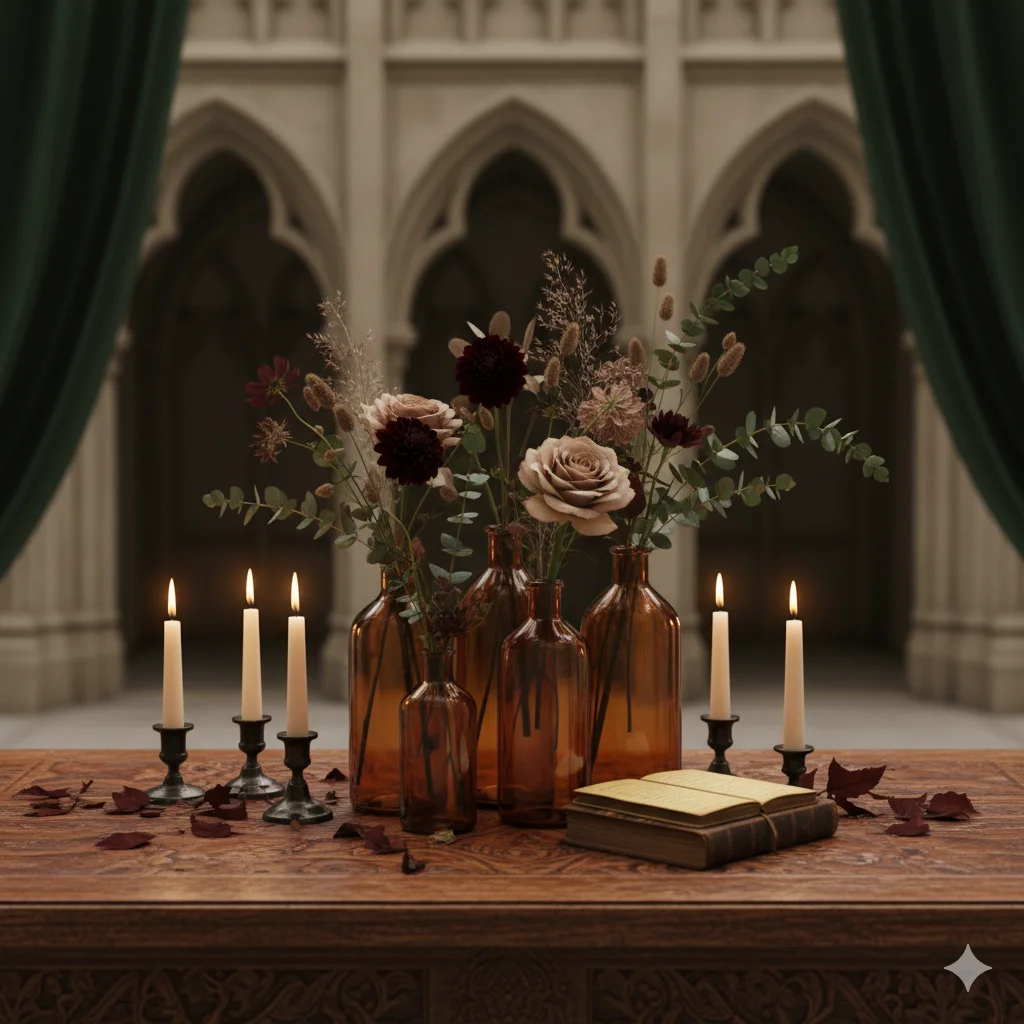
For a warmer interpretation of the trend, combine dark flowers with amber glass.
Use small amber bottles or vintage-inspired glass vases filled with burgundy and plum blooms. Add warm candles and gold or brass details.
The amber tones soften the darker flowers and create a beautiful glow when candlelight passes through the glass.
6. Deep Red Flowers with Ivory Accents
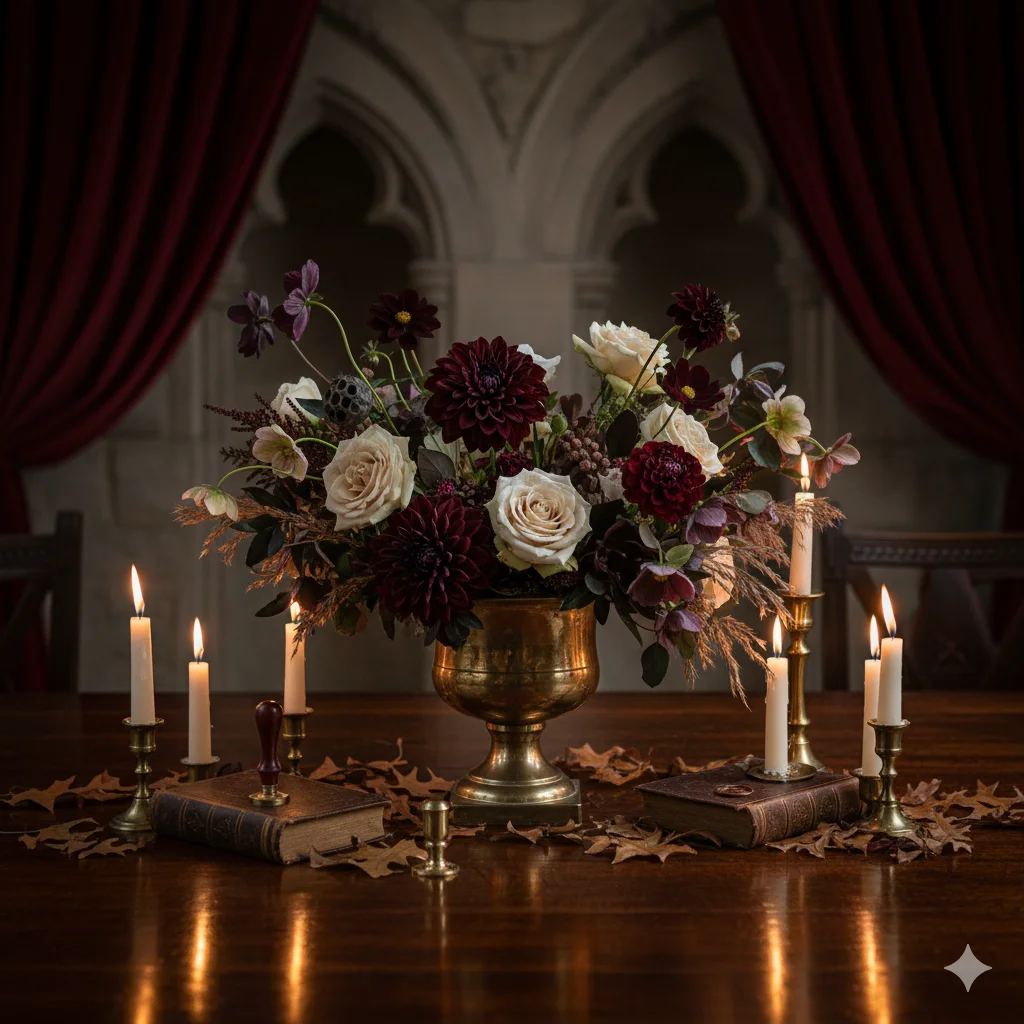
If you love burgundy but worry that an entirely dark palette will feel too heavy, introduce ivory flowers.
A mixture of burgundy roses, cream blooms, muted greenery, and antique brass creates a romantic contrast.
This is also a good option for couples who want a Dark Academia-inspired wedding without making the reception look overtly gothic.
7. Moody Banquet Table with Layered Florals
For a long reception table, avoid placing one huge arrangement in the middle.
Instead, create a rhythm using several low floral arrangements, bud vases, and candles.
Alternate burgundy and plum flowers with ivory candles and small vintage details.
The repeated elements visually connect the entire table while keeping the centerpiece arrangement manageable.
Choosing the Right Vase for Your Centerpiece
The vessel can completely change the personality of your flowers.
Antique brass urns work beautifully with large, dramatic arrangements and grand reception spaces.
Vintage ceramic vases create a softer, collected appearance and pair naturally with loose garden-style flowers.
Amber glass bottles are ideal for small arrangements and minimalist tables.
Clear vintage glass keeps the overall look lighter and lets the flowers remain the main focus.
Low bowls are excellent for guest tables because they allow better visibility across the table.
Rather than using identical vessels everywhere, consider using two or three complementary styles. A slightly mismatched collection can make the reception feel more personal and established over time.
How Many Flowers Do You Need Per Table?
The right amount depends on the size and shape of your table.
For a small round table, one medium centerpiece may be enough.
For a larger 6–8 person round table, you can use one fuller low arrangement or a cluster of smaller vessels.
Long banquet tables benefit from several low arrangements spaced along the center.
Sweetheart tables can handle one or two more substantial arrangements because there is usually less concern about blocking guests’ view.
Cocktail tables often look better with a small bud vase or compact floral cluster rather than a large arrangement.
Before finalizing your flowers, always consider height and visibility. A centerpiece may look beautiful in a photograph but become frustrating if guests have to lean around it to have a conversation.
How to Keep Dark Flowers From Looking Too Heavy
This is one of the most important styling considerations when working with deep floral colors.
Avoid combining every dark element at once.
For example, burgundy flowers, black tablecloths, black candles, dark plates, and very dark glassware can make the entire table feel visually dense.
Instead, introduce contrast.
Try:
Deep flowers + ivory candles + warm brass + muted greenery
or
Burgundy blooms + cream flowers + amber glass + dark wood
The contrast allows the flowers to remain dramatic while the rest of the table provides breathing room.
Fresh Flowers vs. Dried Flowers
Both fresh and dried flowers can work beautifully with this aesthetic, but they create different effects.
Fresh flowers have a softer, more romantic appearance and are ideal when you want lush petals and a traditional wedding-flower feel.
Dried flowers add texture and a naturally aged appearance. Brown grasses, dried leaves, seed pods, and preserved foliage can make a centerpiece feel especially appropriate for autumn or Dark Academia styling.
You can also combine the two.
A fresh burgundy rose surrounded by dried brown foliage can create more visual interest than an arrangement made entirely from fresh flowers.
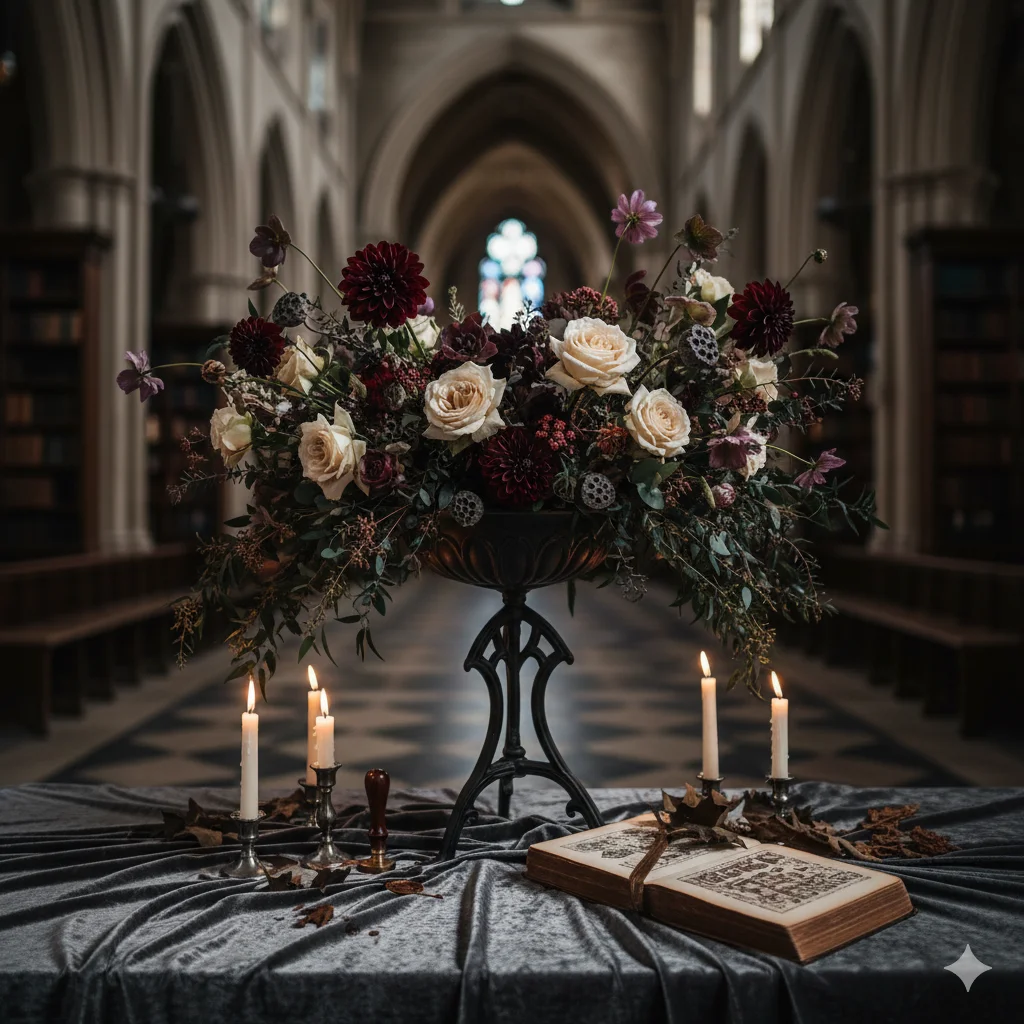
If budget is a concern, dried elements can also be useful as fillers, allowing you to use fewer expensive fresh blooms.
How to Save Money on Moody Wedding Centerpiece
Beautiful wedding flowers do not necessarily require enormous arrangements.
One of the easiest ways to control costs is to use expensive flowers selectively.
Instead of filling an entire centerpiece with premium roses or dahlias, use them as focal flowers and fill the surrounding space with seasonal greenery, less expensive blooms, or dried elements.
Other ideas include:
- Choose flowers that are naturally in season.
- Use several small arrangements instead of one oversized centerpiece.
- Mix fresh and dried botanical elements.
- Use candles to fill visual gaps between floral arrangements.
- Repurpose ceremony flowers at the reception.
- Use bud vases for some tables.
- Ask your florist which burgundy or plum flowers are most affordable during your wedding season.
The goal is to create the impression of abundance, not necessarily use a huge quantity of flowers.
Common Moody Wedding Centerpiece Mistakes
Making Everything Too Dark
A moody wedding does not mean every element needs to be black or burgundy. Include lighter flowers, candles, glass, or metallic accents for balance.
Using Too Many Flower Varieties
A long list of unrelated flowers can make the centerpiece look busy. Choose a few complementary shapes and textures instead.
Forgetting Guest Visibility
Tall centerpieces can interfere with conversation. For dining tables, low arrangements are usually a safer choice.
Ignoring the Venue
A floral arrangement should work with the architecture and existing décor. A grand brass urn may look perfect in a historic hall but feel out of place in a bright minimalist venue.
Copying a Pinterest Arrangement Exactly
Inspiration photographs are useful, but your florist may need to substitute flowers based on season, availability, and budget.
Instead of requesting an exact copy, communicate the color palette, mood, flower types, vessel style, and overall shape.
Seasonal Flowers for a Moody Wedding
Autumn is naturally suited to this color palette. Deep red dahlias, burgundy blooms, dried hydrangeas, chrysanthemums, berries, and earthy foliage can create a rich seasonal arrangement.
Winter weddings can lean into burgundy roses, deep red blooms, evergreen foliage, dried elements, and warm candlelight.
For spring or summer weddings, use plum and burgundy flowers more selectively. Pair them with cream, blush, dusty greenery, or lighter seasonal flowers to keep the arrangement feeling fresh.
Always check flower availability with your florist because specific varieties and colors can vary by location and season.
A Simple Budget-Friendly Centerpiece Example
You can recreate the moody look without filling an entire vase with expensive flowers.
Start with a vintage-style vase or amber bottle. Add one or two burgundy focal flowers, then surround them with seasonal greenery and a few smaller plum or cream blooms.
Place the arrangement in the center of the table and surround it with two or three ivory taper candles.
Add a subtle vintage detail, such as a small stack of old-looking books or an antique brass object.
The result is layered and atmospheric without requiring a huge floral arrangement.
Final Styling Tips for a Dark Academia Wedding
The most successful moody wedding centerpieces are not necessarily the biggest ones. They are the arrangements where every element feels connected.
Think about the relationship between the flowers, table linens, candles, glassware, vessels, and venue.
If the flowers are particularly dark, introduce lighter details. If the vase is ornate, keep the surrounding décor slightly simpler. If the centerpiece is large, allow the rest of the table to breathe.
For a true Dark Academia wedding aesthetic, incorporate literary and vintage touches carefully rather than turning the table into a collection of props. A few old books, brass candlesticks, aged vessels, or handwritten details can be enough.
Deep red, burgundy, brown, and plum flowers already provide plenty of character.
Final Thought
Moody wedding centerpieces are about creating atmosphere as much as arranging flowers. Deep burgundy roses, plum blooms, brown botanical textures, warm candles, and vintage vessels can transform an ordinary reception table into something romantic and memorable.
Whether you choose an overflowing floral urn, a collection of minimalist bud vases, or a low arrangement designed for easy conversation, the key is balance.
Let the flowers provide the drama, then use candlelight, ivory accents, antique textures, and subtle literary details to complete the story. For a Dark Academia-inspired celebration, that combination creates a wedding tablescape that feels intimate, timeless, and beautifully unlike the ordinary.
FAQ: Moody Wedding Centerpiece Ideas
How much do moody wedding centerpieces cost per table?
Costs vary widely depending on table size, flower choice, and season, so there is no single figure. To control spending, use expensive blooms selectively as focal flowers rather than filling the whole arrangement with them, choose flowers that are naturally in season, and fill visual gaps with candles and dried elements. Ask your florist which burgundy or plum flowers are most affordable during your wedding season.
What are the best flowers for a moody wedding palette?
Burgundy roses are a classic focal choice, with plum dahlias, scabiosa, and lisianthus adding softer drama. Dried foliage, seed heads, branches, and preserved grasses bring brown, textured tones that suit vintage or Dark Academia weddings. Always check availability with your florist, since specific varieties and colors vary by season.
Should I DIY my wedding centerpieces or hire a florist?
The formula of 1 focal flower + 2 supporting blooms + textured foliage + vintage vessel + candlelight + one literary detail works well for DIY, especially simpler designs like bud-vase clusters. A florist is worth it for large arrangements such as Victorian urns and for reliably sourcing seasonal flowers. Either way, communicate the color palette, mood, flower types, vessel style, and overall shape rather than asking for an exact copy of an inspiration photo.
How do I keep dark flowers from looking too heavy?
Avoid combining every dark element at once — for example, don’t pair burgundy flowers with black tablecloths, black candles, and dark glassware. Instead, introduce contrast with ivory candles, warm brass, cream flowers, amber glass, or muted greenery. The contrast allows the flowers to remain dramatic while the rest of the table provides breathing room.
Which flowers are best for a moody wedding in each season?
Autumn is naturally suited to this palette, with deep red dahlias, burgundy blooms, dried hydrangeas, and brown foliage. Winter weddings can lean into burgundy roses, deep red blooms, evergreen foliage, and dried elements. For spring or summer, use plum and burgundy flowers more selectively alongside cream and lighter blooms. Always confirm availability with your florist.


