
Moroccan Garden Design: Earthy, Exotic & Courtyard-Focused Retreats
Moroccan garden design is rooted in history, climate, and culture. Traditionally created as inward-facing courtyards rather than outward landscapes, these gardens are intimate, sensory-rich spaces meant to provide privacy, shade, and spiritual calm. Unlike open European garden styles, a Moroccan garden feels like a hidden oasis — a place where earthy materials, water, fragrance, and craftsmanship come together in perfect balance.
This guide explores how to design an authentic Moroccan garden that feels layered, tranquil, and timeless, while still being adaptable for modern homes and outdoor spaces.
The Philosophy Behind Moroccan Gardens
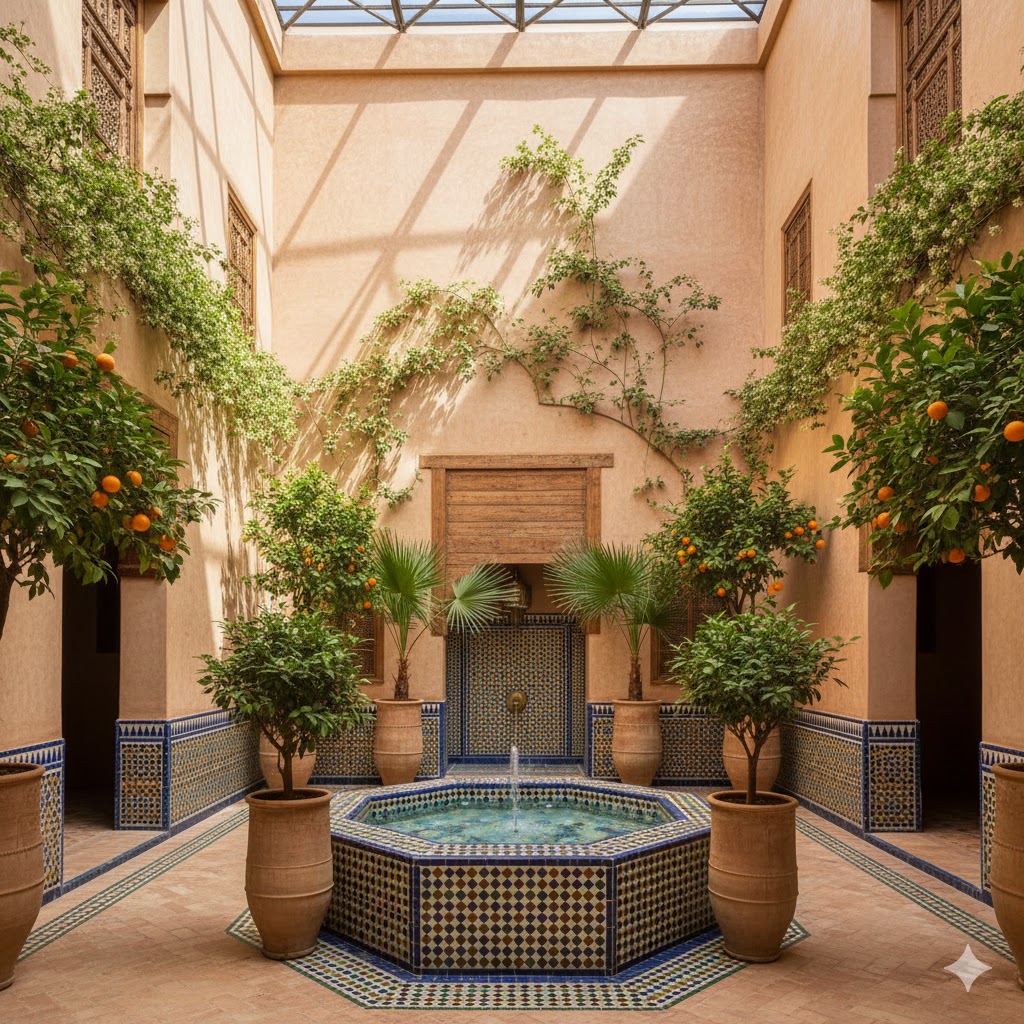
Moroccan gardens are heavily influenced by Islamic garden traditions, where nature is seen as a reflection of paradise. The emphasis is not on sweeping lawns or open views, but on enclosure, symmetry, and sensory experience. Walls protect the space from heat and noise, while plants, water, and shade create a cool, meditative atmosphere.
Every element has a purpose:
- Walls and courtyards offer privacy and temperature control
- Water cools the air and adds soothing sound
- Plants provide fragrance, texture, and symbolism
- Tiles and stone reflect craftsmanship and heritage
The result is a garden that feels deeply personal and restorative.
Courtyard-Centered Moroccan Garden Layouts
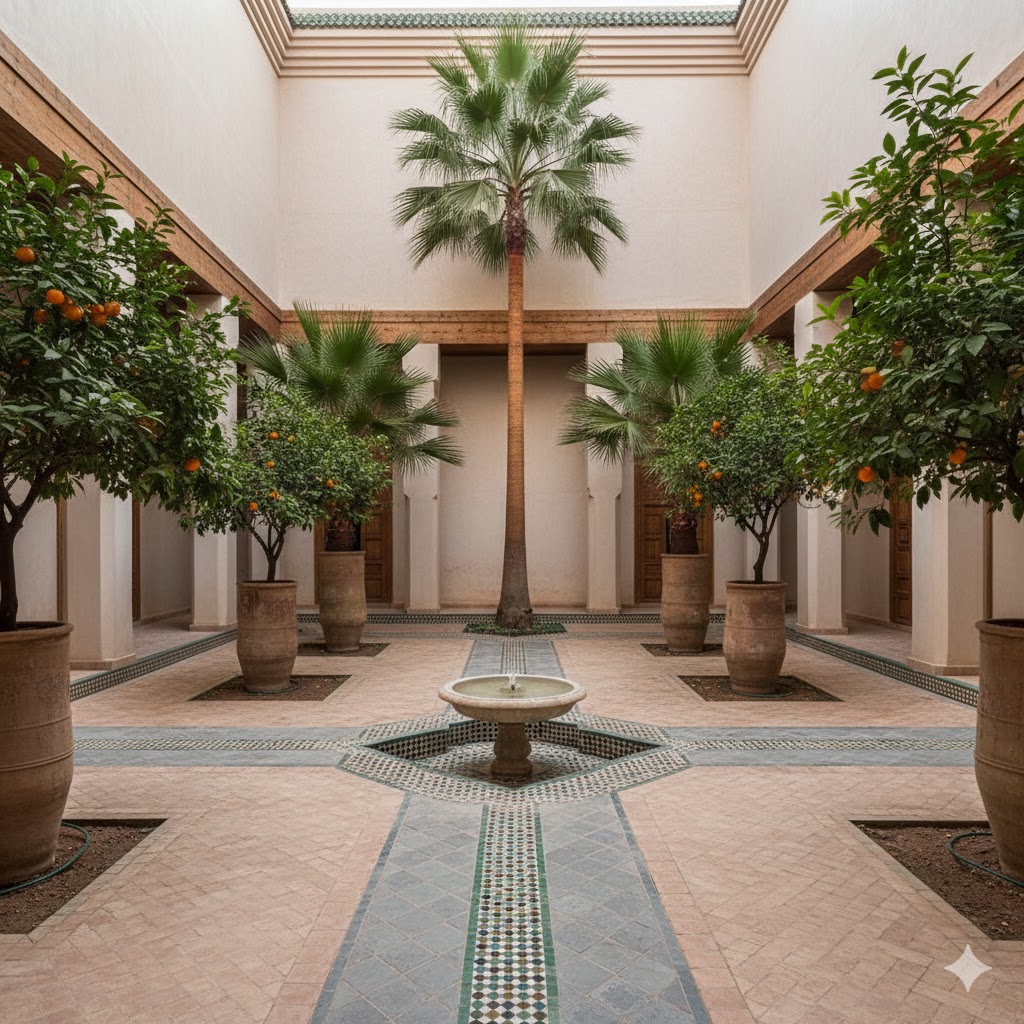
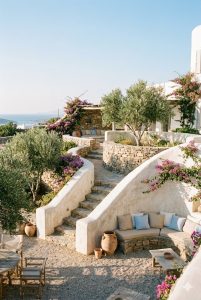
At the heart of Moroccan garden design is the courtyard. Whether large or small, the garden is typically enclosed or semi-enclosed by walls, archways, or surrounding rooms. This inward focus makes Moroccan gardens ideal for patios, inner courtyards, rooftop terraces, and even compact urban spaces.
Common layout features include:
- A central focal point, often a fountain or tiled water bowl
- Symmetry or balanced pathways radiating outward
- Seating built into walls or tucked into shaded corners
- Narrow walkways lined with plants and mosaic details
Even in modern homes, this courtyard approach can be recreated using privacy screens, tall planters, pergolas, or stucco walls.
Earthy Materials Used in Moroccan Garden Design
Material choice is essential to achieving an authentic Moroccan look. Rather than polished finishes, Moroccan gardens favor raw, tactile surfaces that age beautifully over time.
Key materials include:
- Terracotta tiles and pots for warmth and grounding
- Natural stone or tadelakt-style plaster for walls and floors
- Carved wood or cedar for doors, pergolas, and screens
- Wrought iron for lanterns, gates, and furniture details
Layering these materials creates depth and visual richness, especially when paired with handcrafted imperfections rather than factory-perfect finishes.
Zellige Tiles & Mosaic Accents in Moroccan Gardens
One of the most iconic features of Moroccan gardens is zellige tilework. These hand-cut tiles are traditionally used around fountains, along steps, on benches, or as decorative wall panels.
To use tiles effectively:
- Keep them as accent features, not overwhelming surfaces
- Choose traditional colors like cobalt blue, emerald green, soft white, and earthy terracotta
- Mix geometric patterns with plain plaster walls for contrast
If authentic zellige tiles are not accessible, mosaic-style ceramic tiles or patterned outdoor tiles can achieve a similar visual impact.
Water Features & Fountains: The Soul of the Moroccan Garden

Water plays a central role in Moroccan garden design. Beyond beauty, it provides cooling, movement, and sound — essential in warm climates.
Popular water elements include:
- Central fountains with tiled basins
- Shallow reflecting pools in courtyards
- Simple stone or brass bowls with gently flowing water
The sound of trickling water enhances the sense of calm and masks outside noise, making even small gardens feel secluded and serene.
Combining Multiple Water Features in a Single Space
Many garden designers successfully integrate more than one water feature into a single space to create a dynamic and layered environment. The key is to use design principles to ensure they complement rather than compete with each other.
Here are some ways Moroccan elements are commonly combined in garden design:
- Connecting Elements: A common technique is to connect different types of features. For example, a waterfall or a stream can flow directly into a larger pond, creating a natural progression and a sense of movement.
- Diverse Sensory Experiences: You can combine features to offer different sounds and visuals. A still, reflecting pool provides a sense of calm, while a nearby bubbling fountain or cascading waterfall adds active sound and motion.
- Design Cohesion: Multiple features can work together when they share a similar style or material. For instance, a series of contemporary fountains or water bowls made from the same stone or metal can create a unified modern look throughout a garden.
- Focal Points and Backgrounds: One water feature can serve as a main focal point, like a large fountain, while another, smaller feature, such as a wall fountain or a birdbath, acts as a background element or is placed in a different “room” of the garden.
- Integrated Designs: Some elaborate designs are built with multiple integrated water sources. For example, a single stone wall can be designed to feature multiple distinct water spouts or cascades.
When planning for more than one water feature, important design principles include considering the scale and proportion of the features relative to the garden size and ensuring a sense of balance so that one element does not overpower the others.
Warm Color Palettes in Moroccan Garden Styling
Moroccan gardens are grounded in warm, earthy tones that reflect the surrounding desert landscape. Think sunbaked walls and natural clay, balanced with vibrant pops of color.
Earthy Base Colors Inspired by Desert Landscapes:
- Sand, beige, clay, and soft white
- Warm browns and muted terracotta
Bold Moroccan Accent Colors:
- Deep blues and turquoise
- Emerald green
- Saffron yellow or burnt orange
These colors appear in tiles, cushions, planters, and painted details, adding energy without overwhelming the space.
Plant Selection: Fragrance, Shade & Structure
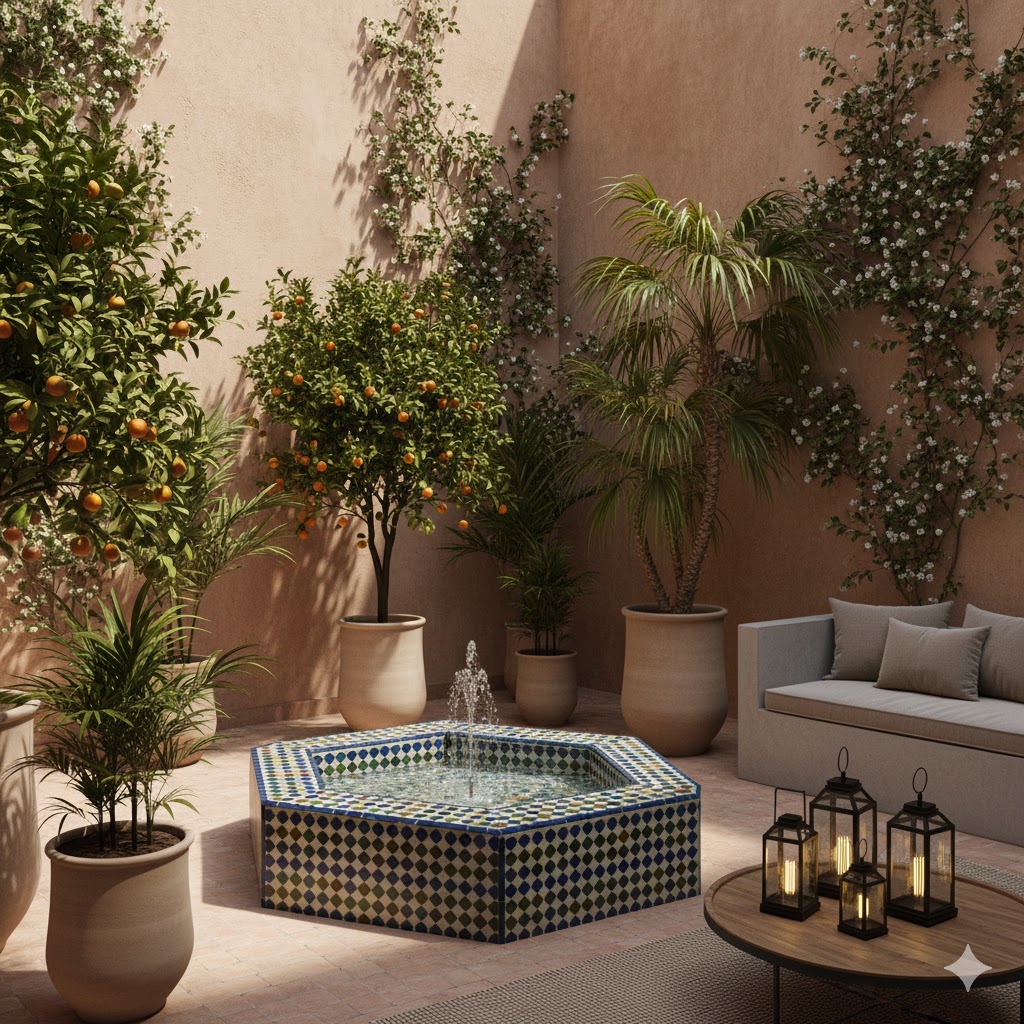
Plants in Moroccan gardens are chosen for more than appearance. Fragrance, symbolism, and resilience in heat are equally important.
Traditional Plant Choices
- Palm trees or dwarf palms for height and filtered shade
- Citrus trees such as orange, lemon, or lime for scent and beauty
- Jasmine and orange blossom for evening fragrance
- Bougainvillea trained along walls or arches
- Succulents and drought-tolerant plants for structure and low maintenance
Plants are often placed in terracotta pots, raised beds, or narrow planting strips rather than large open soil areas.
Moroccan Garden Shaded Seating & Outdoor Living
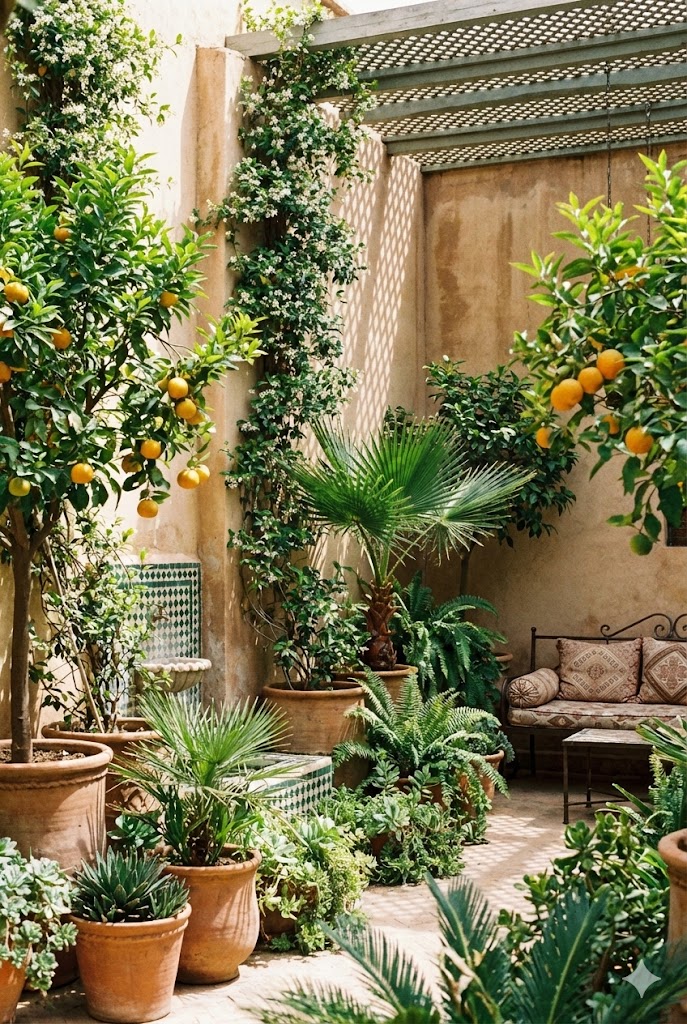
Moroccan gardens are designed to be lived in, not just admired. Seating areas are often shaded and intimate, encouraging long conversations and quiet reflection.
Ideas for Moroccan courtyard seating:
- Built-in plaster benches with patterned cushions
- Low wooden tables paired with floor seating
- Wrought iron chairs softened with textiles
Layer cushions, rugs, and throws in rich textures and patterns to enhance comfort and visual warmth.
Moroccan Garden Lighting for Evening Ambience
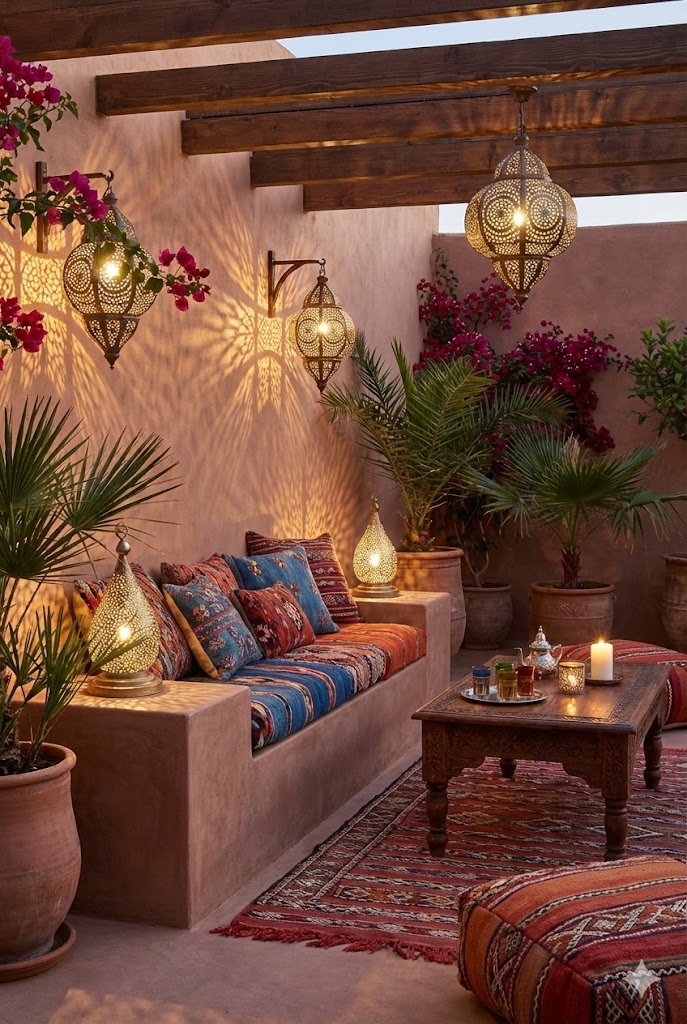
As the sun sets, lighting transforms a Moroccan garden into a magical retreat. Soft, ambient light is preferred over harsh brightness.
Lighting ideas include:
- Hanging metal lanterns with pierced patterns
- Candle clusters in glass holders
- Wall-mounted sconces with warm bulbs
The goal is to create shadows, movement, and glow — enhancing the garden’s mystery rather than fully illuminating it.
Adapting Moroccan Gardens for Modern Homes
You don’t need a traditional riad or large courtyard to embrace Moroccan garden style. Even balconies, patios, and small backyards can incorporate its essence.
Start small by adding:
- A tiled tabletop fountain
- Terracotta planters with citrus or jasmine
- Patterned cushions and lanterns
- A warm-toned wall or privacy screen
The key is intention: creating a space that feels enclosed, layered, and deeply atmospheric.
Modern Moroccan Garden Trends: Bringing Tradition into Contemporary Spaces
While traditional Moroccan gardens are rooted in courtyard layouts and historic design, modern adaptations are making this exotic style more accessible and versatile for today’s homes. Contemporary Moroccan gardens maintain the essence of warmth, sensory richness, and craftsmanship but adapt to urban, compact, and lifestyle-focused spaces.
1. Minimalist Moroccan Courtyard
Modern Moroccan gardens are embracing cleaner lines and simplified layouts. Instead of elaborate symmetry everywhere, designers focus on one or two statement features, like a central fountain or a tile-clad wall, paired with sleek planters and uncluttered seating. This trend makes the style easier to integrate into city homes, small patios, or rooftop terraces without feeling overwhelming.
2. Sustainable & Drought-Tolerant Planting
Water conservation and low-maintenance gardening are key trends. Homeowners are choosing succulents, palms, olive trees, and drought-resistant shrubs over high-maintenance flowers. Citrus trees in containers remain popular, but now paired with native plants to reduce water use. This approach maintains the lush, aromatic appeal while being eco-friendly.
3. Mix of Traditional & Modern Materials
Modern Moroccan gardens are blending old-world charm with contemporary materials. For instance, concrete planters, metal screens, and minimalist pergolas complement traditional elements like terracotta pots, zellige tiles, and carved wood furniture. This fusion gives the garden a fresh, updated aesthetic while honoring its cultural roots.
4. Multi-Functional Outdoor Spaces
Today, Moroccan gardens are not just for passive enjoyment—they double as outdoor lounges, dining areas, or yoga and meditation zones. Modular seating, portable lanterns, and movable planters allow homeowners to transform the garden from a quiet sanctuary during the day into a social retreat in the evening.
5. Accent Lighting & Evening Ambience
Lighting has become a major trend in modern Moroccan gardens. Contemporary designs use LED lanterns, fairy lights, and in-ground spotlights to highlight tilework, fountains, and plants. The goal is to create soft, magical illumination that extends usability into the evening while enhancing the exotic, serene atmosphere.
By blending these modern trends with classic Moroccan elements, gardens feel both authentic and adaptable, offering homeowners a space that’s beautiful, functional, and timeless. Whether you have a sprawling courtyard or a small balcony, incorporating these trends allows your Moroccan garden to evolve into a stylish, contemporary oasis.
Why Moroccan Gardens Feel Timeless
Moroccan garden design endures because it prioritizes emotion over trends. It engages all five senses, offers refuge from the outside world, and celebrates craftsmanship and nature in equal measure.
Whether styled traditionally or blended with modern elements, a Moroccan garden remains a sanctuary — earthy, exotic, and endlessly inviting.
Explore More Countryside & Rustic Garden Inspiration
If you’re drawn to the earthy textures, cultural richness, and courtyard-focused calm of Moroccan garden design, continue your inspiration journey with
our pillar guide 4 Countryside and Rustic Garden Styles.
This in-depth post explores a range of rustic, heritage-inspired garden aesthetics—from Mediterranean and provincial landscapes to warm, timeworn countryside retreats—helping you discover the outdoor style that best complements your home and lifestyle.
Related
- French Countryside Garden: Chic Provincial Charm with Lavender & Stone Paths
- Tuscan Garden Design: Bring the Romance of the Italian Countryside Home
- Traditional Chinese Garden: Timeless Design Ideas for a Peaceful Outdoor Retreat
- Ultimate Guide to Hacienda Style Home Décor (Complete Spanish & Southwestern Lookbook)



One Comment