
Traditional Chinese Garden: Timeless Design Ideas for a Peaceful Outdoor Retreat
A Traditional Chinese Garden is much more than an attractive landscape. Every stone, bridge, pond, and flowering tree is carefully arranged to create harmony between architecture and nature. Inspired by centuries of artistic tradition, these gardens invite visitors to slow down, appreciate changing seasons, and experience peaceful outdoor living.
Unlike formal European gardens that emphasize symmetry, a Classical Chinese Garden celebrates natural beauty through winding pathways, tranquil ponds, ornamental rocks, and carefully framed views. Whether you have a spacious backyard or a compact courtyard, many of these timeless design principles can inspire your own outdoor sanctuary.
In this guide, you’ll discover the defining elements of Chinese Garden Design, the different garden styles, planting ideas, and practical ways to recreate this elegant aesthetic at home.
Table of Contents
What Is a Traditional Chinese Garden?
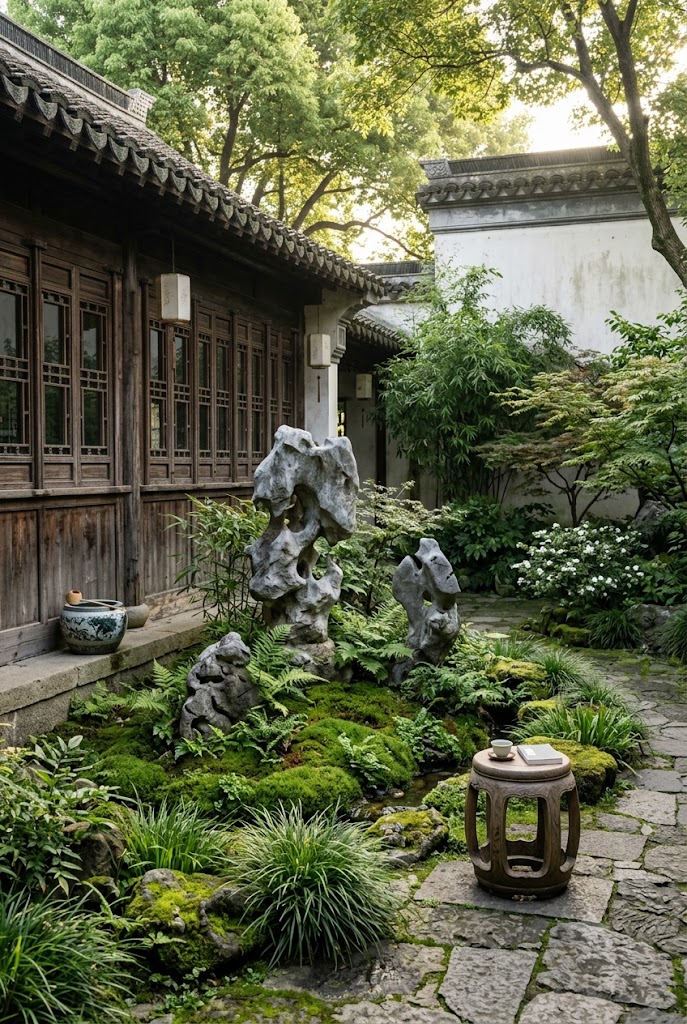
A Traditional Chinese Garden is a carefully designed landscape that combines architecture, water, plants, stone, and open space into one harmonious composition. Rather than displaying nature exactly as it appears, these gardens recreate idealized natural scenery in a compact space.
Every feature has a purpose. Curved pathways encourage slow walks, ornamental rocks represent mountains, ponds symbolize serenity, and pavilions offer peaceful places to rest and admire the surroundings.
The overall feeling is calm, balanced, and deeply connected to nature.
The History Behind Classical Chinese Gardens
The earliest Chinese Scholar Gardens were created more than a thousand years ago by scholars, poets, and artists who wanted peaceful places for reading, painting, writing, and reflection.
Many of the most famous gardens were built during the Ming and Qing Dynasties in southern China, especially around Suzhou. These landscapes became masterpieces of garden design, where architecture and nature blend seamlessly.
Today, these historic gardens continue to inspire landscape designers around the world.
Key Features of Traditional Chinese Garden Design
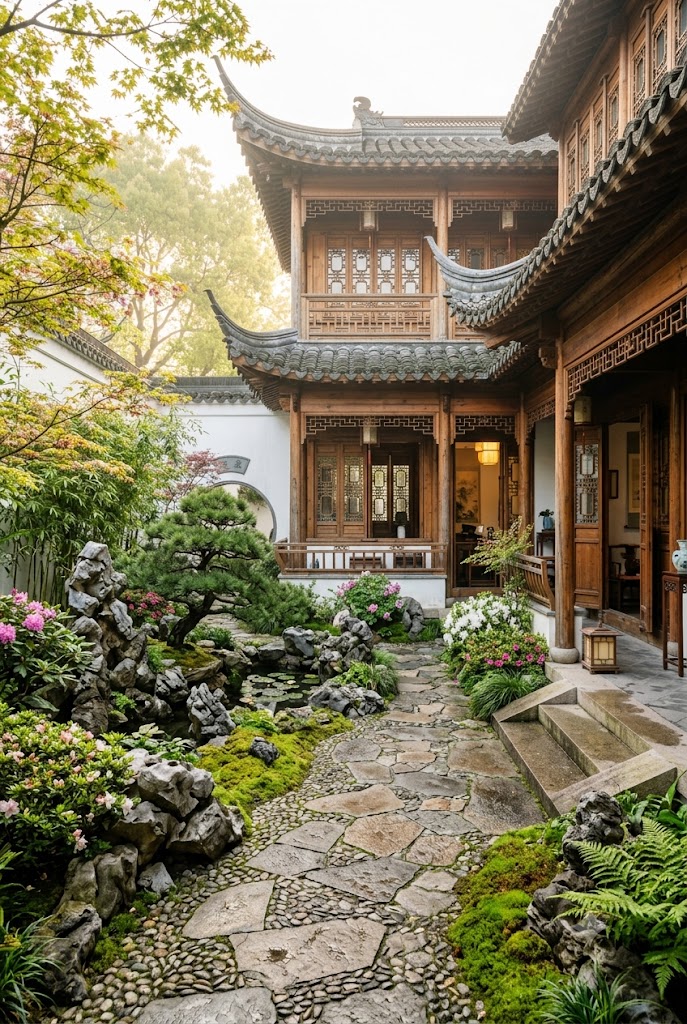
1. Elegant Wooden Architecture
Traditional timber buildings form the heart of many Chinese gardens.
Common structures include:
- Open-air pavilions
- Covered walkways
- Tea houses
- Moon gates
- Courtyard residences
The warm wood tones contrast beautifully with gray tiled roofs and lush greenery, creating an inviting atmosphere throughout the landscape.

2. Peaceful Lotus Ponds and Water Gardens
Water represents tranquility and balance.
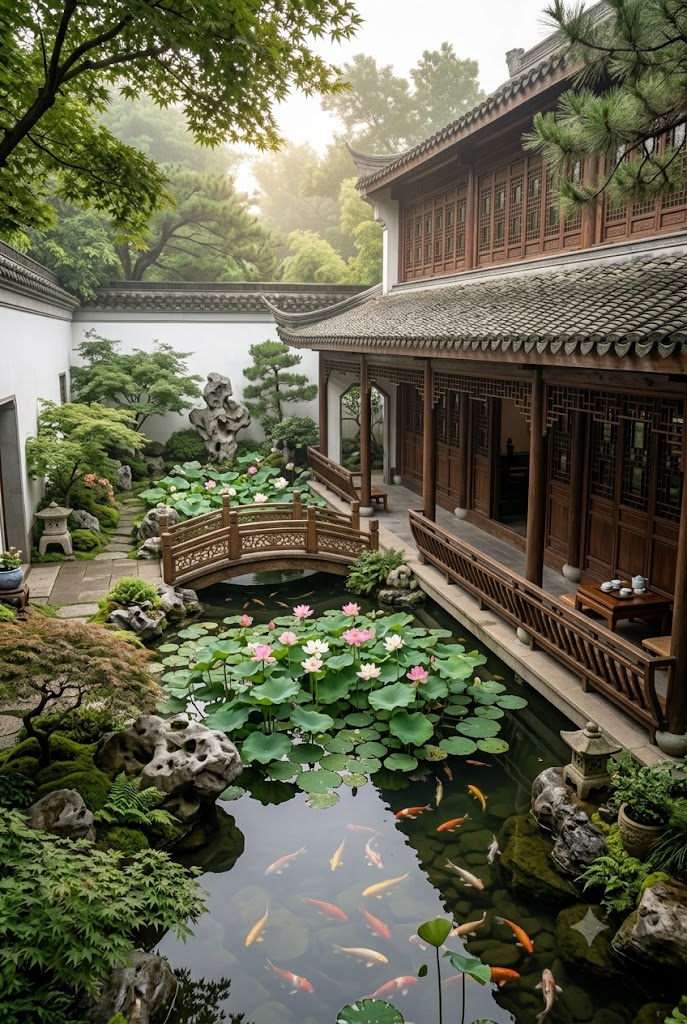
Many Jiangnan Gardens place a large pond at the center of the landscape. Lotus flowers bloom across the water while wooden bridges and pavilions provide beautiful viewpoints from every angle.
Gentle reflections make the garden feel larger and more peaceful.
3. Scholar’s Rocks and Natural Stone Landscapes
Large weathered rocks are one of the defining features of a Chinese Scholar Garden.
These sculptural stones symbolize mountains and create dramatic focal points within the landscape.

Combined with moss, ferns, and flowing water, they bring a sense of age and permanence.
4. Winding Stone Pathways
Unlike straight walkways, Chinese Courtyard Gardens encourage exploration through gently curving paths.
Irregular stone pavers guide visitors toward hidden seating areas, flowering trees, ponds, and scenic viewpoints.

Every turn reveals a new perspective.
5. Traditional Garden Pavilions
A pavilion is often considered the soul of the garden.
Positioned beside a pond or beneath flowering trees, it creates the perfect place to:
- Enjoy afternoon tea
- Read a favorite book
- Practice calligraphy
- Watch seasonal changes
- Entertain guests

These structures blend beautifully into the surrounding landscape.
Different Styles of Traditional Chinese Gardens
Chinese Courtyard Garden
Perfect for enclosed homes, this style emphasizes:
- Stone walkways
- Wooden architecture
- Small rock gardens
- Flowering shrubs
- Quiet seating areas


It creates an intimate retreat where every element feels connected.
Jiangnan Garden
One of the most admired styles of Traditional Chinese Garden Design, the Jiangnan Garden features:
- Large ponds
- Elegant pavilions
- Covered corridors
- Curved bridges
- Lotus flowers
- Sculptural rocks

The goal is to recreate the beauty of lakes and mountains within a private estate.
Chinese Scholar Garden
Designed for artists and scholars, these gardens focus on peaceful contemplation.
Expect to find:
- Reading pavilions
- Bamboo groves
- Ornamental stones
- Small ponds
- Minimal planting
- Carefully framed architectural views

Best Plants for a Traditional Chinese Garden
Choose plants that provide beauty throughout every season.
Popular choices include:
- Bamboo
- Lotus
- Peonies
- Camellias
- Pine trees
- Plum blossoms
- Cherry blossoms
- Japanese maple
- Ferns
- Moss
- Wisteria
- Osmanthus
- Magnolia

Layering evergreen plants with seasonal flowers creates year-round visual interest.
Color Palette Inspired by Chinese Gardens
A balanced color palette enhances the timeless character of the landscape.
Think of:
- Warm natural wood
- Weathered gray stone
- Deep green foliage
- Soft moss green
- Cream blossoms
- Blush pink lotus flowers
- White flowering trees
- Earthy brown pathways
- Charcoal roof tiles

These muted tones create a calming outdoor environment.
How to Create a Traditional Chinese Garden at Home
You don’t need a large estate to enjoy this style.
Start with a few essential elements:
- Install irregular natural stone pathways.
- Add a small pond or water feature.
- Include a simple wooden pergola or pavilion.
- Use ornamental rocks as focal points.
- Plant bamboo and evergreen shrubs.
- Layer moss and ferns beneath trees.
- Add stone lanterns or carved stone stools.
- Create quiet seating areas surrounded by greenery.
- Keep decorations minimal and natural.
Even a modest backyard can capture the peaceful spirit of a Traditional Chinese Garden.
Why Traditional Chinese Gardens Remain Timeless

Unlike trends that come and go, these gardens are designed around enduring principles of harmony, balance, and connection with nature.
Their layered landscapes reveal new details in every season, while water, stone, wood, and plants work together to create an atmosphere of calm. Whether you’re designing a compact Chinese Courtyard Garden or dreaming of a larger Jiangnan Garden with a lotus pond, this timeless style transforms outdoor spaces into peaceful retreats that feel elegant for generations.
Should You Choose a Courtyard Garden or a Lotus Pond Garden?
| If You Have… | Choose… |
|---|---|
| Small enclosed backyard | Chinese Courtyard Garden |
| Medium garden | Scholar Garden |
| Large property | Jiangnan Lotus Pond Garden |
| Low maintenance preference | Stone & bamboo garden |
| Love entertaining | Pavilion with pond |
Instead of trying to recreate every traditional feature, focus on one focal point such as a lotus pond or stone courtyard. Even a single authentic element can establish the overall aesthetic.
If your climate doesn’t support lotus plants, use a ceramic water bowl with floating aquatic plants to capture the same peaceful atmosphere with less maintenance.
Comparison of Chinese Garden and Japanese Garden
| Feature | Chinese Garden | Japanese Garden |
|---|---|---|
| Main Focus | Harmony of architecture & nature | Simplicity & Zen |
| Water | Large ponds & lotus | Streams & koi ponds |
| Buildings | Wooden pavilions | Tea houses |
| Rocks | Scholar’s rocks | Natural boulders |
| Plants | Bamboo, lotus, peonies | Maple, moss, pine |
Traditional Chinese Garden Design Principles
- Design for balance rather than symmetry.
- Let stone, water, wood, and plants work together naturally.
- Frame beautiful views with gateways and windows.
- Create winding pathways that encourage slow exploration.
- Layer plants of different heights for depth.
- Leave open space so each feature can be appreciated.
- Use authentic natural materials like timber, stone, gravel, and clay tiles.
Mistakes to Avoid
- Using too many bright flowers
- Choosing modern concrete pavers
- Ignoring natural asymmetry
- Overdecorating with ornaments
- Mixing unrelated garden styles
- Using tropical plants that don’t suit your climate
Conclusion
A Traditional Chinese Garden is more than beautiful landscaping—it’s a living work of art. By blending graceful wooden architecture, winding stone paths, tranquil lotus ponds, scholar’s rocks, and thoughtfully chosen plants, you can create an outdoor sanctuary that encourages relaxation and reflection.
Whether you incorporate a simple courtyard with natural stone and bamboo or design a water-focused Chinese Scholar Garden complete with pavilions and bridges, these timeless ideas bring lasting beauty and serenity to any home. Let the principles of balance, simplicity, and harmony inspire your next garden project and create a space where every season can be enjoyed in peace.
FAQ: Traditional Chinese Garden
What is a traditional Chinese garden?
A traditional Chinese garden is a carefully designed landscape that combines architecture, water, plants, stone, and open space. Every feature has a purpose: curved pathways encourage slow walks, while ornamental rocks represent mountains. Unlike formal European gardens that emphasize symmetry, a Chinese garden celebrates natural beauty through winding pathways, tranquil ponds, and ornamental rocks.
What are the key features of a traditional Chinese garden?
The defining features include elegant wooden architecture such as pavilions, covered walkways, tea houses, and moon gates, along with peaceful lotus ponds that represent tranquility and balance. Sculptural scholar’s rocks symbolize mountains and create dramatic focal points, while winding stone pathways encourage exploration. Traditional garden pavilions, often called the soul of the garden, sit beside ponds or flowering trees as perfect spots for tea and reflection.
What plants work best in a traditional Chinese garden?
Popular choices include bamboo, lotus, peonies, camellias, pine trees, plum blossoms, cherry blossoms, Japanese maple, ferns, moss, wisteria, osmanthus, and magnolia. Choose plants that provide beauty throughout every season, and layer evergreen plants with seasonal flowers for year-round visual interest.
How can I create a Chinese garden in a small backyard?
You don’t need a large estate to enjoy this style. Start with a few essential elements: install irregular natural stone pathways, add a small pond or water feature, include a simple wooden pergola or pavilion, and use ornamental rocks as focal points. The Chinese Courtyard Garden style is perfect for enclosed homes and small backyards, creating an intimate retreat where every element feels connected.
What is the difference between a Chinese garden and a Japanese garden?
The main focus of a Chinese garden is the harmony of architecture and nature, featuring large ponds with lotus flowers, wooden pavilions, and scholar’s rocks. A Japanese garden, by contrast, emphasizes simplicity and Zen with streams and koi ponds, tea houses, and natural boulders. Both styles use plants like bamboo and maple, but Chinese gardens tend to be more architecturally elaborate while Japanese gardens favor minimalism.
Related
- Courtyard Design Ideas from Around the World: Global Styles for Your Outdoor Space
- Designing a Japandi Garden Oasis: Minimal Scandinavian Calm Meets Zen Serenity
- 12 Stunning 1930s Shanghai Interior Design Ideas for Timeless Luxury
- Nostalgic Elegance: How to Bring 1930s Shanghai Vintage Charm into Your Modern Home
- 16 Chinese Interior Design Ideas That Blend Tradition with Modern Luxury







3 Comments