10 Ways to Style a Moroccan Living Room for Exotic Charm
Moroccan interior design has long been admired for its vibrant colors, intricate patterns, and eclectic mix of textures. A Moroccan living room can instantly transform a home into a cozy oasis filled with exotic charm and warmth. Whether you’re designing a new space or refreshing your current décor, Moroccan-inspired interiors offer endless inspiration with bold colors, luxurious textiles, ornate lanterns, and handcrafted details.
If you’ve been searching for ways to bring Moroccan flair into your home, here are 10 ways to style a Moroccan living room that balances comfort, culture, and sophistication.
1. Embrace Rich and Vibrant Colors
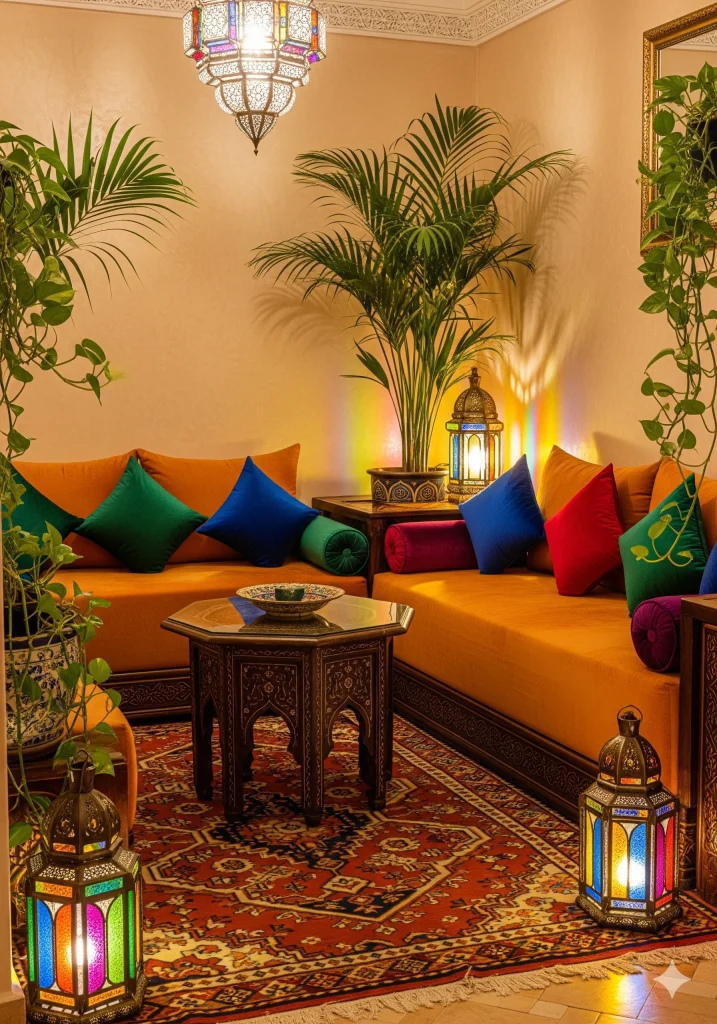
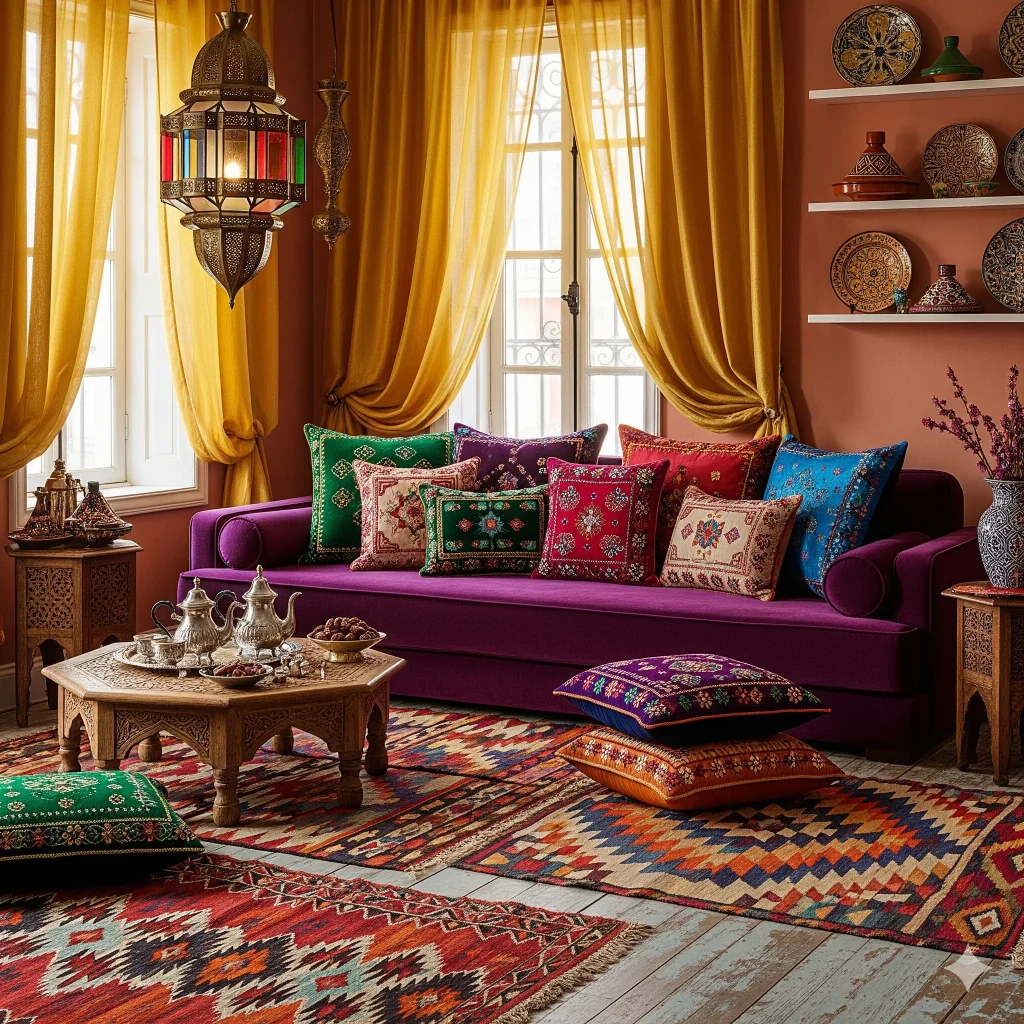
A Moroccan living room is never shy about color. Think deep jewel tones such as emerald green, sapphire blue, ruby red, and golden yellow. Pair these with earthy terracotta, sand, and beige tones for balance. These vibrant hues create a layered, dramatic effect that feels luxurious and inviting. To avoid overwhelming the room, you can incorporate bright Moroccan colors through throw pillows, accent walls, rugs, or patterned curtains.
2. Add Intricate Moroccan Rugs
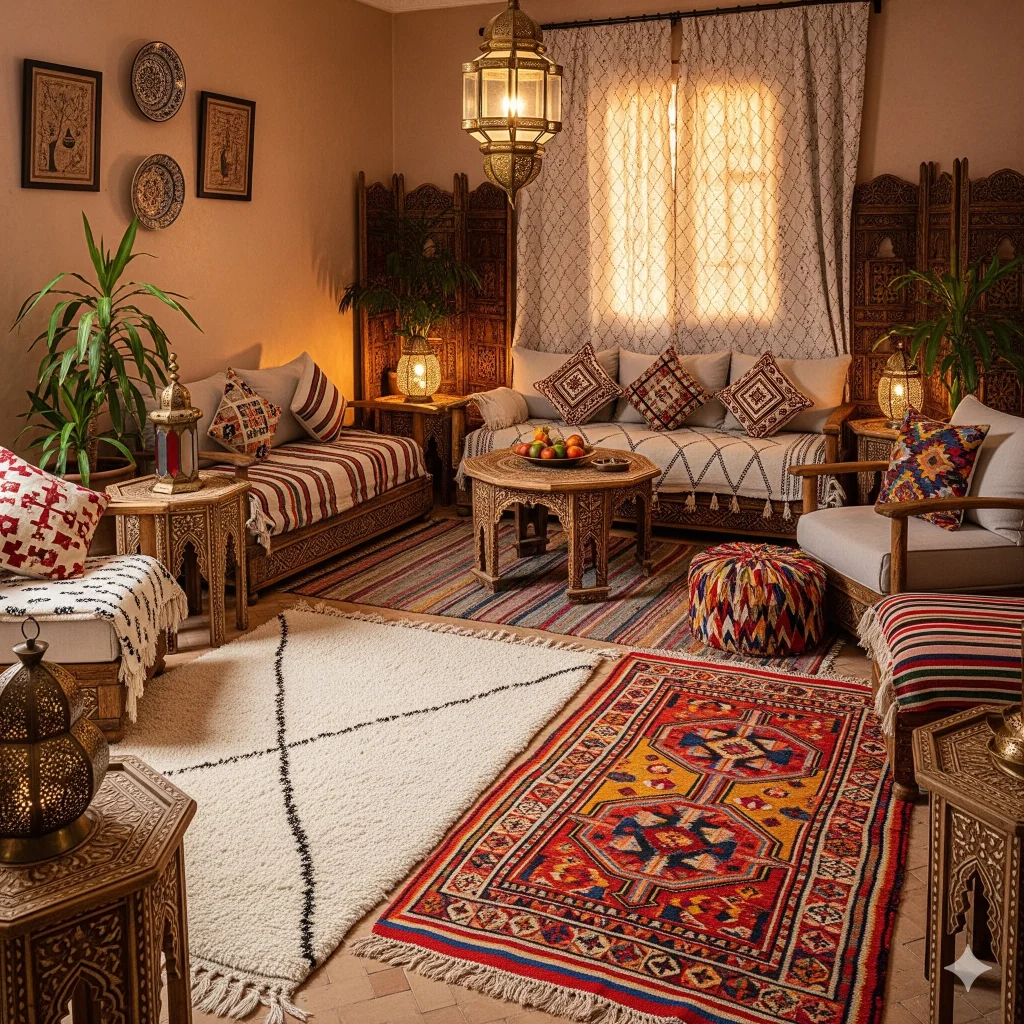
No Moroccan-style living room is complete without an authentic rug. Traditional Moroccan rugs—such as Beni Ourain, Kilim, or Boujad—feature bold geometric shapes, diamond motifs, and soft textures that anchor the room. Layering multiple rugs is also a signature Moroccan décor trick that brings coziness and depth to the space. Place one large rug as the centerpiece and then overlap smaller rugs in different colors and patterns for a true Moroccan-inspired interior.
3. Incorporate Low Seating and Floor Cushions
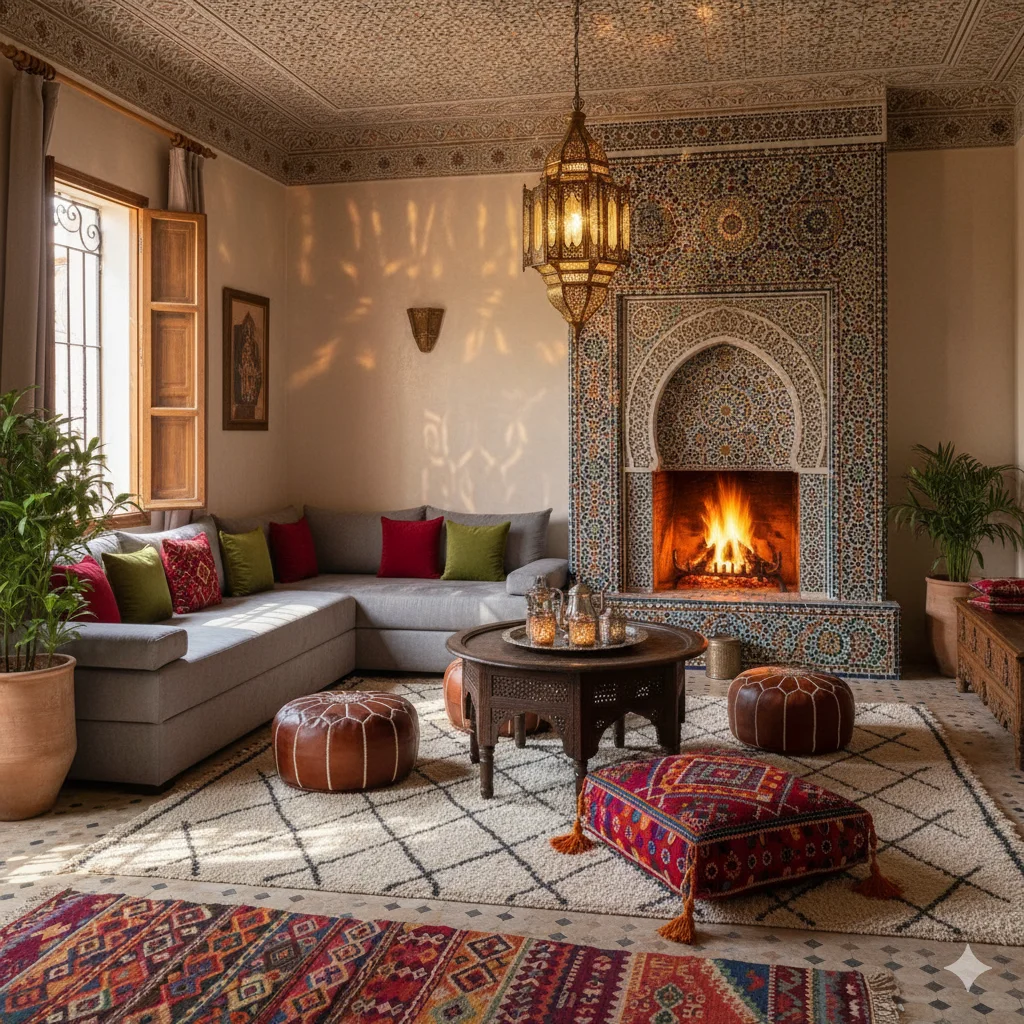
Moroccan living rooms often prioritize comfort and hospitality, which is why low seating is a must. Swap out bulky sofas for low-rise couches, floor cushions, poufs, and ottomans. A grouping of large, plush floor cushions creates an intimate and inviting seating arrangement. Moroccan leather poufs, especially in shades of gold, silver, or caramel brown, are not only practical but also double as stylish accents.
4. Use Moroccan-Inspired Lanterns and Lighting
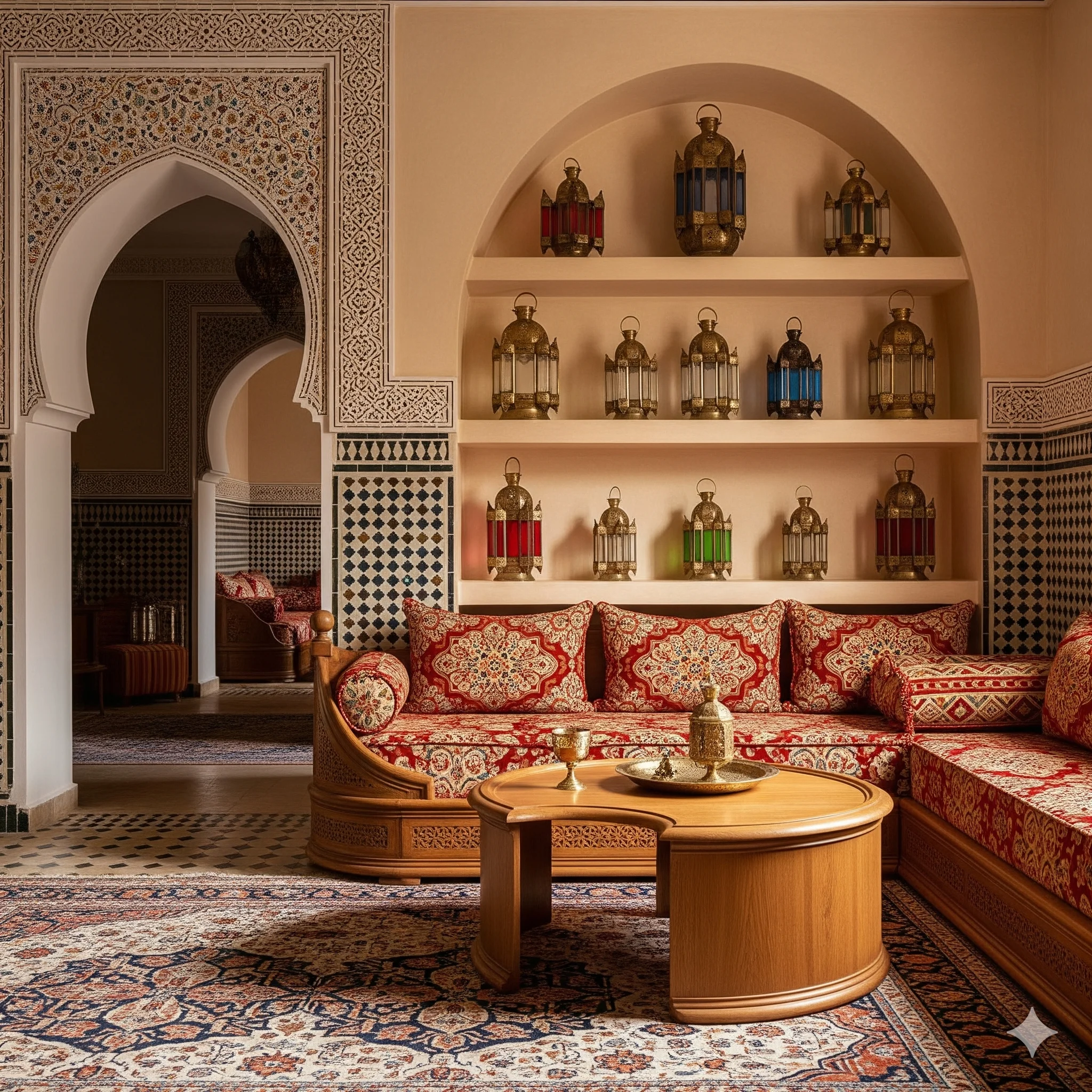
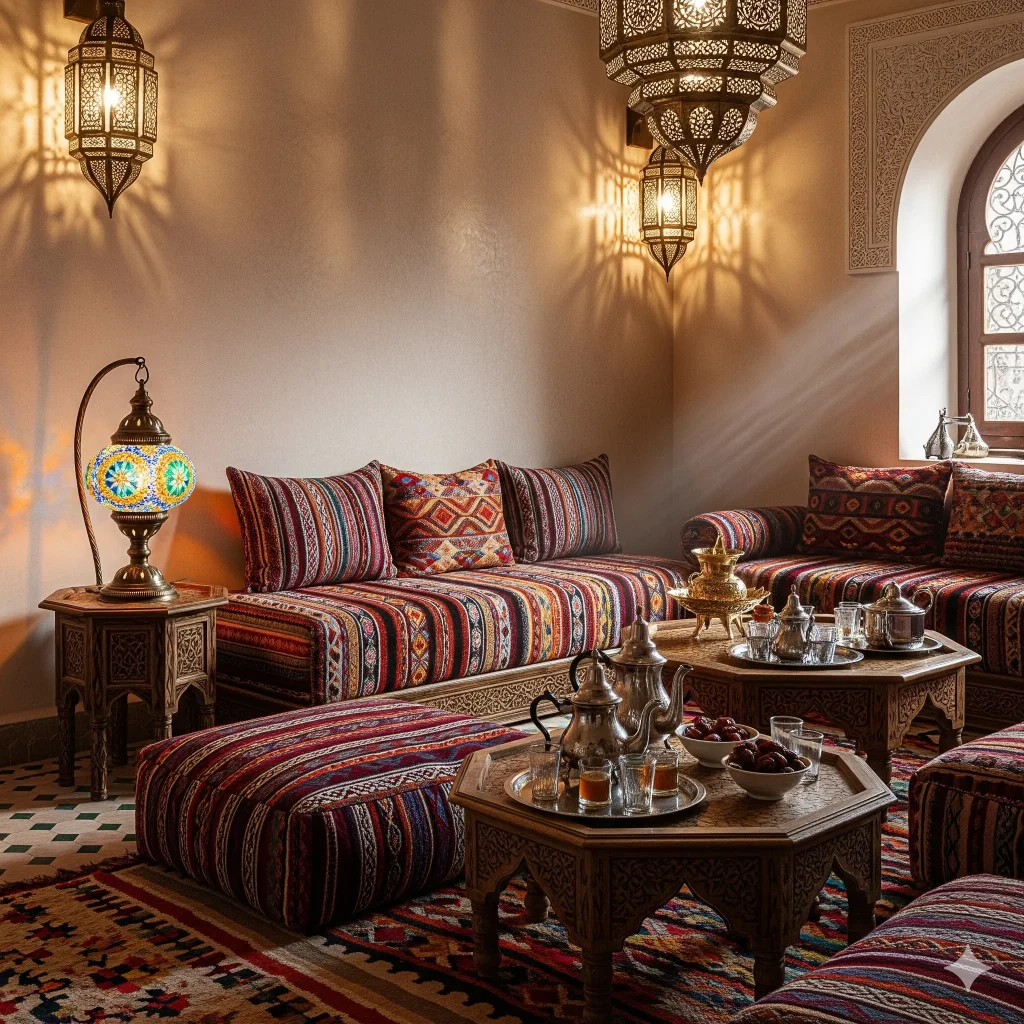
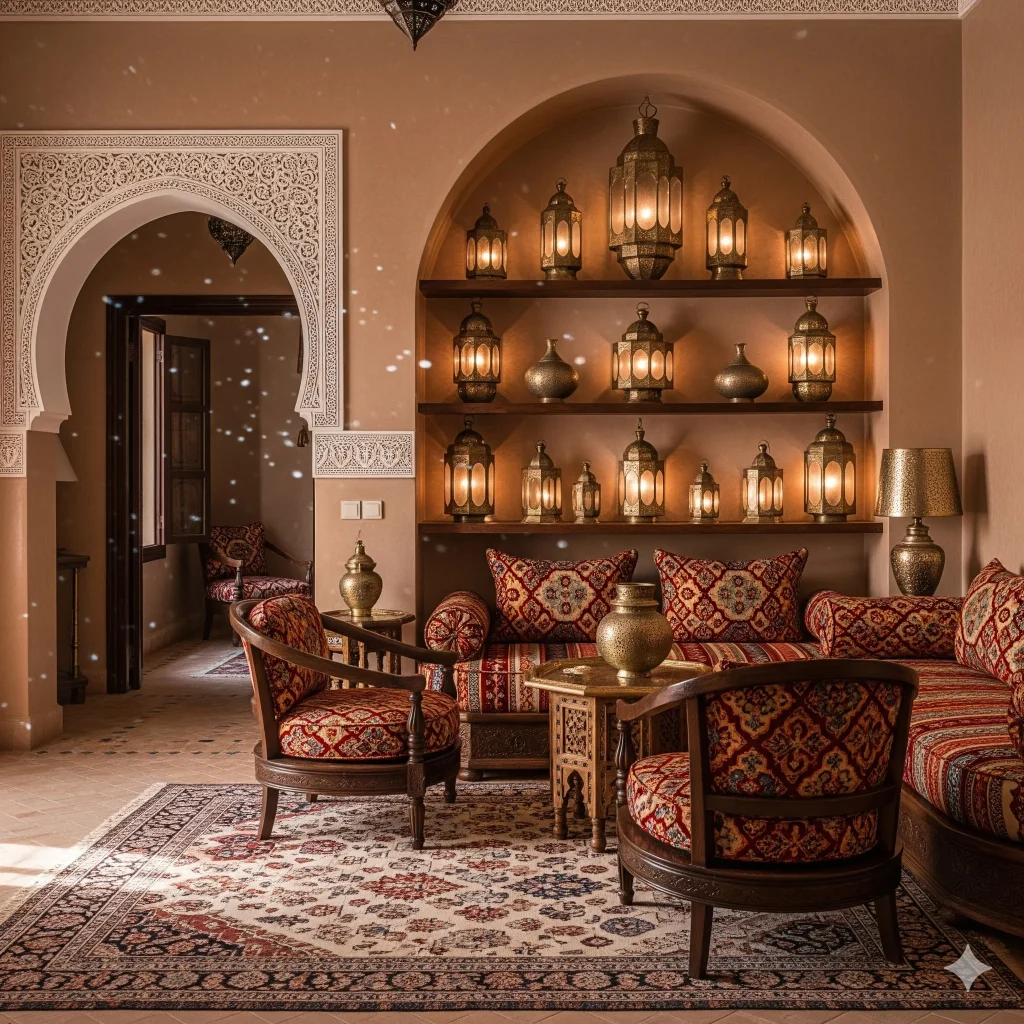
Lighting plays a crucial role in Moroccan décor. Traditional Moroccan lanterns are crafted from metal and glass with intricate cut-out designs that cast enchanting shadows across the walls. Hang a cluster of lanterns at different heights in the living room for a magical effect. In addition to lanterns, you can include mosaic glass lamps, brass wall sconces, or candle holders to enhance the warm, glowing atmosphere.
5. Highlight Intricate Wood Carvings
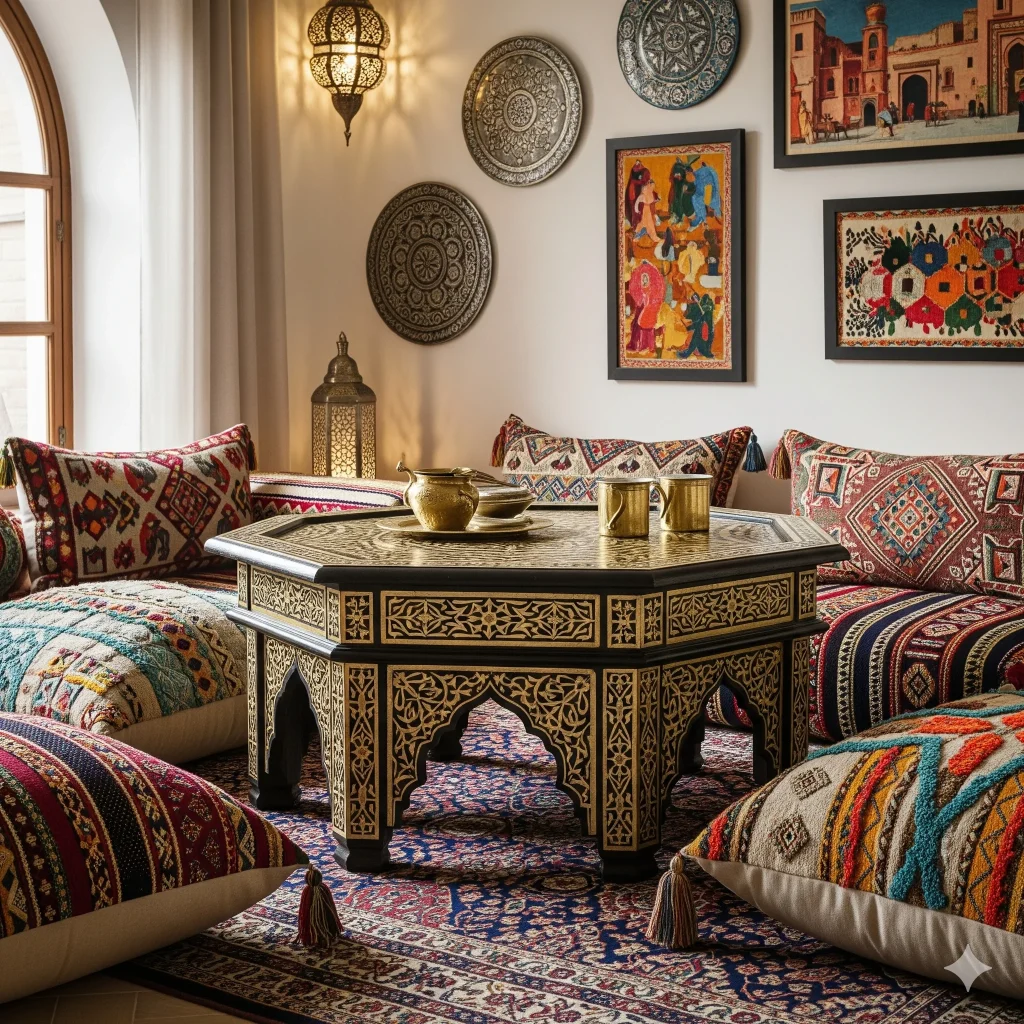
Hand-carved wooden furniture is another key element in Moroccan design. Side tables, cabinets, and room dividers often feature detailed carvings of geometric and floral patterns. Consider adding a carved coffee table with brass or mother-of-pearl inlay to become the focal point of your Moroccan living room. Even small wooden accessories, like picture frames or wall panels, can infuse authentic craftsmanship into the space.
6. Mix Bold Patterns and Textures
Pattern is at the heart of Moroccan style. Don’t be afraid to mix stripes, florals, and geometric designs across different textiles. For example, pair a bold Moroccan rug with patterned curtains and embroidered cushions. Textures are equally important—layer velvet, silk, leather, and cotton to create a rich, tactile environment. The mix-and-match approach adds visual depth while keeping your Moroccan-inspired living room eclectic and vibrant.
7. Introduce Arches and Curves
Architectural details are a distinctive feature of Moroccan design. If you can, incorporate arched doorways, alcoves, or arched shelving into your living room. These soft, curved lines break up rigid modern layouts and introduce exotic elegance. Even if you don’t have structural arches, you can use arched mirrors or curved furniture to mimic the Moroccan aesthetic.
8. Bring in Moroccan Coffee Tables and Trays
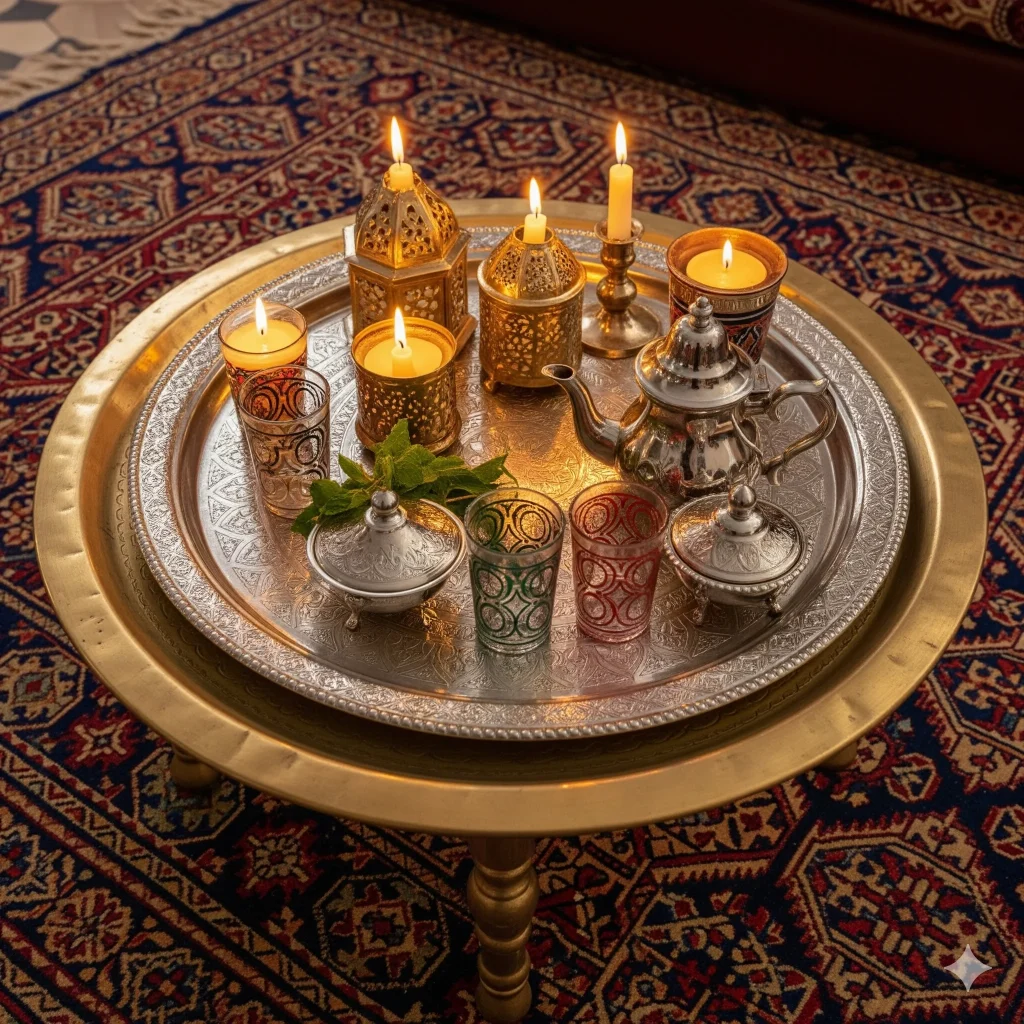
No Moroccan living room is complete without a central coffee table adorned with ornate serving trays. Moroccan brass or silver trays often come with engraved detailing and can be styled with candles, tea sets, or decorative ceramics. Opt for a round table, as the circular shape is typical in Moroccan interiors. For an extra authentic touch, serve Moroccan mint tea when entertaining guests—it ties the décor and cultural experience together.
9. Use Statement Wall Décor
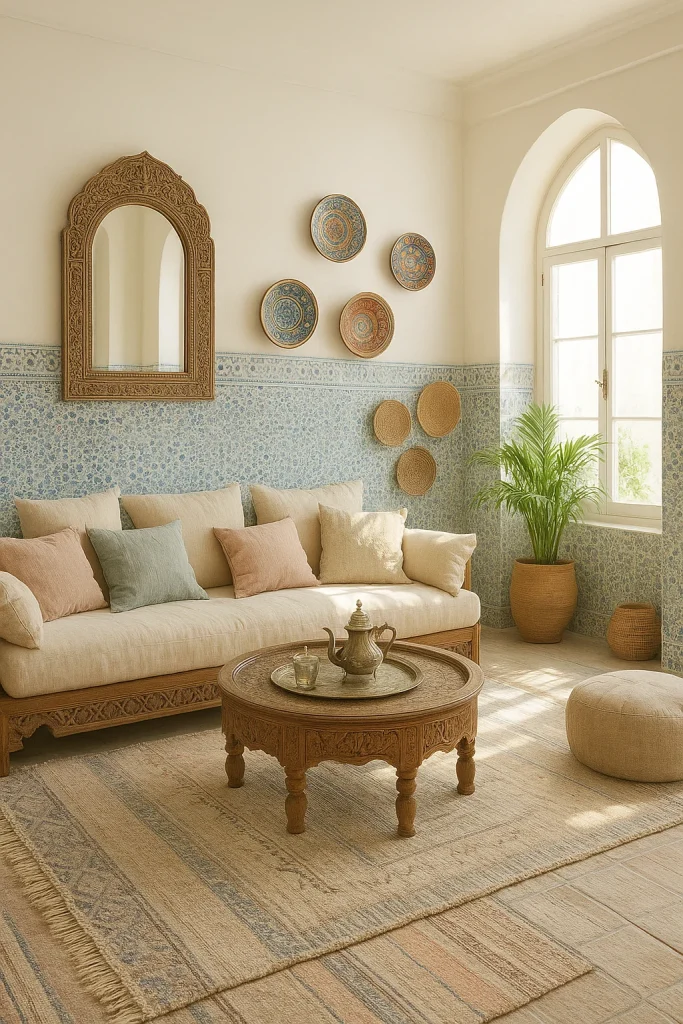
Walls in a Moroccan-style living room are rarely plain. Add personality by incorporating patterned tiles, mosaic wall art, or large mirrors with ornate frames. A Moroccan-inspired accent wall with vibrant wallpaper or zellige tile instantly transforms the space. Hanging woven baskets, colorful tapestries, or hand-painted ceramic plates is another way to showcase Moroccan craftsmanship and heritage.
Find Artwork for Your Space
Artwork is often what gives a room its personality. Whether you prefer botanical prints, Art Deco-inspired designs, nature artwork, or elegant decorative pieces, choosing artwork that complements your colors and furniture can make the entire space feel more intentional.
For more printable wall art and curated décor ideas, explore Rose Glyde Studio, our collection of digital artwork designed to bring character and style to your home.
10. Add Greenery and Indoor Plants
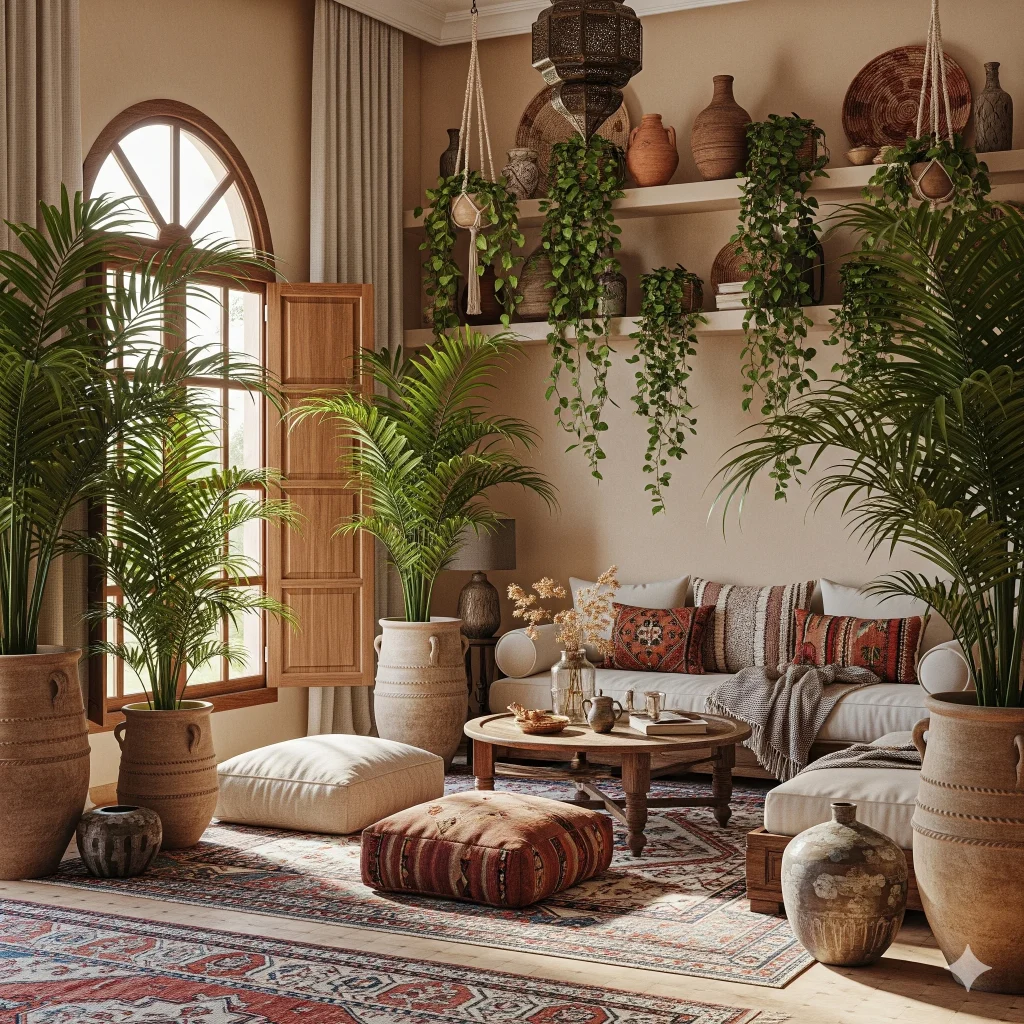
To soften bold patterns and colors, introduce lush greenery. Palm plants, fiddle-leaf figs, or trailing vines bring freshness and balance into the space. Moroccan interiors often blur the line between indoors and outdoors, so filling your living room with plants enhances that natural connection. Pair plants with terracotta pots, brass planters, or mosaic-tiled containers for an authentic Moroccan look.
Final Thoughts
Styling a Moroccan living room is all about blending bold colors, intricate patterns, and handcrafted details into a space that feels inviting and exotic. From traditional rugs and lanterns to carved wood and layered textiles, every element contributes to creating a warm and magical atmosphere. Whether you’re going for a subtle Moroccan-inspired interior or a full cultural makeover, these 10 Moroccan living room ideas will guide you in creating a home filled with rich character, comfort, and style.
Moroccan Style on a Real Budget
A Moroccan living room does not depend on buying everything at once or filling the space with costly pieces. The look is built from a few strong ingredients: warm color, pattern, texture, and soft, low light. Start with what the room already has, then add one element at a time, such as a patterned throw, a pair of cushions, or a single lantern, and live with each addition before choosing the next.
Secondhand and handmade pieces suit this style well, because small variations in weave, carving, and finish add to its character. Rearranging also costs nothing: pull seating closer together, layer textiles you already own, or move a tray table beside a chair. Keeping the palette limited makes modest pieces feel deliberate, and the room can grow gradually while staying balanced.
Mixing Moroccan Pieces with a Modern Room
Moroccan pieces can sit comfortably in a modern living room when the two styles share something in common. Keep the larger furniture simple in shape and let the Moroccan elements supply the pattern and detail: a carved side table beside a plain sofa, a geometric rug under a clean-lined coffee table, or one lantern used as a focal point. Repeating a color from the rug or cushions elsewhere in the room ties the mix together.
Balance is the main guide. If every surface carries pattern, the room feels busy, so leave some areas plain and let each decorative piece have space around it. Metal finishes, warm wood, and woven textures bridge the two styles naturally. Start with one or two Moroccan pieces, live with them, and add more only where the room still feels plain.
Caring for Rugs, Lanterns and Carved Wood
Moroccan pieces are often handmade, and gentle, regular care keeps them looking their best. Shake rugs outdoors or vacuum them without a beater bar where the weave is delicate, rotate them so wear and light fall evenly, and lift spills promptly by blotting rather than rubbing. A rug pad underneath reduces slipping and friction against the floor.
Dust lanterns with a soft, dry cloth or brush so the cut-out patterns stay clear, and keep metal away from damp cloths that can mark the finish. Carved wood prefers a dry or barely damp cloth, protection from direct heat, and coasters or mats under drinks and vases. Small, steady habits like these prevent most wear.
Moroccan Touches for a Small Living Room
A small living room can carry Moroccan character without feeling crowded when each piece earns its place. Choose one anchor, such as a patterned rug or a pair of floor cushions, and keep the remaining furniture light in color and simple in shape. Low seating suits compact rooms because it leaves sightlines open and makes the ceiling feel higher.
Use walls and corners rather than floor space for the remaining touches: a small lantern on a shelf, a carved mirror, or a folded throw over a chair arm. Keep walkways clear, limit the palette to a few connected colors, and store extra cushions in a basket so the room can change from everyday seating to a relaxed gathering spot in moments.