Mediterranean Terrace Ideas for Outdoor Living
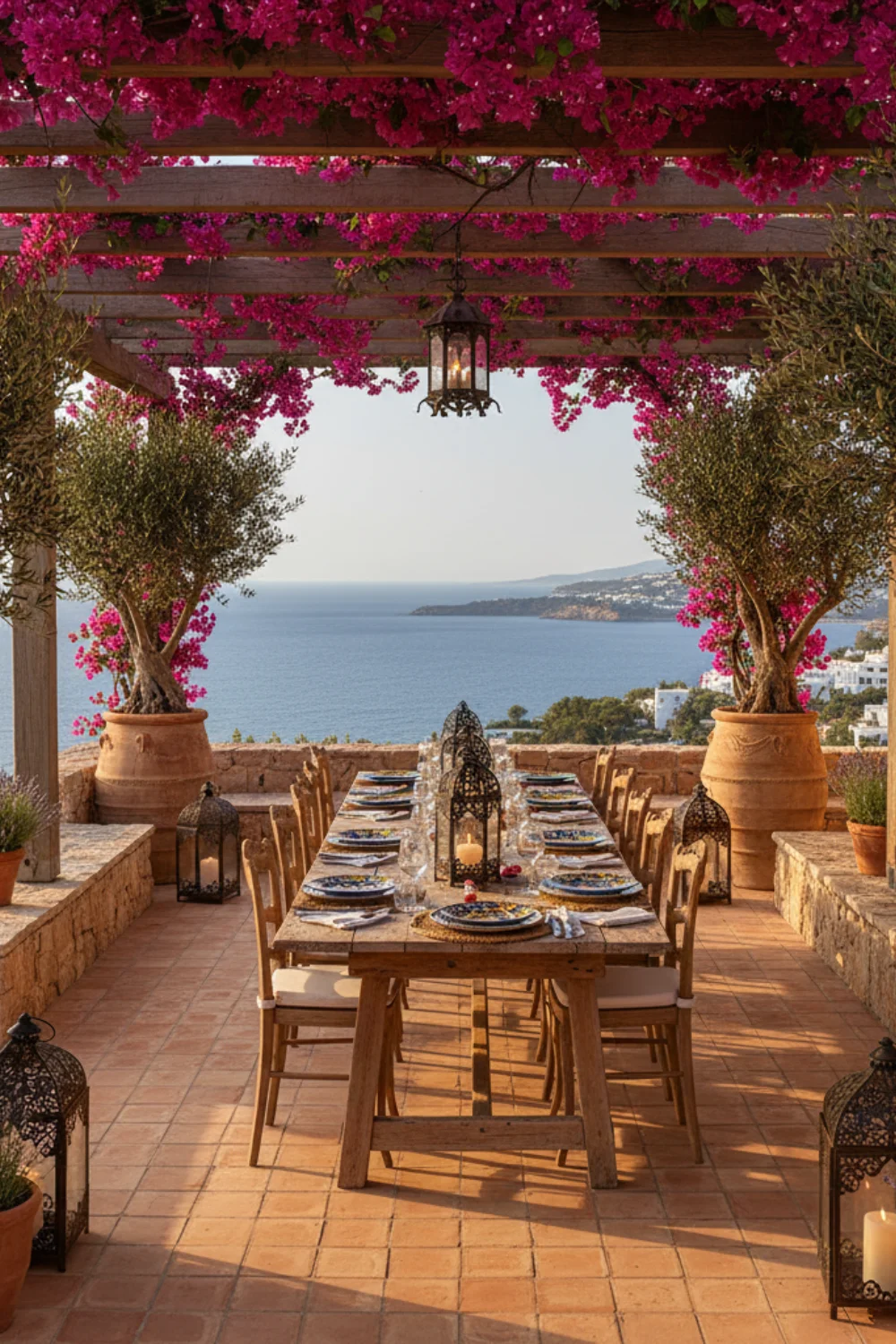
There’s something undeniably captivating about Mediterranean outdoor living. Imagine sitting on a sun-warmed terrace with terracotta tiles underfoot, olive trees swaying gently in the breeze, and the soft glow of lanterns as evening falls. Mediterranean terraces are more than just outdoor spaces—they are sanctuaries where relaxation, beauty, and connection come together. Whether your home overlooks the sea, sits in the suburbs, or even has a small balcony, you can bring Mediterranean charm into your outdoor area with the right design choices.
In this blog, we’ll explore Mediterranean terrace ideas for outdoor living that blend rustic charm with timeless elegance, turning your terrace into a retreat that feels like it belongs in the coasts of Spain, Italy, or Greece.
1. Start with Terracotta and Natural Stone
A true Mediterranean terrace begins with the flooring. Terracotta tiles, natural stone, or mosaic-style patterns are staples of this aesthetic. The warm, earthy tones of terracotta bring instant authenticity, while stone tiles add durability and rustic appeal.
If you prefer a touch of artistry, go for patterned ceramic tiles inspired by Spanish or Moroccan designs. These can be used as flooring, stair risers, or even as decorative inserts in a stone wall. The goal is to create a grounding foundation that feels timeless and sun-drenched.
2. Embrace Earthy Colors and Textures
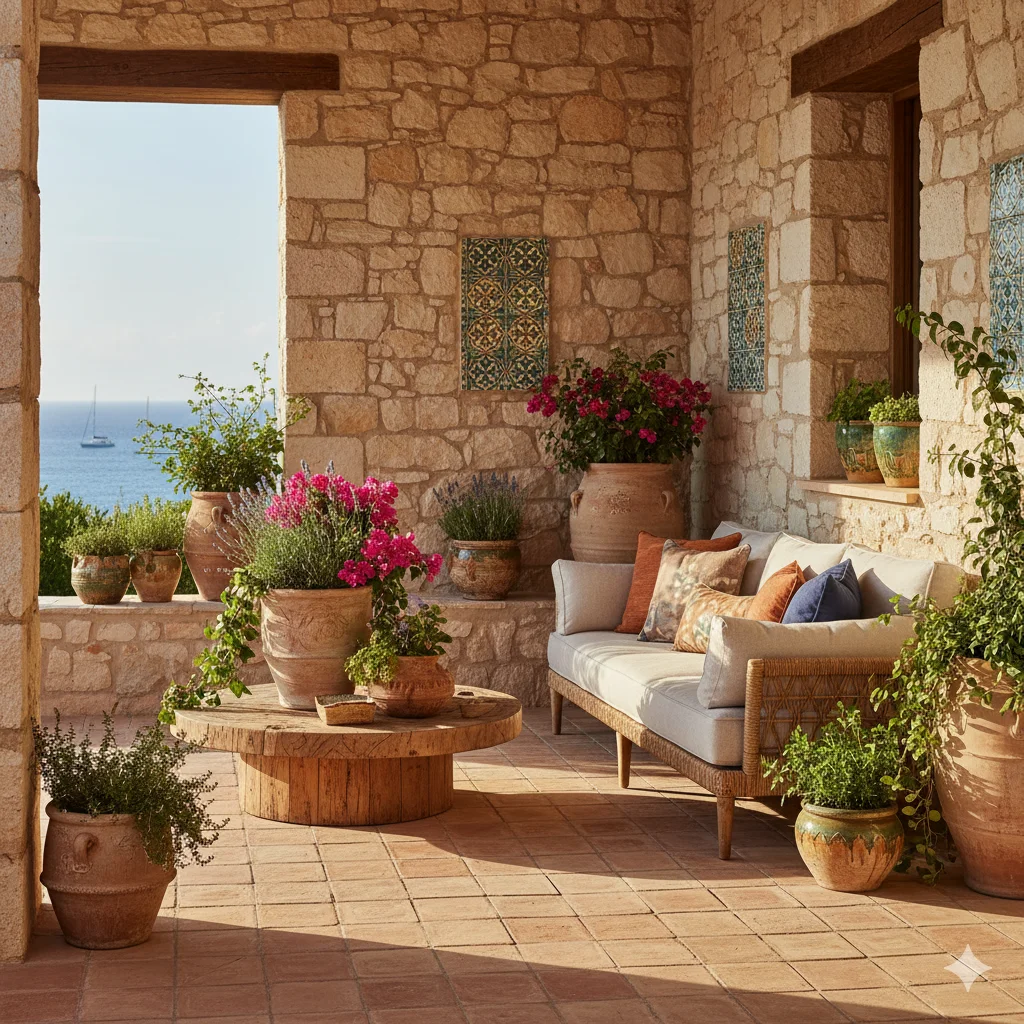
Mediterranean design thrives on earthy palettes and natural textures. Think terracotta orange, sandy beige, ocean blue, olive green, and crisp white. A whitewashed wall makes the perfect backdrop for terracotta pots and vibrant cushions, while wrought iron furniture adds sophistication.
Layer textures by mixing wood, stone, linen, and clay. For instance, a rustic wooden table paired with linen slipcovered chairs creates a casual yet elegant dining corner, while clay urns and woven baskets add depth to your space.
3. Add Mediterranean Greenery
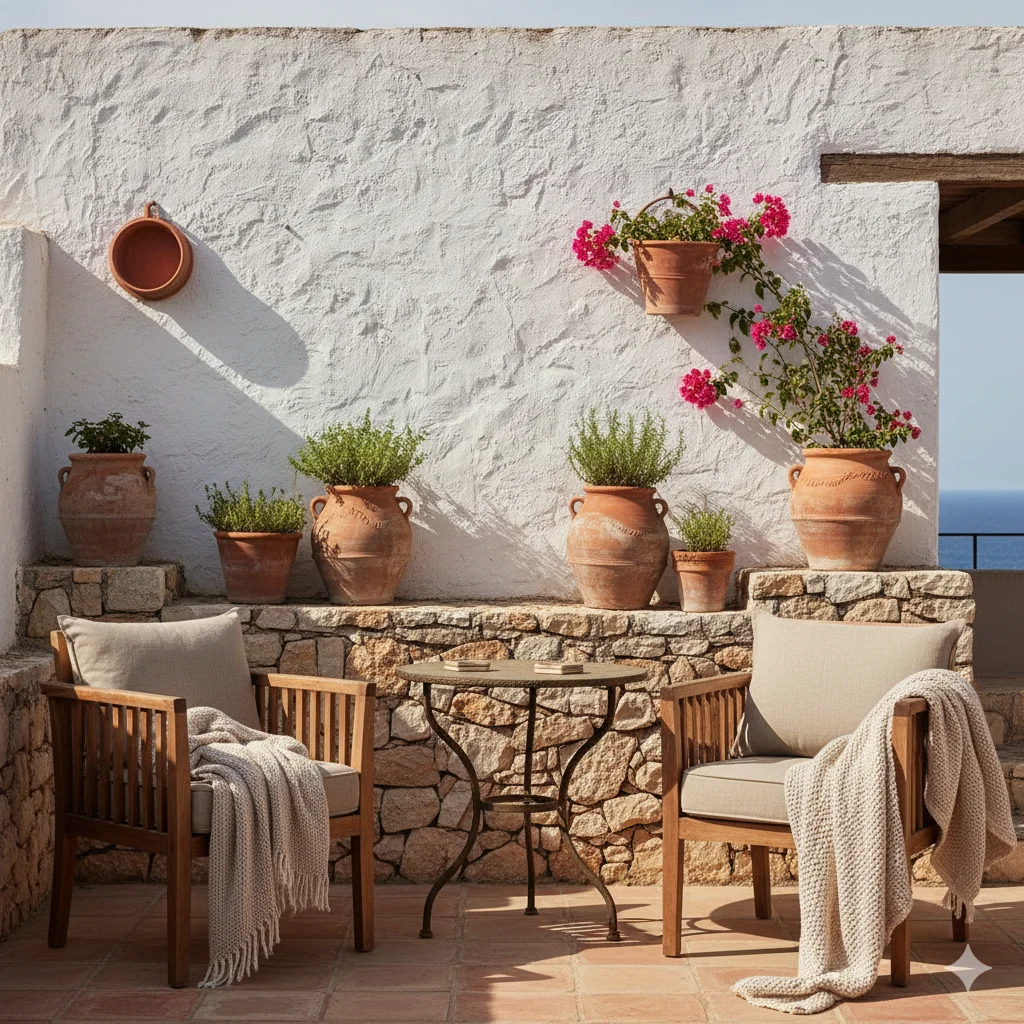
No Mediterranean terrace is complete without lush, vibrant greenery. Potted olive trees, fragrant lavender, climbing bougainvillea, rosemary bushes, and citrus trees bring life and aroma to your terrace.
Place terracotta pots in varying sizes throughout the space, from floor planters to tabletop vases. For a more dramatic effect, use climbing plants like jasmine or bougainvillea along pergolas, trellises, or balcony railings to soften architectural edges and add bursts of color.
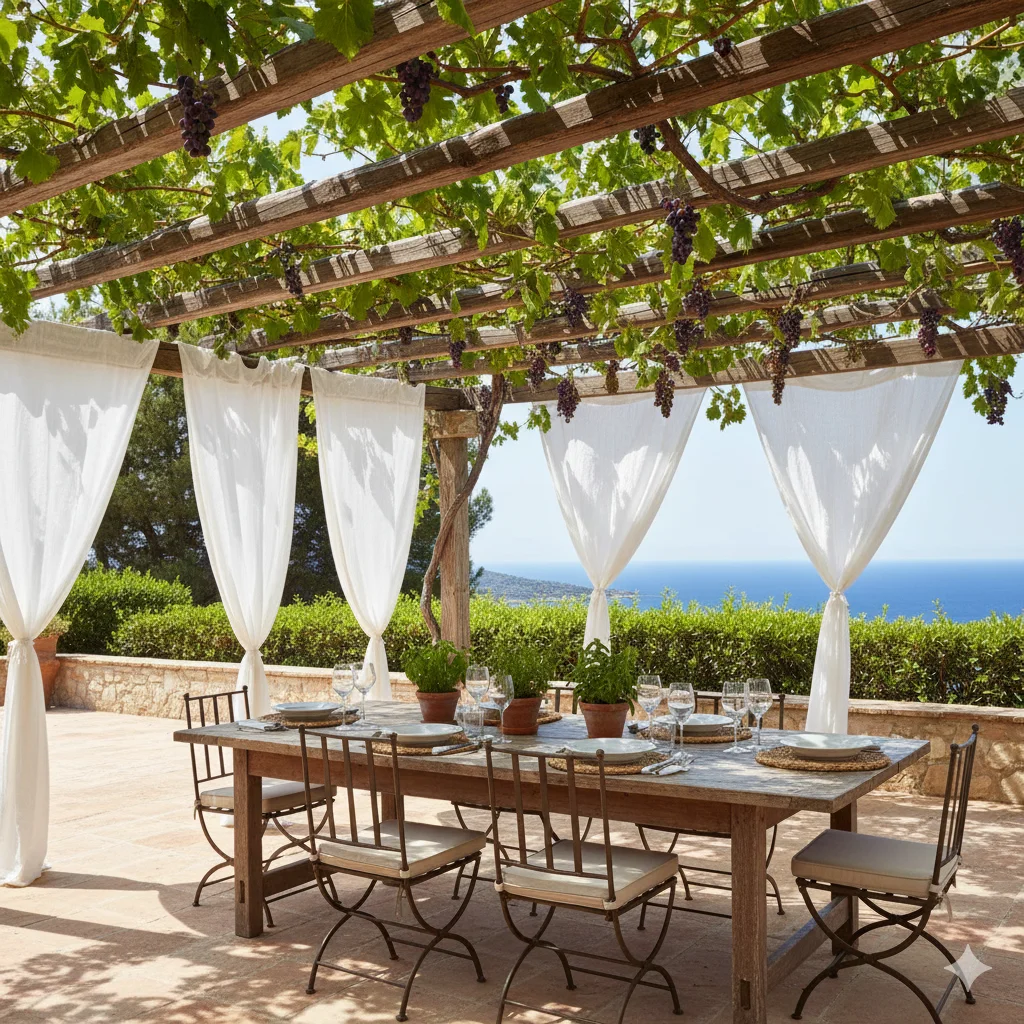
4. Create Shade with Pergolas and Canopies
Mediterranean terraces are all about enjoying the outdoors while staying comfortable under the sun. Wooden pergolas, bamboo canopies, or white fabric drapes not only provide shade but also enhance the relaxed coastal vibe.
For extra charm, let grapevines or climbing roses trail along the pergola beams, creating natural shade and a touch of romance. This makes the terrace feel like a private retreat where nature and design intertwine beautifully.
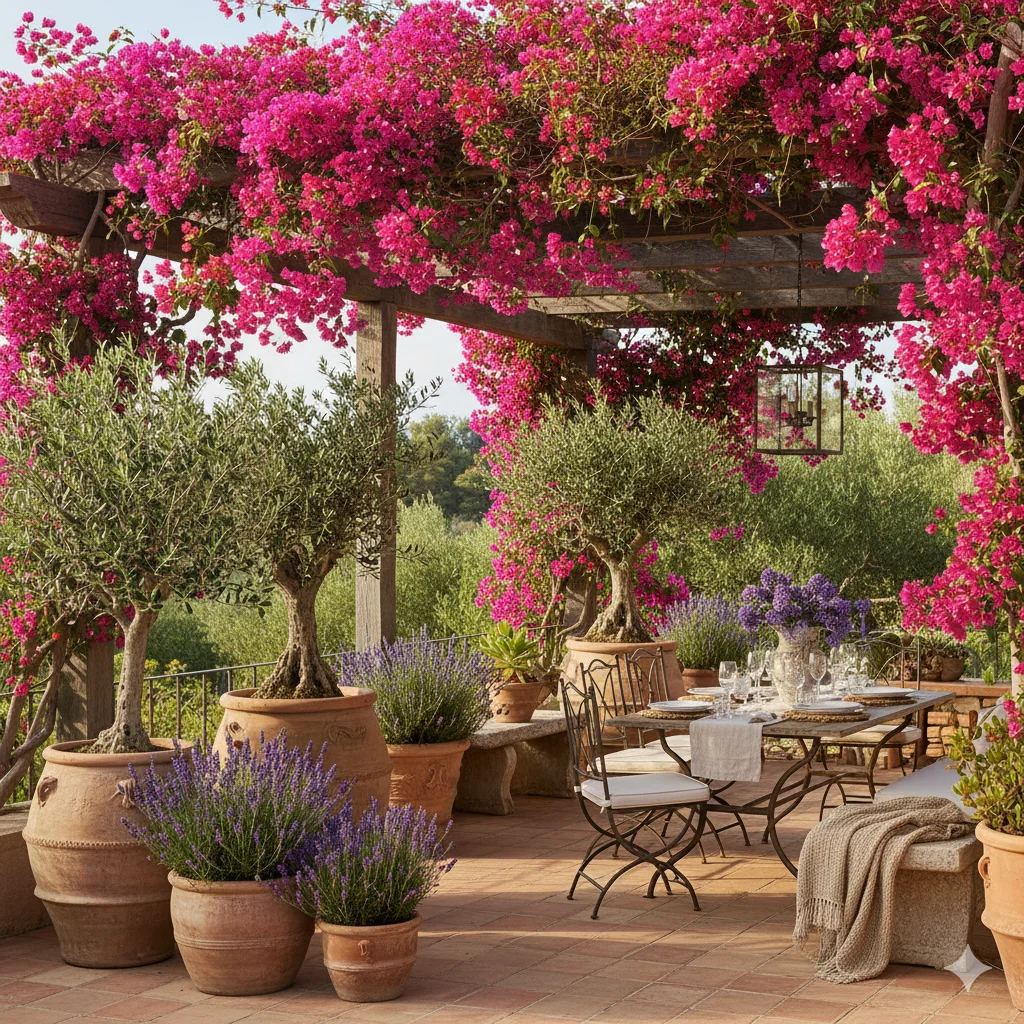
5. Incorporate Outdoor Dining Spaces
Dining al fresco is at the heart of Mediterranean living. A simple yet elegant wooden or wrought iron dining table paired with colorful ceramic plates, linen napkins, and rustic serving trays sets the mood for shared meals.
Consider building a small outdoor kitchen or pizza oven if space allows. Even a modest setup with a grill and prep counter can transform your terrace into the perfect entertaining space. Add string lights or lanterns to keep the atmosphere cozy during evening gatherings.
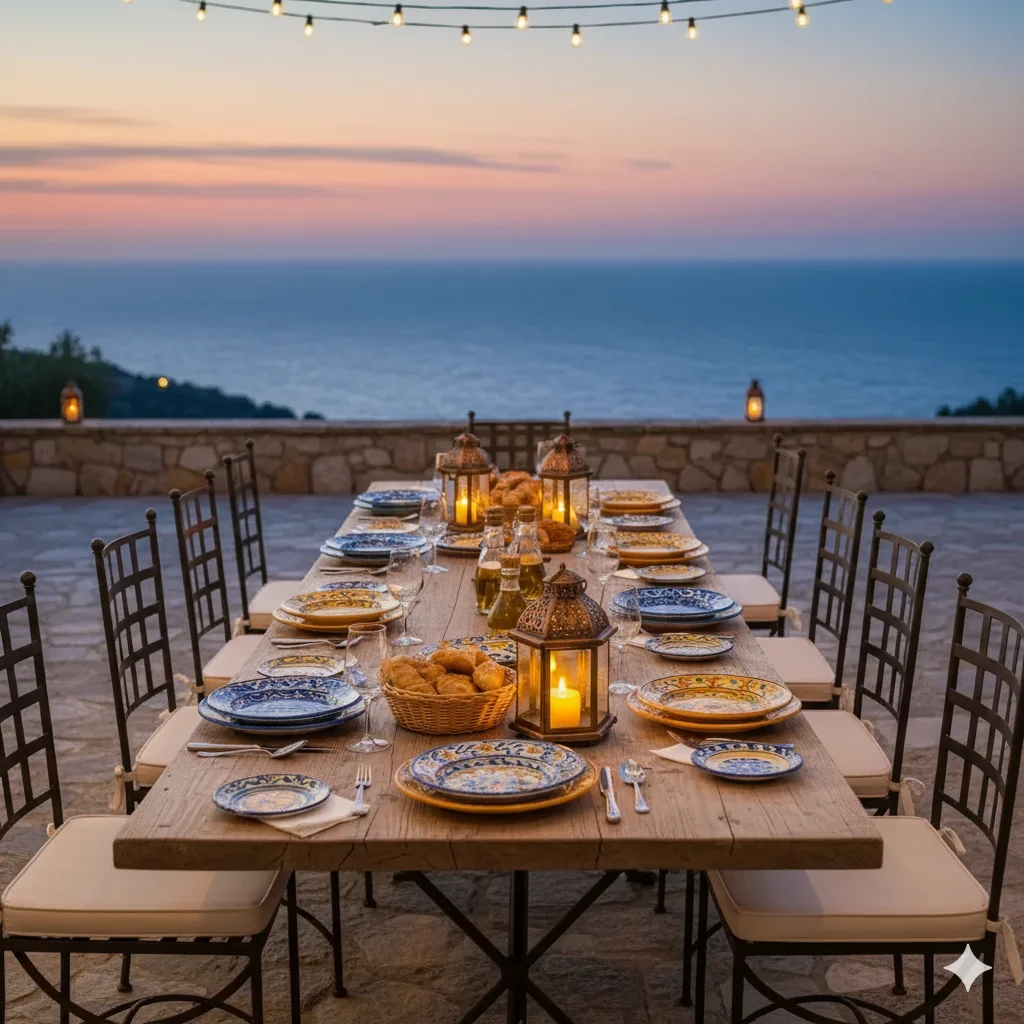
6. Opt for Cozy Lounging Corners
Beyond dining, Mediterranean terraces are about relaxation. Create intimate lounging nooks with built-in benches, rattan chairs, or cushioned daybeds. White or beige cushions accented with blue, green, or terracotta throw pillows will instantly transport you to the Greek isles or Italian coast.
Add side tables for drinks, ceramic lanterns for soft lighting, and outdoor rugs with geometric patterns to tie everything together. A hammock or hanging chair can also enhance the laid-back vibe.

7. Use Lighting for Ambiance
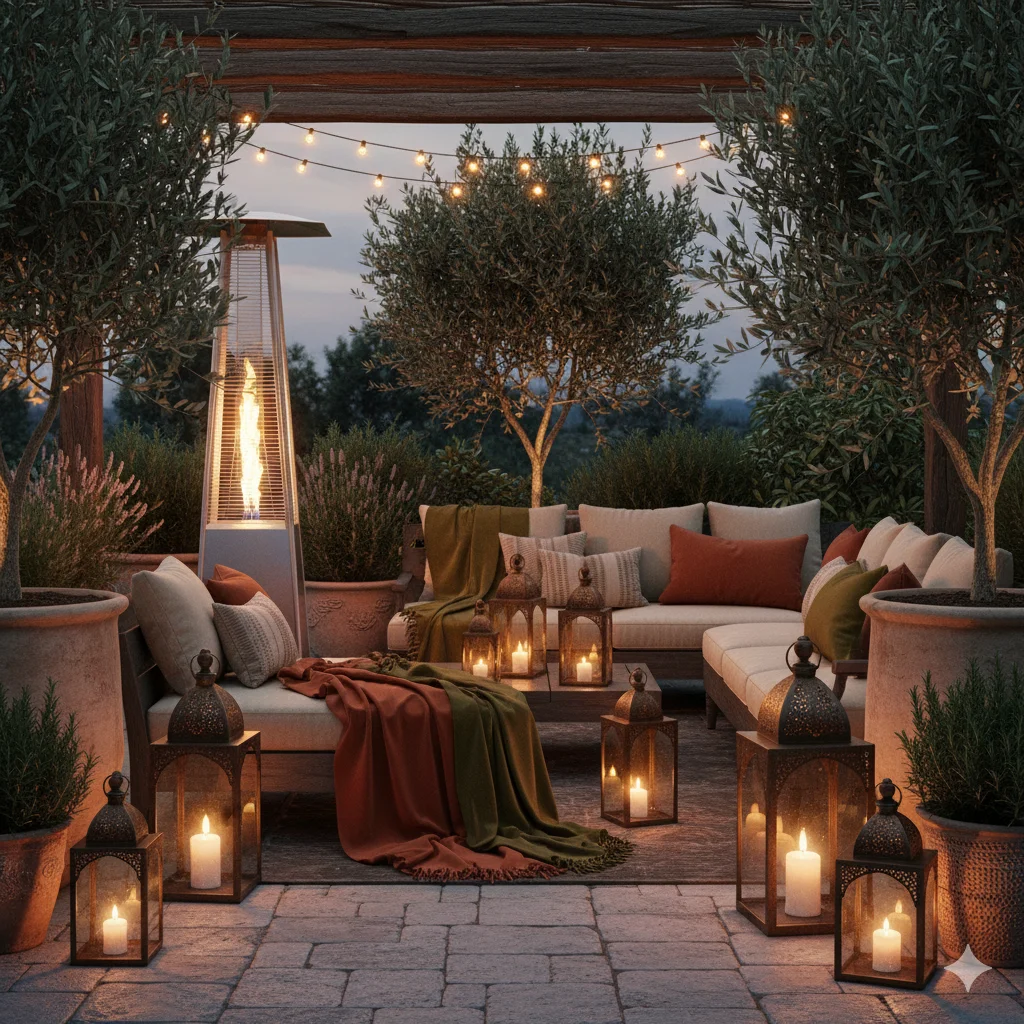
Mediterranean evenings are magical, and lighting plays a key role in creating that charm. Opt for lanterns, wrought iron sconces, and string lights to bathe your terrace in a warm, golden glow.
Candlelit lanterns, either placed on tables or hung from beams, add a romantic touch, while solar-powered string lights are practical and eco-friendly. For a rustic edge, consider Moroccan-inspired pendant lamps with cut-out designs that cast beautiful patterns on walls and floors.
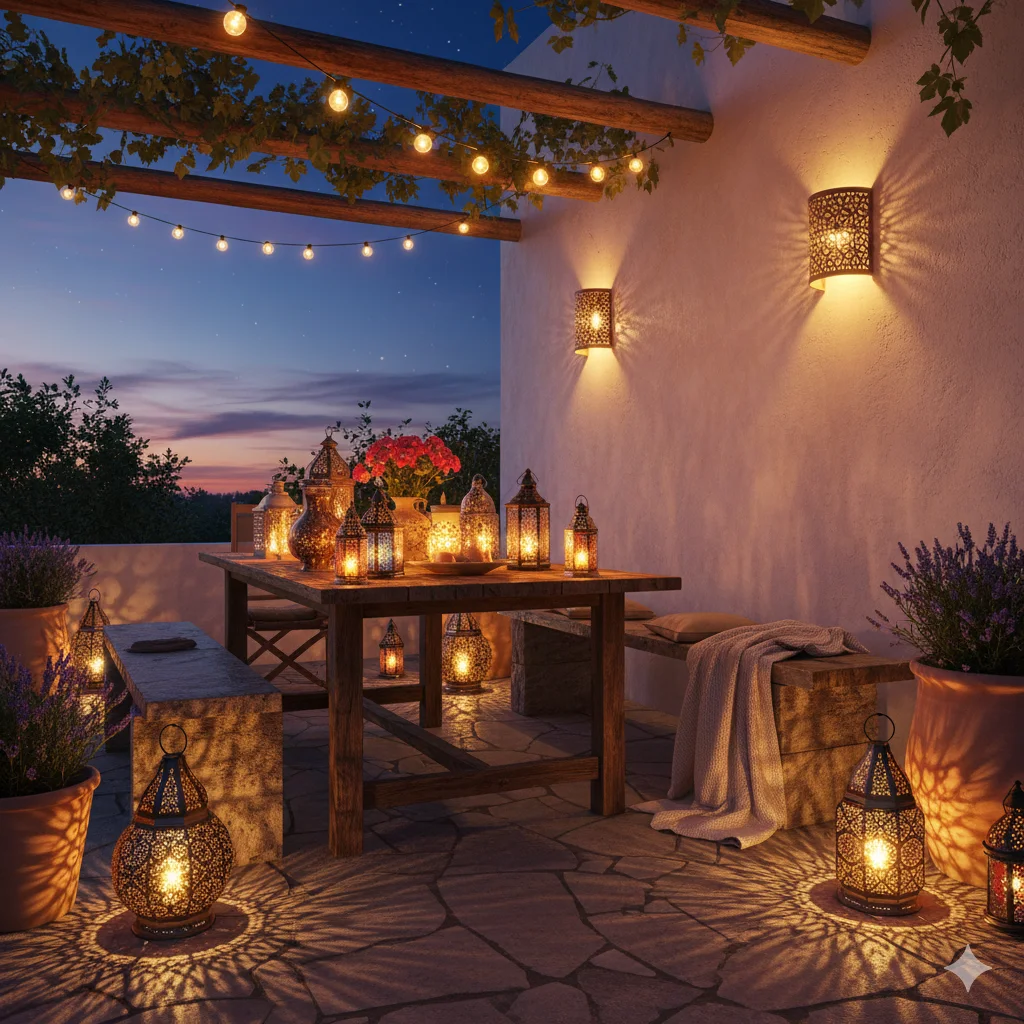
8. Add Water Features for Serenity
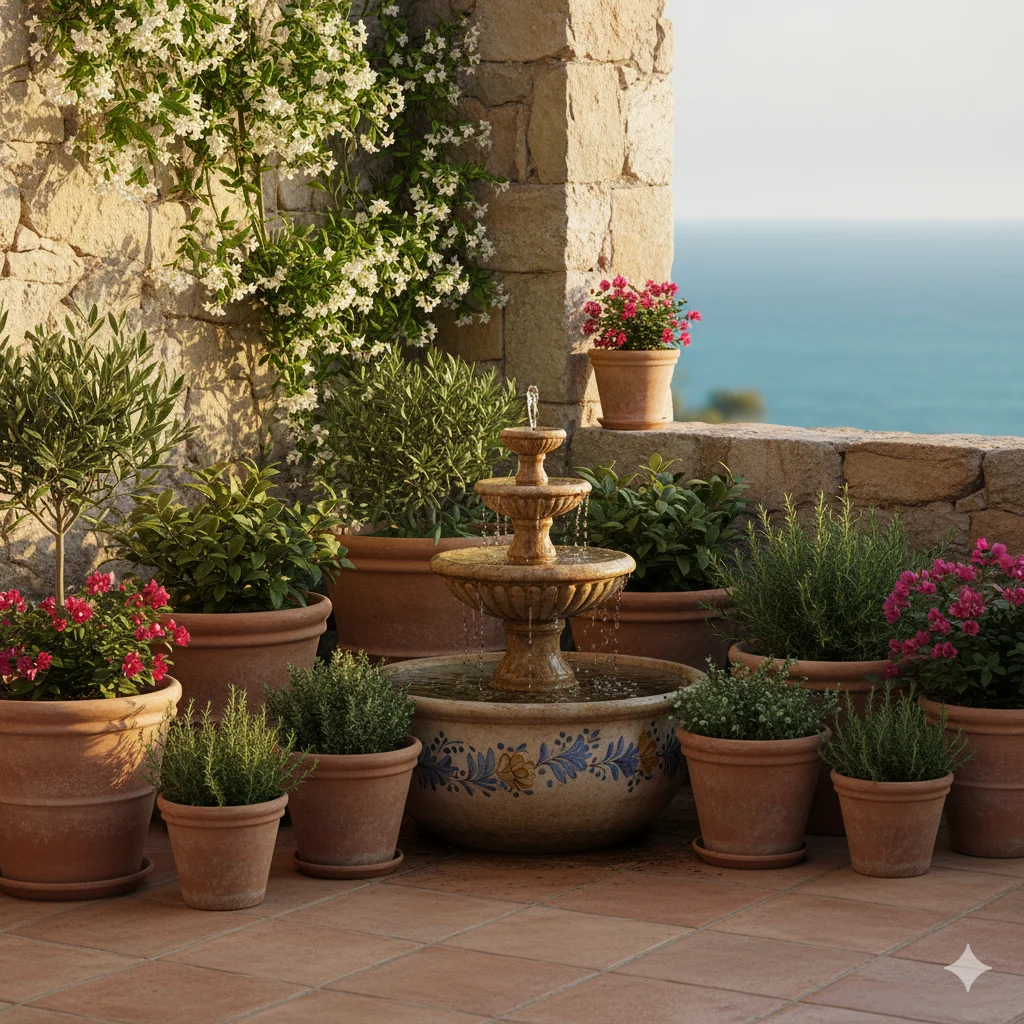
Water is an important element in Mediterranean design, symbolizing life and tranquility. Even a small terrace can incorporate this with a tabletop fountain, wall-mounted spout, or a ceramic basin.
The soothing sound of trickling water adds an extra layer of relaxation, transforming your outdoor area into a peaceful retreat perfect for meditation, reading, or simply unwinding.
9. Layer with Decorative Accents
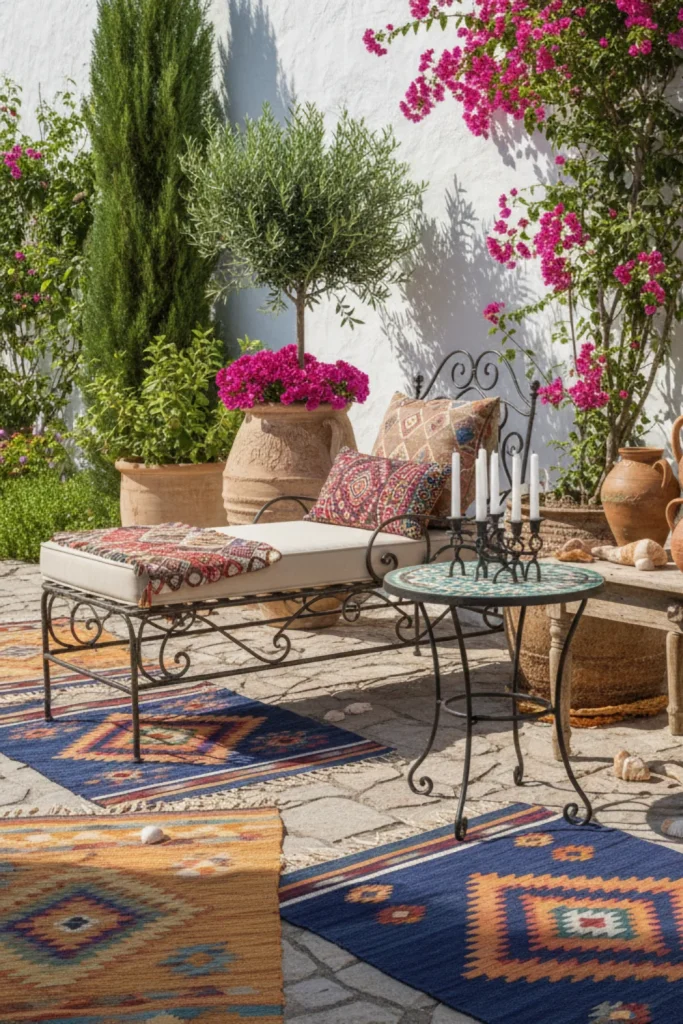
Accessories make the terrace feel complete. Ceramic plates, mosaic tables, woven rugs, and colorful cushions all bring personality to your space. You can also add wrought iron candleholders, terracotta figurines, or handmade pottery for an authentic touch.
For a personal flair, display travel souvenirs from Mediterranean destinations—like seashells, clay jugs, or painted tiles—that reflect your own connection to the region.
10. Make It Seasonal and Flexible
One of the best things about Mediterranean terraces is their adaptability. In the warmer months, you can maximize airy textiles, fresh plants, and open layouts. In cooler weather, layer with wool blankets, thicker cushions, and portable heaters to keep the space functional year-round.
This flexibility ensures your terrace remains a central gathering place no matter the season.
Final Thoughts
A Mediterranean-inspired terrace is not just about design—it’s about lifestyle. It’s about savoring the slower pace of life, enjoying meals under the sun, connecting with nature, and creating lasting memories with loved ones.
Whether you’re working with a sprawling terrace or a modest balcony, the right mix of natural textures, earthy tones, greenery, and cozy corners will transport you straight to the sun-soaked coasts of the Mediterranean. By incorporating these ideas, you can create an outdoor living space that feels warm, timeless, and irresistibly inviting.
Looking for more beautifully designed spaces? Browse our Style collection for timeless interiors and refined decorating tips.
Small Terraces: Making a Compact Space Feel Generous
Measure the terrace before choosing furniture, and leave a clear path from the door to the seating and dining spots. Furniture with slim legs, folding frames, or built in storage keeps the floor visible, and a visible floor makes a compact space feel larger. One comfortable chair with a small side table can serve a reader better than several cramped pieces squeezed into the same corner.
Use the vertical space as well. Wall planters, a narrow shelf, hanging lanterns, and climbing plants on a trellis draw the eye upward without eating into the floor. Keep the palette to a few colors, repeat one material such as terracotta or wood, and choose a rug that leaves a border of floor showing. A tidy edge, good light, and room to move will make even a modest terrace feel calm and generous. Foldaway pieces can be opened for guests and stored flat afterward.
Creating Privacy Without Blocking the Light
A terrace can feel exposed even when it is beautiful, especially where neighbors overlook the seating area. Start by sitting in the main chairs and noting exactly where cover is needed, because privacy is often only required on one side. A trellis with climbing plants, a row of tall grasses in pots, or an open weave screen can soften a view while still letting air and daylight pass through. Potted shrubs can also be moved as the sun or the season changes.
Keep solid barriers low and use lighter screening higher up, so the space does not feel fenced in. Outdoor curtains on a pergola can be drawn for shade or privacy and opened again when you want the view, while layered planting gives a softer edge than a single hard line. Check any rules that apply to your building before fixing screens or drilling into walls, and choose fixings that suit rented homes where changes must be reversible.
Keeping Terracotta, Stone and Wood Looking Their Best
Outdoor materials age gracefully when they get simple, regular care. Brush dust and fallen leaves from stone and tile, wash surfaces with water and a mild cleaner suited to the material, and let everything dry fully before replacing cushions or rugs. Terracotta pots can be scrubbed to remove surface marks, but they are porous, so bring delicate pots indoors or under cover during long spells of frost where winters are cold.
Wooden furniture benefits from being cleaned, dried, and stored or covered in wet weather, following any care guidance that came with the piece. Check metal fittings for rust, tighten loose screws before the season begins, and store fabric cushions somewhere dry when rain is forecast for days. A short check in spring and again in autumn catches small problems early, helps each material last longer, and keeps the terrace ready to enjoy. Repot crowded plants before roots fill the pot completely.