
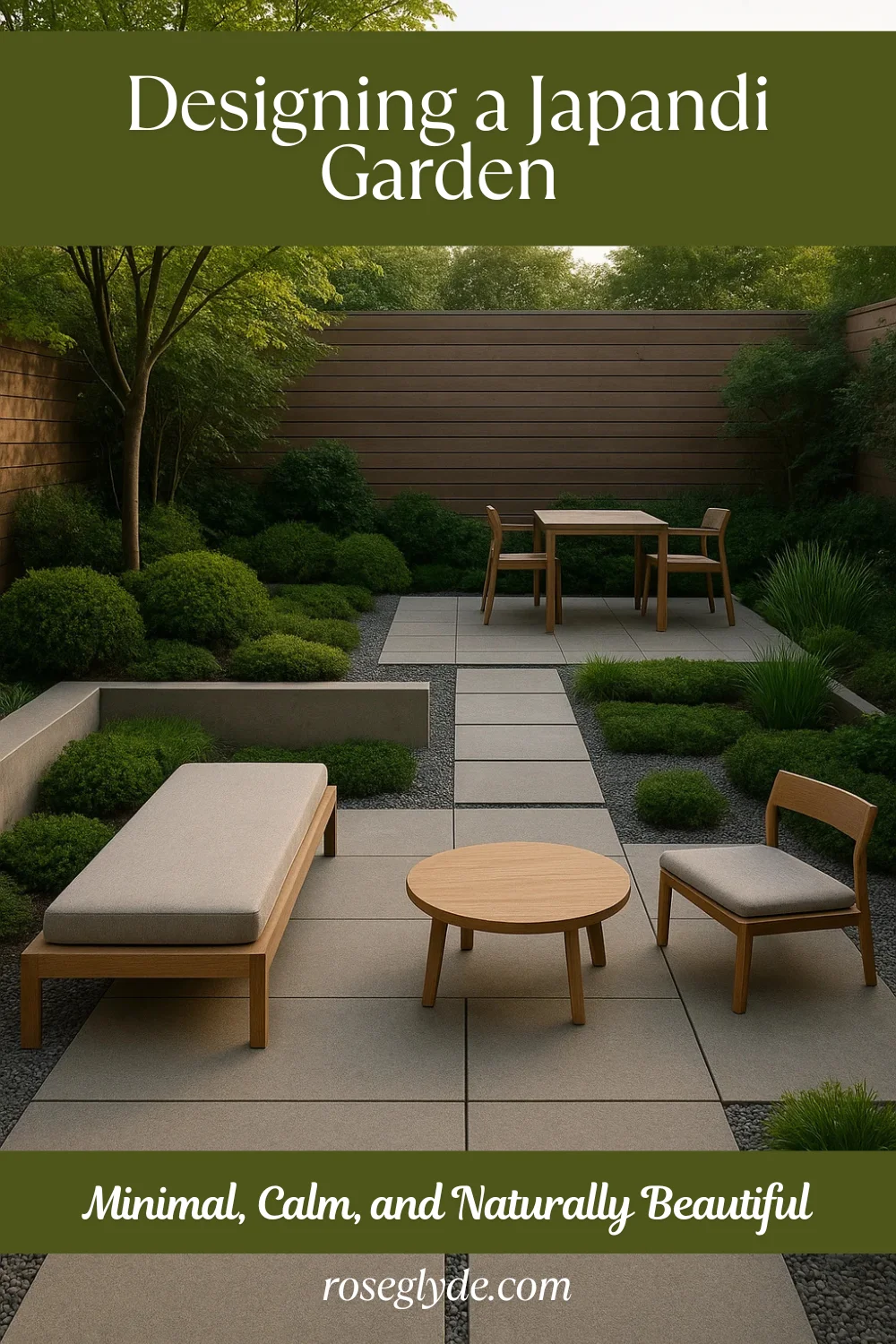
Designing a Japandi Garden Oasis: Minimal Scandinavian Calm Meets Zen Serenity
Introduction: The Essence of a Japandi Garden Oasis
A Japandi garden oasis beautifully fuses the serene simplicity of Japanese Zen gardens with the functional minimalism of Scandinavian design. The result? A peaceful outdoor retreat that radiates calm, balance, and understated beauty. This modern design trend focuses on natural textures, clean lines, muted tones, and intentional simplicity—turning your backyard into a sanctuary for slow living and mindfulness.
In a world that often feels busy and cluttered, the Japandi approach reminds us to pause and reconnect—with nature, tranquility, and purposeful design.
What Is a Japandi Garden?
The word Japandi comes from blending “Japanese” and “Scandi,” merging two timeless philosophies:
- Wabi-sabi, the Japanese art of embracing imperfection and transience.
- Lagom, the Swedish concept of moderation—“not too much, not too little.”
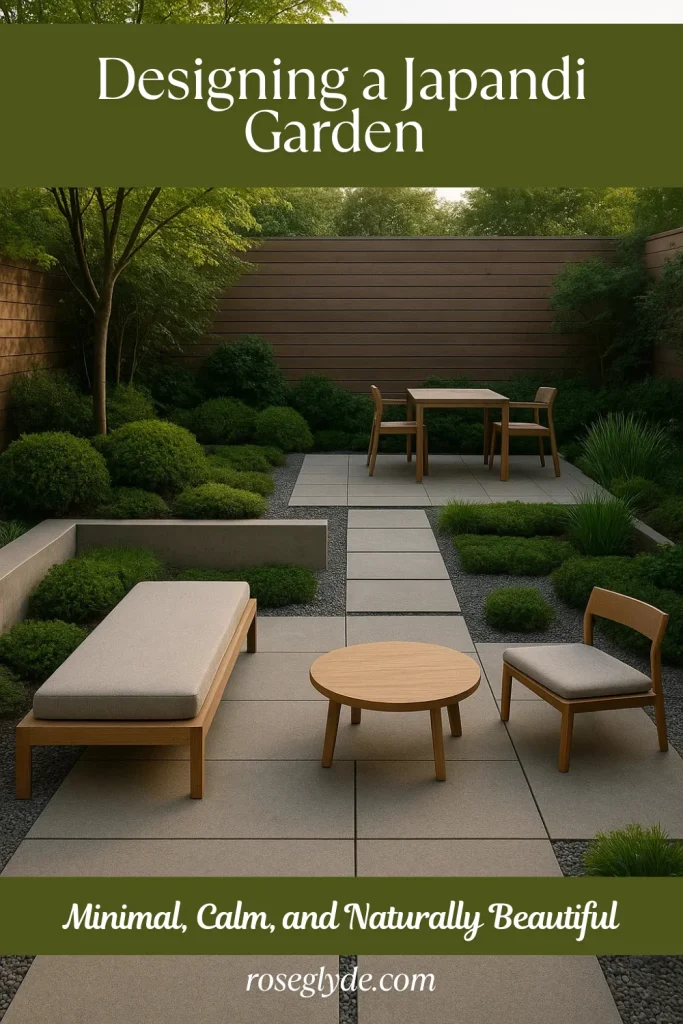
When translated into garden design, these principles create a balanced and soothing outdoor space that feels both curated and organic. Think bamboo screens beside smooth wooden decks, stone pathways winding through mossy textures, and handcrafted pottery resting on simple teak benches.
Core Elements of Japandi Garden Design
Creating a Japandi garden oasis means focusing on harmony, function, and natural flow. Here are the key components to bring this design style to life:
1. Natural Materials and Textures
Use materials that connect directly to nature. Opt for stone, wood, clay, and rattan, paired with organic textiles like linen or jute for seating areas. A mix of rough and smooth textures—like a gravel path next to smooth timber furniture—enhances visual balance.
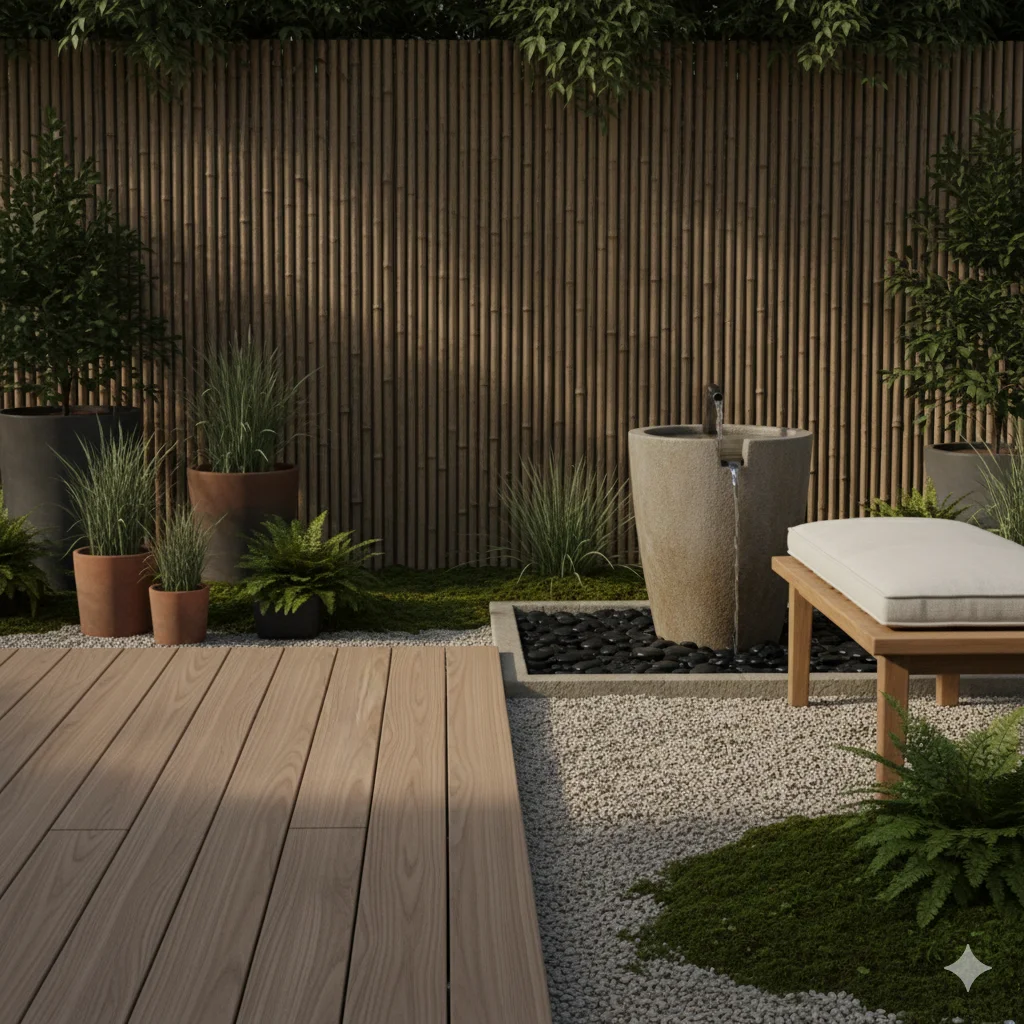
Pro tip: Use reclaimed wood or sustainable bamboo to reflect Japandi’s eco-friendly spirit.
2. Muted, Neutral Color Palette
Stick to soft and earthy hues inspired by nature—sand, beige, taupe, charcoal gray, sage green, and off-white. Avoid bright or artificial colors. The goal is to evoke serenity and a cohesive atmosphere.
For accents, try matte black lanterns, minimalist garden sculptures, or pale terracotta planters.
3. Clean Lines and Minimal Clutter
Simplicity defines Japandi design. Keep pathways, garden beds, and furniture arrangements minimal yet functional. Avoid overly decorative elements—each item should serve a purpose and contribute to a peaceful aesthetic.
Think of low-profile seating, geometric garden layouts, and streamlined plant containers.
4. Water and Rock Elements
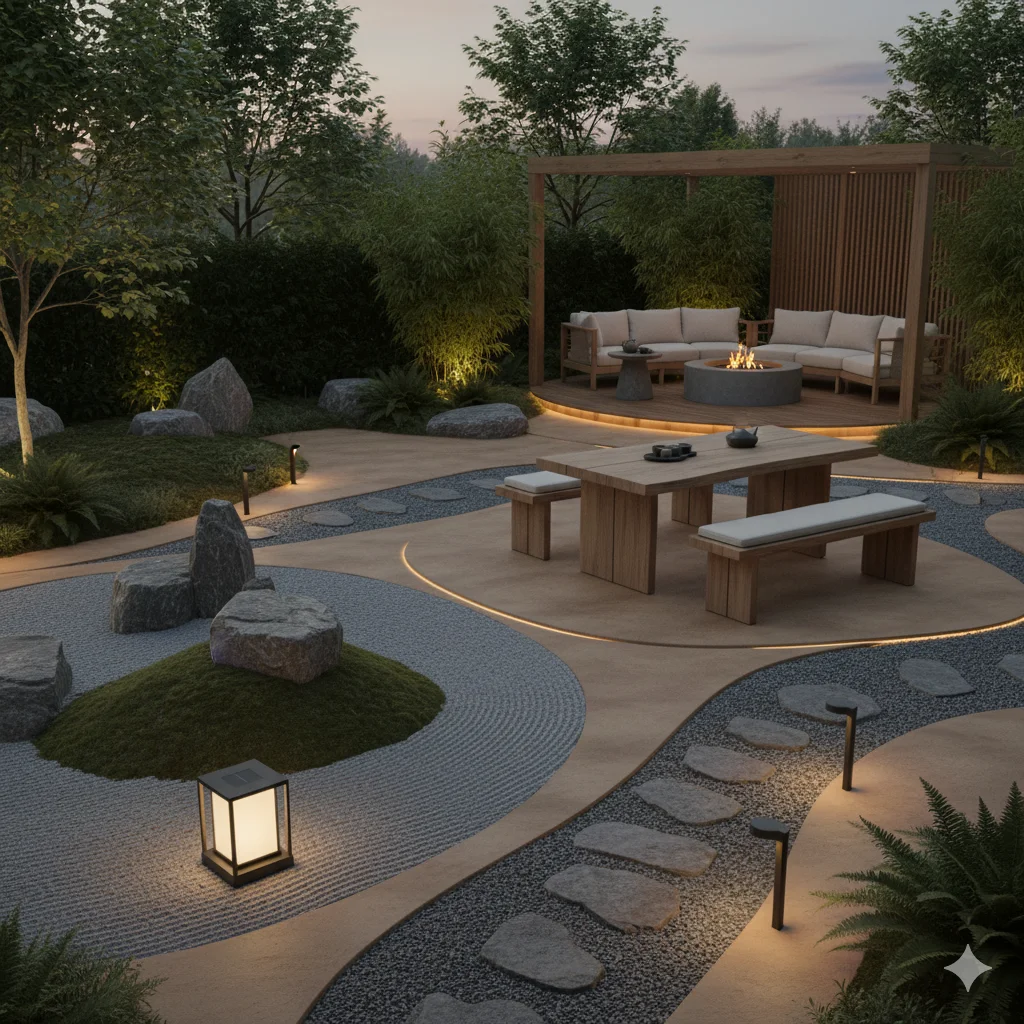
In true Zen-inspired landscaping, water symbolizes clarity and flow, while rocks represent grounding. You don’t need a full koi pond—a small stone basin fountain or trickling water feature will do.
Arrange smooth river stones or gravel beds in organic patterns to enhance that meditative vibe.
5. Intentional Greenery
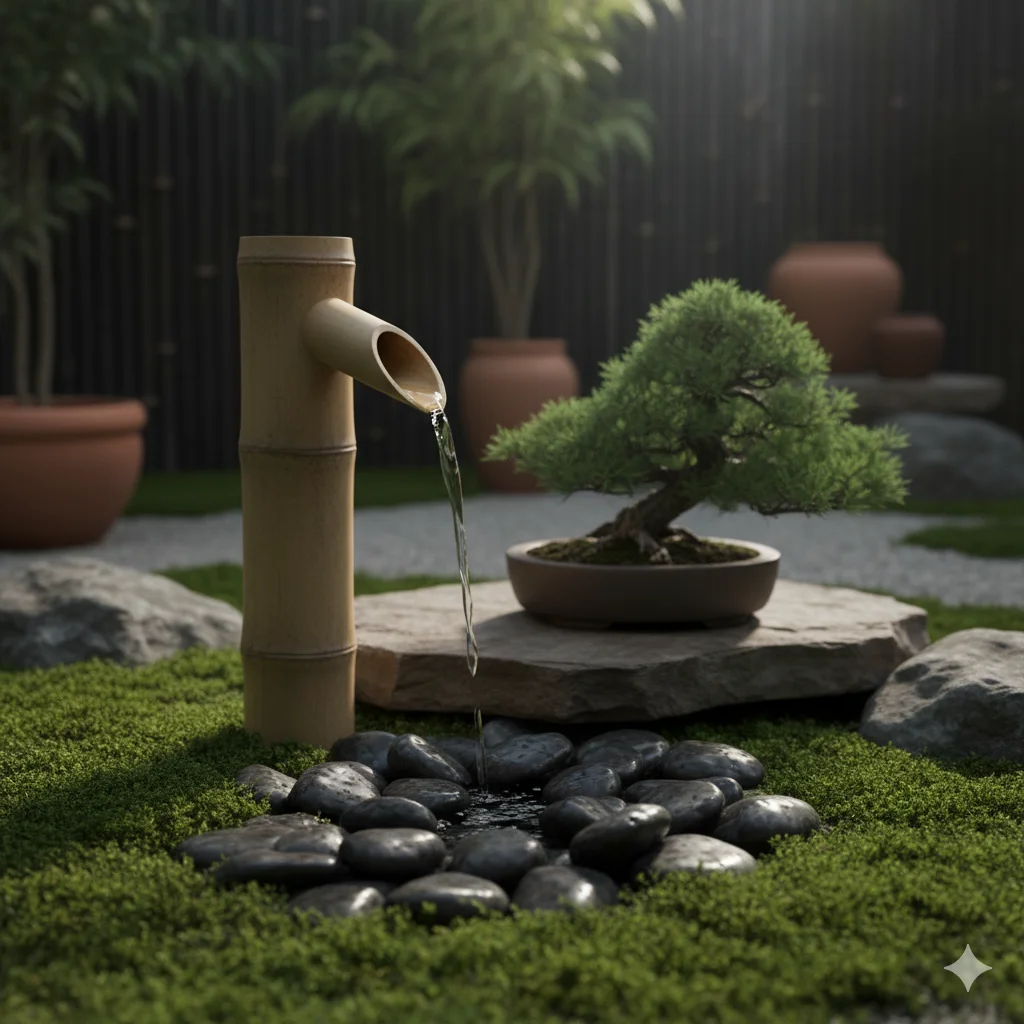
Choose plants that reflect both Japanese and Scandinavian influences—bamboo, ferns, Japanese maples, ornamental grasses, and evergreens. Keep planting patterns balanced and low-maintenance.
A moss-covered surface or bonsai tree can serve as a natural focal point without overwhelming the design.
Designing the Layout: Where Zen Meets Function
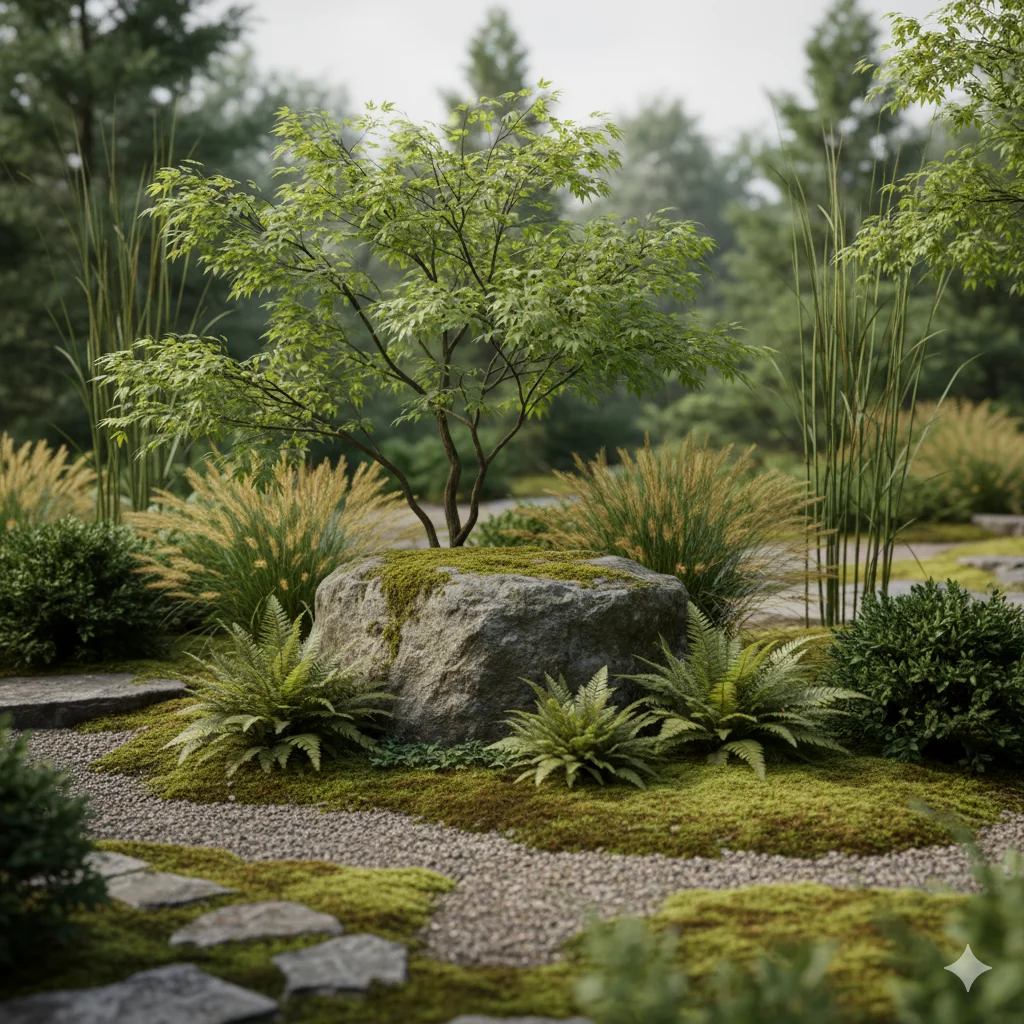
A Japandi outdoor space thrives on balance between stillness and usability. When designing your garden layout:
- Define zones for meditation, dining, and relaxation.
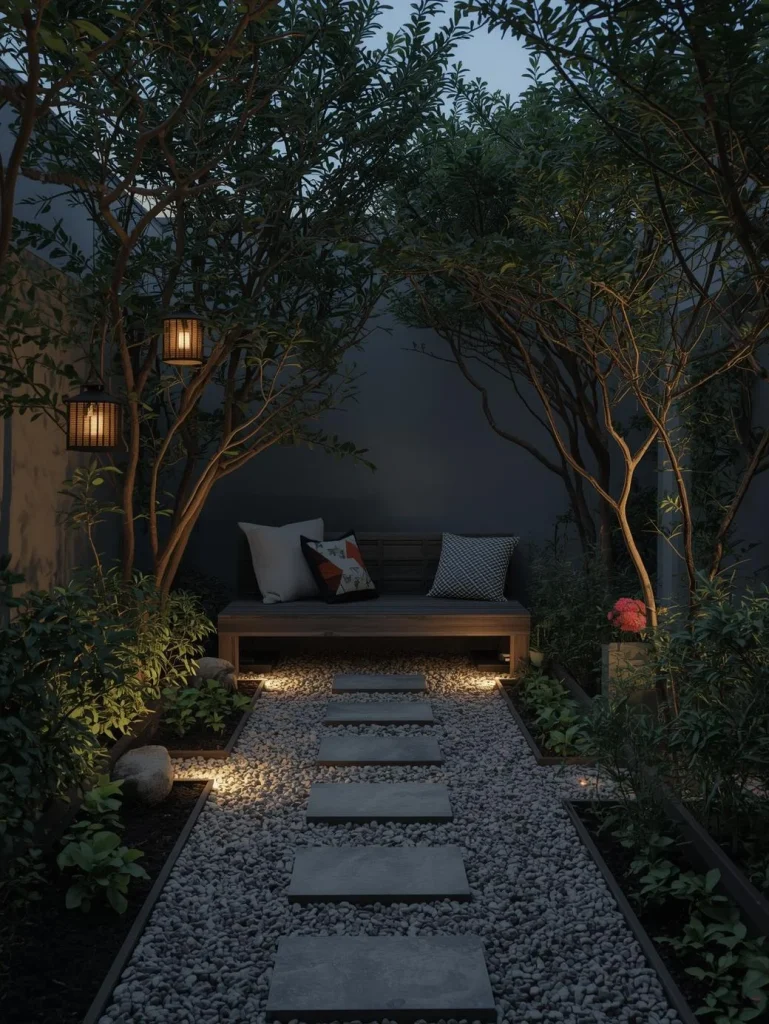
- Use stepping stones or narrow gravel paths to create gentle transitions.
- Incorporate a small seating nook surrounded by lush greenery for quiet tea moments.
- Add soft lighting with solar lanterns or hidden LED strips to enhance evening calm.
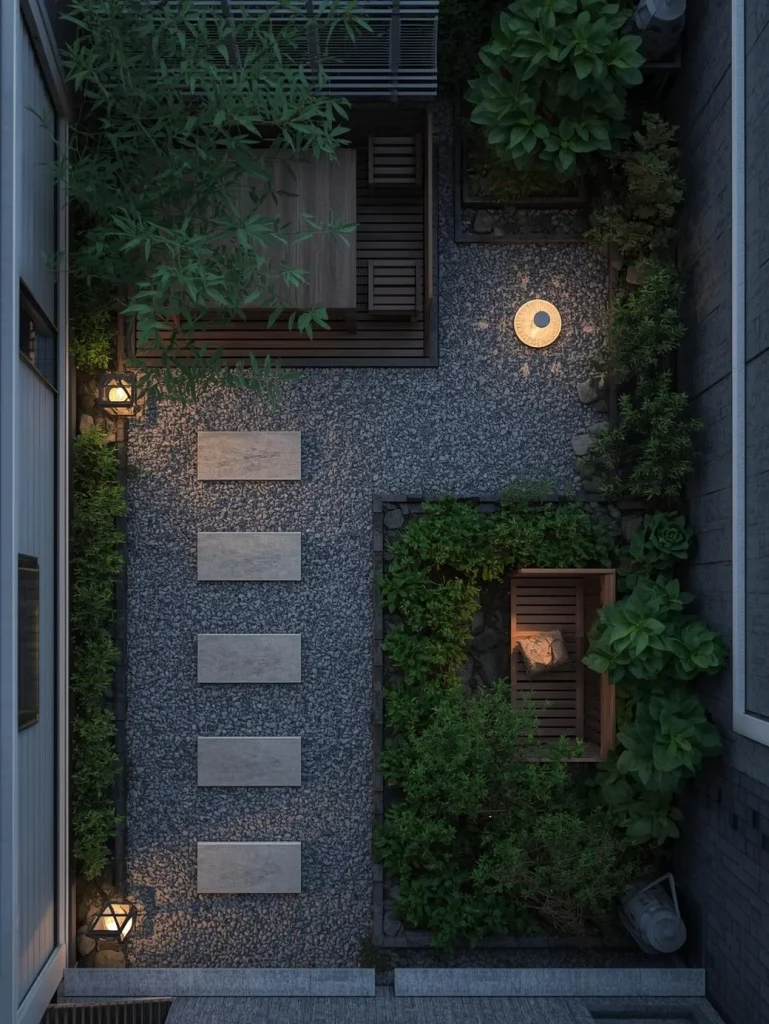
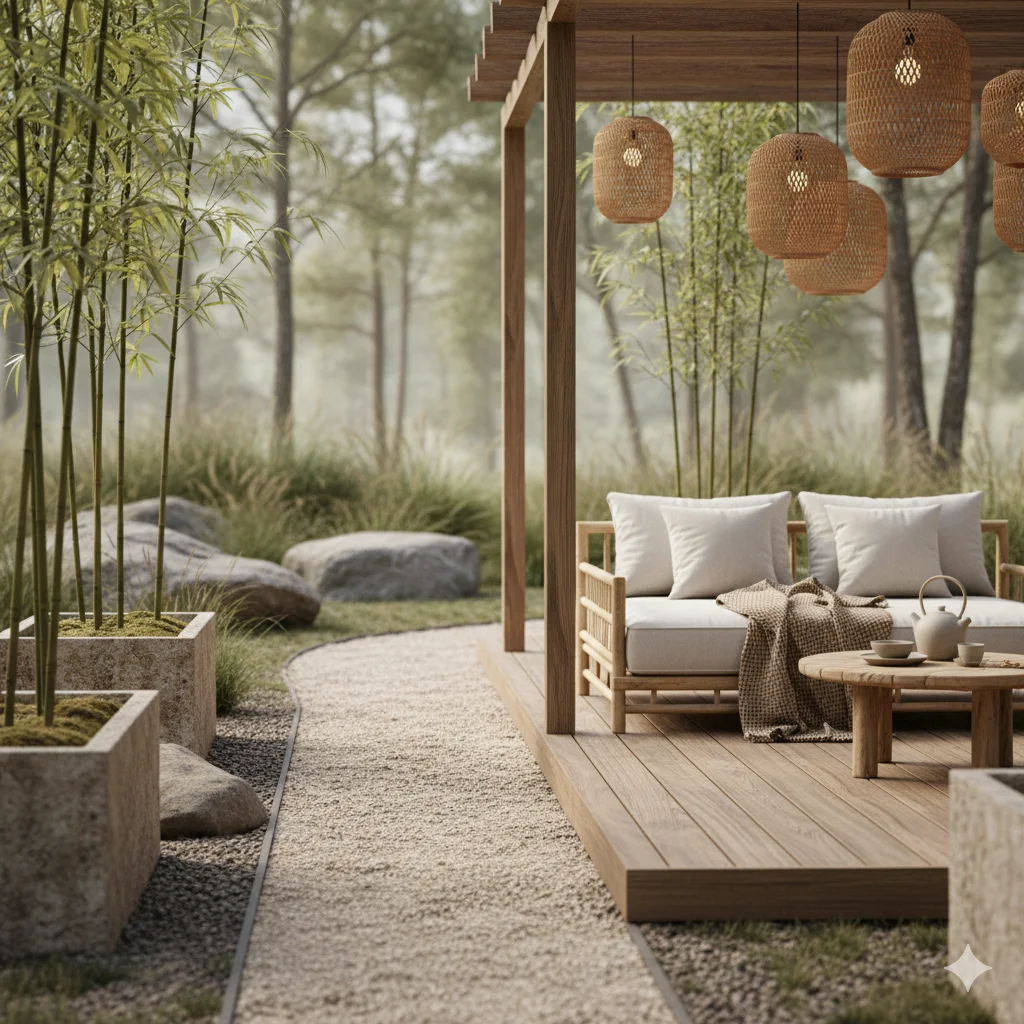
Tip: Avoid symmetry; instead, embrace slightly uneven patterns to mimic the natural world—a subtle nod to wabi-sabi.
Sustainable and Mindful Décor Choices
Sustainability lies at the heart of Japandi style. Choose eco-conscious décor and locally sourced materials where possible. Handcrafted items add authenticity and texture.
- Use recycled planters or terracotta pots instead of plastic.
- Choose energy-efficient outdoor lighting.
- Incorporate native plants that thrive in your climate.
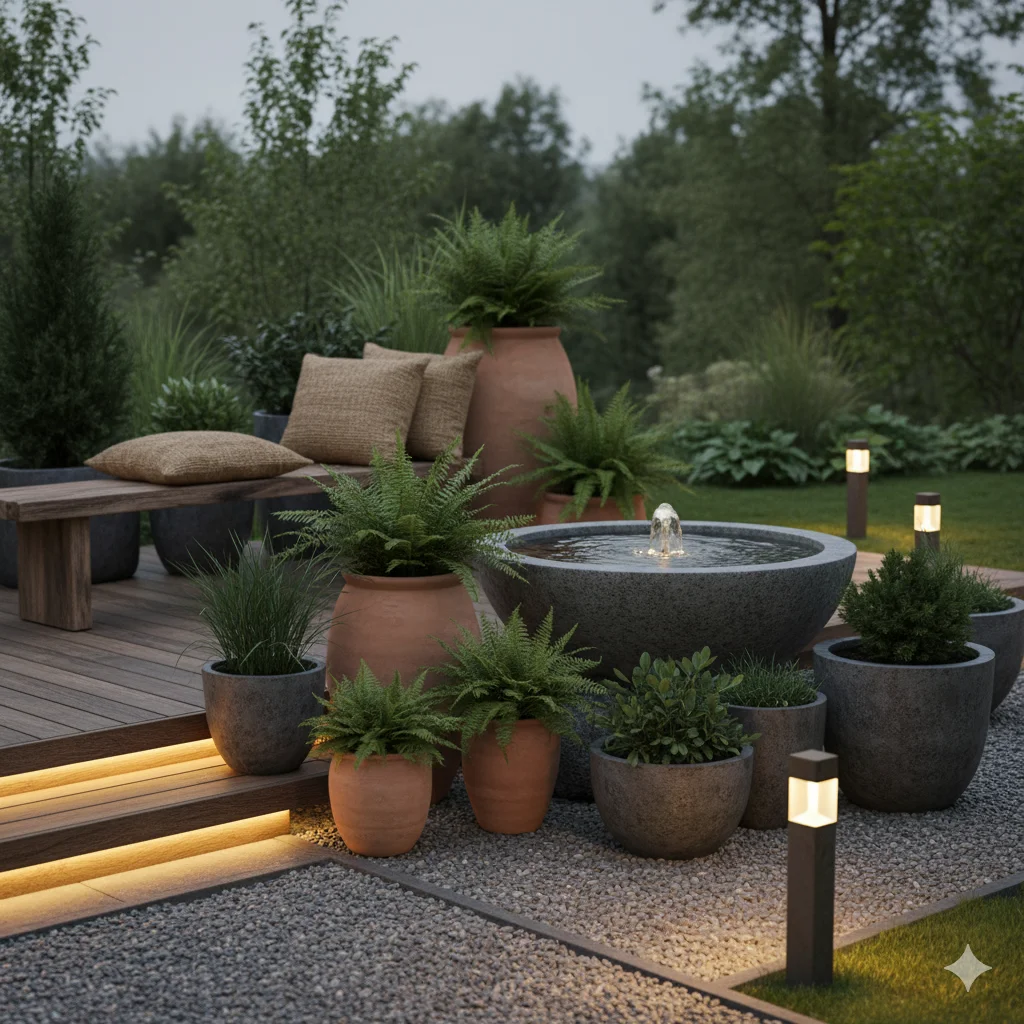
The goal is to create a garden that respects nature, not just imitates it.
Furniture and Accessories for a Japandi Garden Oasis
Your furniture should complement the minimalist, organic tone of the space. Here’s how to keep it cohesive:
- Seating: Go for low wooden benches, teak chairs, or woven loungers in neutral shades.
- Tables: Simple concrete or wood-slab tables enhance the earthy aesthetic.
- Textiles: Use linen or cotton cushions in beige, ivory, or soft gray tones.
- Décor: Minimalist lanterns, handcrafted ceramics, and soft throw blankets for evening warmth.
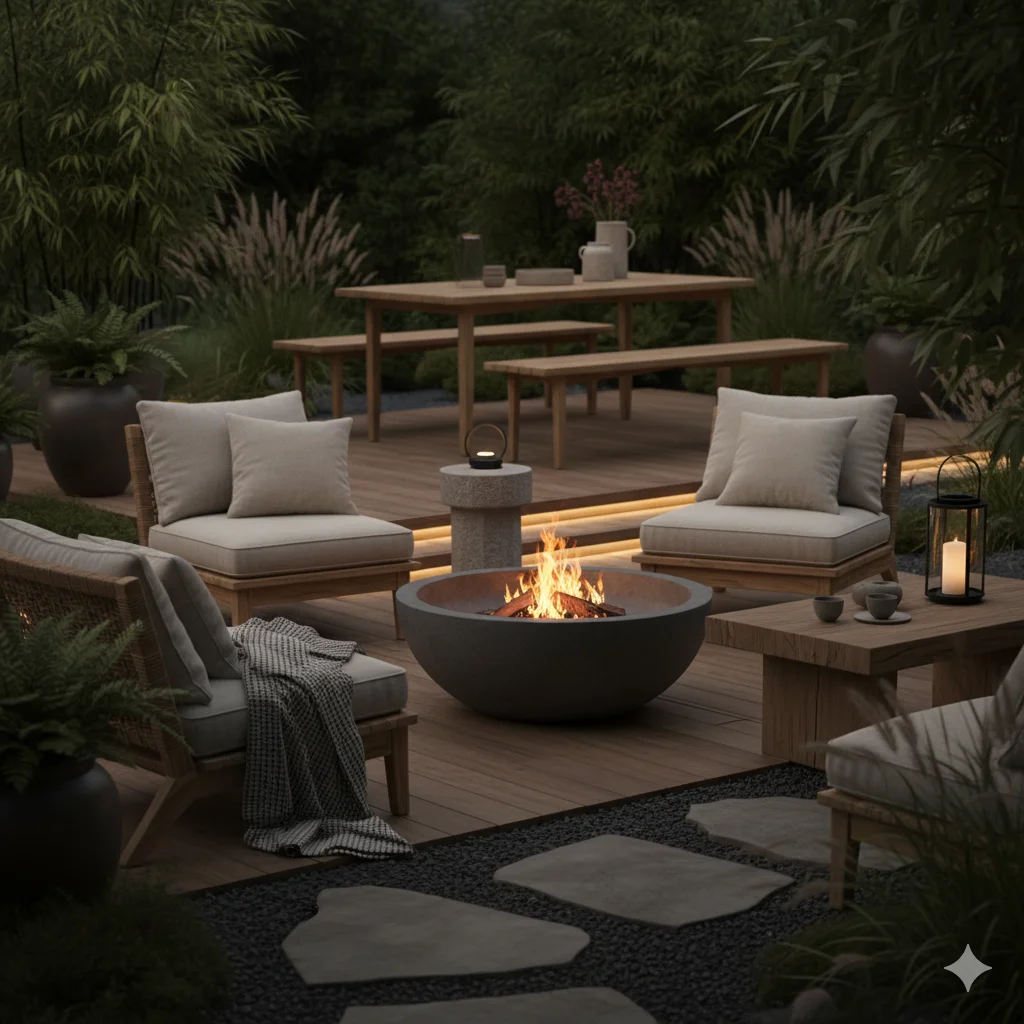
Add a fire bowl or stone lantern as a grounding centerpiece to encourage cozy, slow evenings outdoors.
Lighting: Subtle and Soothing Ambience
Lighting in a Japandi garden is all about creating a sense of calm after sunset. Skip harsh overhead lights and instead use:
- Solar-powered lanterns placed along pathways.
- Candles or LED tealights in frosted glass holders.
- Soft uplighting to highlight key plants or garden sculptures.
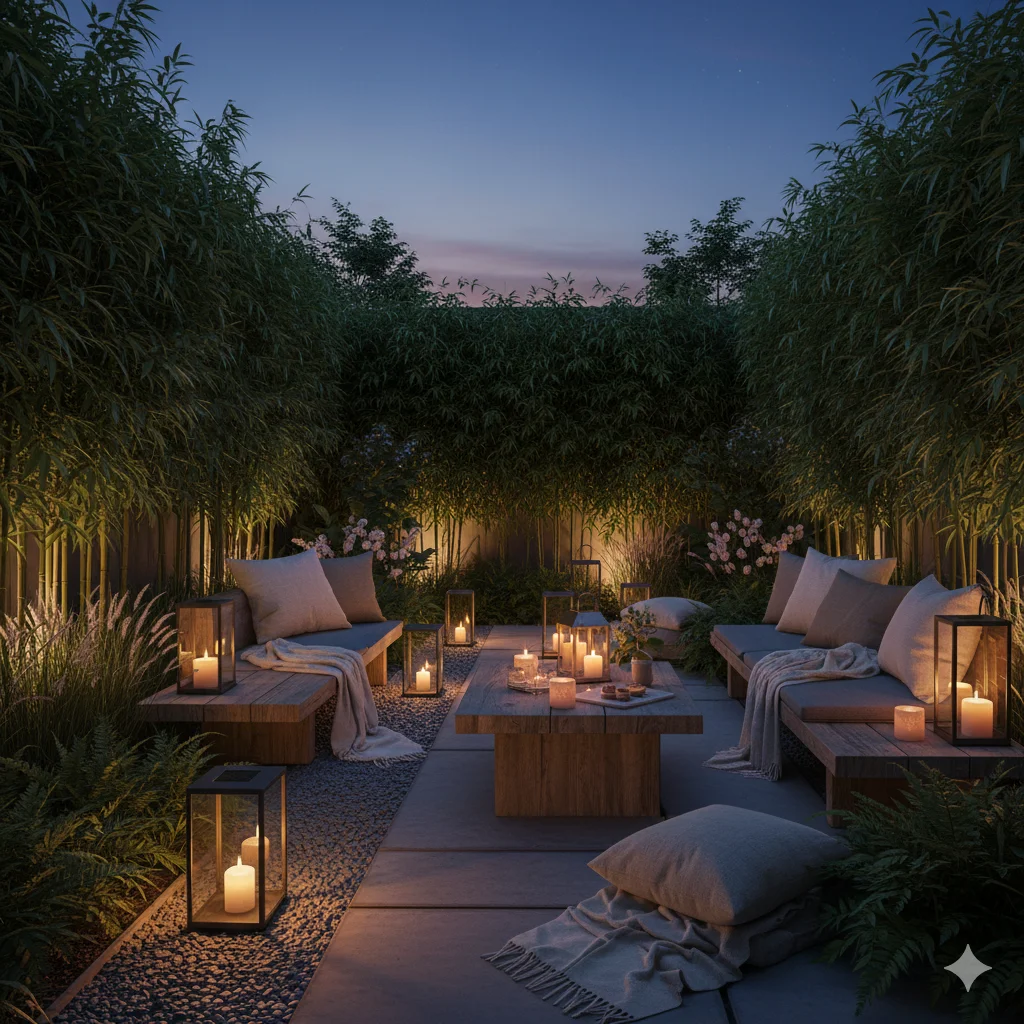
The idea is to make your garden glow softly—inviting, warm, and meditative.
Bringing Indoor Serenity Outdoors
Japandi living celebrates the indoor-outdoor connection, so let your interiors flow naturally into your garden. Use similar materials, colors, or décor themes between your home’s interior and garden.
For instance:
- Extend your wooden flooring to the patio.
- Use linen curtains or bamboo blinds on outdoor pergolas.
- Add indoor plants like monstera or fiddle-leaf figs to create continuity.
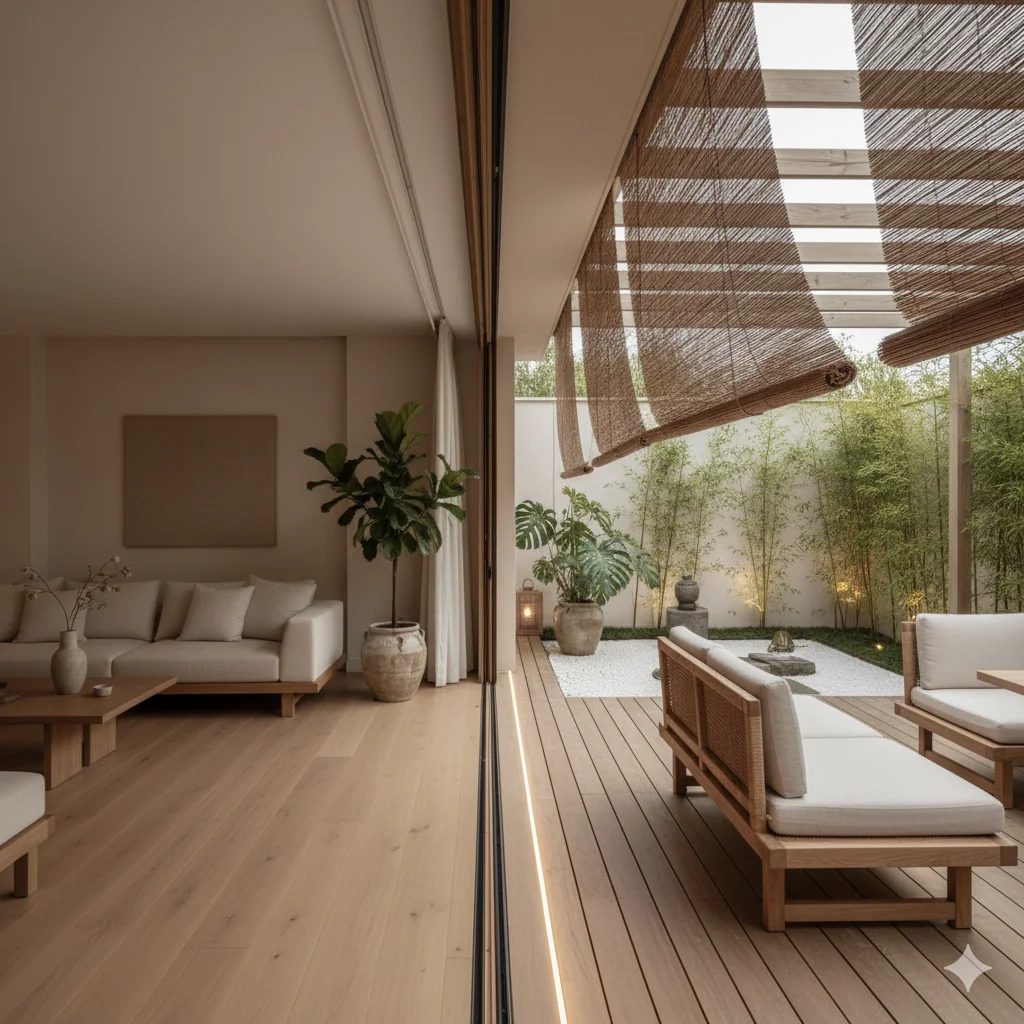
This creates a unified environment where home and nature merge seamlessly.
The Emotional Impact: A Garden for Mindful Living
A Japandi garden oasis is not just about design—it’s about feeling. It encourages slower moments, quiet mornings, and peaceful evenings spent outdoors. Whether you’re sipping matcha tea under a pergola or reading in a minimalist rattan chair, the ambiance nurtures calm and presence.
In an era of overconsumption and digital overload, Japandi gardens remind us of the luxury of simplicity.
Choosing Plants for a Japandi Garden
A Japandi garden asks for restraint in planting as much as in materials. Start with the conditions you have: notice how much sun each area receives, how water drains after rain, and which plants already thrive nearby. Plants suited to the site need less intervention, which suits the low-effort spirit of the style.
Build around a short palette and repeat it. A handful of reliable structural plants, echoed in drifts or pairs, creates rhythm without visual noise. Let evergreen form take the leading role so the garden holds its shape through the quieter months, then add a few seasonal accents for gentle change.
Favor foliage texture and silhouette over bright flower color. Fine grasses beside broad leaves, or a sculptural small tree against a plain fence, give lasting interest. And resist filling every gap: the space between plants is breathing room that lets each form be appreciated.
Seasonal Care for a Minimalist Garden
A minimalist garden stays beautiful through steady, light-touch care rather than intensive overhauls. In spring, clear winter debris, refresh mulch where it has thinned, and check that paths and edging are still crisp after the frost. This is also the moment to divide perennials that have outgrown their allotted space.
Through summer, water deeply and less often so roots grow downward, and do most tidying in the cool of the morning. In autumn, consider leaving seed heads standing; their silhouettes add texture through the darker months. Rake fallen leaves off paths and gravel, but let them lie beneath shrubs as natural mulch.
Winter care is mostly about restraint. Avoid walking on frozen ground, brush heavy snow from evergreen branches before it builds up, and group vulnerable containers in a sheltered spot. A few minutes of attention each week, spread across the seasons, keeps the quiet order of the garden intact.
Small-Space Japandi Garden Ideas
Japandi principles suit balconies, courtyards, and compact patios, where restraint matters even more. Begin by deciding what the space is for: morning coffee, evening unwinding, or simply a green view from indoors. One clear purpose prevents the clutter of trying to fit in everything.
Use height thoughtfully. A simple trellis or slatted screen adds privacy and a backdrop for planting without closing the space in. Choose containers in one or two materials and repeat them; matching pots grouped together read as a single calm composition rather than a collection of odds and ends.
Keep the planting palette tight and give the space a single focal point: a handsome stone, a small multi-stem tree, or a still water bowl. In a small space every element is visible at once, so each one must earn its place. Fewer objects and generous negative space will make even the tiniest garden feel composed.
Final Thoughts
Creating a Japandi garden oasis is an invitation to live mindfully, design sustainably, and embrace the beauty of restraint. With neutral tones, organic textures, and balanced landscaping, you can transform your backyard into a peaceful escape inspired by Scandinavian simplicity and Japanese Zen harmony.
Let your garden breathe, let light move softly, and allow nature to be the star—because, in Japandi design, less truly is more.
Explore More Modern Minimalist Garden Ideas
If you loved designing your Japandi garden oasis, you’ll also enjoy our pillar post on 8 Modern Minimalist Garden Styles. From sleek Scandinavian terraces to Zen-inspired backyards, this guide explores versatile garden layouts, styling tips, and décor inspiration to create calm and functional outdoor spaces.
Read more here: 8 Modern Minimalist Garden Styles





One Comment