

Inside a Solarpunk Kitchen: A Vision of Sustainable Culinary Futurism
Imagine stepping into a kitchen that is not just a place to cook but a living, breathing ecosystem—a space where every surface, every plant, and every pipe tells a story of self-sufficiency. This is the Solarpunk kitchen, a harmonious blend of sustainability, technology, and artful design. It’s where the aesthetic of abundance meets practical ecological function, offering a carbon-negative, self-sustaining environment that nourishes both body and planet.
The Aesthetic is Function: Visible Abundance
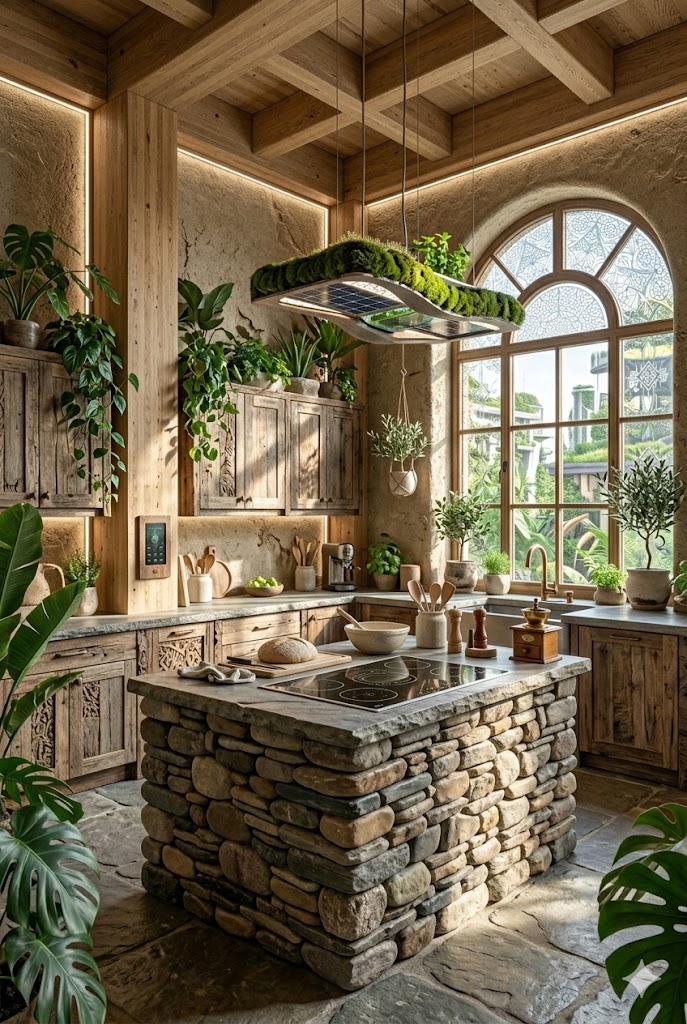
In solarpunk design, function and beauty are inseparable. The kitchen’s Visible Abundance concept means that the elements that make it self-sustaining are proudly on display. Imagine lush vertical gardens cascading beside exposed copper pipes, sunlight streaming through BIPV windows (solar-integrated glass), and reclaimed wooden shelving showcasing colorful jars of preserved foods. Here, nothing is hidden; the kitchen’s life-giving systems are an integral part of the décor.
Plants are everywhere, from hanging baskets above the island to floor-to-ceiling aeroponic towers, creating a lush, green environment that communicates vitality at first glance. The exposed structural Cross-Laminated Timber beams framing the breathable, insulating Hempcrete walls, reinforce the kitchen’s commitment to carbon-negative building materials while adding warmth and texture to the space.
Indoor farming technologies are expanding quickly, with the global vertical farming market projected to reach USD 33 billion by 2032, driven by demand for home-based food production.

The Kitchen as a Closed-Loop Ecosystem
A solarpunk kitchen transcends traditional boundaries. It is an ecosystem, where cultivation, consumption, and decomposition coexist in balance.
The heart of the solarpunk kitchen is its closed-loop design, where four core systems are integrated in plain sight:
Vertical Aeroponics:
Hydroponic towers utilize nutrient-rich water circulated via visible copper pipes, providing fresh produce all year round. The design allows anyone entering the kitchen to see exactly where and how food is grown. Vertical aeroponics maximizes space and sunlight, letting the kitchen itself produce fresh ingredients at a glance.
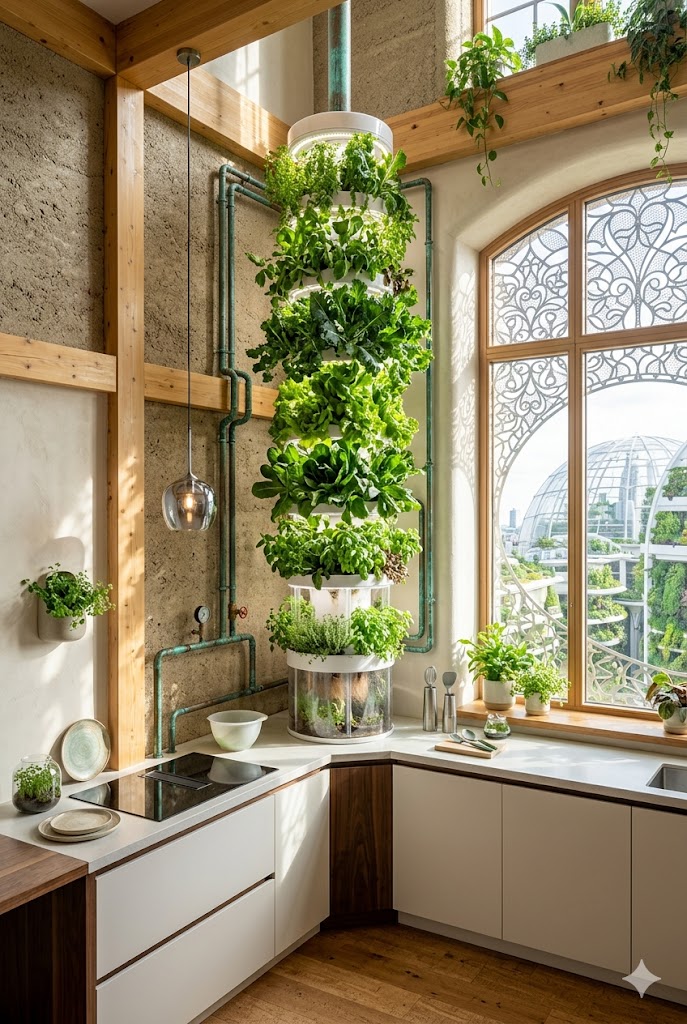
Aeroponics has become one of the fastest-growing segments in indoor agriculture, expected to increase at over 20% CAGR due to its efficient water use and high yield in small spaces.
1. Fermentation Nexus:
More than a countertop feature, this carved stone block becomes the hub for living foods, demonstrating the art and science of fermentation in a tactile, aesthetic way. It’s both functional and visually striking, celebrating slow, living food processes.
2. Greywater Recycling:
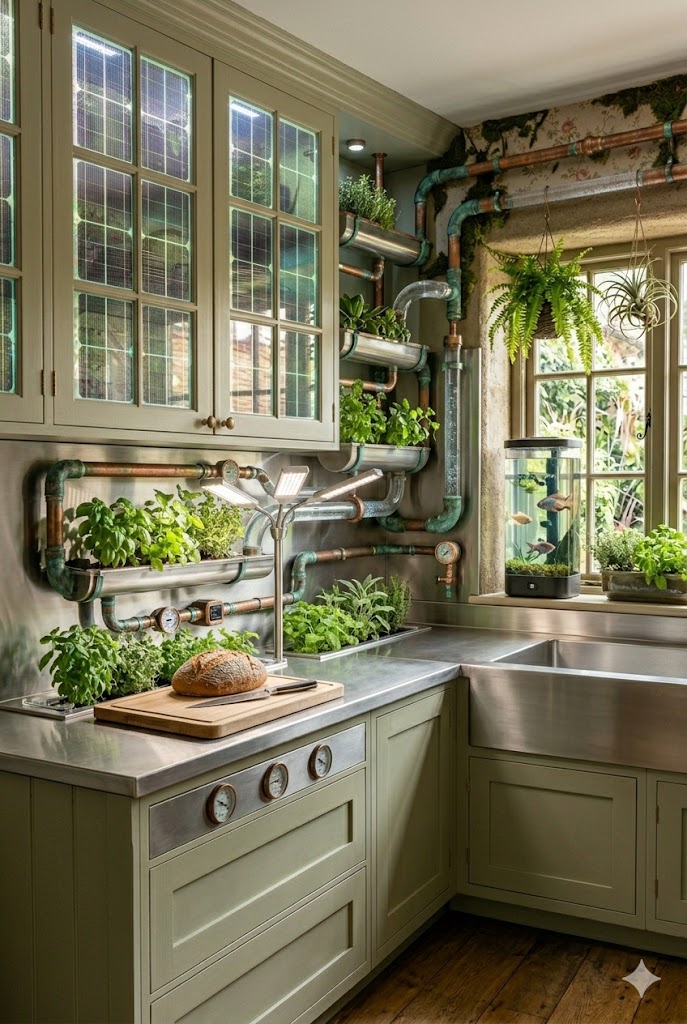
Exposed oxidized copper pipes carry filtered water from sinks and appliances to plants or garden beds. The circulation is part of the visual design, turning a normally hidden process into an educational and beautiful spectacle.
Greywater systems can reduce household water waste by up to 40%, making them a foundational element in regenerative design.
3. BIPV Windows:
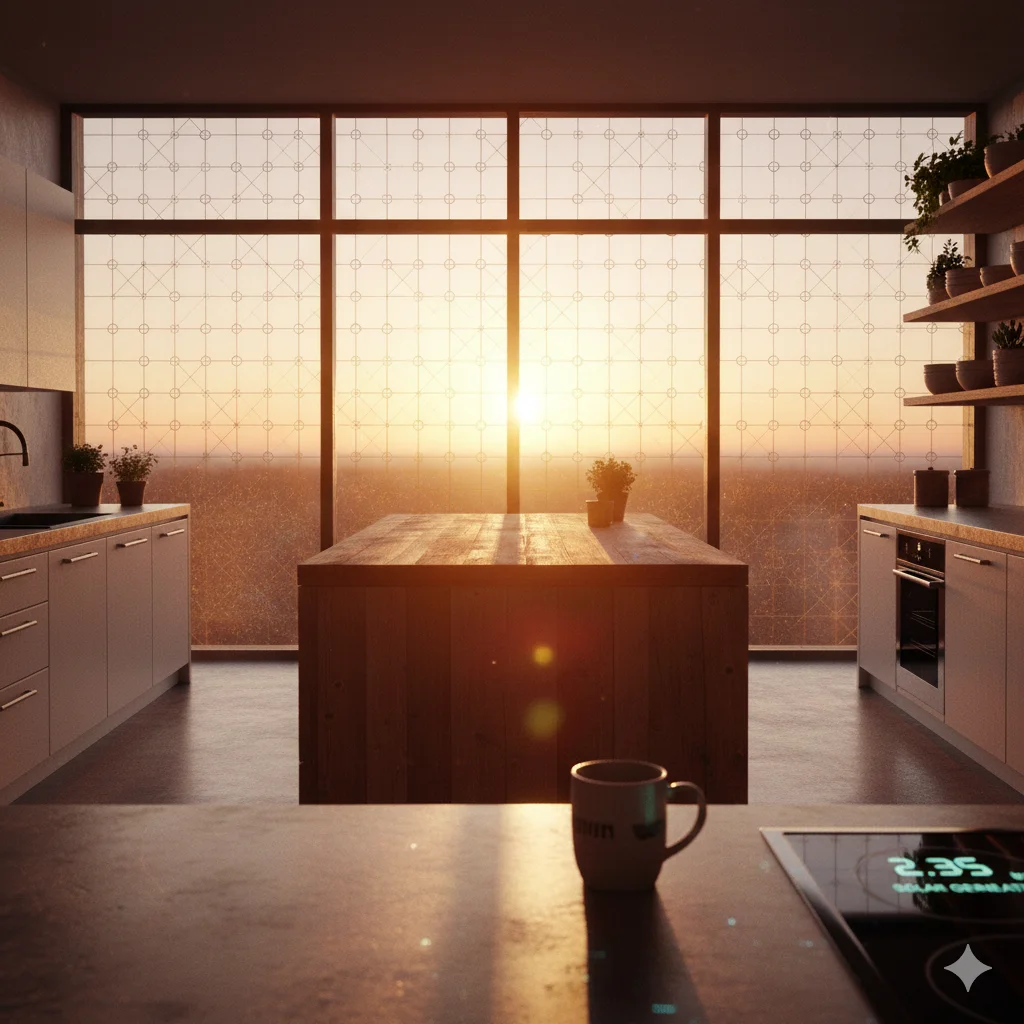
Windows double as solar panels, generating electricity while letting in natural light. These Building-Integrated Photovoltaics turn a simple view to the outside into a productive, energy-generating surface.
BIPV (Building-Integrated Photovoltaics) installations are rising steadily, with global adoption expected to surpass 17 GW by 2030, reflecting interest in multifunctional solar surfaces.
4. Decomposition:
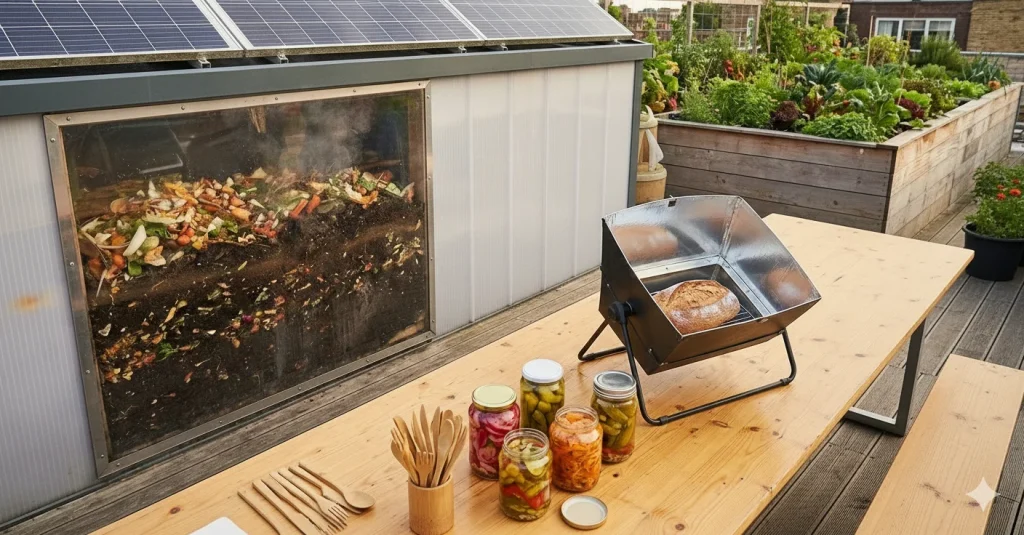
Advanced composting systems are seamlessly integrated, turning scraps into nutrient-rich soil for the non-aeroponic plants, completing the cycle of renewal.
5. Carbon-Negative Materials
Every choice in a solarpunk kitchen contributes to reducing environmental impact. Cross-Laminated Timber (CLT) replaces conventional cabinetry and structural wood, storing carbon for decades. Hempcrete walls provide natural insulation, breathable surfaces, and additional carbon sequestration. Even countertops and shelving prioritize reclaimed or low-impact materials, reinforcing the kitchen’s role as a sustainable hub.
Buildings using carbon-negative materials like CLT and hempcrete contribute to significant carbon storage; CLT alone can store up to 1 ton of CO₂ per cubic meter.
Styling Tips for Your Solarpunk Kitchen
- Embrace greenery: Don’t just have a single herb pot—think floor-to-ceiling vertical gardens and hanging planters.
- Show your systems: Expose pipes, wires, and structural beams as part of the aesthetic. Industrial chic meets ecological function.
- Use natural textures: Combine CLT, reclaimed stone, hemp-based materials, and glass to create a layered, earthy palette.
- Highlight living processes: Keep fermenting foods, sprouting seeds, and composting visible. Life is beautiful when functional.
- Balance light: Incorporate daylight with BIPV windows and ambient indoor lighting to energize plants and create a warm atmosphere.
Botanical prints can make a solar kitchen feel warmer, more relaxed, and connected to the rest of your décor. For a coordinated botanical look, see the 8 nature-inspired botanical prints from Rose Glyde Studio.
Beyond Technology: Community and Resilience
While the technology is impressive, the true heart of Solarpunk lies in its philosophy. It is not just about a futuristic look; it is about creating a lifestyle that is both generous and secure.
The Community Aspect
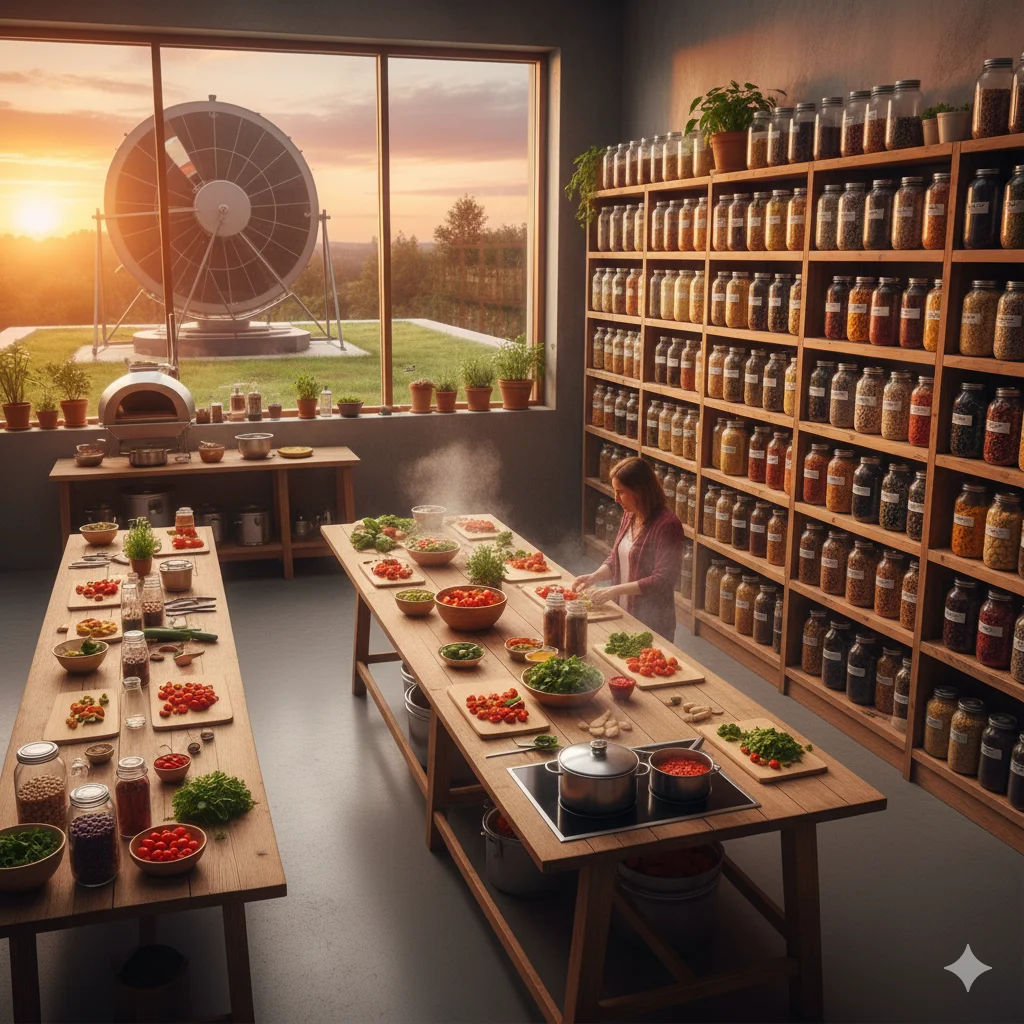
A Solarpunk kitchen is rarely a lonely place; it is designed to be a hub of connection. The systems are built for “visible abundance,” creating a surplus that naturally spills over into the wider community. This is a kitchen that produces more fresh greens, herbs, and ferments than a single family needs, encouraging trade and sharing with neighbors. In this way, the kitchen moves beyond simple utility to become a catalyst for social bonding and mutual aid.
Resilience and Independence
Why do we want this kitchen? Not just because it is beautiful, but because it is safe. The Solarpunk ethos is deeply rooted in autonomy. In a world of fluctuating global supply chains and shifting climates, the Solarpunk kitchen offers a sanctuary of security. With energy generated from the windows, food growing on the walls, and water recycled on-site, it transforms the home from a passive consumer into an active, resilient producer, ensuring stability regardless of the changing world outside.
Why Solarpunk Kitchen Design Is Gaining Momentum
Recent sustainability reports show that indoor food cultivation is growing rapidly, with home hydroponic and aeroponic systems expected to surpass $20 billion in global market value by 2030. More households are adopting small-scale growing systems to cut grocery costs and reduce reliance on long supply chains.
Energy-efficient homes are also becoming more achievable as Building-Integrated Photovoltaics (BIPV) continue to expand, with the sector projected to grow by more than 18% annually. This shift makes solar-generating windows a practical upgrade that blends seamlessly into everyday living spaces.
Water-conscious design is another driving factor. Studies indicate that greywater reuse can reduce household water consumption by 25–40%, making visible water loops not just sustainable but highly effective in regions facing water stress. When combined with composting and carbon-negative materials like hempcrete and Cross-Laminated Timber, these systems help lower a kitchen’s environmental footprint while creating a regenerative, closed-loop environment.
Indoor greenery is also backed by research, with NASA and biophilic design studies showing that plants can improve indoor air quality by reducing certain pollutants by up to 60%. In a solarpunk kitchen, this effect is amplified through dense vertical growing walls and continuous plant activity that bring more oxygen and natural humidity into the home.
Related
- Inside a Solarpunk Home: Blending Nature, Technology & Artful Sustainability
- Embrace the Solarpunk Lifestyle: Turning Your Balcony Garden into a Green Haven
- Guide to Sustainable Gardening and Landscaping: Creating Harmony with Nature
- Smart Gardening Tech for Fall/Winter: Extend Your Green Thumb Through the Cold Seasons
- Solar-Powered Garden: How to Use Renewable Energy in Your Backyard
- Solarpunk Bathroom: A Mini Eco-Sanctuary for Sustainable Living


