How to Grow Herbs in Terrariums for Kitchen Décor and Fresh Cooking
Growing herbs in terrariums is one of the most charming ways to combine kitchen décor with fresh, home-grown flavor. These miniature glass gardens bring greenery indoors, save space, and keep your favorite culinary herbs within arm’s reach while cooking. Whether your kitchen is small, modern, rustic, or cottage-style, a well-styled herb terrarium adds life, beauty, and functionality to your space.
In this guide, you’ll learn how to grow herbs in terrariums step by step, which herbs work best, how to style them beautifully for kitchen décor, and how to keep them healthy for everyday cooking.

Table of Contents
Why Grow Herbs in Terrariums?
Terrariums are more than just decorative glass containers—they create a controlled micro-environment that supports healthy plant growth when done correctly.
Benefits of Herb Terrariums for Kitchens
- Space-saving solution for apartments and small kitchens
- Adds natural, biophilic décor to shelves and countertops
- Provides fresh herbs year-round
- Reduces grocery costs and food waste
- Easy to maintain with proper setup
- Perfect for decorative yet edible plant styling
Growing herbs in terrariums also supports sustainable living, encouraging you to cook with fresh ingredients while keeping your kitchen visually inspiring.
Open vs Closed Terrariums: Which Is Best for Herbs?
Not all terrariums are the same—and when it comes to herbs, choosing the right type is essential.
Open Terrariums (Best Choice for Herbs)
Open terrariums allow airflow and prevent excess moisture buildup.
Best for:
- Basil
- Thyme
- Rosemary
- Mint
- Parsley
- Chives
Closed Terrariums (Use with Caution)
Closed terrariums trap humidity and are better suited for tropical plants—not most herbs.
If used:
Only choose moisture-loving herbs like mint, and keep the lid slightly ajar.
For kitchen herb terrariums, open containers are highly recommended.
Best Herbs to Grow in Terrariums for Cooking
Not every herb thrives in a terrarium environment. Choose compact, slow-growing herbs that adapt well indoors.
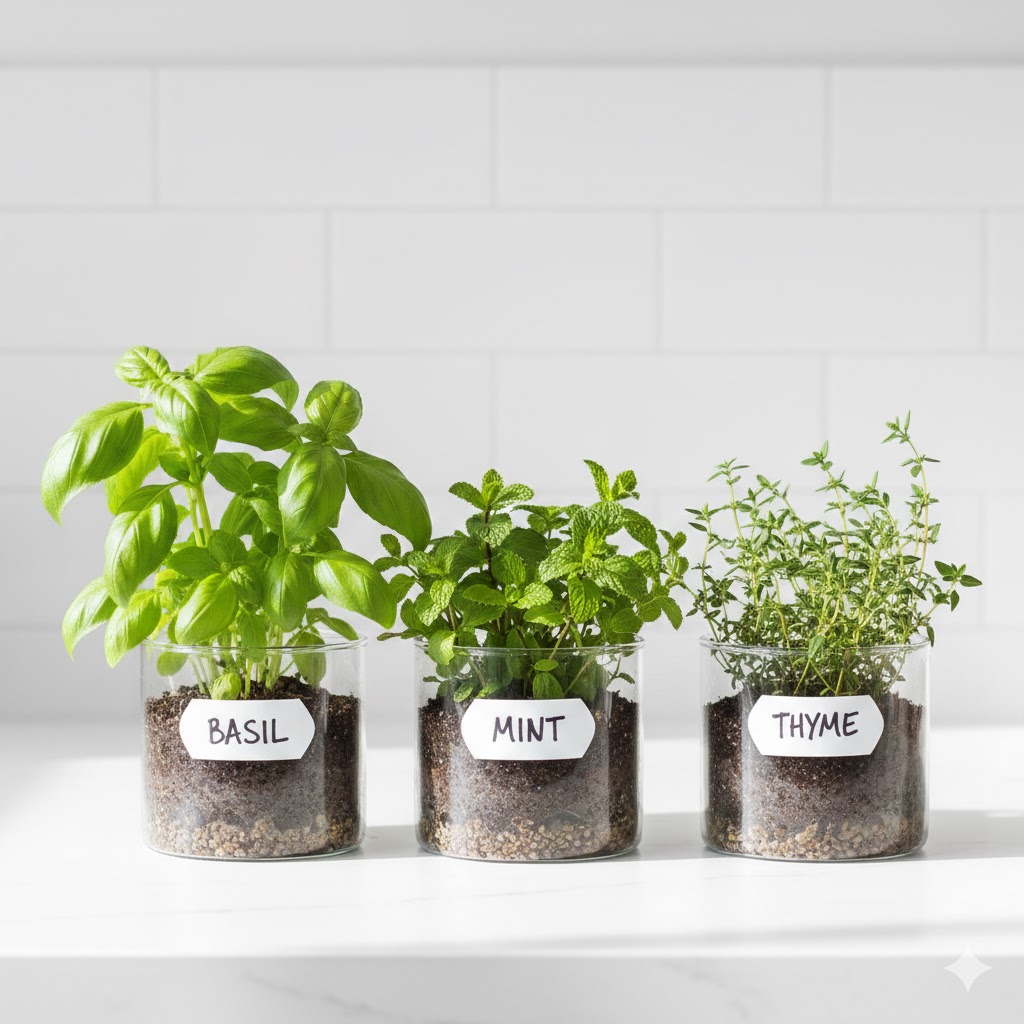
Top Herbs for Terrarium Gardening
Basil
- Bright, aromatic leaves
- Thrives in warm kitchens
- Perfect for cooking and garnishing
Thyme
- Low-growing and drought-tolerant
- Great for small glass bowls
Mint
- Hardy and fast-growing
- Excellent for teas, desserts, and drinks
Parsley
- Compact and versatile
- Adds lush greenery
Chives
- Thin stems suit small containers
- Ideal for savory dishes
Oregano
- Easy to maintain
- Works well in bright kitchens
Choosing the Right Terrarium Container
The container sets the foundation for both plant health and kitchen aesthetics.
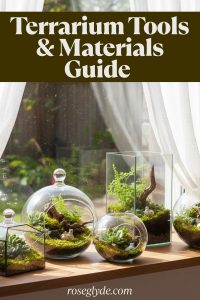
Best Terrarium Containers for Herbs
- Glass jars
- Fish bowls
- Hanging glass orbs
- Apothecary jars
- Wide-mouth glass vases
Key features to look for:
- Wide opening for airflow
- At least 6–8 inches deep
- Clear glass for light penetration
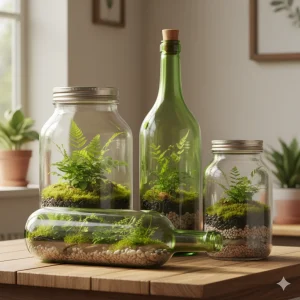
Avoid narrow-neck bottles—they trap humidity and make harvesting difficult.
How to Plant Herbs in a Terrarium (Step-by-Step)
Creating a healthy herb terrarium is simple when layered correctly.

Step 1: Add Drainage
Start with a layer of small pebbles or gravel at the bottom.
- Prevents root rot
- Improves drainage
Step 2: Activated Charcoal Layer
Add a thin layer of activated charcoal.
- Keeps soil fresh
- Prevents odor and mold
Step 3: Soil Mix
Use a light, well-draining potting mix.
- Ideal mix: potting soil + sand or perlite
- Avoid heavy garden soil
Step 4: Plant the Herbs
- Gently remove herbs from nursery pots
- Loosen roots slightly
- Plant with enough spacing
Step 5: Light Watering
Water lightly—soil should be moist, not soggy.
Where to Place Herb Terrariums in the Kitchen
Light is crucial for healthy herb growth.

Best Placement Ideas
- Near a south- or west-facing window
- On open kitchen shelves
- On countertops with natural light
- Near a sunny sink area
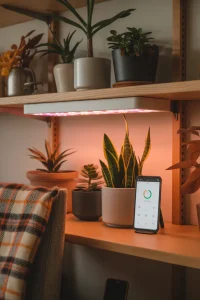
If natural light is limited, consider a small LED grow light for indoor herb terrariums.
Watering & Maintenance Tips for Herb Terrariums
Overwatering is the most common mistake.
Watering Guidelines
- Water only when top soil feels dry
- Use a spray bottle or small watering can
- Avoid water pooling at the bottom
Pruning & Harvesting
- Trim regularly to encourage growth
- Never harvest more than one-third of the plant
- Use fresh clippings immediately in cooking
Signs Your Herb Needs Attention
- Yellowing leaves → too much water
- Wilting → needs light or hydration
- Mold → improve airflow and reduce watering
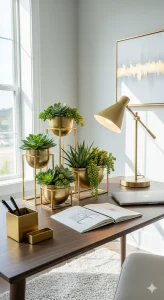
Styling Herb Terrariums as Kitchen Décor
Herb terrariums aren’t just functional—they’re beautiful design elements.
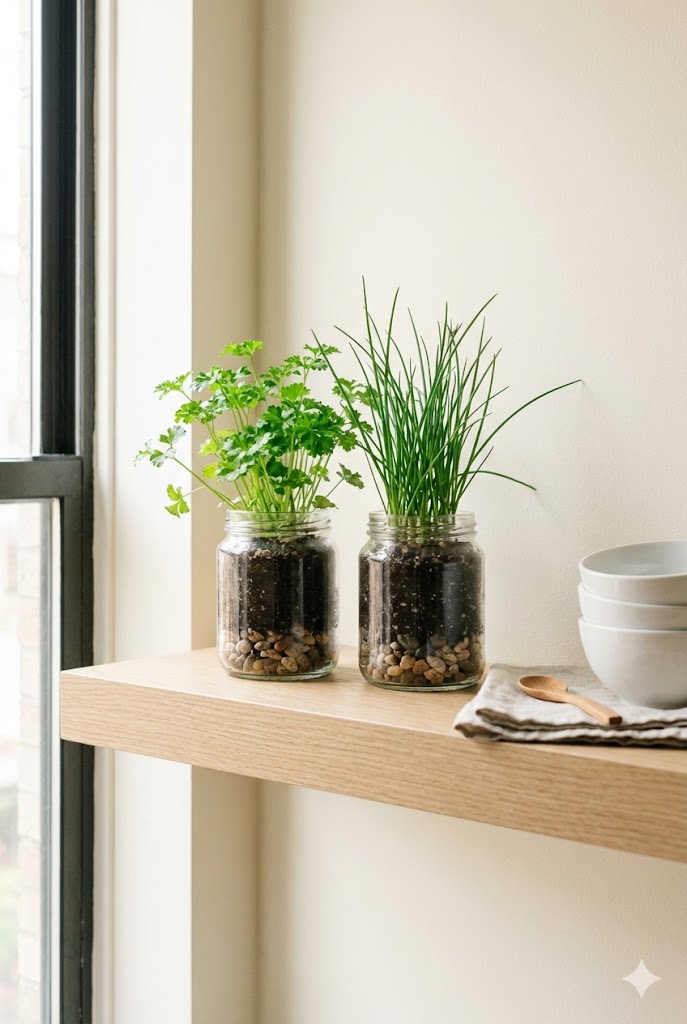
Kitchen Styling Ideas
- Group 3 terrariums on a wooden tray
- Mix herbs with small labels or chalk tags
- Pair with cutting boards and ceramic bowls
- Combine glass terrariums with terracotta accents
- Use hanging terrariums near windows
For cottagecore or rustic kitchens, layer in vintage jars. For modern kitchens, opt for sleek glass bowls with minimalist labels.
Common Mistakes to Avoid
- Using closed terrariums for dry-loving herbs
- Overwatering
- Poor drainage layers
- Insufficient light
- Planting herbs that grow too large
Choosing the right setup from the beginning prevents most issues.
Are Herb Terrariums Safe for Cooking?
Yes! As long as you:
- Use organic soil
- Avoid chemical fertilizers
- Keep glass containers clean
Herbs grown in terrariums are perfectly safe and flavorful for everyday cooking.
How to Prune and Harvest Terrarium Herbs
Pruning keeps terrarium herbs compact, productive, and healthy. In a small glass container, unpruned herbs quickly become leggy and crowd their neighbors, so regular trimming is essential rather than optional.
Always cut just above a leaf node, the point where leaves meet the stem. This encourages the plant to branch and grow bushier instead of tall and sparse. For basil, pinch the top sets of leaves regularly to prevent flowering, which can make the leaves taste bitter. Use clean, sharp scissors or pinch with your fingernails to avoid crushing the stems.
Follow the one-third rule: never remove more than a third of the plant at one time. Terrarium herbs have limited root space and recover more slowly than garden plants, so gentle, frequent harvests work better than occasional heavy ones. Harvest in the morning, when essential oils are most concentrated, for the best flavor. Snipping a few stems for cooking doubles as maintenance, keeping plants tidy without extra effort.
For woody herbs like rosemary and thyme, avoid cutting into old, woody stems, since they may not regrow. Focus on soft, green growth instead, and never strip a stem completely bare.
Troubleshooting Common Herb Terrarium Problems
Even a well-planned terrarium can run into trouble. Here is how to diagnose and fix the most common issues.
Mold on the soil surface usually signals excess moisture and poor airflow. Scrape off the affected layer, let the soil dry slightly, and improve ventilation around the container. Watering less frequently and avoiding misting the soil surface helps prevent it from returning.
Soggy soil and drooping stems point to overwatering or inadequate drainage. Allow the soil to dry out between waterings and confirm that the pebble drainage layer is thick enough to hold excess water away from the roots. If the roots look dark and mushy, remove the affected plant promptly so rot does not spread to its neighbors.
Leggy, stretched growth with pale, widely spaced leaves means the herbs need more light. Move the terrarium to a brighter spot or add a small grow light, then prune back the leggy stems to encourage compact, bushy regrowth.
Yellowing leaves most often indicate too much water. Check the soil moisture before watering again, and only consider a light feeding if new growth still looks very pale after watering is corrected.
A few herb-specific notes: basil dislikes cold drafts and sulks near chilly windows, mint tolerates more moisture than most herbs, and rosemary demands excellent drainage. Soggy soil will kill rosemary faster than drought ever will.
Seasonal Care Adjustments for Herb Terrariums
Herb terrariums need slightly different care as light and temperature shift through the year.
Spring: Growth resumes as days lengthen. Gradually increase watering, refresh the top layer of soil if it looks compacted, and replace any tired or overgrown plants. This is the best season for a full terrarium reset, since herbs establish quickly in the strengthening light.
Summer: Light is plentiful, but a sunny windowsill can become intensely hot behind glass. Watch for wilting or scorched leaf edges and move the terrarium back slightly if needed. Water more often, but still let the top of the soil dry between waterings. Rotate the container every week or two so growth stays even on all sides.
Fall: Daylight shrinks noticeably. Move the terrarium closer to your brightest window and reduce watering as growth slows. Hold off on feeding, since plants need little nutrition while they wind down.
Winter: Short days mean weak light, so consider a small LED grow light to keep herbs productive. Water sparingly, because plants use far less moisture in low light and cool rooms. Keep terrariums away from cold, drafty windows at night and from hot, dry radiators, since both extremes stress herbs.
Final Thoughts: Small Gardens, Big Flavor
Learning how to grow herbs in terrariums transforms your kitchen into a space that’s both stylish and practical. These mini gardens offer fresh ingredients, enhance your décor, and bring calming greenery indoors—all without needing a full garden.
Whether you’re styling a cozy cottage kitchen or a modern apartment, herb terrariums prove that good design can also be delicious