The Ultimate Guide to Terrariums: Create Your Own Mini Indoor Garden
The Ultimate Guide to Terrariums is your complete resource for creating beautiful miniature gardens that bring nature indoors. Whether you’re new to indoor gardening or looking for fresh terrarium ideas, these self-contained ecosystems offer a stylish and low-maintenance way to display plants in your home. From lush closed terrariums filled with moss and tropical plants to modern open terrariums showcasing succulents and air plants, there is a design for every space and skill level. In this guide, you’ll discover the different types of terrariums, the best plants to use, step-by-step DIY instructions, care tips, decorating ideas, and the latest terrarium trends to help you create a thriving glass garden that doubles as stunning home décor.
1. What is a Terrarium?
Beyond their decorative appeal, terrariums are now celebrated in wellness trends. Studies show that keeping greenery in your living space can reduce stress and improve air quality, and terrariums are one of the easiest ways to enjoy these benefits in compact form.
Definition and History
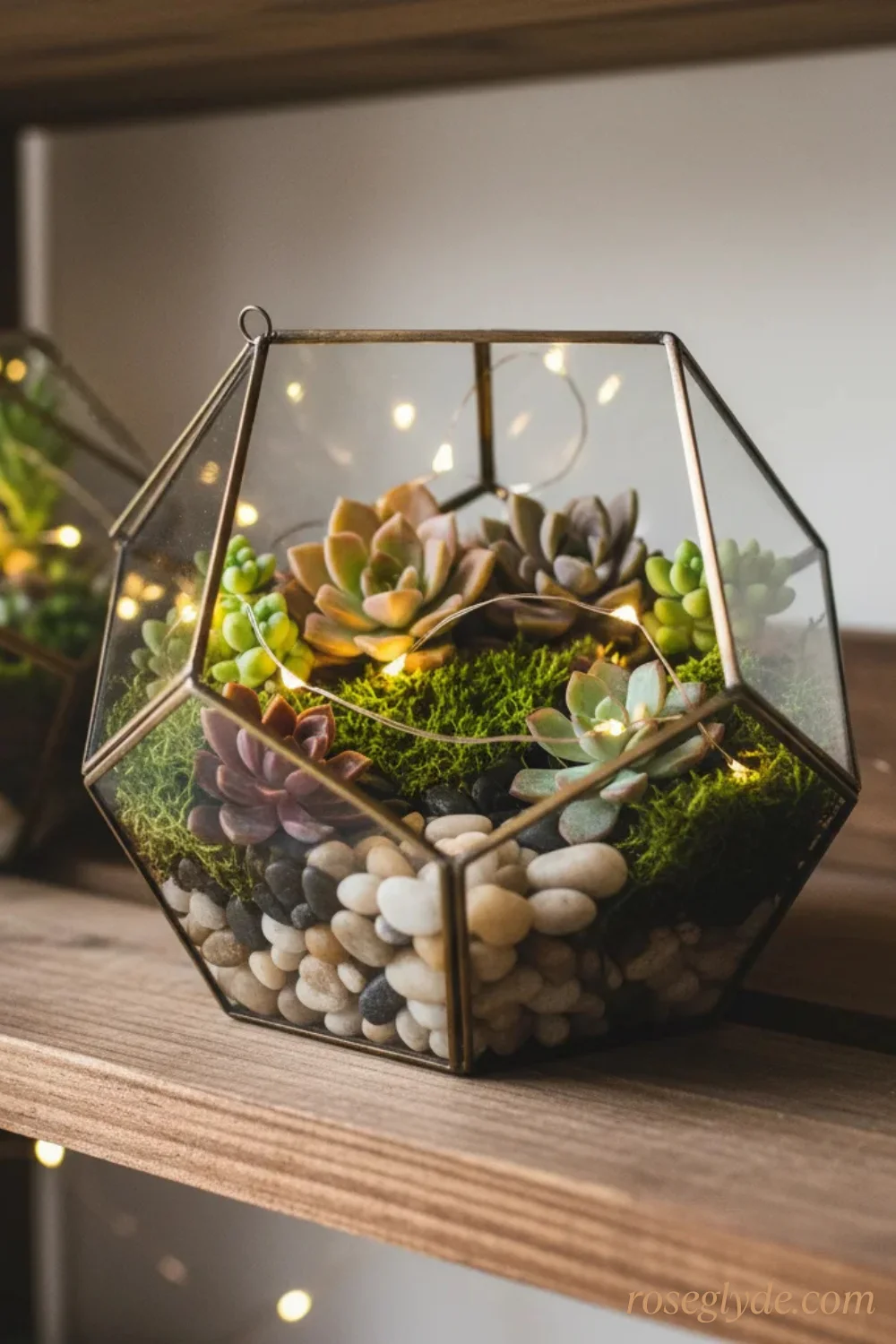
A terrarium is a miniature indoor garden enclosed in glass, creating a natural display that’s both beautiful and functional. First popularized in Victorian times as “Wardian cases,” terrariums are now trending again thanks to their low-maintenance appeal and décor versatility.
Terrariums vs. Potted Plants
Unlike traditional potted plants, terrariums create a contained ecosystem—especially closed terrariums, which recycle their own water through condensation. Potted plants require more frequent watering and exposure, while terrariums balance themselves naturally.
2. Types of Terrariums
Closed Terrariums
Self-sustaining ecosystems ideal for mosses, ferns, and tropical plants. They’re almost self-sustaining, but beginners should be careful not to overwater since moisture can’t escape easily.
Open Terrariums
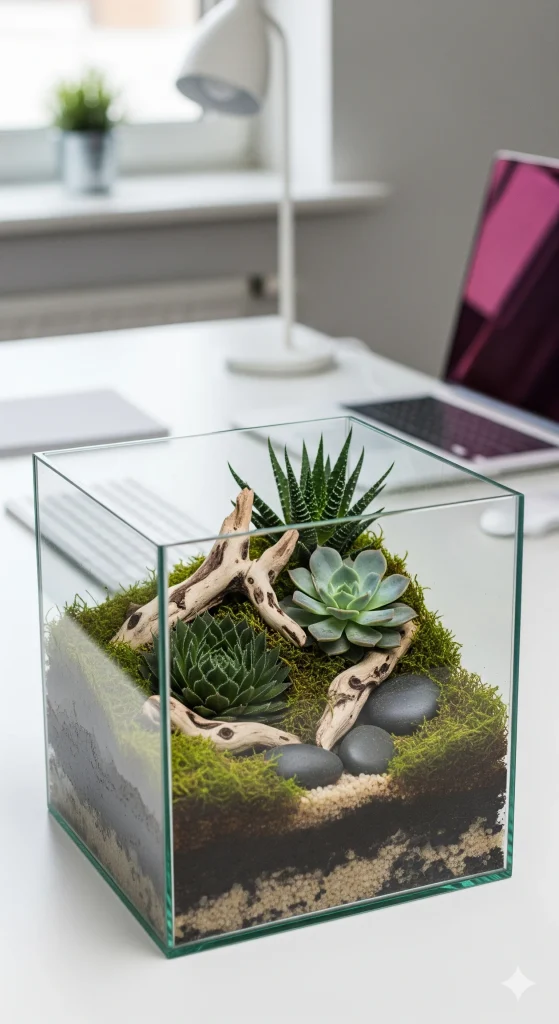
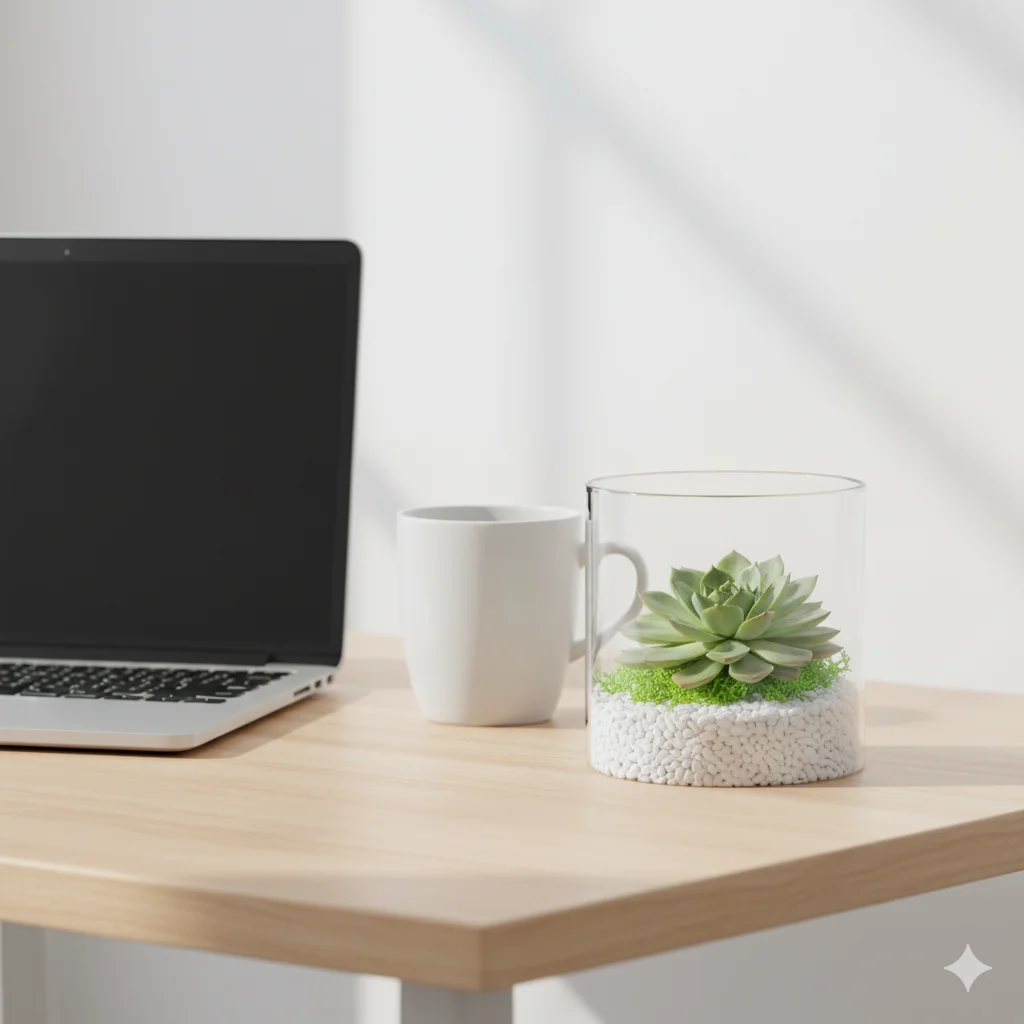
Designed for succulents, cacti, and air plants that need airflow and less humidity. These are perfect if you love sculptural plants like succulents and cacti, as the airflow prevents rot and keeps them thriving.
Hanging Terrariums
Lightweight and stylish, these work well with air plants and are ideal for modern interiors with limited table space.
Wall-Mounted Terrariums
A smart way to bring vertical greenery into small apartments, doubling as wall art.
Tabletop Terrariums
Classic centerpieces that can be dressed up with seasonal decorations or kept minimalist for a sleek look.
Specialty Terrariums
- Aquatic Terrariums with water-loving plants.
- Hanging Terrariums for lightweight décor accents.
- Wall-Mounted Terrariums as vertical gardens.
- Tabletop Terrariums as chic centerpieces.
Read the full guide: How to Make a DIY Terrarium at Home
3. Best Plants for Terrariums
Closed Terrarium Plants
Moss, ferns, Baby’s tears, fittonia, and other tropicals thrive in humid, sealed environments.
Open Terrarium Plants
Succulents, echeveria, haworthia, and air plants are best for open designs.
Herbs & Edible Terrariums
Basil, thyme, and mint can be grown in larger open terrariums with proper drainage.
Pet-Safe Terrarium Plants
Options like peperomia and certain ferns are non-toxic and safe for homes with pets.
Not sure which plants to choose? Here’s a list of The Best Plants for Closed Terrariums beginner-friendly and easy to care for.
4. Terrarium Containers & Designs
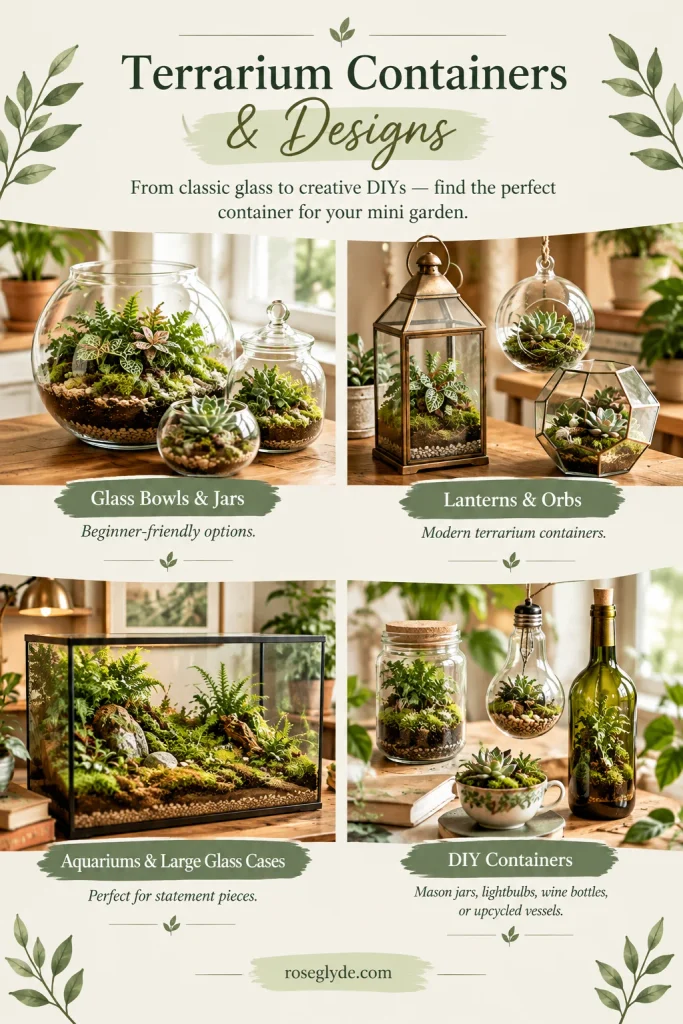
- Glass Bowls & Jars – beginner-friendly options.
- Lanterns & Orbs – modern terrarium containers.
- Aquariums & Large Glass Cases – perfect for statement pieces.
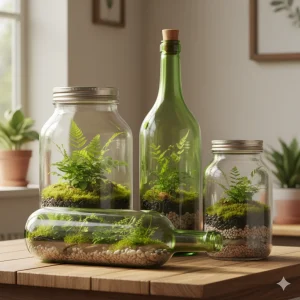
- DIY Containers – mason jars, lightbulbs, wine bottles, or upcycled vessels.
Terrarium Design Styles
From modern minimalist terrariums to vintage apothecary jars or fairy-garden inspired designs, containers define the aesthetic.
5. Step-by-Step: How to Make a Terrarium
If you’re just starting out, keep it simple by choosing hardy plants such as moss or succulents and avoid mixing plants with very different care needs. A common mistake is overwatering—remember, terrariums need much less water than potted plants since the glass container helps retain moisture.
Materials Needed for a DIY Terrarium
- A glass container (jar, vase, bowl, or even an old lantern)
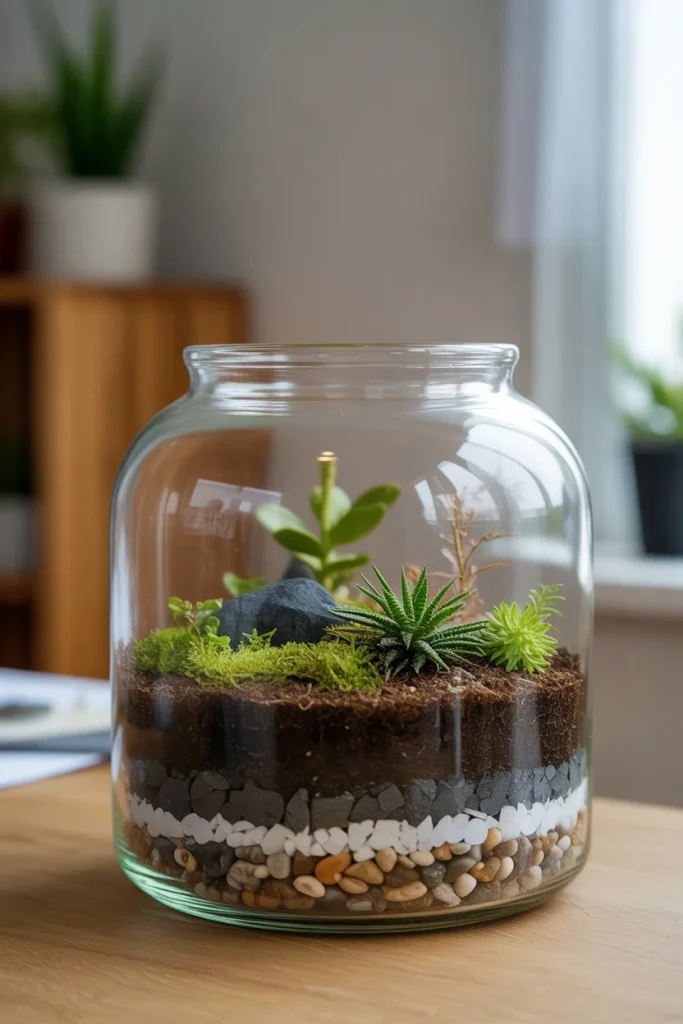
- Small pebbles or gravel for drainage
- Activated charcoal (prevents mold and odor)
- Potting soil (specific to your chosen plants)
- Plants (succulents, ferns, mosses, or air plants)
- Decorative elements like shells, stones, or tiny figurines
- Small tools — tweezers, a spoon, or a stick for arranging plants
You can find most of these supplies at garden stores or order them from home décor and plant retailers online.
Read the full guide → Tools and Materials Essentials for Creating Terrarium
Step 1: Choose the Right Glass Container
Your terrarium starts with the container — it sets the tone and style for your design.
- For an open terrarium: Use wide-mouthed bowls, glass trays, or hanging globes. These work best for succulent and cactus terrariums since they allow airflow and prevent excess humidity.
- For a closed terrarium: Choose containers with lids, like apothecary jars or large glass bottles. These are great for moss and fern terrariums, creating a self-sustaining humid environment.
Tip: Clear glass looks modern and elegant, while tinted or vintage jars add a rustic, cozy vib
Step 2: Add a Drainage Layer
Unlike outdoor gardens, terrariums don’t have drainage holes, so you’ll need to create one manually with layers.
- Add about 1–2 inches of small pebbles or gravel at the bottom of your container.
- Sprinkle a thin layer of activated charcoal on top — this keeps the environment fresh and prevents bacterial growth.
This layer ensures excess water doesn’t sit around the roots, protecting your plants from rot.
Step 3: Add the Potting Soil
Next, add soil suited for your plant type:
- Use succulent or cactus mix for open terrariums.
- Choose moisture-retaining soil for ferns or tropical plants.
Add enough soil so the plants can spread their roots comfortably (around 2–3 inches). Slightly slope the soil upward toward the back to give your terrarium a natural landscape look.
Step 4: Choose and Plant Your Greenery
Here comes the fun part — arranging your plants!
Use tweezers or small tools to gently place them into the soil.
Plant pairing tips:
- For open terrariums, go for succulents, echeveria, or haworthia.
- For closed terrariums, choose moss, fittonia, baby ferns, or peperomia.
- Avoid mixing plants with drastically different humidity and light needs.
Once planted, lightly pat the soil around each plant and brush off any soil from leaves for a clean finish.
6. Styling & Decoration Ideas
- Miniatures, figurines, and crystals.
- Fairy lights for a magical glow.
- Natural décor like bark, shells, or stones.
- Seasonal terrariums (autumn pumpkins, winter snow-globes, tropical summer looks).
Choose between a clean, minimalist look or a lush jungle aesthetic depending on your style.
Discover more ideas: 10 Creative Terrarium Decoration Ideas for Every Season

7. Terrarium Care & Maintenance
- Watering: Closed terrariums need minimal watering, while open terrariums require regular but light watering.
- Light: Bright, indirect sunlight is best. Consider grow lights for low-light homes.
- Trimming: Keep plants from overgrowing.
- Pest Control: Refresh soil if needed and watch for fungus gnats.
8. Troubleshooting Terrariums
- Foggy Glass: Too much moisture, remove lid occasionally.
- Dying Plants: Swap out plants unsuited to humidity/light levels.
- Mold or Algae: Wipe glass, remove affected plants, adjust watering.
- Resetting a Terrarium: Rebuild layers if problems persist.
Read the full guide: Terrarium Care, Maintenance & Troubleshooting
9. Creative Uses for Terrariums
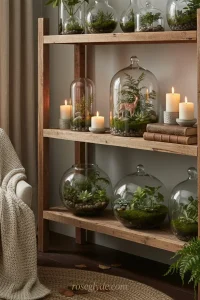
- Home Décor: Place on coffee tables, bookshelves, or entryway consoles.
- Gifts: Wedding favors, birthdays, housewarming gifts.
- Offices & Classrooms: Boost wellness and focus.
- Event Centerpieces: Stylish for weddings or seasonal parties.
10. Terrarium Trends for 2025
- Statement Terrariums as living art pieces.
- Smart Terrariums with grow lights and self-watering systems.
- Biophilic Design: Integrating terrariums into modern architecture.
- DIY Terrarium Boom on Pinterest and Etsy.
Read the full guide: Terrarium Trends in 2025: Smart, Stylish & Sustainable
Conclusion
Terrariums are timeless, stylish, and easy to care for—making them the perfect indoor garden project for any space. Whether you love lush closed terrariums or airy succulent displays, this guide gives you all the tools to create your own. Start your DIY terrarium today and bring a little green magic indoors.
This guide gives you the foundation for understanding terrariums, but each part of the process—from choosing plants to styling—deserves its own spotlight. That’s why I’ll be covering detailed tutorials and inspiration in upcoming blogs. Be sure to check back for deep dives into terrarium care, decoration ideas, and the best plants to keep your miniature garden thriving.
If you enjoy creating miniature indoor gardens, be sure to explore our Indoor Gardening Ideas for more inspiration, plant care tips, and DIY projects.
FAQ: DIY Terrarium
Q1. How often should I water my terrarium?
Once every few weeks is enough. Always check soil moisture before watering — overwatering is a common mistake.
Q2. Can I use any glass jar?
Yes, as long as it’s clean and transparent. Avoid containers that restrict airflow too much unless you’re creating a closed terrarium with humidity-loving plants.
Q3. Why is mold growing inside my terrarium?
Mold appears when there’s too much moisture or poor ventilation. Reduce watering, open the lid for a few hours, and remove affected areas.
Q4. Can I put terrariums in direct sunlight?
No — bright, indirect light is best. Direct sunlight can overheat the glass and damage plants.