
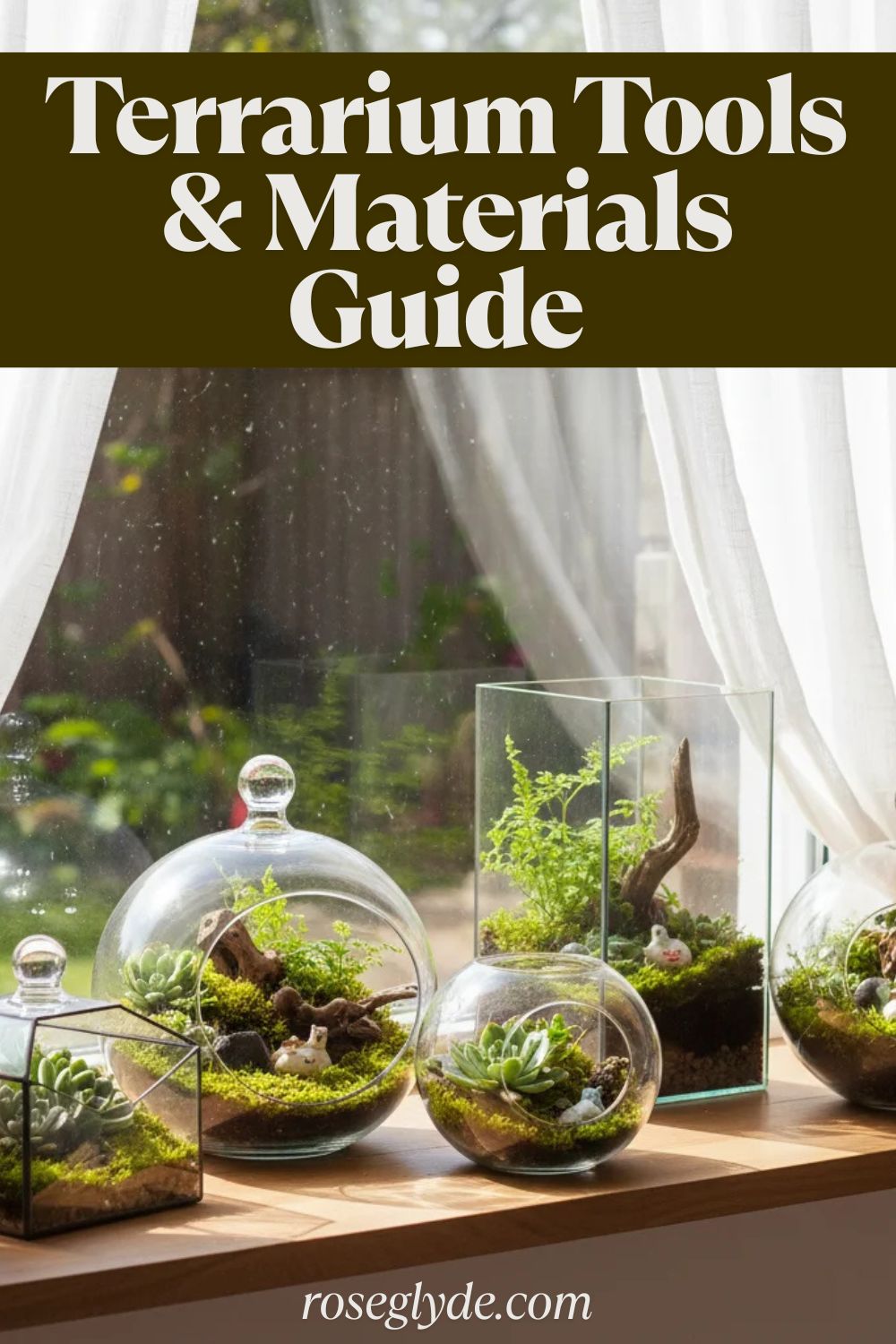
My Favorite Terrarium Tools and Materials: Essentials for Creating Stunning Mini Gardens
Terrarium Tools and Materials can completely change the way your mini indoor gardens look, function, and survive over time. Creating terrariums has become one of my favorite parts of slow home decorating — it’s calming, creative, and surprisingly rewarding when you see your tiny ecosystem start thriving. Over time, I’ve tested dozens of tools, containers, soil types, and accessories, and I’ve learned which ones actually make terrarium-making easier (and which ones are just cute extras).
If you’re new to terrariums or want to upgrade your setup, here are the tools and materials I genuinely love and reach for most often.
Table of Contents
Terrarium Tools and Materials
1. Long Tweezers (My Most-Used Terrarium Tool)
If I could recommend only one tool, it would be long planting tweezers. They make it so much easier to place moss, adjust stones, tuck roots into the soil, or move delicate leaves without messing up the whole layout.
Why I love them:
- You can reach deep jars and bottles
- You avoid smudging the glass with your fingers
- They help with precise, aesthetic plant placement
- Perfect for both open and closed terrariums
I used to do everything with my hands, and the result was always uneven soil and fingerprints everywhere. Tweezers changed everything!
2. Mini Scissors or Pruning Snips
Tiny scissors help keep plants trimmed and healthy. I especially use them for moss shaping, pruning fittonia leaves, and removing any brown spots.
Why they’re essential:
- Clean cuts prevent plant stress
- Great for shaping moss into neat cushions
- Helps maintain airflow in closed terrariums
Good trimming keeps your mini ecosystem looking fresh instead of overgrown.
3. A Small Funnel (for Clean Soil Layers)
This is one of those simple tools that saves so much mess. Funnels help you pour soil, sand, or gravel neatly into narrow-mouthed jars without coating the inside walls.
Perfect for:
- Layering charcoal
- Adding fine sand
- Creating clean, aesthetic soil lines
I used to avoid narrow containers because they were too messy to fill — a funnel fixed that.
4. Soft Bristle Brush
A brush may not seem important, but it’s one of the tools I use the most.
What it helps with:
- Dusting soil off plant leaves
- Cleaning the inside of the glass
- Shaping sand layers
- Removing dirt from corners
It’s especially useful when you want that “Pinterest-pretty” finished look.
5. Spray Bottle or Misting Bottle
Terrariums don’t need a lot of water, but they do need gentle moisture.
Why misting works best:
- Prevents overwatering
- Keeps moss green and fluffy
- Helps settle soil layers after building
I always start with a light mist and then adjust based on how much condensation forms.
6. Activated Charcoal
I never skip this step anymore — charcoal keeps terrariums fresh by reducing odors and preventing mold.
Why it’s important:
- Absorbs impurities
- Helps drainage
- Keeps closed terrariums healthier for longer
It’s especially important for moss terrariums and sealed environments.
7. High-Quality Potting Soil
Not all soil mixes are the same. I get the best results with lightweight, well-draining soil, ideally mixed with coconut coir or perlite.
Look for:
- Moisture-retaining but breathable texture
- No large wood chunks
- Sterile or pre-sifted options
Good soil is the foundation of a long-lasting terrarium.
8. Decorative Stones & Natural Elements
I love collecting stones, driftwood pieces, small pebbles, and natural accents to personalize each terrarium.
My favorites:
- White pebbles for clean, modern designs
- Lava rock for natural aquascape-inspired looks
- Mini driftwood for woodland-style terrariums
- Tiny crystals for a magical, whimsical feel
Choosing natural elements makes your terrarium feel like a tiny landscape.
9. Moss (The Terrarium MVP)
Moss is the easiest plant to work with — soft, forgiving, and instantly aesthetic. Whether preserved or live, moss adds texture and fills empty areas beautifully.
Why I love moss:
- It works in both open and closed terrariums
- Softens hard edges
- Creates charming “forest floor” vibes
- Low maintenance and beginner-friendly
I often build entire terrariums using just different types of moss.
10. A Good Glass Container
You don’t need expensive glassware, but you do need something clear, clean, and bright.
Great container options:
- Apothecary jars
- Lantern-style terrariums
- Hanging globes
- Wide-mouth bowls
- Geometric glass terrariums
Every container shapes the style of the terrarium — modern, vintage, rustic, or romantic.
11. Optional but Fun Add-Ons
These aren’t necessary, but they’re great for creativity:
- Mini figurines
- Tiny ceramic houses
- Fairy garden accessories
- LED micro string lights
- Sea shells or coral pieces (for coastal themes)
I use these sparingly because minimal décor highlights the plants better.
My Simple Terrarium-Building Routine (What Actually Works)
Here’s how I usually set up a terrarium using the tools above:
- Add gravel
- Sprinkle charcoal
- Pour soil with the funnel
- Place moss and plants using tweezers
- Brush away loose soil
- Mist lightly
- Style stones or décor
- Let it settle for 1–2 days
With the right tools, the process is smooth, clean, and genuinely fun.
Caring for and Cleaning Terrarium Tools
Clean tools keep terrariums healthier. After each use, wipe tweezers, scissors, scoops, and brushes with a damp cloth to remove soil and plant debris. For a deeper clean, wash tools in warm, soapy water, rinse them well, and dry every surface completely before putting them away.
Disinfecting Tools Between Projects
Disinfecting tools between terrariums helps stop pests and disease from spreading. Wipe blades and tips with rubbing alcohol or a diluted bleach solution, then rinse and dry them so no residue touches soil or leaves. This simple step matters most when pruning or replanting.
Inspect tools now and then for rust, dull edges, or loose joints. Dry metal parts thoroughly after washing, and rub a light coat of mineral oil onto pruning blades to prevent corrosion. Well-kept tools make cleaner cuts, and clean cuts help plants recover faster.
Storing and Organizing Terrarium Tools
Store terrarium tools in a clean, dry place where they are easy to see and reach. A small caddy, drawer organizer, or lidded box keeps everything together and prevents delicate tips from bending. Keeping tools in one spot also makes it easier to notice when something needs cleaning or replacing.
Group tools by task to speed up each project. Long tweezers and scissors can stand upright in a jar, while brushes and small scoops fit well in a divided tray. Labeling sections helps when several people share the same supplies.
A Simple Storage Setup That Works
A basic setup needs only three parts: a container for long tools, a shallow tray for small items, and a dry cloth for wiping blades between uses. Empty and wipe the containers occasionally so soil and moisture do not build up. With this routine, tools stay organized and last longer.
Choosing Tools for Different Terrarium Sizes and Styles
Open and closed terrariums call for slightly different tools. Open containers allow easy hand access, so standard tweezers and scissors work well. Closed terrariums with narrow necks need extra-long, slender tools that can reach the bottom without disturbing the glass.
Scale matters too. Large terrariums benefit from full-size scissors and wide scoops that move soil quickly. Miniature vessels, such as small jars or ornaments, require precision tools with fine tips for placing tiny plants and details.
Matching Tools to Your Project
Before starting, consider the container opening and interior size. Choose the longest tool that still offers control, and keep a small brush handy for cleanup in tight spaces. The right fit makes building easier and keeps the design neat.
Final Thoughts: The Tools That Make Terrarium-Making More Enjoyable
Over time, I’ve learned that you don’t need a huge kit — just a few thoughtful Terrarium Tools and Materials make the whole experience easier and the terrarium healthier. The right tweezers, scissors, soil, and moss can transform a simple jar into a calm, beautifully layered little ecosystem.
If you’re just starting out, choose a few essentials and grow your collection slowly. Each terrarium teaches you something, and soon you’ll find your personal favorites too.
Related
Pillar Post: The Ultimate Guide to Terrariums
Full Series:
- Terrarium Care & Maintenance
- Water Terrariums
- 10 Creative Terrarium Decoration Ideas
- Terrarium Trends
- The Best Plants for Closed Terrariums





2 Comments