Minimalist Desert-Modern Garden: A Calm, Architectural Take on Arid Outdoor Living
A minimalist desert-modern garden is not about palm trees, poolside loungers, or mid-century nostalgia. Instead, it’s a refined outdoor space inspired by the raw beauty of arid landscapes around the world—from rocky plateaus and dry riverbeds to high-desert plains and sun-washed stone terrain. This style embraces restraint, structure, and intentional design, allowing the garden to feel grounded, timeless, and deeply connected to nature.
Unlike Palm Springs–style desert gardens that lean into leisure and retro glamour, a desert-modern garden is quieter and more architectural. Every plant, material, and line has a purpose. The result is an outdoor environment that feels contemplative, sustainable, and effortlessly modern.
What Defines a Minimalist Desert-Modern Garden?
At its core, desert-modern garden design balances harsh climate realities with soft, human-centered spaces. It draws inspiration from contemporary architecture, natural geology, and low-water landscapes rather than resort aesthetics.
Key characteristics include:
- Clean lines and geometric layouts
- Muted, earthy color palettes
- Sculptural, drought-tolerant plants
- Hardscaping that dominates over lush greenery
- A strong connection between indoor and outdoor spaces
This style is especially popular in modern homes, courtyard gardens, and minimalist landscapes where simplicity and sustainability matter more than decorative excess.
1. Color Palettes Inspired by Earth, Not Oasis
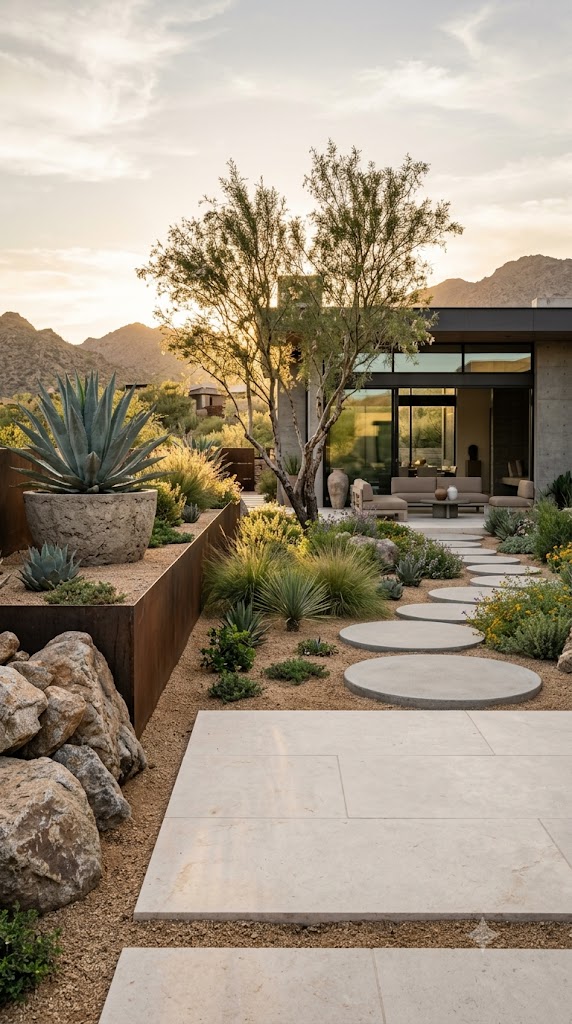
A true desert-modern garden relies on subtle, mineral-based tones rather than bright greens or tropical contrasts. Think of colors found naturally in dry environments:
- Warm limestone and sandstone
- Clay, terracotta, and muted rust
- Soft beige, taupe, and bone white
- Charcoal, basalt, and weathered concrete
These colors help the garden blend seamlessly with its surroundings, whether you’re designing for a hot climate or simply recreating desert-inspired calm in a temperate region. Avoid high-contrast color blocking or glossy finishes—desert modern thrives on matte textures and tonal harmony.
2. Plant Selection: Sculptural, Sparse, and Intentional
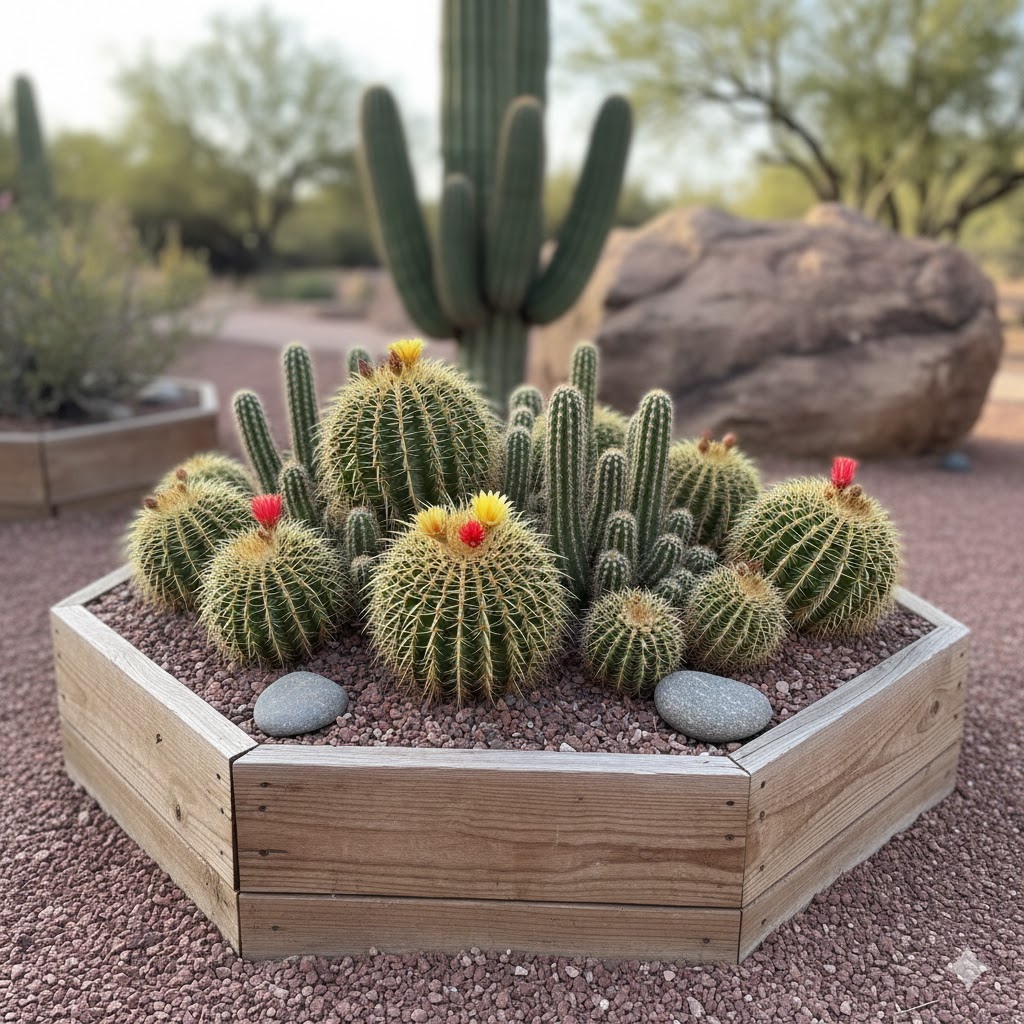
Plants in a minimalist desert-modern garden act as living sculptures, not fillers. The goal is negative space—allowing each plant to stand on its own.
Instead of palm trees or lush succulents, consider:
- Agave varieties with sharp architectural forms
- Yucca and sotol for height and movement
- Native grasses adapted to dry climates
- Prickly pear or barrel cactus used sparingly
- Low, spreading groundcovers that tolerate heat
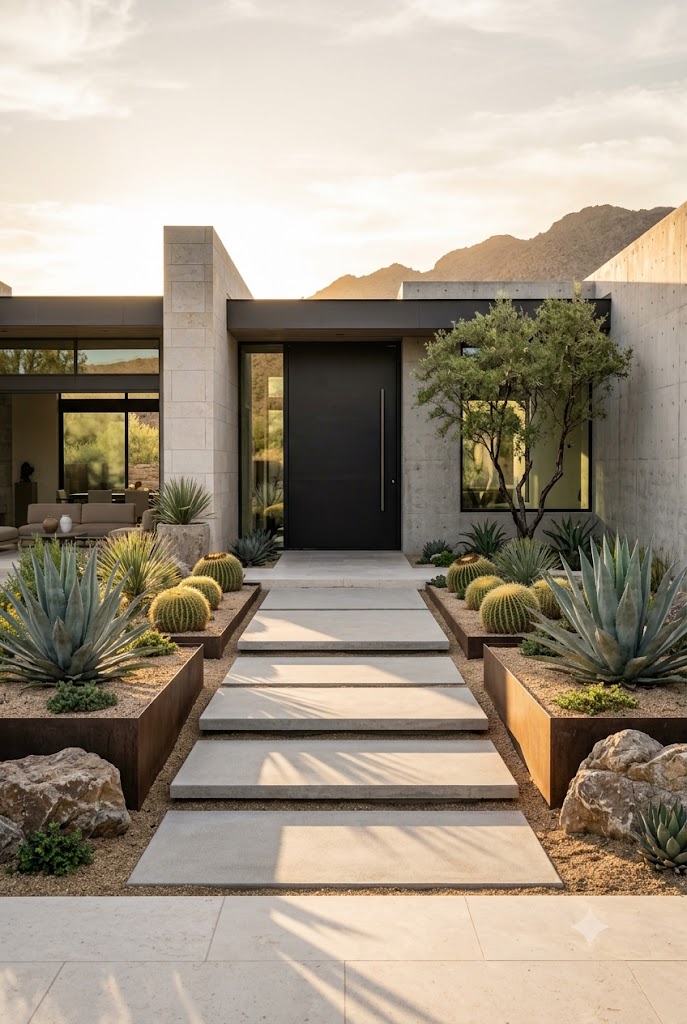
The emphasis is on native and climate-appropriate plants, chosen for their shape and durability rather than flowers or foliage density. Spacing is crucial—plants should never feel crowded. Empty gravel beds or exposed soil are just as important as greenery.
3. Hardscape as the Foundation of the Design
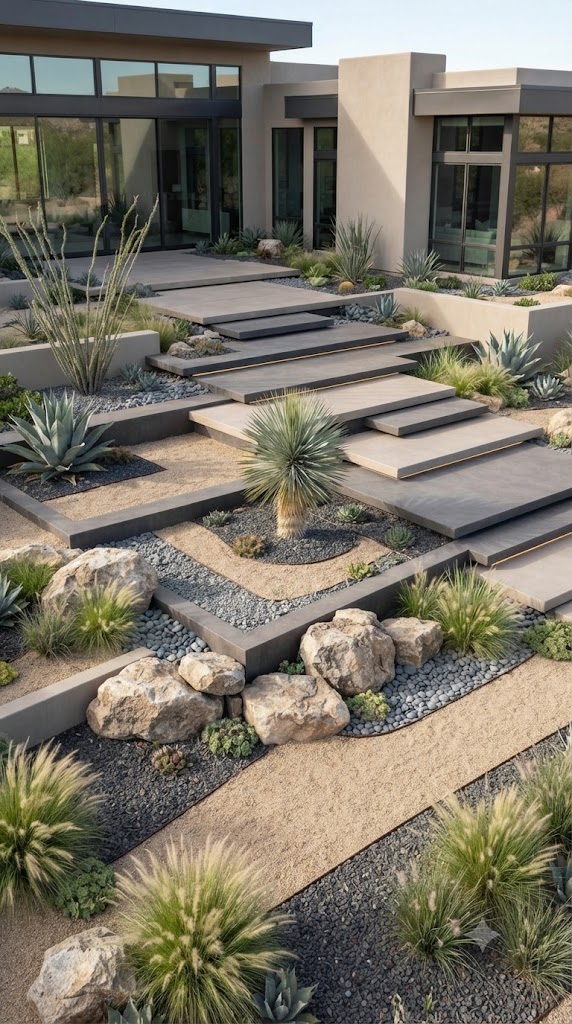
In desert-modern landscaping, hardscape often plays a more dominant role than planting. This creates a sense of permanence and architectural clarity.
Popular materials include:
- Poured concrete or concrete pavers
- Natural stone slabs and crushed stone
- Gravel paths inspired by dry riverbeds
- Steel edging and minimalist retaining walls
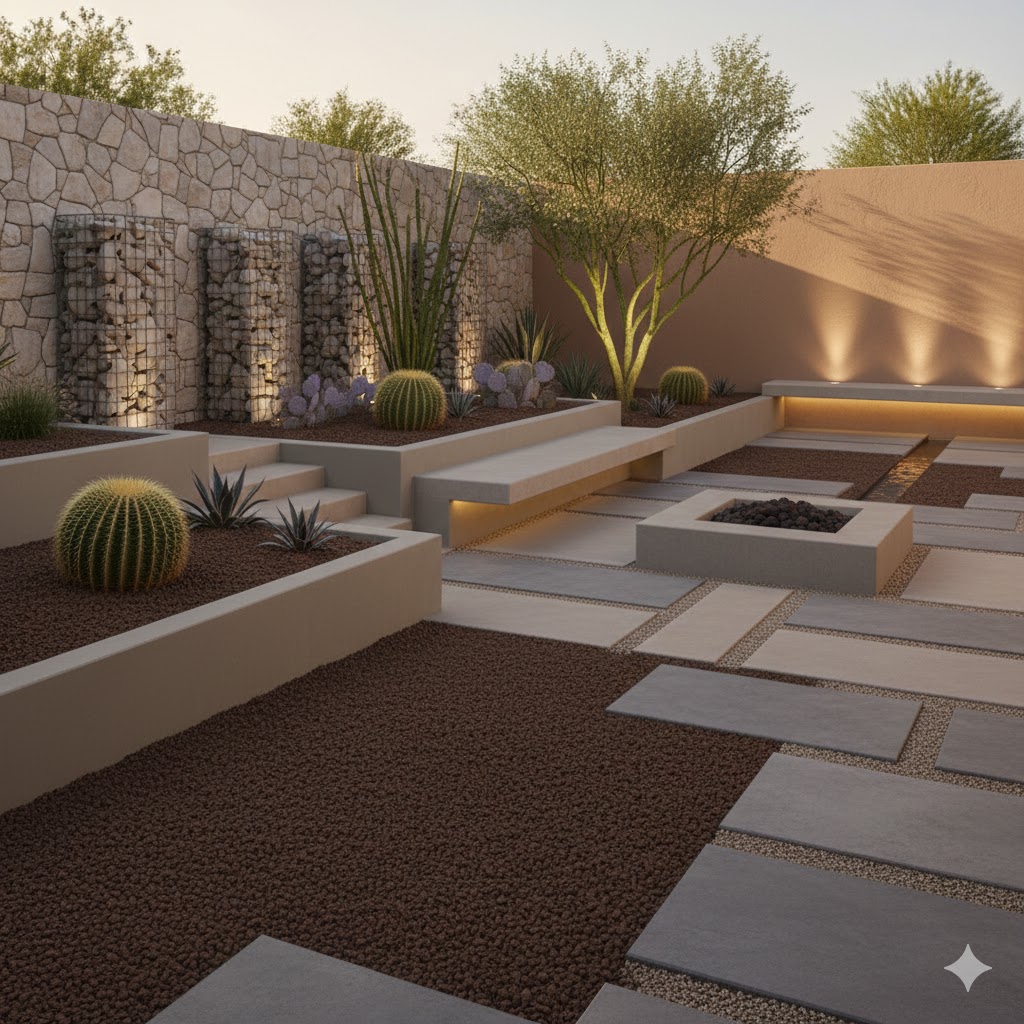
Paths are usually linear or gently angular, echoing modern architecture rather than winding garden trails. Seating areas are often built-in, using concrete benches or stone blocks instead of traditional outdoor furniture.
This approach reduces water usage while giving the garden a clean, gallery-like quality.
4. Minimalist Water Use Without Losing Tranquility
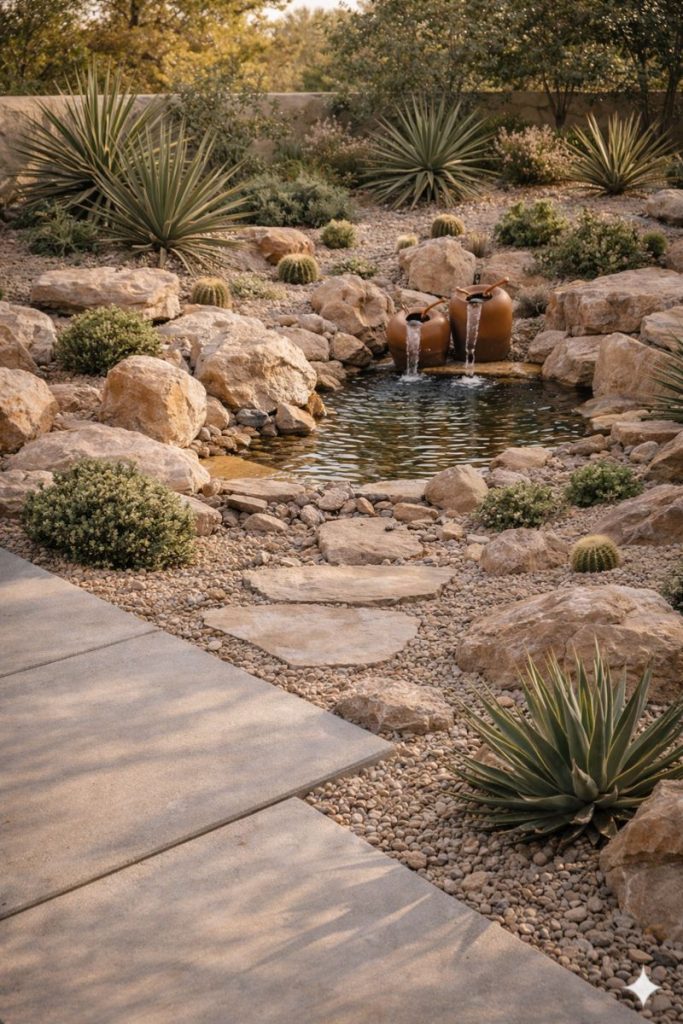
Water features, if used at all, are subtle and symbolic in a desert-modern garden. Instead of fountains or pools, designers opt for:
- Shallow reflecting basins
- Narrow rills that echo irrigation channels
- Smooth stone bowls with still water
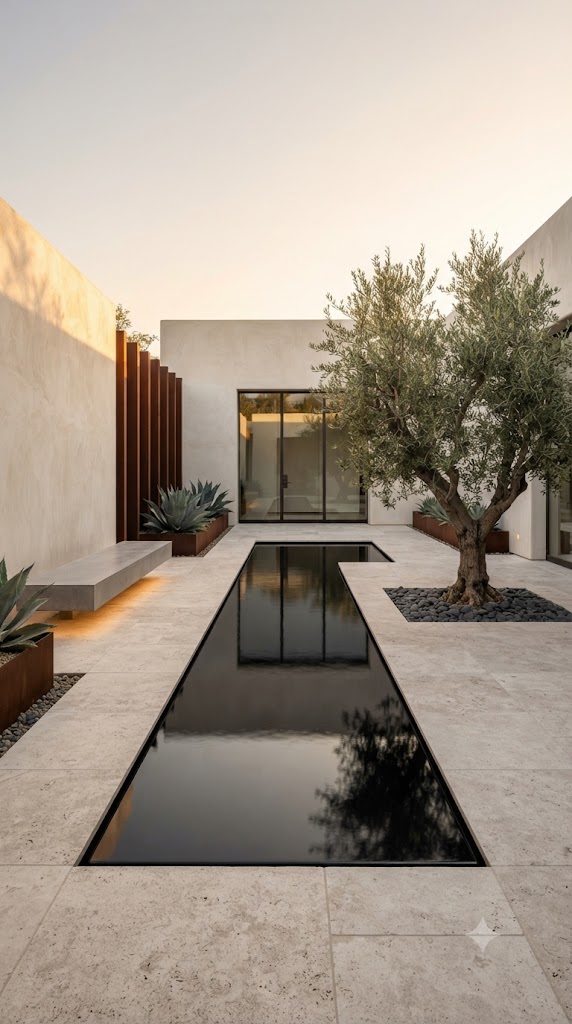
These elements introduce calm and reflection without disrupting the arid narrative. In many designs, water is replaced entirely by texture—raked gravel, layered stone, or shadow play from architectural walls.
5. Desert-Modern Garden Lighting: Soft, Low, and Architectural
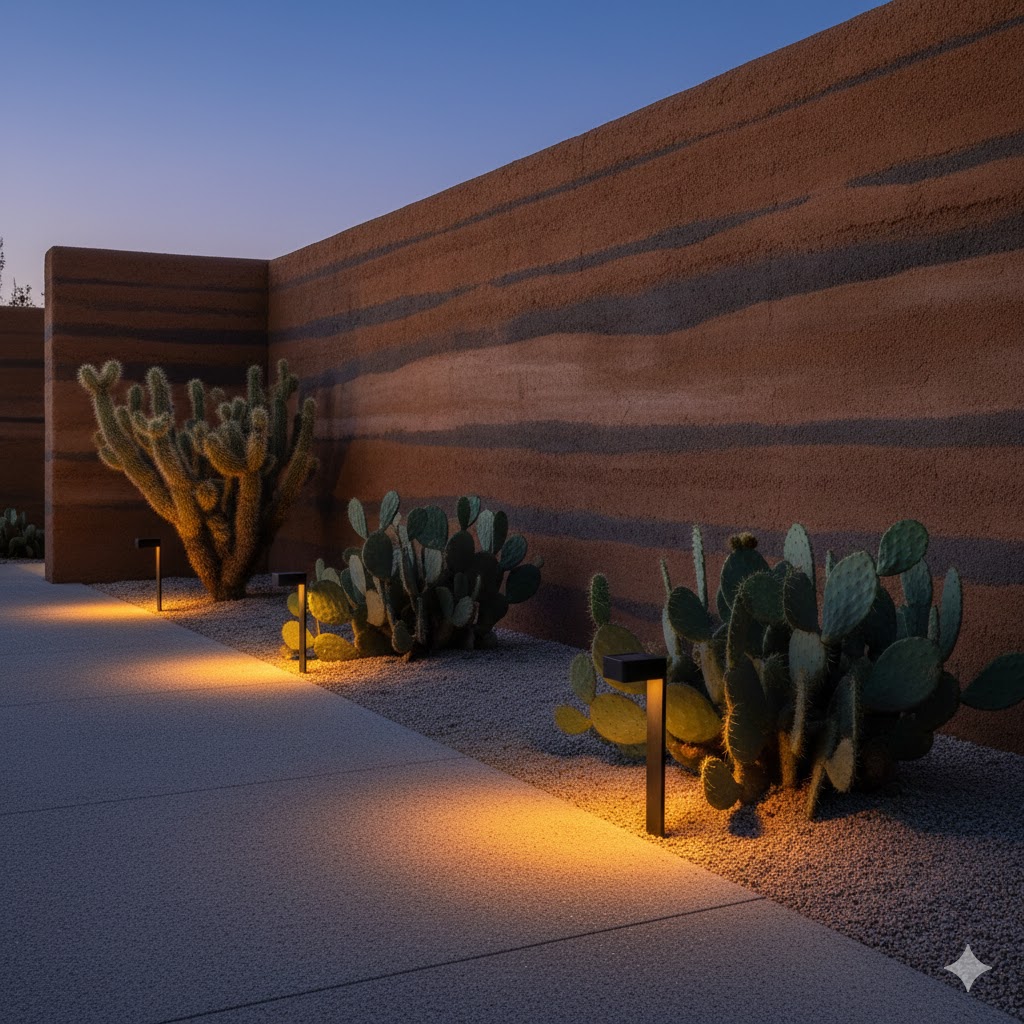
Lighting should enhance form, not dominate the space. Desert-modern garden lighting is typically warm and indirect.
Effective lighting ideas include:
- Ground-level uplights highlighting plant silhouettes
- Recessed wall lights for pathways
- Low bollard lights with diffused glow
- Hidden LEDs under benches or steps
The goal is to create quiet drama after sunset—long shadows, soft edges, and a sense of enclosure. Avoid string lights or decorative lanterns, which lean toward casual or bohemian styles.
6. Courtyard Layouts and Enclosed Garden Spaces
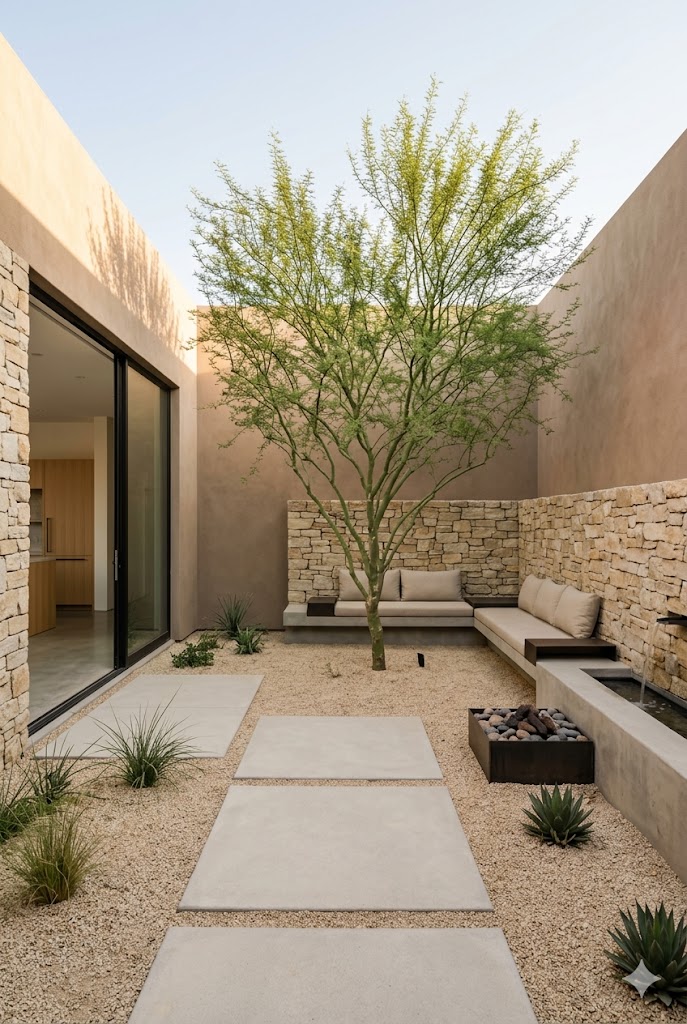
Many desert-modern gardens work beautifully as courtyards or enclosed outdoor rooms. Walls made of stucco, stone, or concrete help block wind, retain warmth, and frame views.
Within these spaces, design remains minimal:
- One focal plant or sculptural tree
- A single seating zone
- Clean paving with generous negative space
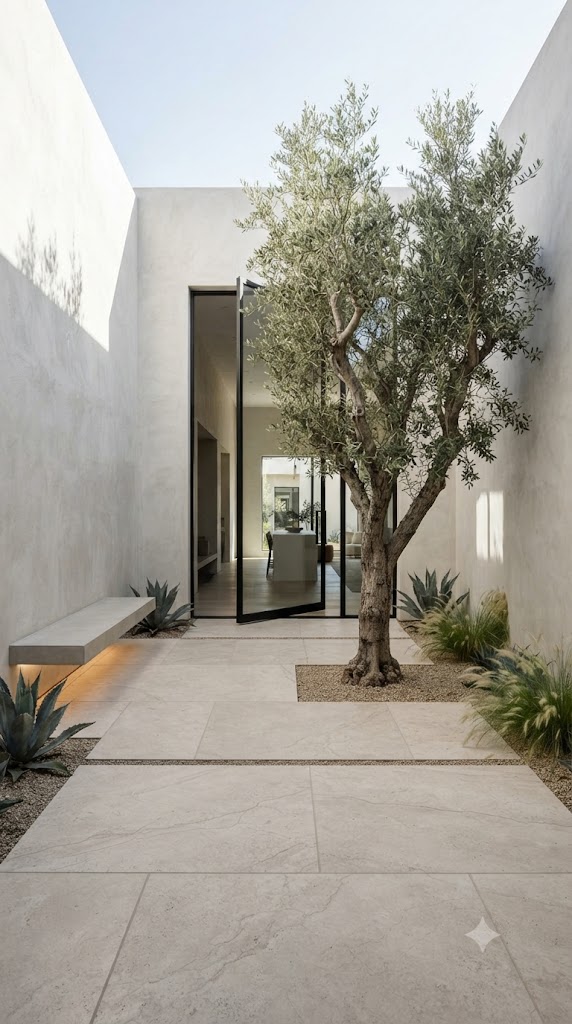
This layout creates a meditative atmosphere—perfect for slow mornings, evening conversations, or quiet reflection.
7. Sustainability at the Heart of Desert-Modern Design
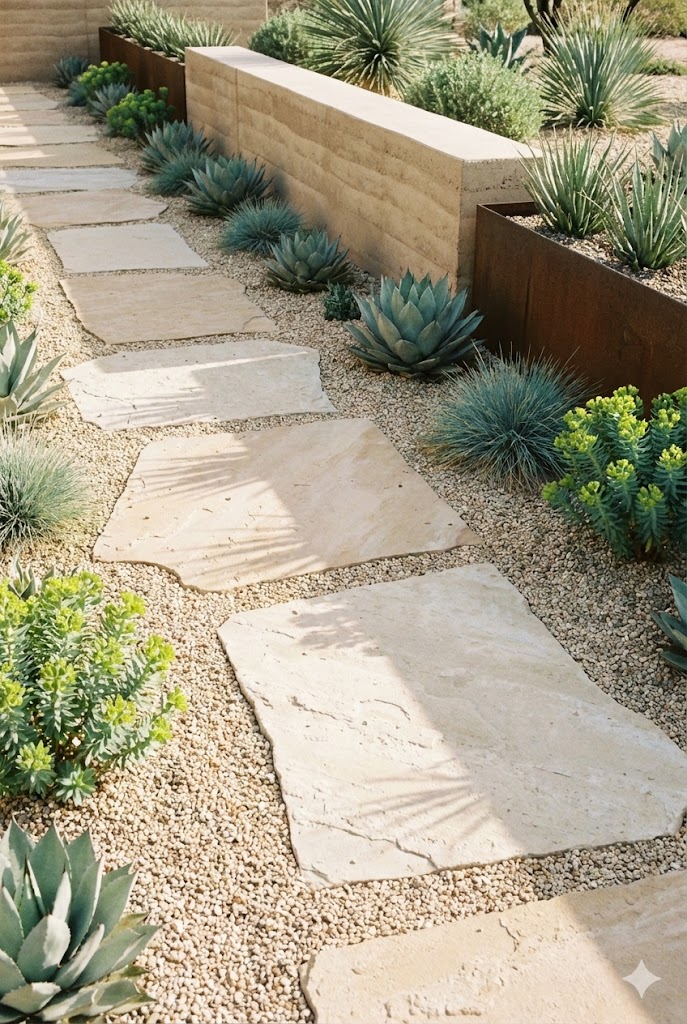
A minimalist desert-modern garden is inherently sustainable. It prioritizes:
- Low-water landscaping (xeriscaping principles)
- Native or adaptive plant species
- Long-lasting materials that weather beautifully
- Reduced maintenance and chemical use
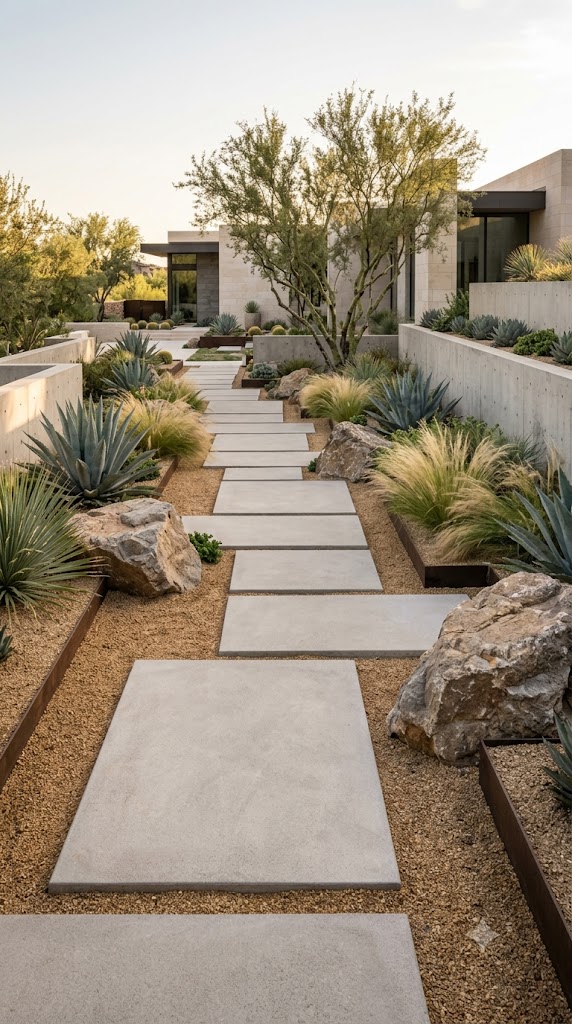
Mulching with gravel or stone helps retain soil moisture and reduce weeds, while drip irrigation systems deliver water efficiently. Over time, these gardens often become even more beautiful as materials age and plants mature.
8. How Desert-Modern Differs from Palm Springs Style
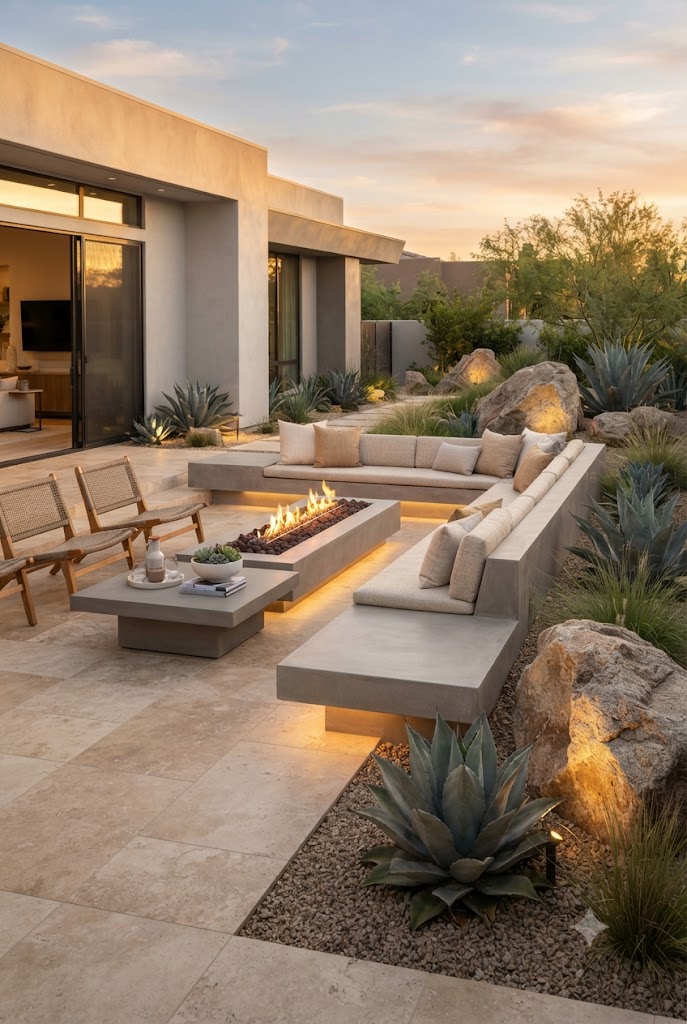
It’s important to distinguish desert-modern gardens from Palm Springs–inspired designs. While both exist in arid climates, their philosophies are very different.
Desert-modern gardens are:
- Subdued and architectural
- Rooted in natural landscapes
- Minimalist and contemplative
Palm Springs gardens are:
- Playful and decorative
- Centered on leisure and retro charm
- Often lush and ornamental
By avoiding bright colors, tropical plants, and resort-style elements, a minimalist desert-modern garden feels timeless rather than trend-driven.
Best Plants by Zone
Choosing the right plant for the right zone keeps a desert-modern garden low-maintenance and visually calm. Instead of browsing a nursery by whim, group your choices by the role each plant plays in the design.
Structural and architectural plants are the sculptures of the garden — use them as focal points or repeated accents along paths and walls. Century plant and artichoke agave offer bold rosette forms, while desert spoon and red yucca add height and movement without demanding much water. Space them generously so each silhouette reads clearly against gravel or concrete.
Groundcover and gravel companions soften the transition between hardscape and planting beds. Damianita, trailing lantana in hot climates, and low-growing sedums knit gravel beds together and help suppress dust. Keep groundcovers sparse — a few drifts rather than full coverage — to preserve the minimalist negative space that defines the style.
Container plants bring greenery to seating areas and entryways where irrigation is easy to control. A single blue agave or golden barrel cactus in a concrete or weathered-steel planter makes a striking statement, while smaller succulents like echeveria suit tabletops. In colder regions, containers also let you shelter tender plants indoors over winter, extending desert-modern style beyond warm climates. In every zone, choose native or climate-adapted species first: they establish faster, need less water, and age gracefully into the landscape.
Final Thoughts: Designing a Garden That Breathes
A Desert Modernism isn’t about filling space—it’s about allowing space to exist. It invites stillness, respects climate, and celebrates the quiet beauty of arid environments. Whether you live in a desert region or simply love the grounded aesthetic, this style offers a thoughtful, sustainable way to design an outdoor space that feels both modern and deeply connected to the earth.
When done right, a desert-modern garden doesn’t shout for attention—it whispers calm.
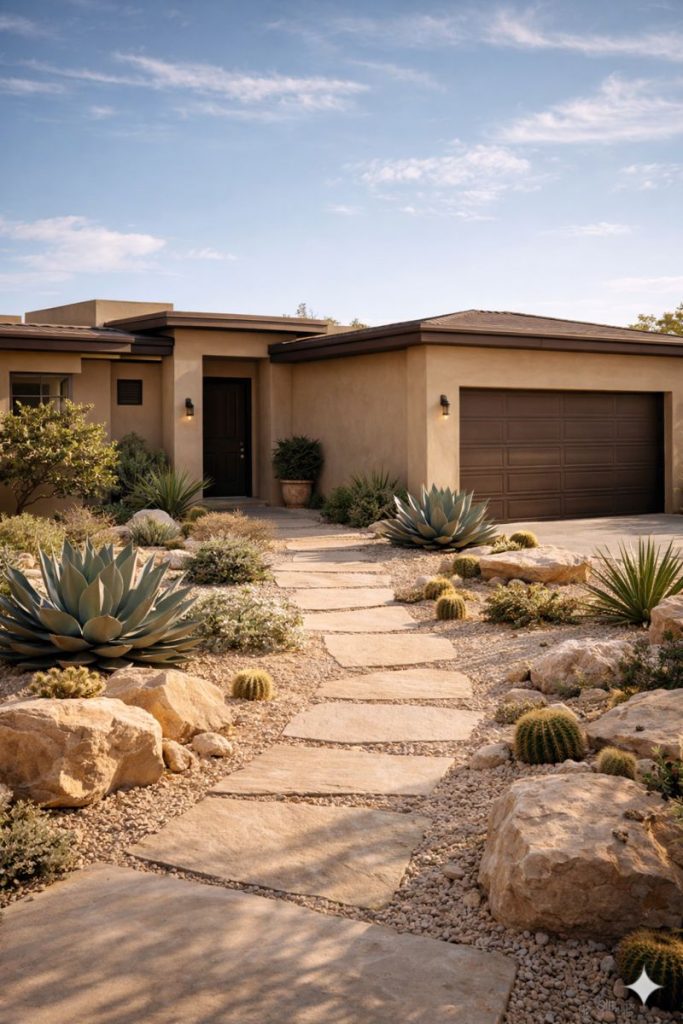
Explore More Minimalist Garden Styles
If you love the calm simplicity of a desert-modern garden, you’ll enjoy exploring 8 Modern Minimalist Garden Styles. This pillar post dives into a variety of modern minimalist gardens—from serene courtyard landscapes to sculptural urban patios—offering inspiration and design tips to help you create your perfect outdoor sanctuary.
FAQ: Minimalist Desert-Modern Garden: A Calm, Architectural Take on Arid Outdoor Living
What is a minimalist desert-modern garden?
A minimalist desert-modern garden is a refined, architectural outdoor space inspired by arid landscapes like rocky plateaus and dry riverbeds. Unlike playful Palm Springs–style gardens, it embraces restraint — clean lines, muted earthy tones, sculptural drought-tolerant plants, and hardscape that dominates over greenery. Every element has a purpose, creating a calm, contemplative space that feels timeless rather than trend-driven.
Which plants work best in a desert-modern garden?
Choose sculptural, drought-tolerant plants that act as living sculptures rather than fillers: agave varieties, yucca and sotol, native grasses, and prickly pear or barrel cactus used sparingly. Native and climate-appropriate species are ideal since they establish faster and need less water. Spacing matters — give each plant room to stand on its own and let empty gravel beds provide breathing room.
How much water does a desert-modern garden need?
Very little. These gardens follow xeriscaping principles: drought-tolerant plants, gravel or stone mulch that retains soil moisture, and efficient drip irrigation where watering is needed. Water features, if any, stay subtle and symbolic — a shallow reflecting basin or narrow rill rather than a fountain or pool. Over time, the garden often looks better as materials weather and plants mature.
Can I create a desert-modern garden in a non-desert climate?
Yes — the style adapts well beyond arid regions. Focus on the design language: matte mineral tones, clean geometric lines, gravel beds, and architectural plants suited to your climate. In colder areas, use containers for tender succulents so they can shelter indoors over winter. The result captures the grounded, minimalist calm of the desert without requiring desert conditions.
What materials should I use for desert-modern hardscaping?
Hardscape is the foundation of the style, so choose long-lasting materials that weather beautifully: poured concrete or pavers, natural stone slabs, crushed stone and gravel paths, and steel edging or minimalist retaining walls. Stick to matte finishes and tonal, earthy colors rather than glossy or high-contrast surfaces. Built-in concrete or stone seating keeps the look clean and architectural.
Related
- Palm Springs Mid-Century Garden: Cactus, Color & Retro Vibes
- Designing a Japandi Garden Oasis: Minimal Scandinavian Calm Meets Zen Serenity
- Modern Zen Courtyard Garden: Transform Your Outdoor Space into a Peaceful Retreat
- Scandinavian Garden Style: Light, Airy and Functional