
Nostalgic Elegance: How to Bring 1930s Shanghai Vintage Charm into Your Modern Home
There is a timeless elegance to 1930s Shanghai interior design that continues to inspire homeowners and designers today. Often referred to as the golden age of the “Paris of the East,” Shanghai in the 1930s was a fascinating blend of Eastern traditions and Western sophistication. Grand townhouses, refined apartments, and boutique hotels embraced an aesthetic where handcrafted Chinese furniture met glamorous Art Deco influences, creating interiors that felt luxurious, romantic, and deeply welcoming.
Unlike many modern decorating trends that prioritize minimalism, 1930s Shanghai vintage charm celebrates warmth, craftsmanship, and storytelling. Every room was thoughtfully layered with rich wood furniture, elegant wallpapers, vintage textiles, and carefully selected decorative pieces that reflected everyday life. The result was a home filled with character rather than clutter—a style that still feels remarkably timeless today.
The beauty of this design style is that you don’t need to restore an old townhouse to enjoy it. Whether you live in a city apartment, a suburban home, or a cozy cottage, you can recreate the atmosphere.
In this guide, you’ll discover how to bring 1930s Shanghai vintage charm into your modern home, room-by-room styling ideas that blend historical elegance with contemporary comfort.
The Signature Color Palette & Textures
Every memorable interior begins with a cohesive color palette, and 1930s Shanghai vintage charm is no exception. The homes of this era embraced dramatic jewel tones balanced by soft neutral backgrounds, creating interiors that felt refined rather than overwhelming.
Peacock Teal & Deep Blue-Green
Rich peacock teal served as one of the defining colors of the period. It frequently appeared on wooden wall paneling, built-in cabinetry, window frames, and painted trim. Today, using this color on an accent wall or traditional wainscoting instantly creates a sophisticated vintage atmosphere.
Soft Cream & Aged Beige
To balance darker woodwork, walls were often finished in faded cream, ivory, or warm beige. Delicate damask wallpaper added subtle texture while allowing furniture and decorative accessories to become the focal point.
Dark Mahogany & Aged Oak
Wood was never hidden during this era—it was celebrated. Mahogany, walnut, and oak furniture introduced depth and warmth while showcasing the craftsmanship of skilled artisans. Dining tables, wardrobes, bookshelves, and bed frames all featured beautifully stained timber with elegant carved details.
Brass, Ceramic & Glass
Instead of bright chrome or polished steel, decorative accents leaned toward aged brass, hand-painted porcelain, frosted glass, and ceramic accessories. These materials soften the room and reinforce the nostalgic character that defines vintage Shanghai décor.
Layering these materials together creates interiors that feel collected over time rather than decorated all at once, giving every room a sense of authenticity and quiet luxury.
1. The Grand Living Hall
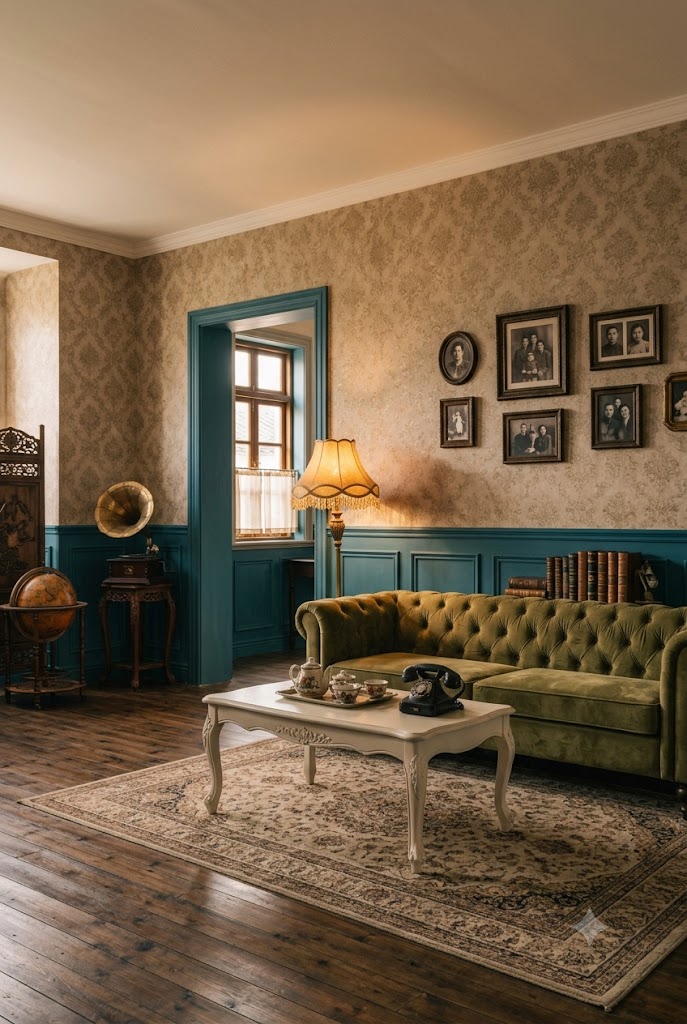
The living room was traditionally the heart of a 1930s Shanghai home, where family members gathered for conversations, afternoon tea, and evenings spent listening to music or entertaining guests. Rather than filling the room with excessive furniture, homeowners carefully selected a few well-crafted pieces that allowed the architecture to shine.
Begin by grounding the space with deep peacock-teal wainscoting around the lower half of the walls. Pair this with elegant cream damask wallpaper above to create visual balance and add historical character. Dark wood flooring complements the rich wall colors while providing warmth underfoot.
Choose a tufted velvet sofa in olive green, emerald, or deep teal as the room’s centerpiece. Accent it with embroidered cushions featuring subtle floral or geometric Art Deco patterns. A low ivory or dark wood coffee table creates an inviting focal point where vintage accessories can tell their own story.
Decorative details make this room truly memorable. Display a porcelain tea set, antique books, a brass clock, framed sepia family photographs, or a beautifully restored rotary telephone. A vintage gramophone in one corner and a woven Persian-style rug underfoot help complete the nostalgic atmosphere without overwhelming the room.
Lighting should remain soft and layered throughout the evening. Instead of relying on bright ceiling lights, use fringed floor lamps, fabric table lamps, and brass wall sconces to create pools of warm golden light that highlight the room’s rich textures and vintage finishes.
The result is a welcoming living room that feels elegant, comfortable, and filled with history—a space where every object appears to have been thoughtfully collected over generations.
2. The Romantic Master Bedroom
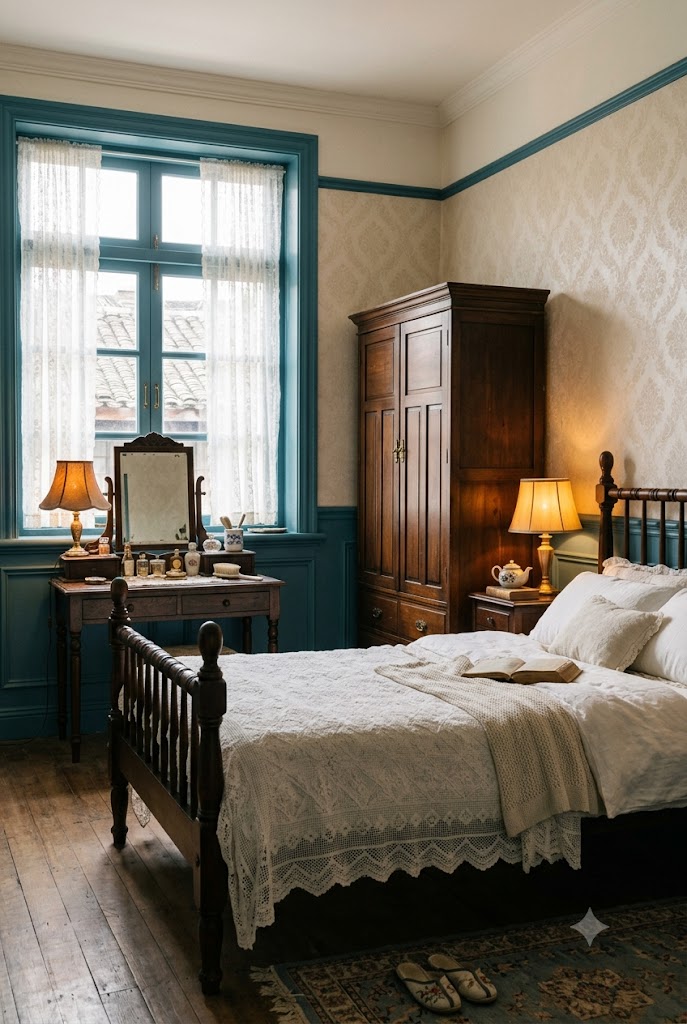
Bedrooms inspired by 1930s Shanghai vintage charm embrace simplicity, comfort, and understated elegance. Rather than showcasing extravagant luxury, these rooms focus on handcrafted furniture, delicate textiles, and soft natural light that creates a peaceful retreat.
Replace modern platform beds with a beautifully crafted dark wood spindle or carved wooden bed frame. Dress it with crisp cotton or linen bedding, then layer a delicate lace coverlet or embroidered quilt across the top to introduce vintage softness.
Walls painted in warm cream or decorated with subtle damask wallpaper create a serene backdrop for darker furnishings. Continue the signature peacock-teal trim around windows and lower wall panels to maintain consistency throughout the home.
Large windows dressed with sheer lace curtains allow morning sunlight to gently filter into the room. During the evening, fabric lampshades cast a warm amber glow that transforms the bedroom into a cozy sanctuary.
Instead of sleek modern storage, choose a vintage wardrobe or wooden armoire with paneled doors and brass hardware. A classic dressing table with a tri-fold mirror, antique perfume bottles, and a small upholstered stool adds both beauty and function.
Complete the room with woven baskets, embroidered cushions, framed botanical prints, and a small ceramic vase filled with fresh seasonal flowers. These thoughtful details make the bedroom feel lived-in while preserving the timeless elegance of 1930s Shanghai interior design.
Above all, this bedroom should encourage relaxation. Every material—from polished wood to soft linen and delicate lace—works together to create a comforting space that feels romantic without appearing overly ornate.
3. The Modest Vintage Kitchen
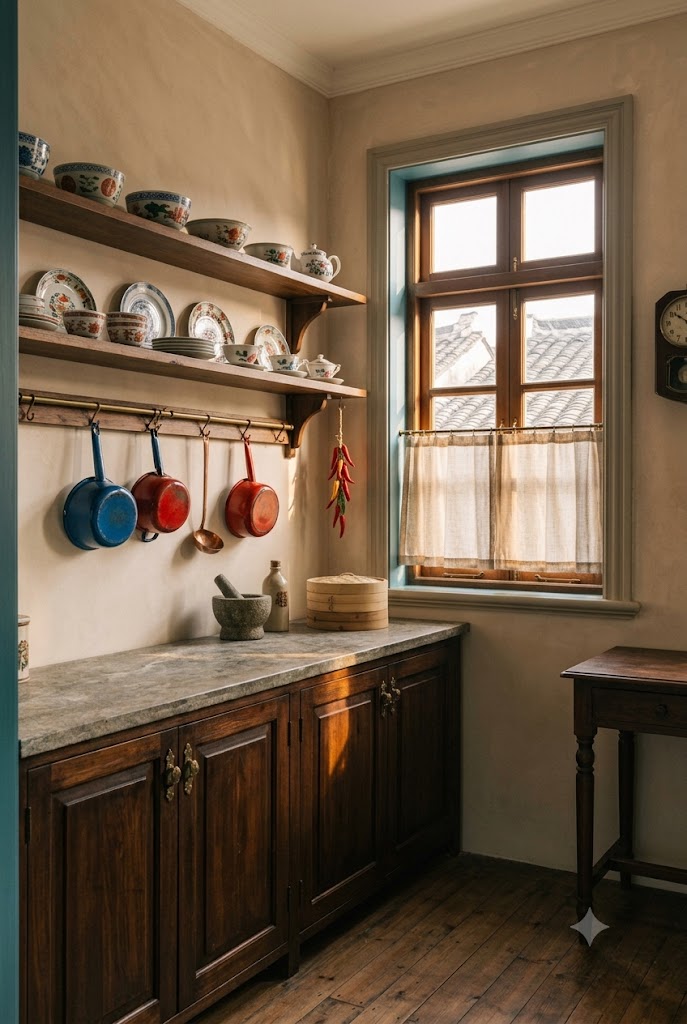
Although kitchens in the 1930s were designed primarily for function, they still reflected the same thoughtful craftsmanship found throughout the rest of the home. Vintage Shanghai kitchens favored practical layouts, honest materials, and beautifully organized storage rather than decorative excess.
Choose dark wood cabinetry with aged brass handles and pair it with solid wooden or natural stone countertops that develop character over time. Avoid glossy cabinet finishes or overly modern materials, as the charm of this style lies in its subtle imperfections and handcrafted appearance.
Open wooden shelving is one of the defining features of a period-inspired kitchen. Instead of hiding everything behind closed doors, proudly display hand-painted ceramic bowls, celadon teacups, enamel cookware, woven baskets, and vintage glass jars filled with tea leaves, rice, or spices. These everyday objects become part of the décor while adding warmth and personality.
A small window dressed with a linen café curtain allows gentle morning sunlight to brighten the workspace without sacrificing privacy. The soft daylight enhances the rich wood tones and highlights the texture of plaster walls and painted teal paneling.
Traditional kitchen tools also contribute to the authentic atmosphere. A stone mortar and pestle, wooden cutting boards, bamboo steamers, cast iron cookware, and ceramic storage crocks introduce both practicality and historical charm. Hanging utensils on brass hooks keeps essential tools within easy reach while reinforcing the kitchen’s handcrafted aesthetic.
To complete the look, decorate sparingly with a vintage wall clock, framed botanical illustrations, or a simple vase of fresh greenery. These subtle additions help the kitchen feel welcoming while preserving the understated elegance that defines 1930s Shanghai vintage charm.
4. The Intimate Dining Corner
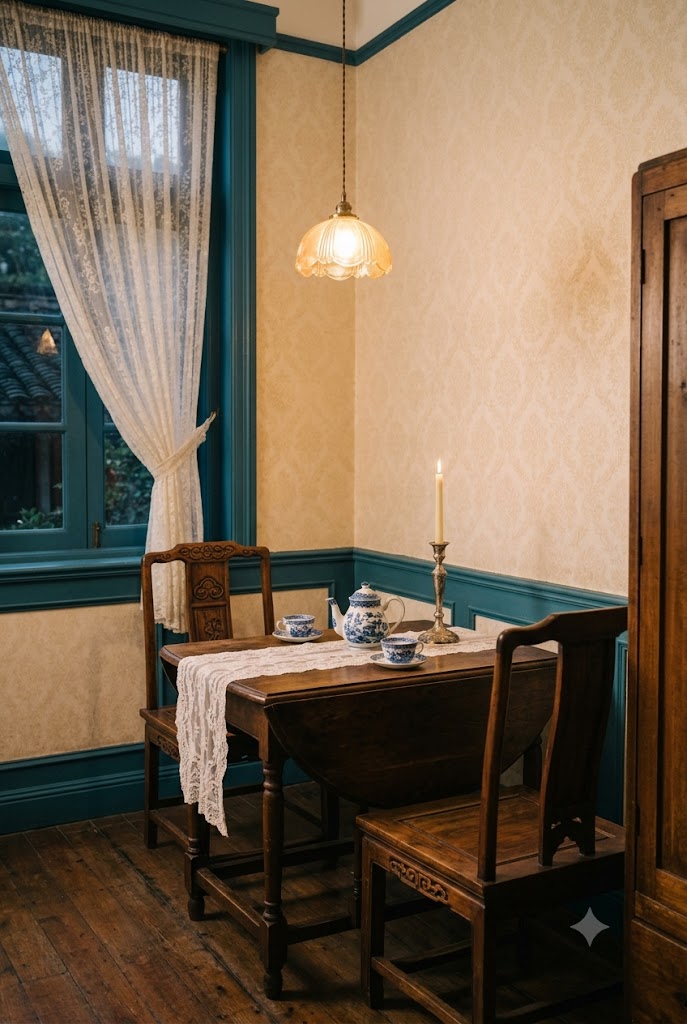
Not every home has space for a formal dining room, but even a small corner can capture the warmth and elegance of a 1930s Shanghai vintage home. The key is to create a setting that feels inviting, where family meals, afternoon tea, and meaningful conversations naturally unfold.
Choose a round or drop-leaf dining table crafted from dark mahogany or oak. These timeless designs were common in pre-war homes because they were both practical and beautifully made. Pair the table with carved wooden chairs featuring simple upholstered seats in neutral linen or velvet.
A delicate white lace table runner instantly softens the rich wood tones and introduces the romantic charm that defines this decorating style. Complete the tablescape with a porcelain teapot, matching teacups, vintage candlesticks, and a small arrangement of seasonal flowers or greenery.

Lighting plays a crucial role in setting the mood. Suspend a brass or fluted-glass pendant light above the table and choose a warm amber bulb instead of bright white lighting. The soft glow creates an intimate atmosphere reminiscent of historic Shanghai apartments where evenings were spent sharing meals with family and friends.
If space allows, place a glass-front china cabinet nearby to display treasured porcelain dishes, crystal glassware, and antique serving pieces. Rather than hiding these beautiful items away, let them become part of your home’s story.
5. The Sanctuary Tea Corner
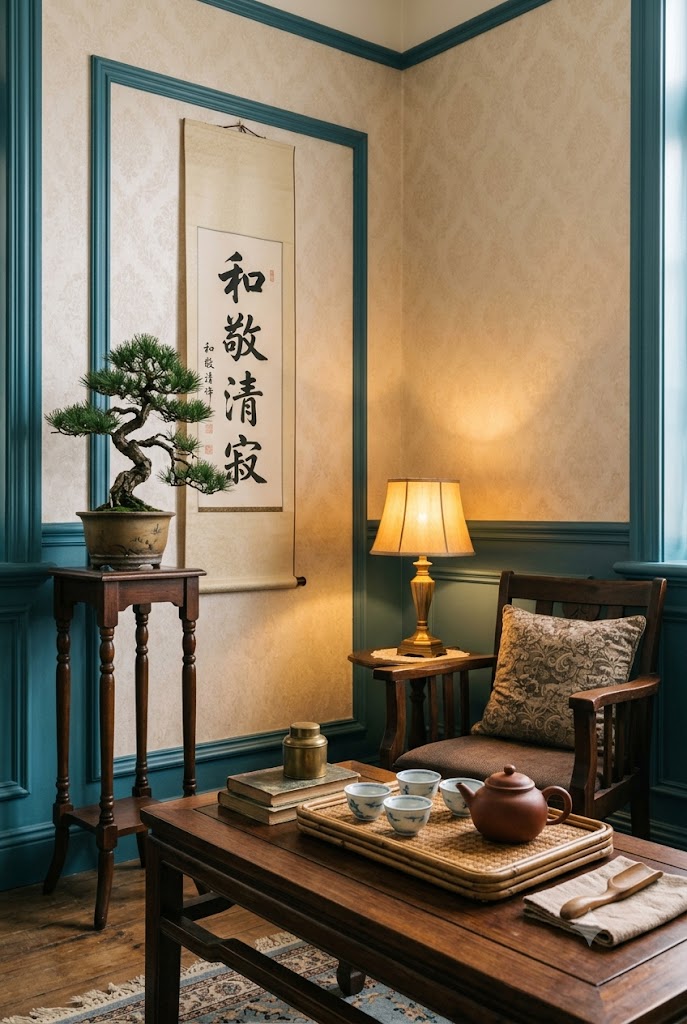
A dedicated tea corner is one of the most recognizable features of traditional Chinese-inspired interiors. In a 1930s Shanghai home, this quiet space offered a welcome retreat from the busy rhythm of everyday life.
Begin with a handcrafted dark wood tea table placed near a window or tucked into a peaceful corner of the living room. A woven bamboo or slate tea tray serves as the perfect foundation for a traditional clay Yixing teapot and a matching set of ceramic teacups.
Surround the table with thoughtful decorative details that encourage relaxation. A bonsai tree displayed on a tall wooden stand introduces natural beauty, while a hand-painted calligraphy scroll or vintage landscape artwork reinforces the home’s cultural heritage.
Layer the space with soft lighting from a fabric-shaded table lamp, allowing warm golden light to highlight the rich wood grain and handcrafted ceramics. A woven rug beneath the table adds texture and helps define the space without overwhelming it.
Whether used for morning tea, quiet reading, or evening reflection, this sanctuary becomes more than a decorative feature—it becomes a daily ritual that embodies the timeless elegance of 1930s Shanghai interior design.
Art Deco Lighting Ideas for a Shanghai-Inspired Home
Lighting is one of the easiest ways to recreate the nostalgic atmosphere of 1930s Shanghai vintage charm. While modern homes often rely on bright ceiling fixtures, historic interiors embraced multiple layers of warm lighting that made each room feel inviting and intimate.
Choose table lamps with pleated fabric shades, brass floor lamps with decorative fringe, frosted glass pendants, and elegant wall sconces to create soft pools of light throughout your home. Warm amber bulbs (around 2700K) are ideal because they enhance the richness of dark wood furniture and jewel-toned walls.
Avoid harsh cool-white LEDs, which can make vintage interiors feel sterile. Instead, combine several light sources at different heights to create gentle shadows and depth. During the evening, this layered lighting transforms ordinary rooms into cozy retreats filled with warmth and timeless character.
Furniture That Defines the 1930s Shanghai Look
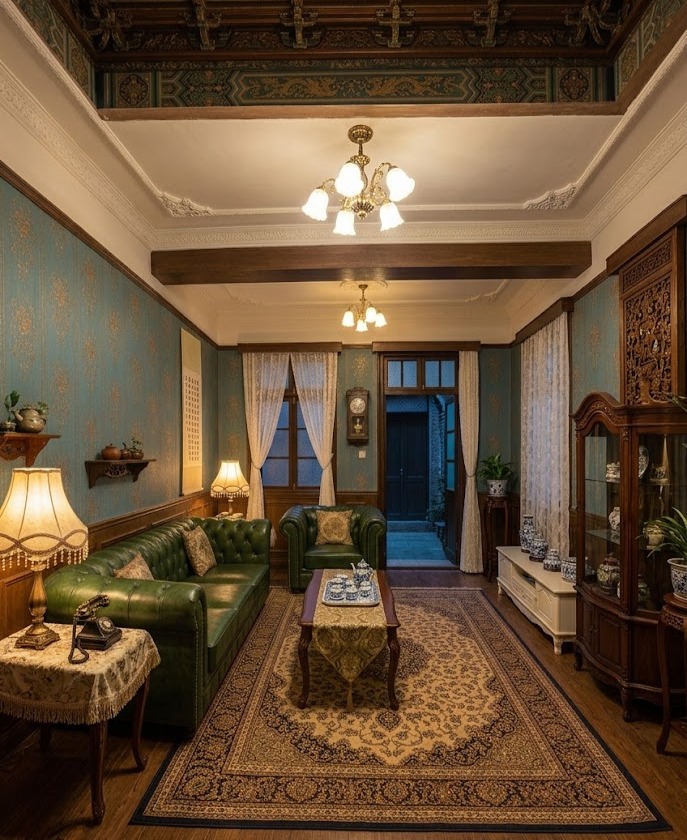
Furniture is the heart of 1930s Shanghai interior design. Rather than filling every corner, homeowners invested in a few beautifully crafted pieces that balanced functionality with elegance.
Look for furniture made from mahogany, walnut, or oak with graceful curves, carved details, and polished finishes. Tufted velvet sofas, spindle bed frames, carved dining chairs, and glass-front cabinets all reflect the refined craftsmanship of the era.
Traditional Chinese furniture can also be mixed with Art Deco influences. A streamlined cabinet with brass hardware pairs beautifully with an antique tea table or a carved wooden screen, creating an eclectic yet harmonious space.
When shopping for vintage-inspired furniture, focus on quality rather than quantity. Each piece should feel timeless, functional, and rich in character, allowing your home to tell a story rather than simply following a trend.
Modern Ways to Add Vintage Shanghai Charm to Your Home
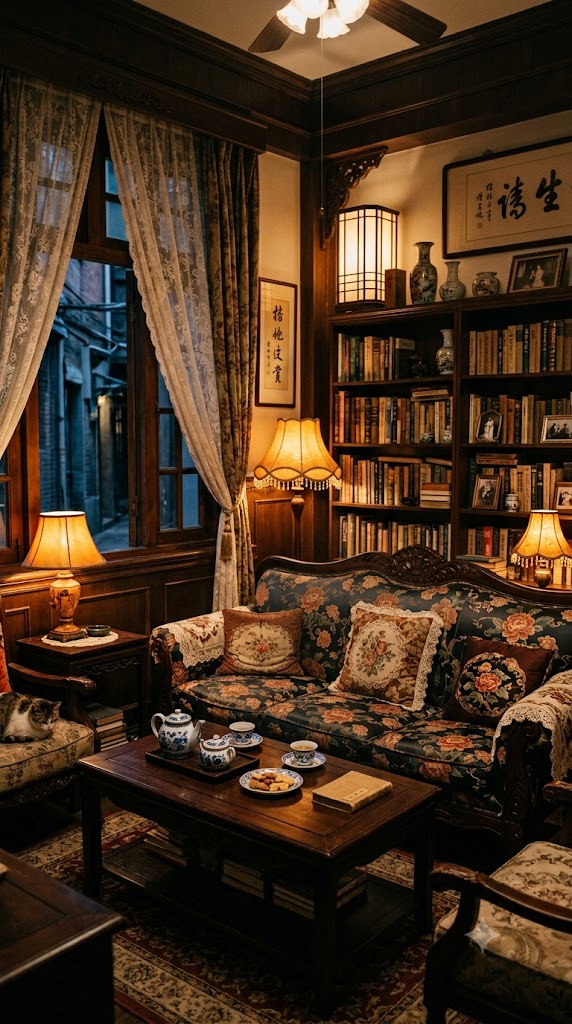
You don’t need to renovate your entire house to embrace this beautiful style. Even a few carefully chosen details can bring the romance of 1930s Shanghai vintage charm into a contemporary interior.
Start by painting a single accent wall in a rich peacock teal or adding traditional-style wainscoting. Replace modern table lamps with vintage-inspired brass fixtures and layer lace curtains over simple linen drapes to soften natural light.
Decorate open shelves with ceramic teaware, antique books, woven baskets, and framed black-and-white family photographs. Introduce velvet cushions, embroidered textiles, and handcrafted pottery to create warmth and texture.
Mixing vintage and modern furniture also keeps the space feeling fresh. A contemporary sofa can sit comfortably beside an antique side table or carved cabinet, proving that historic influences can blend beautifully with modern living.
Common Mistakes to Avoid
While 1930s Shanghai interior design embraces rich colors and layered textures, balance remains essential.
One common mistake is using too many dark colors without enough contrast. Always pair deep teal walls or dark wood furniture with cream textiles, light wallpaper, or natural daylight to keep rooms feeling open.
Another mistake is overcrowding spaces with antiques. Instead of displaying every vintage item you own, choose a few meaningful pieces that allow each object to stand out.
Lighting is equally important. Cool white bulbs can diminish the warmth of wood furniture and vintage fabrics, so opt for soft warm lighting throughout the home.
Finally, don’t overlook texture. Lace, velvet, wood, brass, ceramic, and woven fibers should work together to create depth and visual interest. It’s this thoughtful layering that gives the style its timeless appeal.
Final Design Takeaway
The enduring beauty of 1930s Shanghai vintage charm lies in its ability to blend elegance with comfort. Rich jewel tones, handcrafted wood furniture, romantic lace textiles, and warm ambient lighting come together to create interiors that feel both sophisticated and deeply lived-in.
Rather than chasing short-lived decorating trends, this style celebrates quality craftsmanship, meaningful objects, and thoughtful design. Every room tells a story through carefully chosen materials, treasured heirlooms, and timeless details that never go out of fashion.
Whether you’re transforming an entire home or simply introducing a few vintage-inspired accents, 1930s Shanghai interior design offers endless inspiration for creating spaces that are warm, inviting, and filled with character.
Continue exploring elegant home aesthetics in our Style category, featuring classic, modern, and cozy interior ideas.



One Comment