
16 Chinese Interior Design Ideas That Blend Tradition with Modern Luxury
Introduction
Chinese interior design is a timeless blend of elegance, philosophy, and craftsmanship. Rooted in centuries of tradition, it celebrates harmony, natural materials, meaningful décor, and the beauty of balance.
Today, Chinese-inspired interiors are being reimagined through a modern luxury lens—combining classic elements like Ming furniture, porcelain, bamboo, silk, and calligraphy with contemporary spaces, clean lines, and sophisticated materials.
From subtle decorative accents to complete room transformations, these Chinese interior design ideas show how traditional influences can create homes that feel refined, peaceful, and effortlessly stylish.
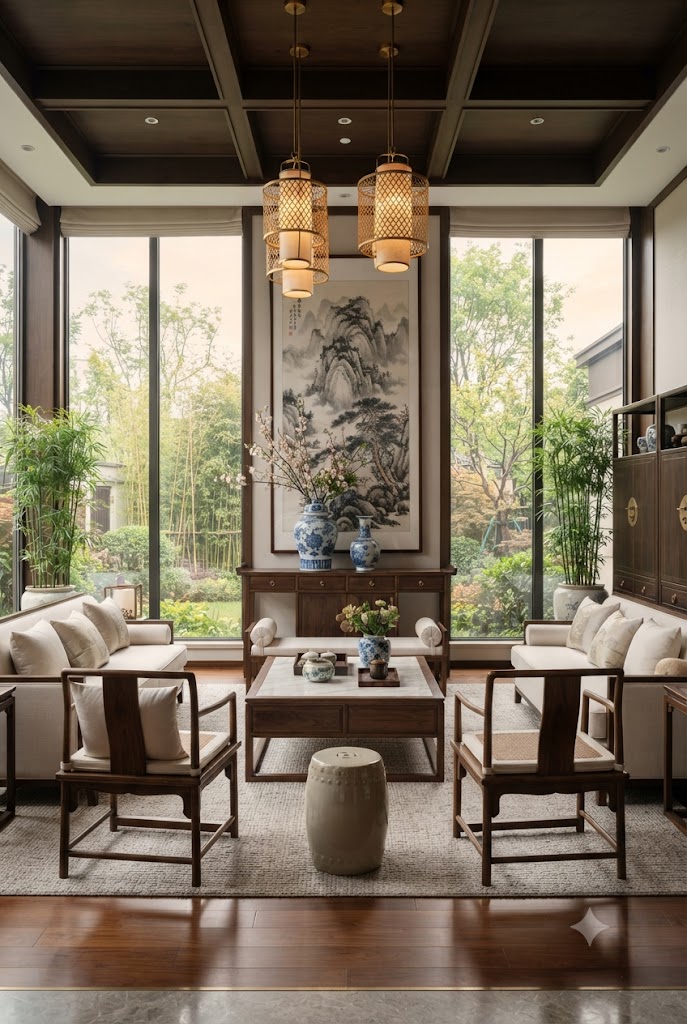
Table of Contents
Understanding Chinese Interior Design
Before exploring individual decorating ideas, it’s worth understanding what makes Chinese interior design so distinctive. Its beauty isn’t defined by one color, furniture style, or decorative object. Instead, it comes from a combination of philosophy, culture, craftsmanship, and thoughtful spatial planning that has evolved over thousands of years.
Rather than decorating for visual impact alone, traditional Chinese interiors are designed to create balance, encourage meaningful living, and celebrate the beauty of natural materials. Every element has a purpose, whether practical, symbolic, or artistic.
A Rich History of Timeless Design
Chinese interior design dates back thousands of years, evolving through numerous dynasties, each contributing its own artistic style and architectural innovations.
Early interiors emphasized simplicity and functionality, while later dynasties introduced increasingly refined craftsmanship. During the Ming Dynasty, furniture became celebrated for its graceful proportions, clean lines, and exceptional joinery techniques. The Qing Dynasty added more elaborate carvings, decorative lacquerwork, and luxurious materials without losing the importance of symmetry and order.
These historical influences continue to shape contemporary interiors today. Many of the furniture designs admired in luxury homes are directly inspired by classic Ming pieces, proving that thoughtful craftsmanship never goes out of style.
The Influence of Confucian Philosophy
One of the foundations of Chinese interior design comes from Confucian ideals, which emphasize order, respect, balance, and harmony within daily life.
This philosophy can be seen throughout traditional homes:
- Furniture is carefully arranged rather than randomly placed.
- Rooms maintain visual balance.
- Family gathering spaces receive special attention.
- Natural materials are valued for their authenticity.
- Decoration is meaningful rather than excessive.
Instead of filling every corner with accessories, Chinese interiors often celebrate restraint. Empty space is considered just as important as furnished areas because it allows each object to be appreciated individually.
This sense of intentional simplicity is one reason Chinese-inspired homes continue to feel calming despite their rich decorative heritage.
Feng Shui: A Gentle Guiding Principle
No discussion of Chinese interiors would be complete without mentioning Feng Shui, although modern homes don’t necessarily need to follow every traditional rule.
At its core, Feng Shui encourages arranging spaces to support comfort, balance, and positive energy. Rather than treating it as a strict decorating formula, many contemporary designers simply adopt its underlying principles:
- Allow natural light to flow freely.
- Avoid overcrowding rooms.
- Create clear pathways throughout the home.
- Position furniture to feel welcoming and comfortable.
- Balance natural materials with architectural structure.
Even subtle adjustments can make a room feel more peaceful and inviting without changing its overall style.
The Importance of Balance
Balance is perhaps the defining characteristic of Chinese interior design.
This doesn’t necessarily mean everything must be perfectly identical. Instead, balance is achieved through thoughtful relationships between different elements.
Light contrasts with dark.
Smooth stone complements textured wood.
Delicate silk softens solid timber.
Open space balances decorative objects.
Modern glass pairs beautifully with handcrafted antiques.
This interplay creates interiors that feel sophisticated rather than overwhelming.
Instead of competing for attention, every element supports the overall atmosphere of the room.
Symbolism in Every Detail
Chinese interiors often include objects chosen for their cultural meaning rather than purely decorative value.
For example:
- Bamboo symbolizes resilience and integrity.
- Plum blossoms represent perseverance.
- Peonies symbolize prosperity and abundance.
- Cranes often represent longevity.
- Jade reflects purity and protection.
- Circular forms symbolize unity and completeness.
These symbolic elements give Chinese-inspired interiors emotional depth. Even a single piece of artwork or handcrafted vase can carry centuries of cultural significance while adding elegance to a modern home.
Exceptional Craftsmanship
Perhaps the greatest luxury found in Chinese interiors is craftsmanship.
Traditional artisans spent years mastering woodworking, lacquer techniques, porcelain painting, silk weaving, stone carving, and calligraphy. Instead of mass production, each piece reflected patience, skill, and attention to detail.
Today, homeowners increasingly appreciate handcrafted furniture and authentic decorative pieces because they bring character that cannot be replicated by factory-made products.
Traditional vs Modern Chinese Interiors
Although inspired by the same cultural heritage, traditional and modern Chinese interiors create very different visual experiences. Understanding their differences makes it easier to incorporate Chinese design into today’s homes without making a room feel overly historical.
| Feature | Traditional Chinese | Modern Chinese | Luxury Contemporary Chinese |
|---|---|---|---|
| Furniture | Ornately carved hardwood | Clean-lined wood furniture | Ming-inspired furniture mixed with designer pieces |
| Color Palette | Rich reds, golds, black lacquer | Neutral colors with subtle accents | Walnut, ivory, marble, jade green |
| Materials | Hardwood, silk, porcelain | Wood, stone, linen, glass | Marble, brass, silk, handcrafted ceramics |
| Decoration | Symbolic artwork and antiques | Minimal curated décor | Museum-quality statement pieces |
| Layout | Formal symmetry | Open-plan living | Balanced layouts with modern flow |
| Lighting | Lanterns and candles | Recessed lighting | Lantern-inspired pendants and warm ambient lighting |
| Overall Feeling | Historic elegance | Calm minimalism | Refined luxury with cultural influence |
Luxury contemporary Chinese interiors take the best of both worlds. Instead of recreating an ancient palace, they introduce carefully selected traditional elements into sophisticated modern homes. A Ming-style chair beside a marble coffee table or a porcelain vase displayed on minimalist shelving creates a space that feels curated rather than themed.
16 Chinese Interior Design Ideas
1. Elegant Ming Style Furniture
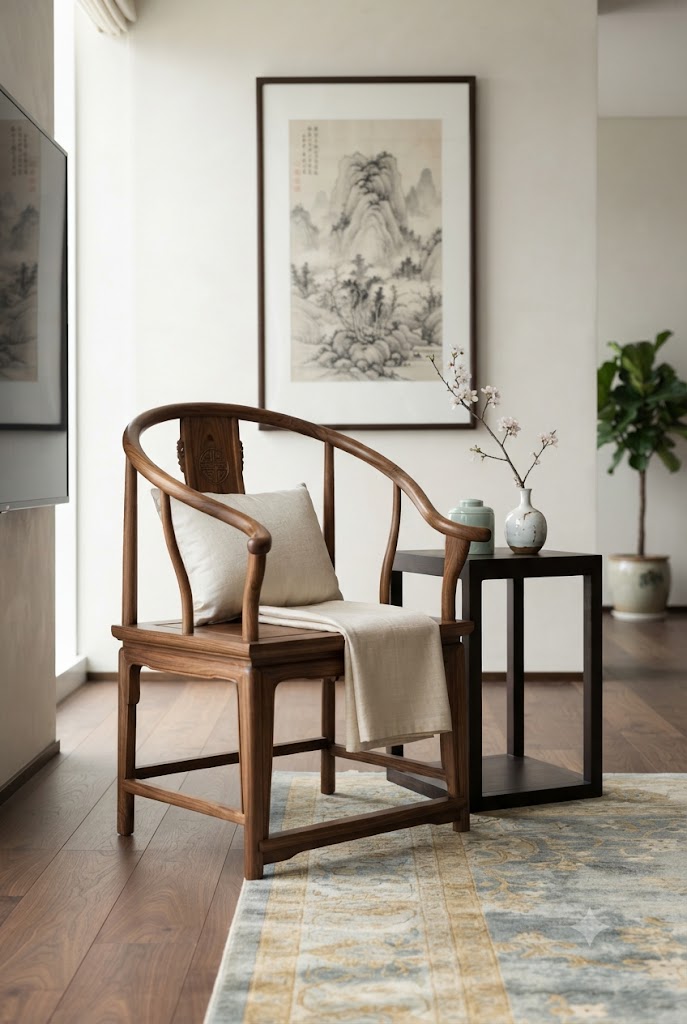
Ming-style furniture is one of the greatest influences on Chinese interior design. Known for its elegant proportions, clean lines, and exceptional craftsmanship, it represents the idea that beauty comes from simplicity and balance.
Unlike heavily decorated furniture styles, Ming pieces focus on the natural beauty of wood, graceful curves, and carefully considered construction. Their timeless appearance allows them to blend effortlessly with contemporary interiors.
Why it works
Unlike heavily ornate furniture, Ming pieces rely on elegant craftsmanship instead of excessive decoration. Their balanced proportions allow them to complement both traditional and modern interiors.
Modern interpretation
A single Ming-inspired console beneath contemporary artwork instantly creates a sophisticated fusion of old and new.
2. The Beauty of Chinese Symmetry and Balance
Balance is one of the most important principles in Chinese design. Traditional interiors often use symmetry to create visual harmony and a feeling of order.
However, modern interpretations do not require perfect matching. Instead, they focus on creating relationships between different elements.
Why it works
Balanced spaces feel naturally comfortable and inviting. Furniture placement, lighting, artwork, and accessories work together instead of competing for attention.
Modern interpretation
- Create balance by pairing:
- Similar materials throughout the room
- Two lamps beside a console
- Matching chairs around a table
- Artwork centered above furniture
3. Modern Chinese Minimalism
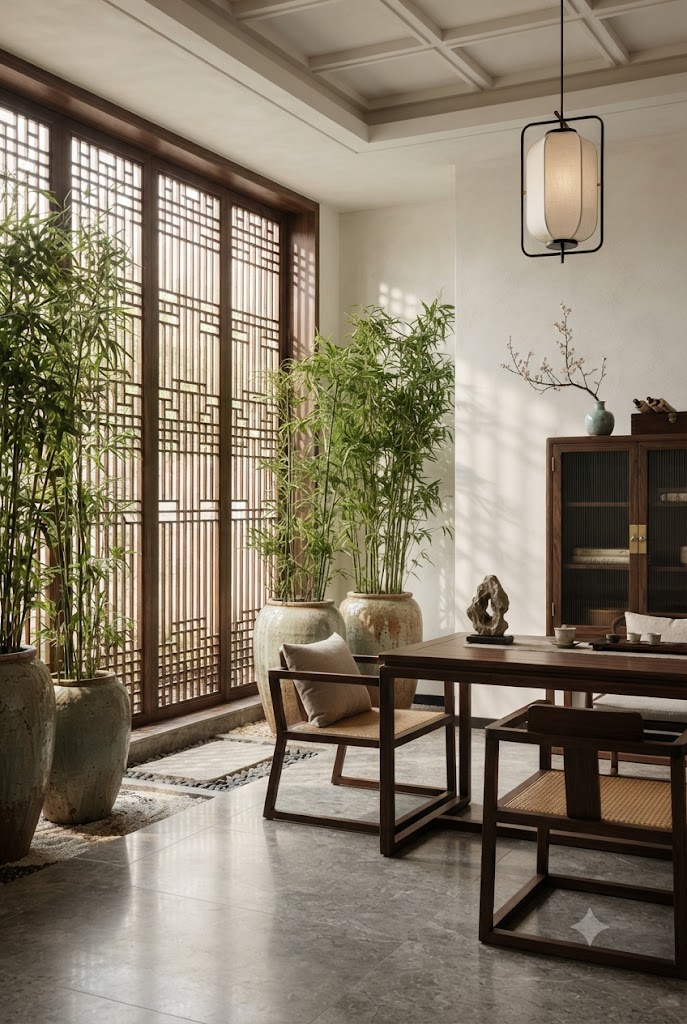
Chinese interiors have always valued restraint and thoughtful simplicity. Modern Chinese minimalism takes this idea further by removing unnecessary decoration and allowing craftsmanship to become the focus.
Why it works
A minimalist approach creates peaceful spaces where textures, materials, and meaningful objects receive more attention.
Modern interpretation
Instead of filling shelves with accessories, choose a few exceptional pieces:
- A handcrafted vase
- A piece of calligraphy
- A sculptural lamp
- A beautiful wooden object
The result feels luxurious because every element has purpose.
4. Dark Wood Luxury Interiors
Dark wood has always been associated with elegance and craftsmanship in Chinese interiors. Rich walnut, elm, and rosewood tones create warmth while adding a sense of permanence.
Why it works
Wood introduces natural texture and creates a strong foundation for luxurious interiors.
Modern interpretation
Combine dark wood with lighter materials to prevent the space from feeling heavy:
- White marble countertops
- Ivory fabrics
- Soft lighting
- Neutral walls
A dark wooden cabinet or feature wall can instantly become the focal point of a room.
5. Chinese-Inspired Architectural Details
Traditional Chinese architecture is known for beautiful structural details, including curved openings, wooden screens, and geometric patterns.
Modern interiors can borrow these elements in subtle ways.
Why it works
Architectural details add character and make a space feel thoughtfully designed rather than decorated.
Modern interpretation
Introduce:
- Lattice-inspired wall panels
- Rounded doorways
- Decorative wood screens
- Geometric room dividers
These details create cultural influence without overwhelming the room.
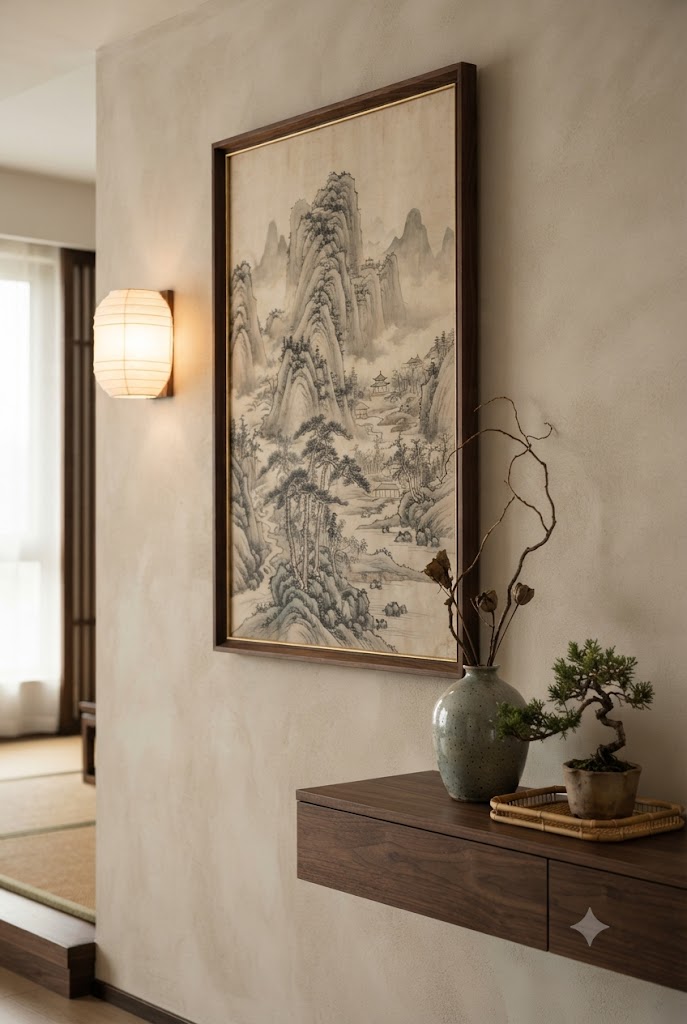
6. Chinese Ink Painting Inspired Spaces
Ink wash painting is one of China’s most respected art forms. Traditional landscapes often feature mountains, rivers, trees, and misty scenery created through expressive brushwork.
Why it works
These artworks bring a sense of calm and encourage a connection with nature.
Modern interpretation
Use oversized monochrome artwork as a statement piece. Instead of decorating every wall, allow one meaningful painting to become the focal point.
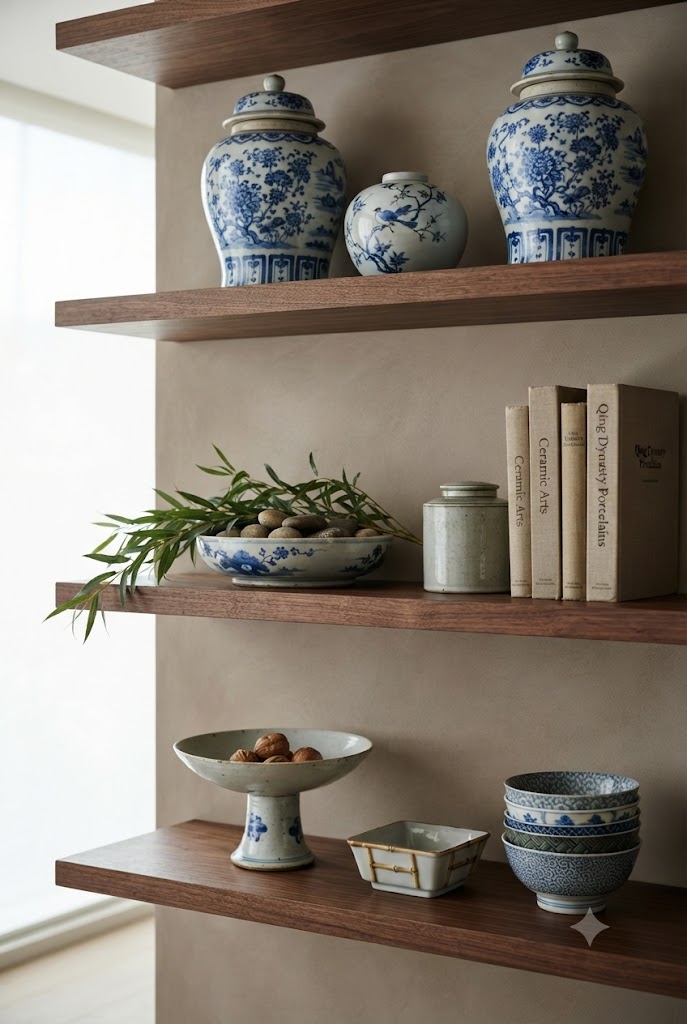
7. Blue-and-White Porcelain Inspired Interiors
Blue-and-white porcelain remains one of the most recognizable symbols of Chinese artistry. The combination of deep cobalt blue and crisp white creates a timeless aesthetic.
Why it works
This color pairing feels elegant, fresh, and adaptable to many decorating styles.
Modern interpretation
Use porcelain-inspired elements through:
- Decorative jars
- Ceramic bowls
- Vases
- Tableware
Display them with modern shelving, books, and greenery to create a curated look.
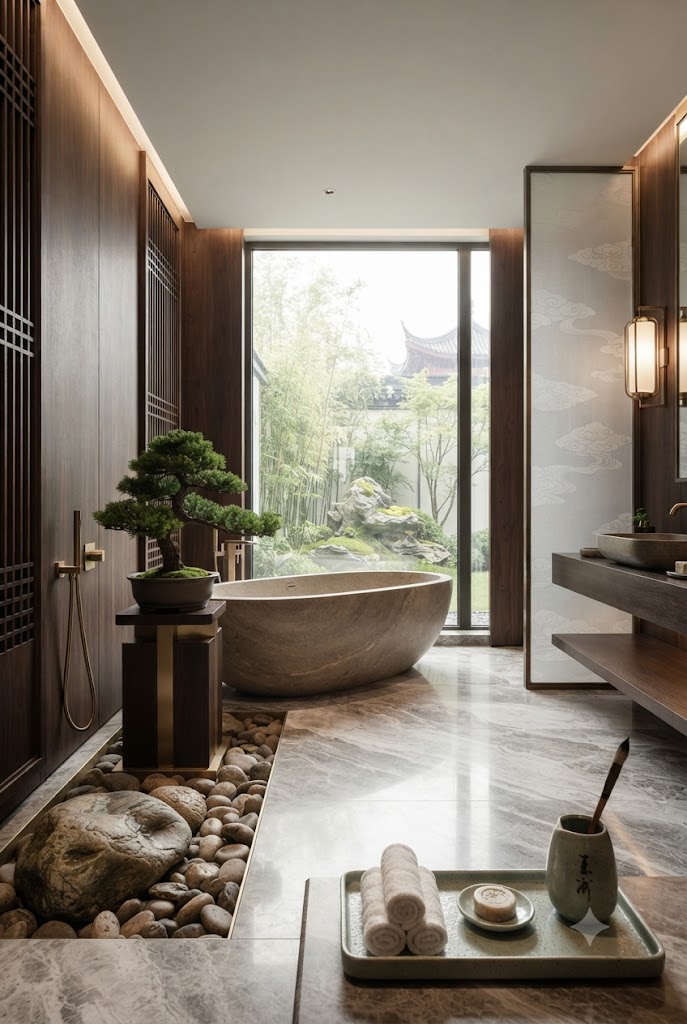
8. Nature-Inspired Chinese Interiors
Chinese design has always celebrated the relationship between humans and nature. Materials like bamboo, stone, wood, and plants create a peaceful connection with the natural world.
Why it works
Natural elements soften modern interiors and create a more welcoming atmosphere.
Modern interpretation
- Wooden furniture
- Stone surfaces
- Indoor plants
- Natural textiles
The goal is not to create a garden theme but to bring subtle organic beauty indoors.
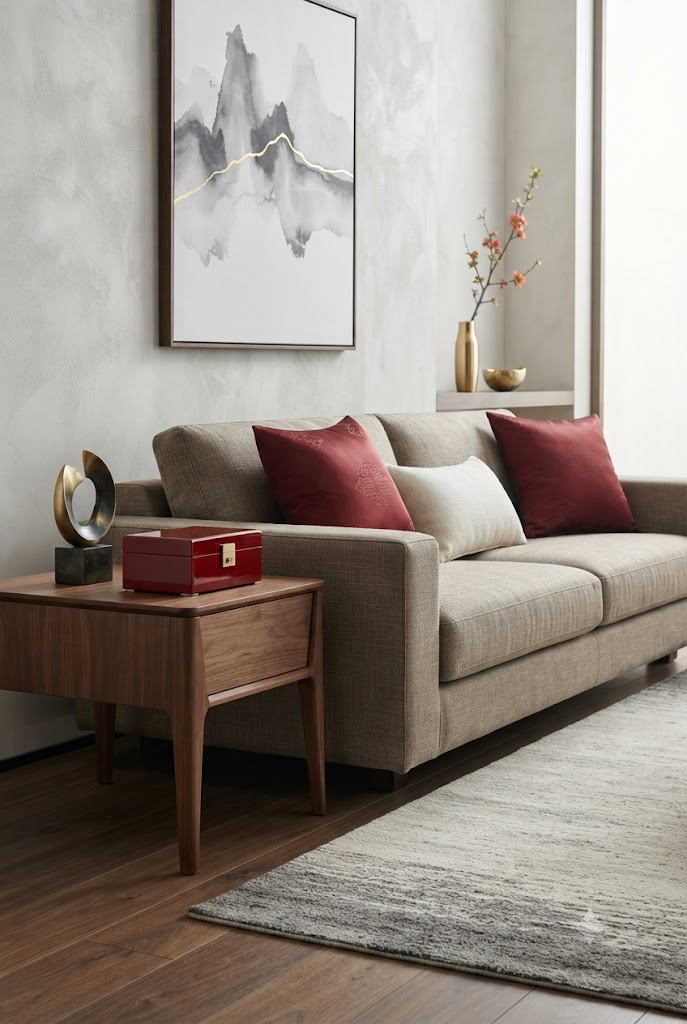
9. Red and Gold Used with Modern Restraint
Traditional Chinese scholars valued creativity, knowledge, and contemplation. Their workspaces were designed to encourage focus and inspiration.
Why it works
These colors add warmth and luxury when used thoughtfully.
Modern interpretation
InInstead of creating a red room, introduce small accents:
- Velvet cushions
- Gold lighting
- Decorative objects
- Artwork details
A neutral background allows these colors to feel elegant.
10. Silk and Textile Layering
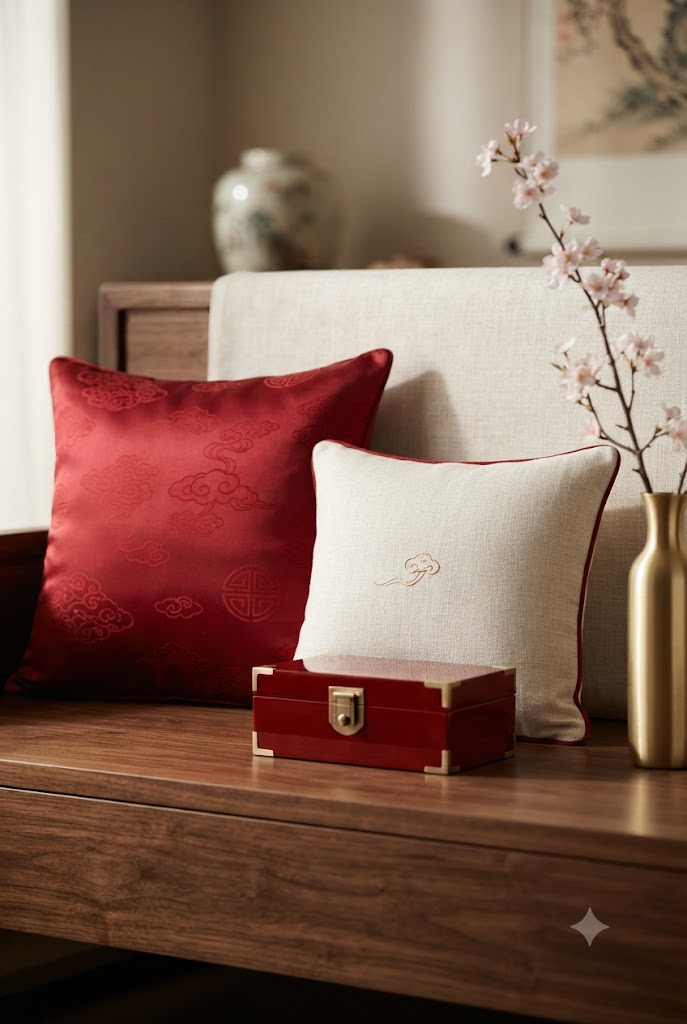
Luxury Chinese interiors often use textiles to introduce softness and craftsmanship. Silk, embroidery, and woven fabrics add richness without requiring dramatic changes.
Why it works
Textiles create warmth and make interiors feel more comfortable.
Modern interpretation
Introduce silk through:
- Cushions
- Curtains
- Bedding
- Decorative throws
Balance luxurious fabrics with simple materials like linen and cotton.
11. Chinese Garden Philosophy Indoors
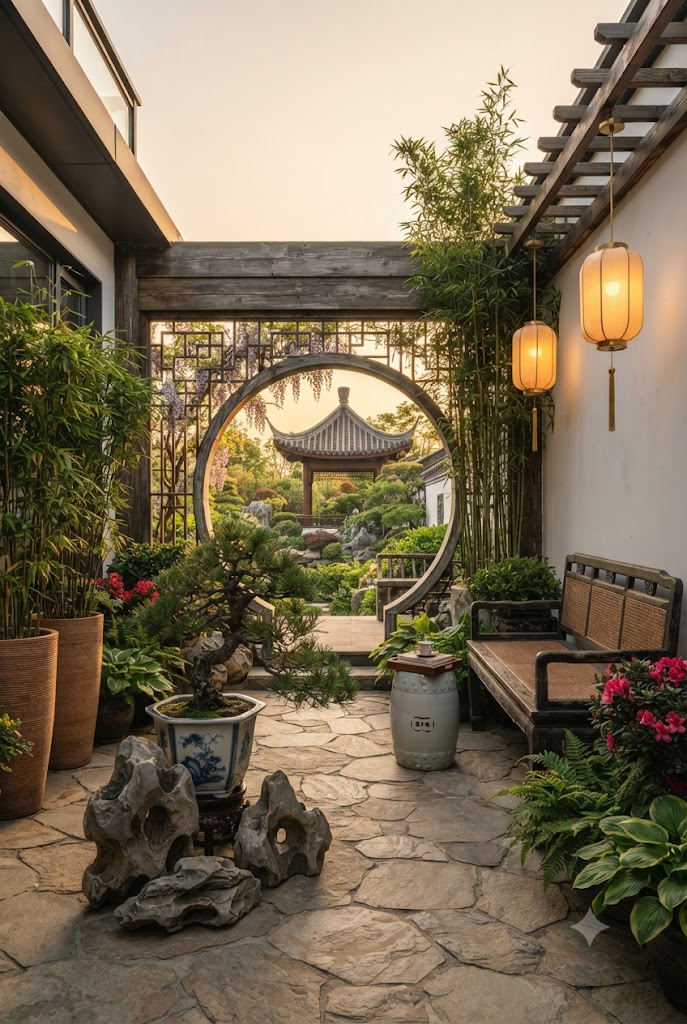
Chinese gardens are designed around balance, movement, and natural beauty. Modern homes can borrow this philosophy by creating spaces that feel connected and peaceful.
Why it works
Garden-inspired interiors encourage relaxation and bring a sense of escape.
Modern interpretation
Bring the spirit of a Chinese garden indoors with a few natural touches:
- A small water feature
- Natural stone and pebbles
- Potted plants or a sculptural bonsai
- Framed views borrowing the outdoor scenery
Balancing water, stone, and greenery creates a calm retreat that feels connected to nature.
12. Contemporary Chinese Luxury Living
Modern Chinese luxury design combines heritage with high-end materials and contemporary architecture.
Why it works
The combination of traditional craftsmanship and modern finishes creates a sophisticated atmosphere.
Modern interpretation
Mix:
- Dark wood
- Marble
- Glass
- Brass
- Soft neutral fabrics
This approach creates interiors that feel luxurious without appearing overly traditional.
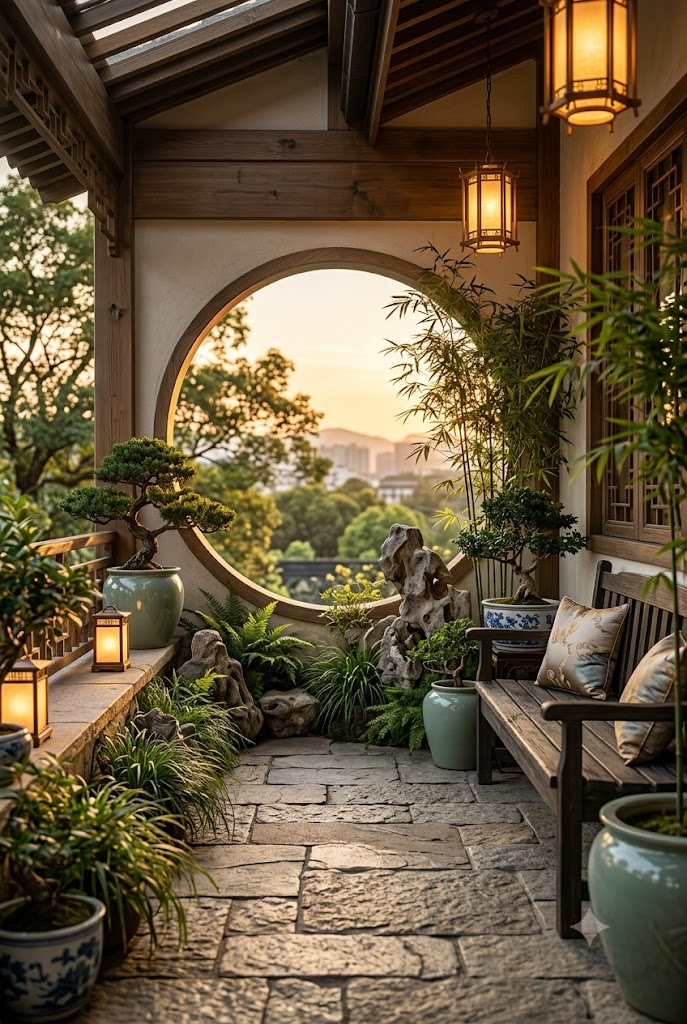
13. Moon Gate Inspired Interior Architecture
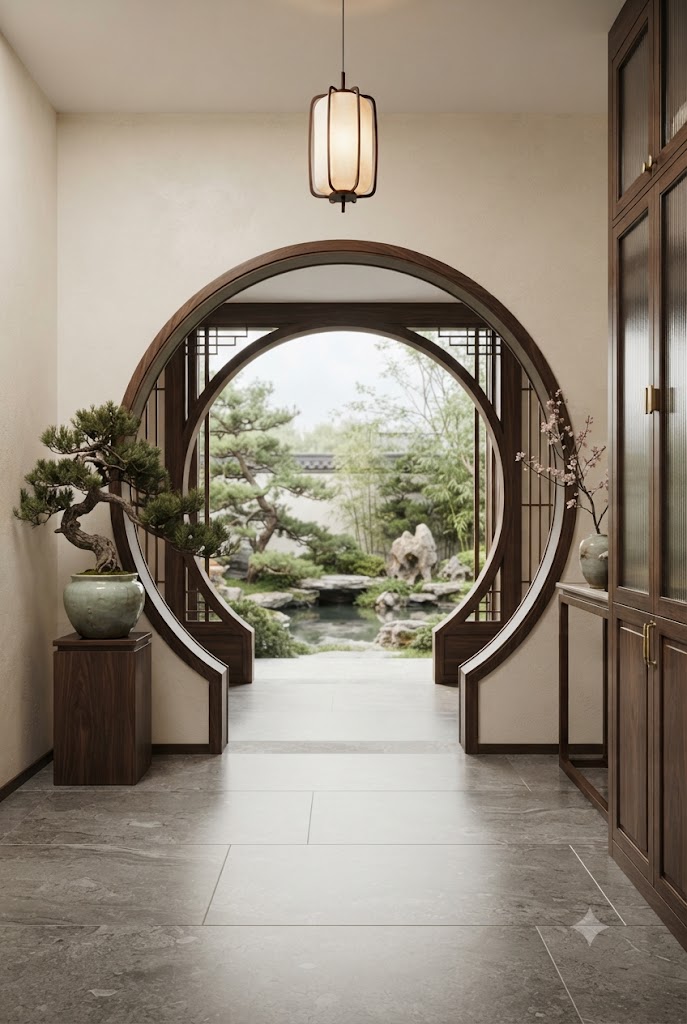
The moon gate is one of the most iconic elements of traditional Chinese gardens and architecture. Originally used as an entrance between garden spaces, its circular shape symbolized unity, wholeness, and harmony.
Why it works
Moon gate-inspired designs create a sense of movement and discovery. The curved opening naturally draws the eye and creates a beautiful transition between different areas of a home.
Unlike ordinary doorways, a circular opening can act almost like a living frame, highlighting artwork, gardens, furniture arrangements, or architectural views.
Modern interpretation
In contemporary homes, the moon gate can be reimagined as:
- A rounded doorway between rooms
- A circular wall opening
- A curved shelving feature
- A garden entrance
- A decorative architectural frame
For a subtle luxury look, pair a moon gate-inspired opening with natural stone, dark wood, bamboo, or indoor greenery.
14. Warm Bamboo Accents
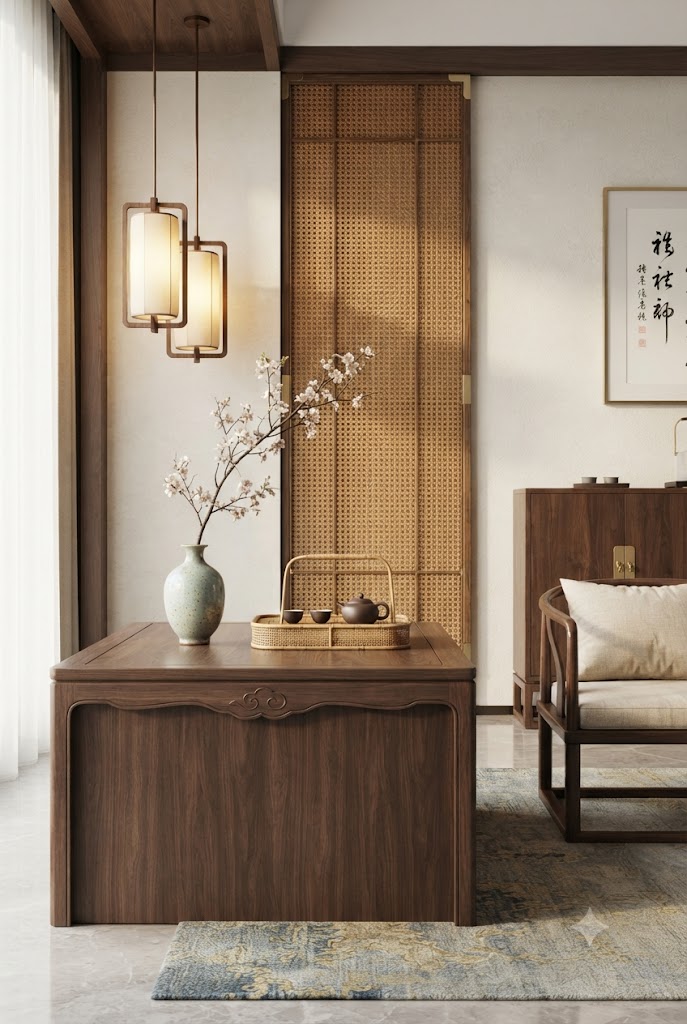
Bamboo has long been admired in Chinese culture for its strength, resilience, and graceful simplicity. Introducing bamboo into your décor instantly adds warmth and a connection to nature.
Why it works
Its natural texture softens hard surfaces like marble, glass, and metal, creating a more inviting and balanced atmosphere.
Modern interpretation
Opt for sleek bamboo furniture or minimalist accessories with clean lines, allowing the material’s beauty to shine without feeling rustic.
15. Traditional Chinese Lantern Lighting
Chinese lanterns bring warmth, elegance, and a sense of history into contemporary interiors. Whether crafted from silk, paper, or metal, their soft glow creates an inviting atmosphere.
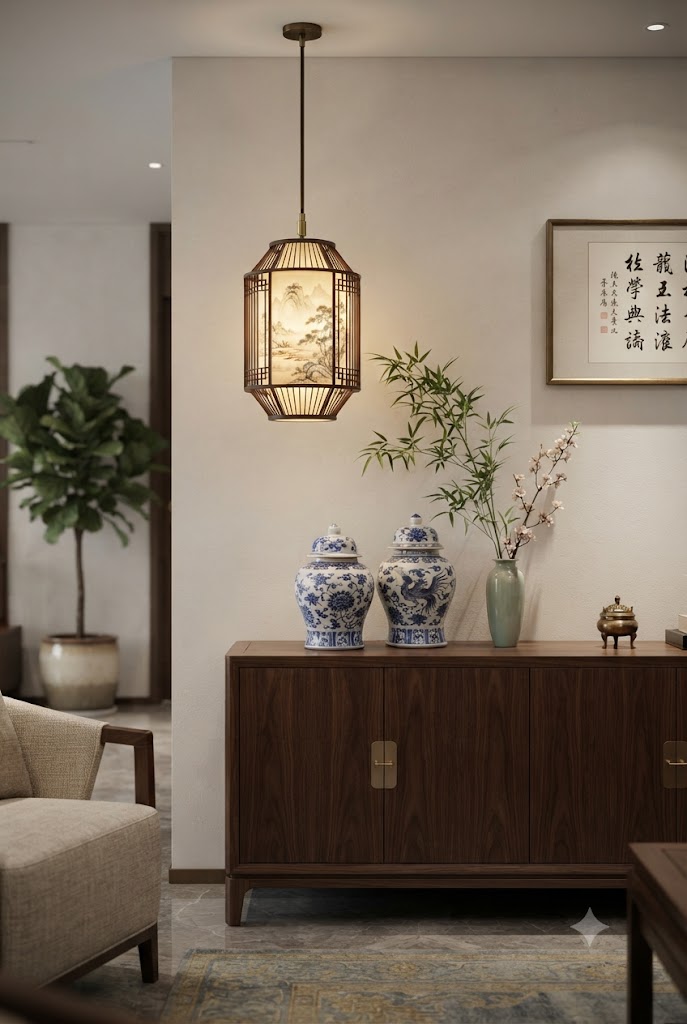
Why it works
Lantern lighting diffuses illumination gently, adding ambiance while serving as a striking decorative feature.
Modern interpretation
Replace ornate detailing with matte black frames or frosted glass while retaining the lantern-inspired shape for a sophisticated fusion of tradition and contemporary design.
16. Chinese Calligraphy Gallery Walls
Calligraphy is considered one of China’s highest art forms, transforming written characters into expressive visual compositions.
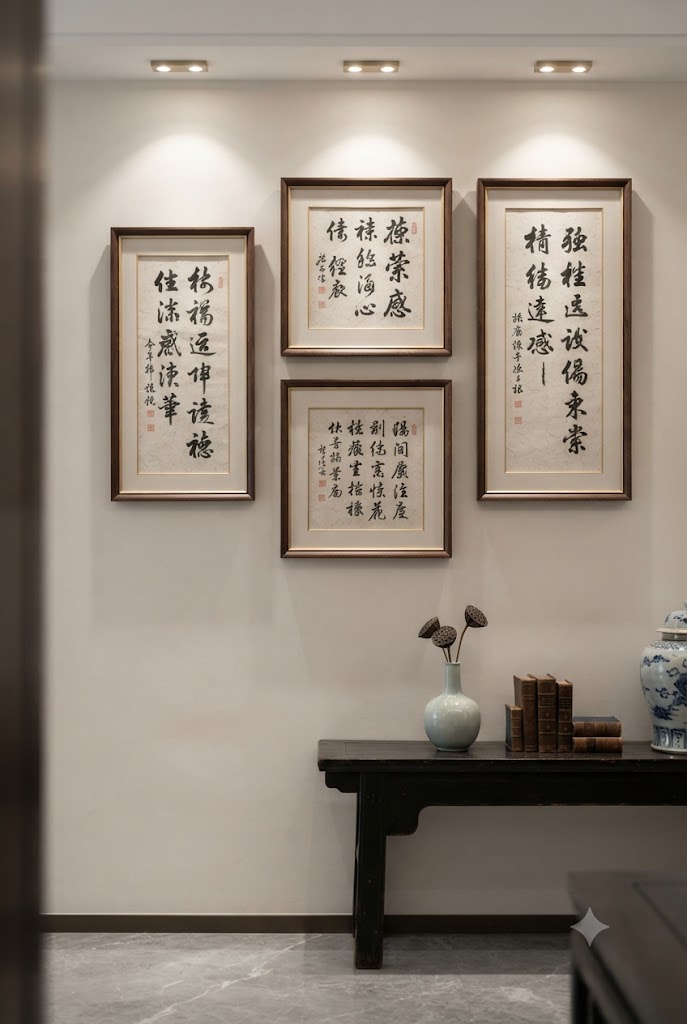
Why it works
A curated gallery wall featuring calligraphy introduces culture, artistry, and a sense of tranquility without relying on excessive decoration.
Modern interpretation
Combine traditional calligraphy with minimalist abstract prints to create a gallery wall that bridges ancient artistry and modern design.
Chinese Color Palette Guide
Color in Chinese interior design is far more than a decorative choice—it reflects centuries of cultural symbolism, philosophy, and artistic tradition. Rather than overwhelming a space with bold hues, modern Chinese interiors often use meaningful colors thoughtfully, allowing each shade to create atmosphere while honoring its heritage.
1. Imperial Red
Perhaps the most iconic color in Chinese culture, imperial red symbolizes happiness, prosperity, celebration, and good fortune. Historically reserved for palaces, temples, and festive occasions, it remains one of the most recognizable elements of Chinese design.
In contemporary interiors, red is best introduced as an accent rather than a dominant color. A lacquered cabinet, silk cushions, or a ceramic vase can add warmth and character without overwhelming the room.
Best paired with: Walnut, ivory, brass, and marble.
2. Gold
Gold represents wealth, nobility, abundance, and success. Traditionally used alongside imperial red, it brings a sense of grandeur while highlighting fine craftsmanship.
Modern homes benefit from subtle gold accents through lighting, cabinet hardware, mirrors, and decorative objects. Brushed or antique finishes feel far more sophisticated than highly polished metallics.
Best paired with: Black, jade green, dark wood, and soft white.
3. Jade Green
Inspired by the treasured gemstone, jade green symbolizes purity, harmony, wisdom, and longevity. It introduces calmness and natural beauty to interiors.
Soft jade works beautifully on accent chairs, decorative ceramics, or painted cabinetry, especially when balanced with natural wood and linen fabrics.
Best paired with: Walnut, ivory, brass, and warm gray.
4. Ink Black
Derived from traditional Chinese calligraphy and ink wash paintings, black represents strength, depth, and elegance.
Rather than making a room feel dark, black can define architectural features, furniture, and decorative accessories. Matte black finishes are particularly effective in contemporary homes.
Best paired with: White marble, walnut wood, brass, and soft lighting.
5. Ivory
Ivory provides balance by softening richer colors and highlighting intricate craftsmanship. It creates a calm backdrop that allows statement furniture and artwork to shine.
Use ivory on walls, upholstery, rugs, and curtains to brighten interiors while maintaining warmth.
Best paired with: Every traditional Chinese color, particularly walnut, jade, and gold.
6. Warm Walnut
Warm walnut reflects the timeless beauty of handcrafted Chinese furniture. Its rich grain adds warmth, sophistication, and a sense of permanence.
Use walnut for flooring, cabinetry, shelving, or furniture to anchor modern interiors with natural elegance.
7. Dark Elm
Dark elm has been a favorite material for Chinese furniture makers due to its durability and striking appearance.
Its deep tone creates dramatic contrast when paired with marble, ivory walls, and contemporary lighting, making it ideal for feature furniture.
8. Blue-and-White
Inspired by world-famous Chinese porcelain, this timeless color combination symbolizes refinement, artistry, and cultural heritage.
Introduce blue-and-white through ginger jars, ceramic bowls, decorative plates, or statement vases displayed on open shelving.
9. Soft Stone Gray
Stone gray reflects mountains, natural rock, and the quiet beauty of traditional Chinese gardens. It provides a sophisticated neutral foundation for contemporary interiors.
Use it on walls, stone flooring, upholstery, or textured fabrics to balance darker woods and vibrant accents while maintaining a serene atmosphere.
Read Full Post Here: Luxury Asian Color Psychology
Must-Have Chinese Decorative Elements
Beautiful Chinese interiors are rarely defined by furniture alone. It is often the carefully chosen decorative objects—each rich in symbolism and craftsmanship—that give a space its distinctive character. The following timeless pieces can add authentic Chinese influence to a modern home without making it feel overly themed.
- Chinese Folding Screens
- Lattice Panels & Window Designs
- Porcelain Collections
- Hand-Painted Ceramic Vases
- Bamboo Décor
- Chinese Lanterns
- Wall Art & Scroll Paintings
- Chinese Calligraphy
- Room Dividers
- Tea Corner Essentials
- Scholar’s Objects
- Cloisonné & Lacquerware
- Jade & Stone Accents
Chinese Room-by-Room Styling Tips
One of the greatest misconceptions about Chinese interior design is that it requires a complete home transformation. In reality, the beauty of this style lies in introducing carefully chosen elements that add depth, balance, and cultural richness to existing interiors. Whether your home is modern, transitional, or even Scandinavian-inspired, a few thoughtfully selected Chinese details can create an atmosphere that feels timeless rather than themed.
Here’s how to bring authentic Chinese character into every room of your home.
1. Living Room
The living room is where Chinese design truly shines. Traditionally, it served as a space for welcoming guests, celebrating family, and displaying treasured heirlooms. Today’s homes can reinterpret this idea with curated décor and balanced furniture arrangements.
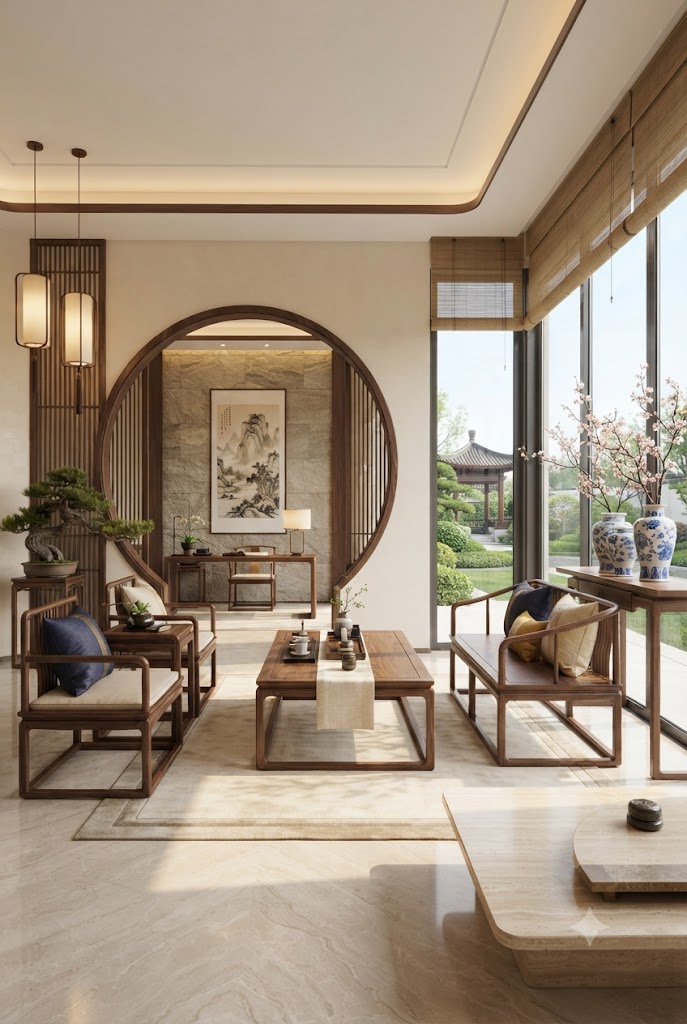
Signature Chinese Details
- Ming-inspired wooden furniture
- Blue-and-white porcelain
- Large ceramic floor vase
- Ink wash landscape artwork
- Lantern-inspired pendant lighting
- Indoor bonsai
Styling Tips
Instead of filling every corner with decorative objects, choose a few statement pieces. A dark walnut console topped with porcelain jars, framed by a large landscape painting, instantly establishes a refined Chinese influence.
Arrange seating symmetrically around a central coffee table to create visual harmony. Layer natural materials such as linen, marble, walnut, and silk to add warmth and texture.
2. Bedroom
Chinese-inspired bedrooms prioritize serenity over decoration. The goal is to create a restful retreat where soft textures, calming colors, and natural materials encourage relaxation.
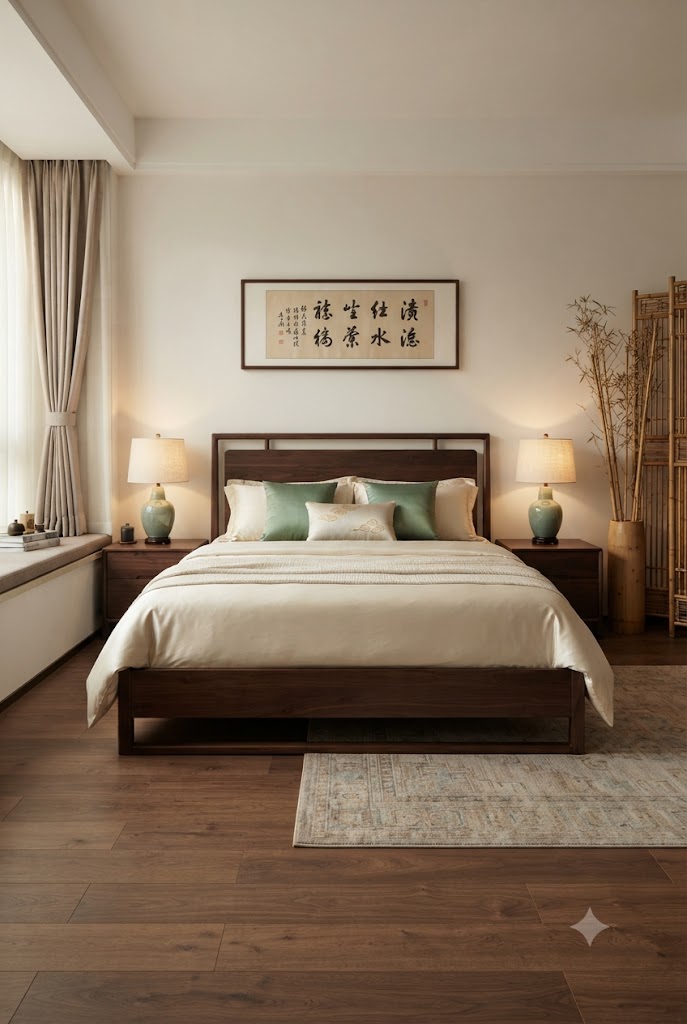
Signature Chinese Details
- Walnut platform bed
- Silk bedding
- Minimal artwork
- Bamboo accents
- Warm ambient lighting
- Soft jade green accessories
Styling Tips
Choose neutral walls and allow luxurious textures to become the focus. A pair of matching bedside tables, elegant ceramic lamps, and embroidered silk cushions create balance without clutter.
Avoid oversized decorative collections. Every item should contribute to a peaceful atmosphere.
3. Dining Room
Dining holds deep cultural significance in Chinese tradition, making this one of the most meaningful spaces to decorate.
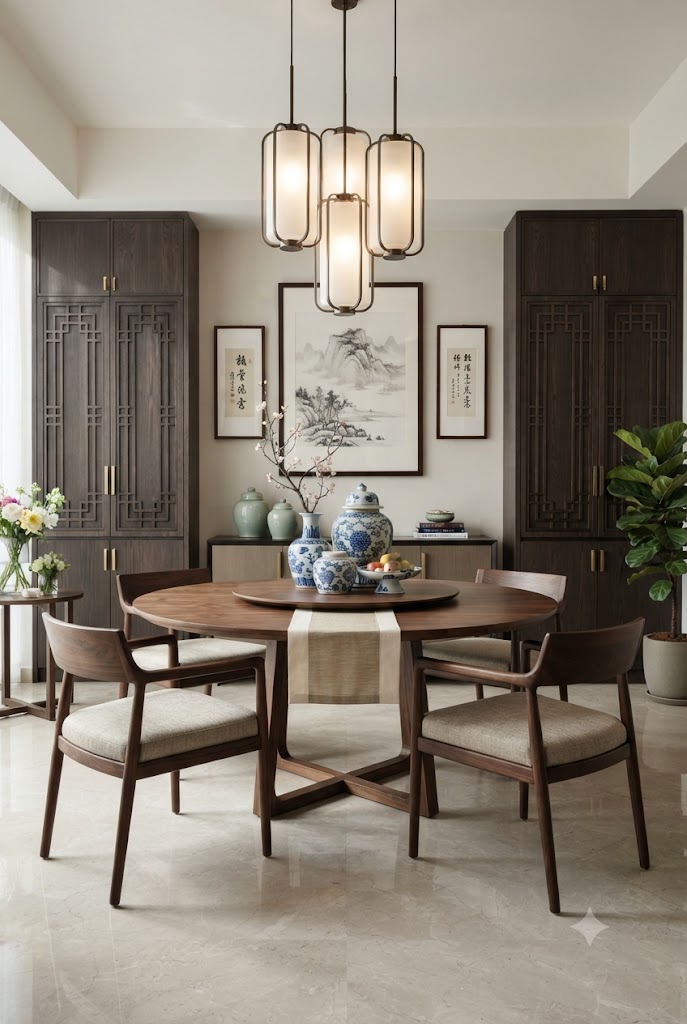
Signature Chinese Details
- Round dining table
- Lantern pendant lighting
- Porcelain dinnerware
- Floral centerpiece
- Wooden buffet cabinet
Styling Tips
Round tables encourage conversation and symbolize unity. Pair them with upholstered dining chairs for contemporary comfort while maintaining traditional influence.
Display only one or two porcelain centerpieces rather than elaborate table decorations.
4. Entryway
In Chinese design philosophy, the entrance creates the first impression of the home’s energy and hospitality.
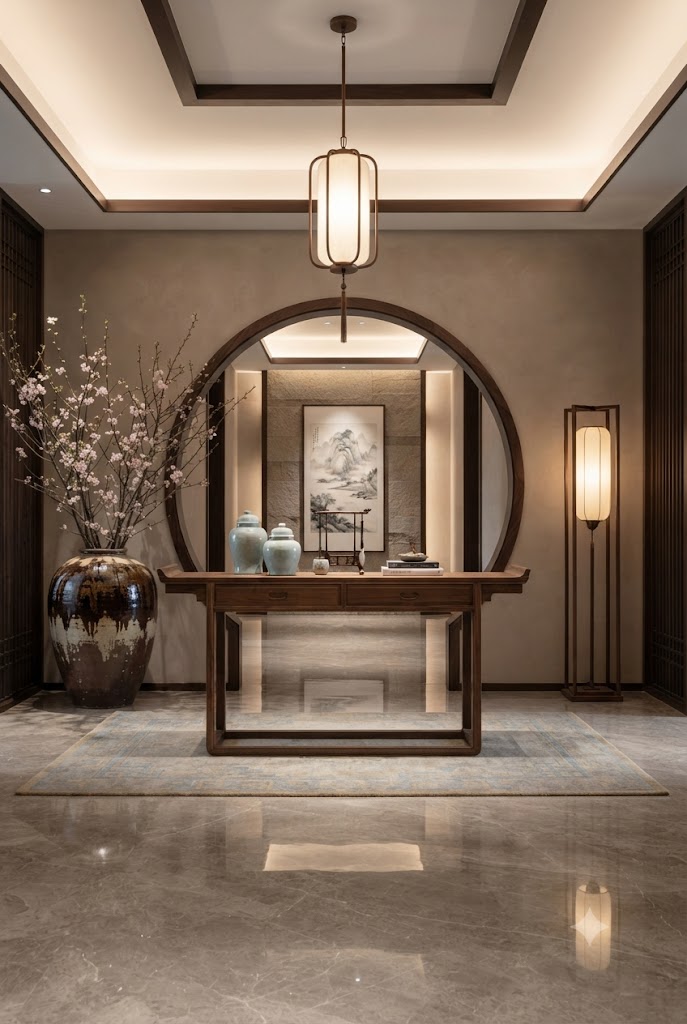
Signature Chinese Details
- Dark wood console
- Large ceramic vase
- Mirror
- Fresh branches or flowers
- Soft lighting
Styling Tips
Keep the area uncluttered. A beautifully styled entry feels welcoming and sophisticated while setting the tone for the rest of the home.
A simple arrangement of greenery inside a handcrafted vase often creates more impact than multiple decorative accessories.
5. Home Office
Traditional Chinese scholars valued simplicity, focus, and craftsmanship. These principles translate beautifully into today’s workspaces.
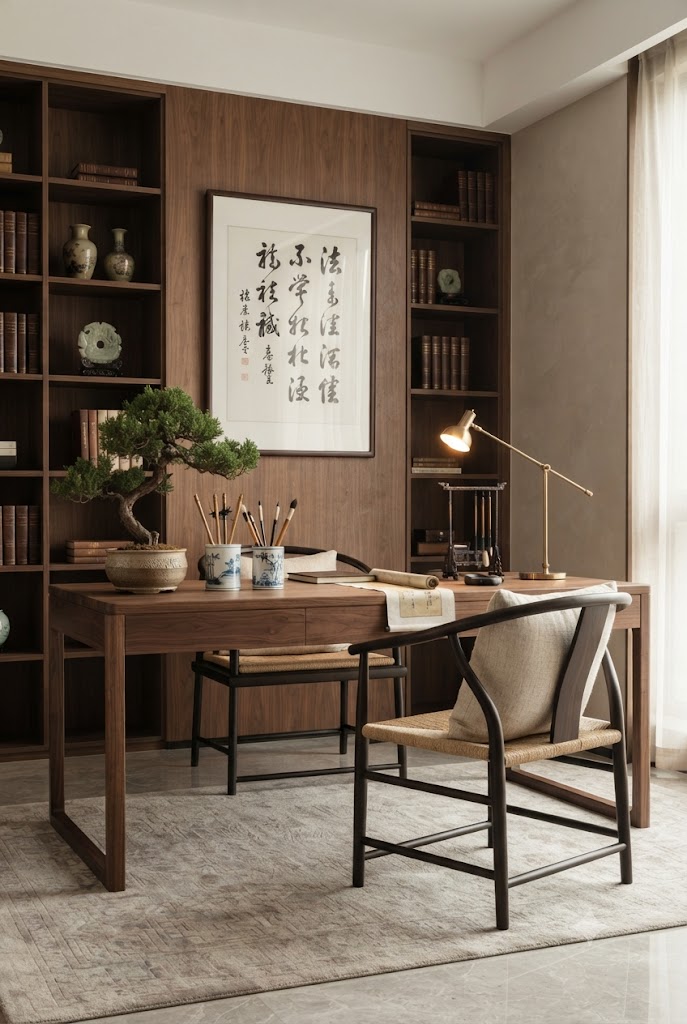
Signature Chinese Details
- Solid wood desk
- Calligraphy artwork
- Floating shelves
- Scholar’s objects
- Bonsai tree
- Warm reading lamp
Styling Tips
Keep surfaces organized and avoid unnecessary decorations. Display books, ceramics, and artistic objects with generous spacing to encourage concentration.
6. Tea Room
The tea room represents one of the most iconic expressions of Chinese hospitality and mindfulness.
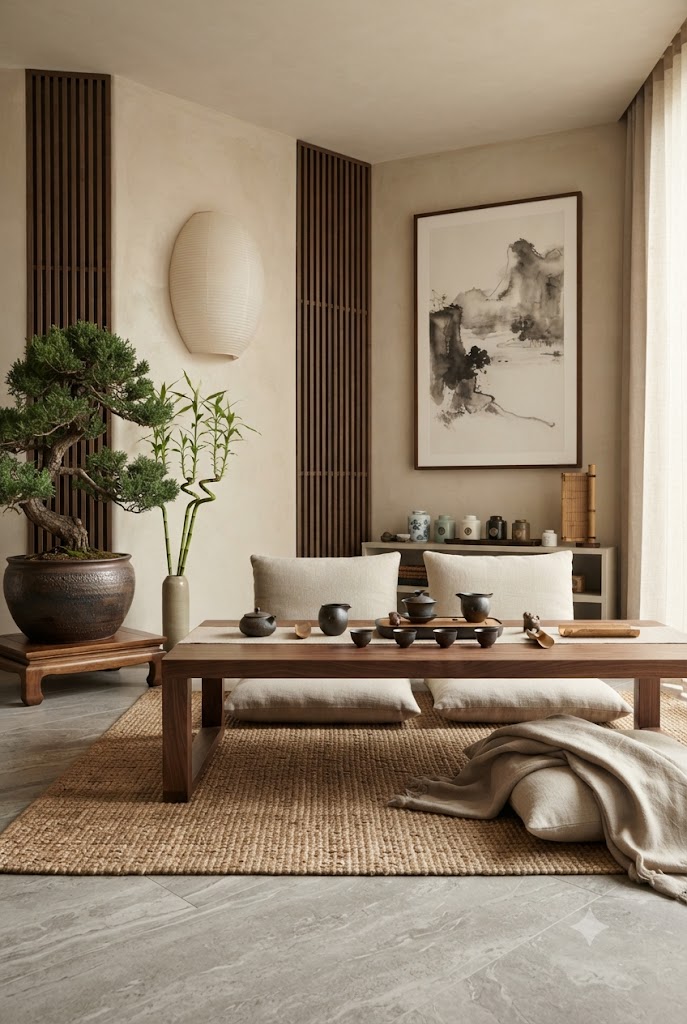
Signature Chinese Details
- Gongfu tea set
- Low wooden table
- Floor cushions
- Bamboo
- Soft natural lighting
Styling Tips
The atmosphere should encourage slowing down. Use calming colors, natural wood, and handcrafted ceramics while limiting visual distractions.
Even a small apartment can dedicate one peaceful corner to tea rituals.
7. Balcony or Courtyard
Outdoor spaces have always played an important role in Chinese architecture. They serve as places to reconnect with nature and find quiet reflection.
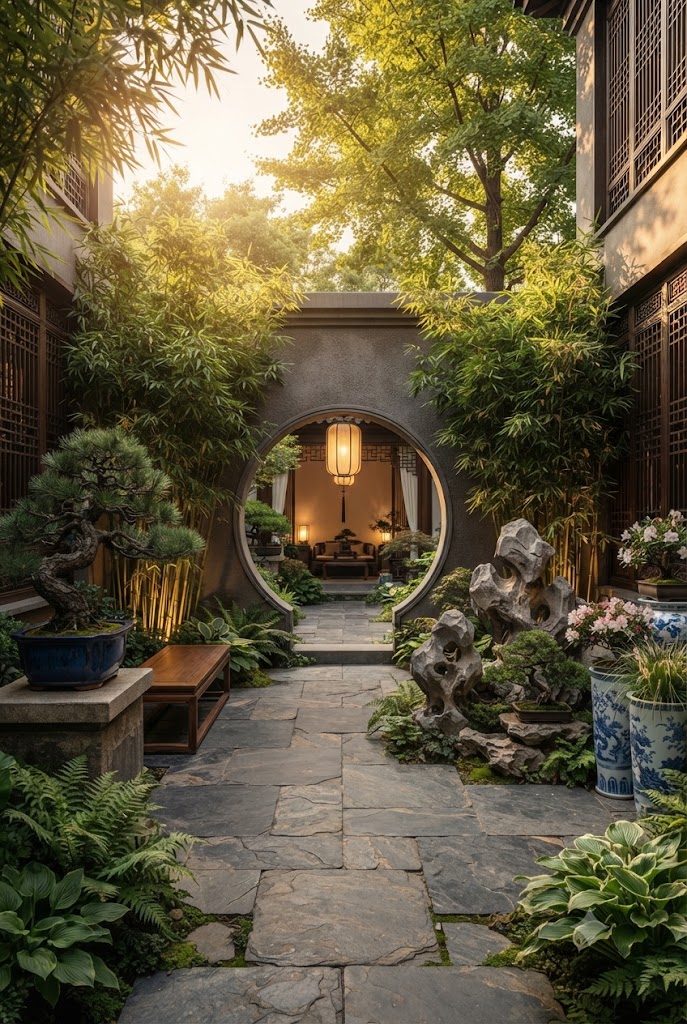
Signature Chinese Details
- Stone planters
- Bamboo
- Bonsai
- River stones
- Wooden bench
- Lantern lighting
Styling Tips
Keep planting simple and sculptural. Mix natural stone with wood and greenery while avoiding excessive ornamentation.
A single bonsai, comfortable bench, and warm lantern often create a more luxurious atmosphere than a crowded collection of plants.
You may also like: Traditional Chinese Garden
8. Zen Reading and Reflection Corners
Quiet spaces for reflection are an important part of Chinese living traditions. A dedicated reading corner creates a peaceful escape. It encourages slowing down and enjoying moments of calm.
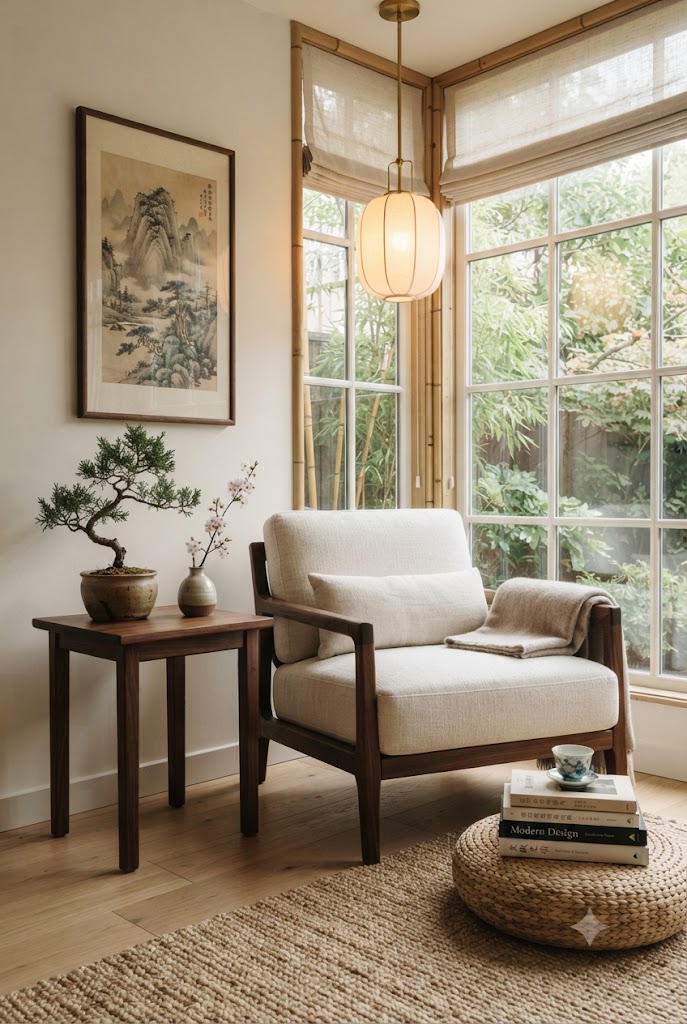
Signature Chinese Details
- Small plant
- Comfortable chair
- Wooden side table
- Artwork
- Warm lighting
- Floor cushions
9. Chinese-Inspired Bathrooms and Spa Spaces
Modern Chinese bathrooms often combine natural materials with minimalist design to create relaxing spa-like environments. This focus on simplicity and nature creates a peaceful atmosphere.
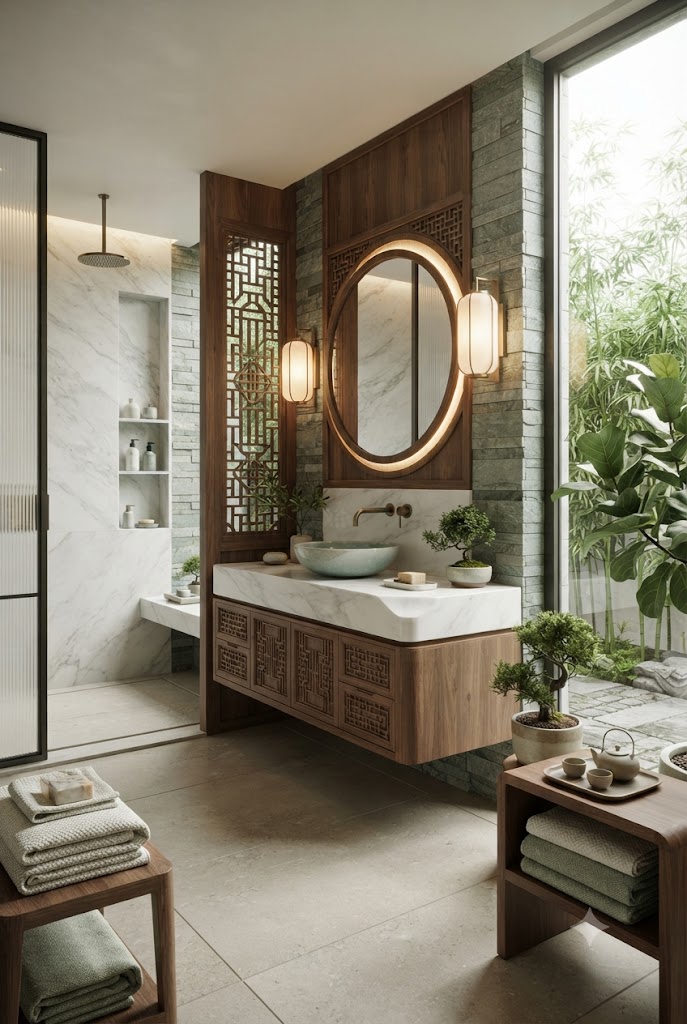
Signature Chinese Details
- Minimal accessories
- Stone surfaces
- Wooden cabinetry
- Lantern lighting
You may also like: Solarpunk Bathroom
Chinese Interior Design Mistakes to Avoid
Chinese interiors are admired because they feel refined, balanced, and intentional. Unfortunately, many people unintentionally create spaces that feel more like themed restaurants or souvenir shops than elegant homes. Avoiding these common mistakes will help you capture the true spirit of Chinese design.
1. Overusing Dragons and Overt Motifs
Dragons, pagodas, and other symbolic designs should be used sparingly. Let one or two meaningful pieces make a statement instead of repeating the same motif throughout the room.
2. Using Too Much Bright Red
Red is an important color in Chinese culture, but too much can overwhelm a modern interior. Balance it with neutral tones and natural wood for a more sophisticated look.
3. Mixing Different Asian Design Styles
Chinese, Japanese, Korean, and Thai interiors each have distinct histories and aesthetics. Stick to one primary style to create a cohesive and authentic space.
4. Choosing Mass-Produced Décor Over Craftsmanship
Handcrafted furniture, ceramics, and textiles add character and longevity, while inexpensive imitations can diminish the overall look.
5. Ignoring Balance and Proportion
Chinese interiors emphasize symmetry and thoughtful furniture placement. Leave enough open space for the room to feel calm and harmonious.
6. Decorating Every Surface
Instead of filling shelves with collectibles, display a few carefully chosen pieces. A curated arrangement always feels more elegant than visual clutter.
How to Blend Chinese Tradition with Modern Luxury
The most inspiring Chinese interiors today are not historical recreations—they’re sophisticated homes that thoughtfully combine ancient craftsmanship with contemporary living. By balancing tradition with clean lines, luxurious materials, and curated décor, you can create spaces that feel timeless, elegant, and deeply personal.
1. Pair Ming Furniture with Modern Sofas
One beautifully crafted Ming-style chair or console table can become the star of a contemporary living room. Pair it with a streamlined sofa in linen or boucle fabric to create a striking contrast between heritage craftsmanship and modern comfort.
2. Display Porcelain on Minimalist Shelving
Blue-and-white porcelain doesn’t belong hidden inside cabinets. Display a curated collection on floating walnut shelves or within a glass-front bookcase, allowing each piece to stand out like artwork.
3. Transform Lattice Panels into Architectural Features
Instead of reserving latticework for traditional windows, use it creatively as feature walls, sliding partitions, cabinet inserts, or headboard details. These geometric patterns introduce texture while maintaining a clean, contemporary appearance.
4. Introduce Bamboo and Silk in Small Doses
Rather than filling a room with bamboo furniture, incorporate the material through trays, baskets, woven shades, or decorative accessories. Likewise, add silk through cushions, throws, or lampshades to introduce subtle luxury without overwhelming the space.
5. Mix Marble, Glass, and Dark Wood
One of the hallmarks of contemporary Chinese luxury is the combination of contrasting materials. Cool marble, transparent glass, warm walnut, and brushed brass create interiors that feel sophisticated while still honoring traditional craftsmanship.
6. Layer Neutral Colors with Symbolic Accents
Build your room around calming neutrals such as ivory, warm gray, stone, or soft beige. Then introduce meaningful Chinese colors through carefully selected accessories—jade green ceramics, a red lacquer box, or gold-framed artwork. This restrained approach feels elegant and allows each symbolic accent to stand out.
7. Prioritize Craftsmanship Over Quantity
The true essence of Chinese interior design lies not in owning more décor but in choosing pieces that tell a story. A hand-carved cabinet, a hand-painted porcelain vase, or an heirloom-quality tea set will always have a greater impact than a room filled with inexpensive decorative items.
By investing in authentic craftsmanship and surrounding it with clean, contemporary design, you create a home that feels collected, personal, and timeless.
You may also like: Luxury Materials That Instantly Elevate an Asian-Inspired Home
Conclusion
Chinese interior design is not about recreating a historical space—it is about bringing balance, craftsmanship, and meaningful beauty into modern homes.
By incorporating thoughtful elements such as handcrafted furniture, natural materials, symbolic colors, and curated décor, you can create interiors that feel luxurious, timeless, and deeply personal.
Whether you introduce a single porcelain piece or redesign an entire room, Chinese-inspired design offers a beautiful way to create a home filled with harmony and character.
FAQ: 16 Chinese Interior Design Ideas
What is the most important principle in Chinese interior design?
Balance is perhaps the defining characteristic of Chinese interior design. It is achieved through contrast — light against dark, smooth stone complementing textured wood, delicate silk softening solid timber, and open space balancing decorative objects — rather than requiring perfect symmetry. Balanced spaces feel naturally comfortable and inviting.
How do I avoid making a Chinese-inspired room look like a themed restaurant?
Practice restraint: use dragons, pagodas, and other symbolic motifs sparingly, letting one or two meaningful pieces stand out. Introduce red as an accent rather than a dominant color, choose handcrafted pieces over inexpensive mass-produced décor, and decorate for meaning rather than excess.
Can I mix Chinese design with my existing modern décor?
Yes — the most inspiring interiors today blend tradition with modern luxury rather than recreating historical spaces. Pair a Ming-style chair or console with a contemporary sofa, display blue-and-white porcelain on minimalist floating shelves, or layer calming neutrals with symbolic accents. Balance each statement piece with clean, contemporary design.
What are the biggest mistakes to avoid in Chinese interior design?
Avoid overusing dragons and overt motifs, using too much bright red, mixing different Asian design styles (Chinese, Japanese, Korean, and Thai each have distinct aesthetics), choosing mass-produced décor over craftsmanship, ignoring balance and proportion, and decorating every surface. Leave enough open space for the room to breathe.
What role does feng shui play in a modern home?
Modern homeowners can use feng shui as a gentle guiding principle rather than a strict rulebook. Its core ideas are practical: allow natural light to flow freely, avoid overcrowding rooms, create clear pathways, position furniture to feel welcoming, and balance natural materials with architectural structure. Even subtle adjustments can make a room feel more peaceful and inviting.



One Comment