Troubleshooting Terrariums: Mold, Foggy Glass & Dying Plants
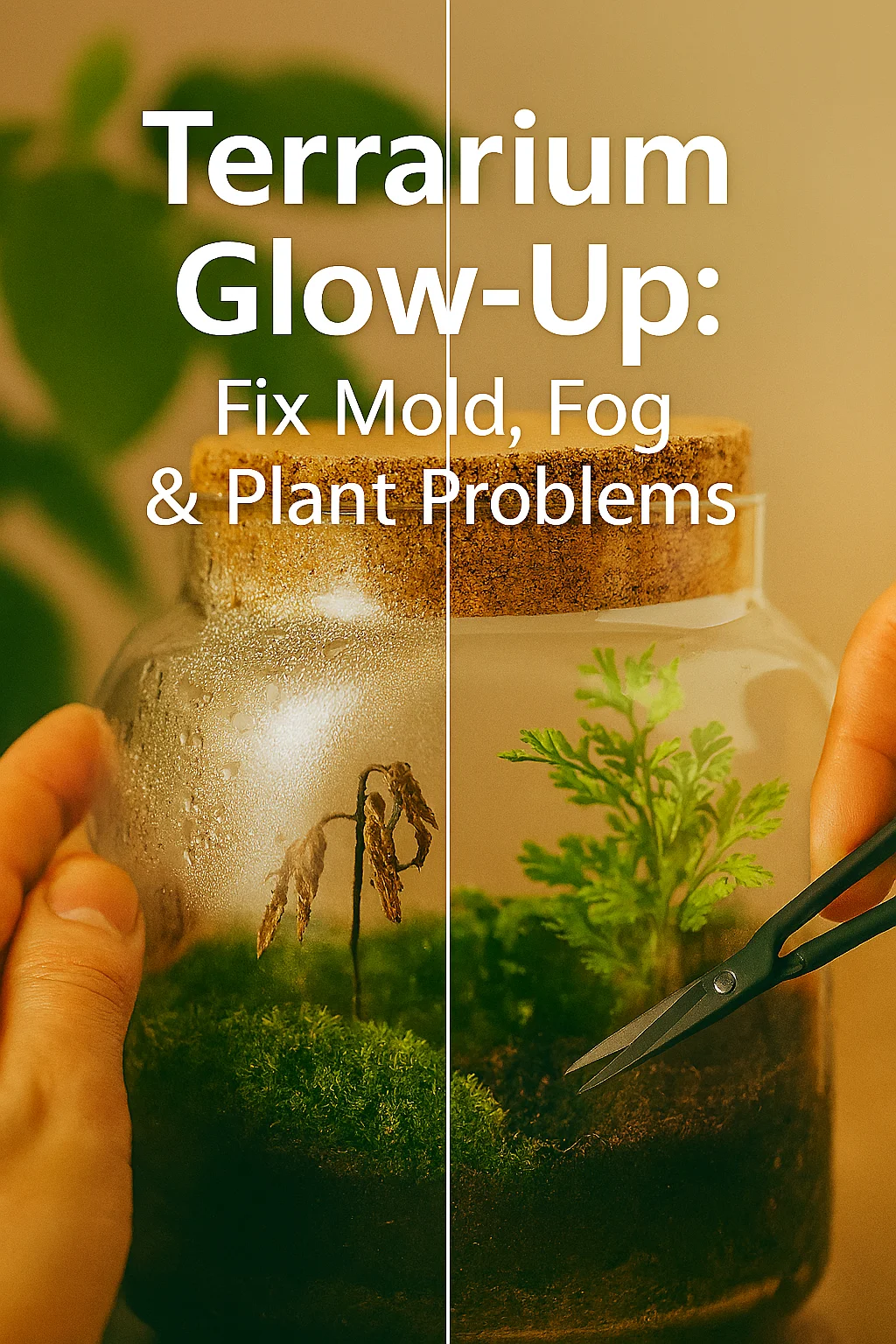
Troubleshooting Terrariums doesn’t have to be difficult, even when you’re dealing with mold, foggy glass, or struggling plants. Terrariums are designed to create a balanced miniature ecosystem, but small changes in moisture, light, or airflow can quickly lead to common problems. The good news is that most terrarium issues are easy to identify and fix once you understand what’s causing them. In this guide, you’ll learn how to solve mold growth, reduce excess condensation, revive dying terrarium plants, and keep your glass garden healthy and thriving for years to come.
1. Understanding Your Terrarium’s Ecosystem
Before diving into troubleshooting, it’s important to remember that terrariums are self-contained environments. Everything inside—from the soil to the plants and moisture—works together to create a delicate balance.
When one element goes off (too much water, too little air circulation, or too little light), problems like mold, rot, or foggy glass can appear quickly. The good news? Once you understand what’s causing the imbalance, it’s easy to bring your terrarium back to life.
2. Problem #1: Mold Growing in Your Terrarium

What It Looks Like:
White, gray, or fuzzy spots appearing on the soil, plants, or décor—sometimes resembling cotton or cobwebs.
Why It Happens:
- Excess humidity or overwatering
- Poor air circulation
- Decomposing organic matter like leaves or moss
How to Fix It:
- Remove Affected Areas: Gently scoop out moldy soil or trim infected plant parts using sterilized scissors.
- Improve Air Circulation: Open the terrarium lid for a few hours daily or keep it slightly ajar until the mold clears.
- Add Activated Charcoal: Mix a layer of activated charcoal beneath the soil to absorb moisture and prevent future fungal growth.
- Adjust Watering Routine: Mist only when the soil looks dry—not damp. Overwatering is the most common cause of terrarium mold.
Pro Tip: For decorative open terrariums, a small USB fan nearby can help improve airflow and keep mold at bay.
3. Problem #2: Foggy or Steamed-Up Glass

What It Looks Like:
Your once-clear glass looks cloudy or covered with condensation, making it hard to see the plants inside.
Why It Happens:
- Too much humidity trapped inside
- Temperature fluctuations between the room and the terrarium
- Overwatering or poor ventilation
How to Fix It:
- Wipe and Air Out: Use a soft cloth to clean the glass, then leave the lid open for several hours to release trapped moisture.
- Balance Moisture Levels: If you notice water droplets forming frequently, remove the lid more often or reduce misting.
- Avoid Sudden Temperature Changes: Keep your terrarium away from heaters, direct sunlight, or air conditioners.
Prevent Future Fogging:
Maintain a consistent environment. A light mist every few days (not daily) is enough for closed terrariums. If you’re growing tropical plants, a bit of morning condensation is natural—it means your terrarium is thriving!
4. Problem #3: Dying or Yellowing Plants

What It Looks Like:
Leaves turning yellow or brown, drooping stems, or plants that stop growing.
Why It Happens:
- Overwatering or waterlogged soil
- Too little or too much sunlight
- Wrong plant choice for your terrarium type
- Root rot or nutrient imbalance
How to Fix It:
- Check the Roots: Gently remove the plant and inspect the roots. If they’re mushy or dark, trim them and replant in fresh, dry soil.
- Right Light Conditions:
- Closed terrariums prefer indirect or filtered light.
- Open terrariums (like succulents and cacti) need bright, direct sunlight.
- Avoid Fertilizing Often: Most terrarium plants don’t need fertilizer. If you must, use a half-strength liquid fertilizer only every few months.
- Choose Compatible Plants: Make sure your terrarium’s species match in light and moisture needs. For example, ferns and mosses love humidity, but succulents will quickly rot in such conditions.
5. Preventing Future Terrarium Problems
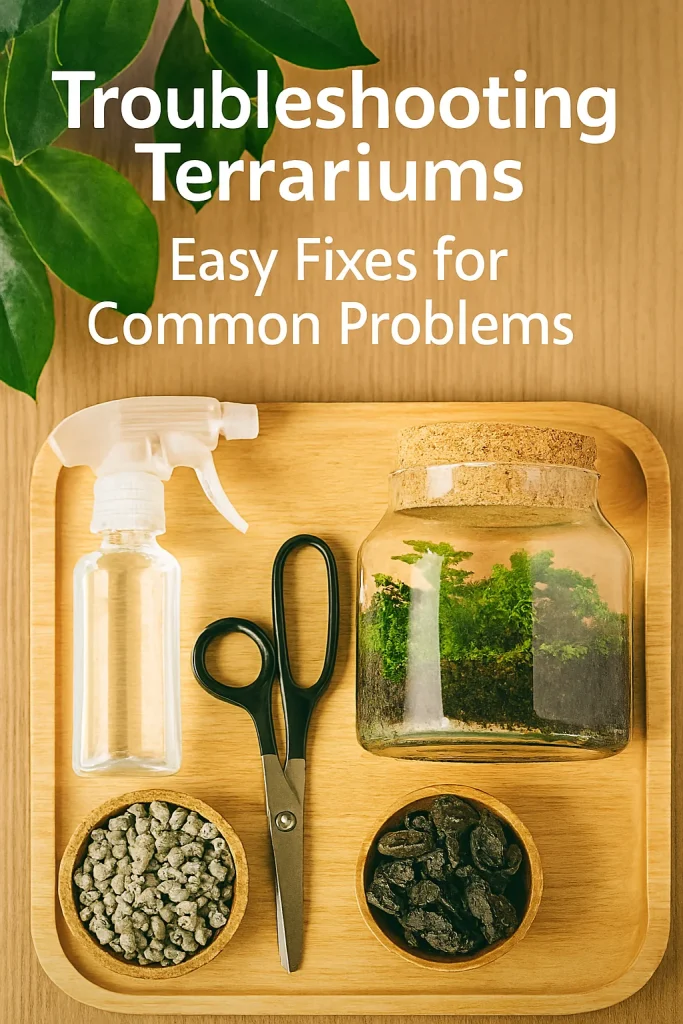
Keeping your glass garden healthy long-term is all about terrarium maintenance and observation.
Here’s a quick checklist to follow weekly:
- Check moisture levels by touching the soil. Only mist if it feels dry.
- Remove fallen leaves before they start to decay.
- Wipe the glass to keep it clear and light-friendly.
- Rotate your terrarium occasionally for even light exposure.
- Allow fresh air circulation weekly to prevent mold buildup.
If you notice changes—like condensation, color shifts, or slow growth—adjust watering and light before problems worsen.
6. When to Rebuild Your Terrarium
Sometimes, despite your best care, your terrarium may become overrun with mold, dead plants, or pests. In that case, it’s okay to start fresh.
- Remove everything, sterilize the container with diluted vinegar, and let it dry completely.
- Use fresh substrate layers: gravel → charcoal → soil → plants.
- Rebuild slowly, giving each layer time to settle before adding water.
Rebuilding not only restores balance but also gives you the chance to redesign your mini world with better plant choices.
7. Quick Troubleshooting Chart
| Problem | Likely Cause | Quick Fix |
|---|---|---|
| Mold | Overwatering / poor air flow | Open lid, remove mold, add charcoal |
| Foggy Glass | High humidity | Wipe glass, reduce misting |
| Dying Plants | Wrong light / root rot | Adjust lighting, trim roots |
| Mushy Soil | Excess water | Replace soil, improve drainage |
| Brown Moss | Too dry | Mist lightly or reposition away from direct heat |
FAQs: Troubleshooting Terrariums
Should I keep my terrarium lid open or closed?
It depends on your plant types. Closed terrariums are great for moisture-loving plants (like ferns or moss), while open terrariums work best for succulents and air plants that prefer drier air.
Can I use regular potting soil for terrariums?
Regular soil can compact and hold too much water. Instead, use a terrarium-specific mix or combine potting soil with sand, perlite, or sphagnum moss for better drainage.
Why is there white buildup on my terrarium glass?
That’s usually mineral residue from hard water. Wipe it off with a cloth dipped in diluted vinegar, then rinse with clean water.
How often should I water my terrarium?
Only when needed! Closed terrariums may need watering every 2–4 weeks, while open terrariums might need a light mist once a week, depending on room temperature and plant type.
Final Thoughts: Troubleshooting Terrariums
Troubleshooting terrariums is part of the joy of growing them—it helps you understand your plants and their needs more deeply. Whether you’re tackling mold, foggy glass, or drooping leaves, small adjustments go a long way.
Once you restore balance, your terrarium will thrive again—lush, green, and clear as a tiny rainforest under glass.
Explore the Full Terrarium Series
- Step-by-Step: How to Make a DIY Terrarium at Home
- Troubleshooting Terrariums
- Terrarium Care & Maintenance
- My Favorite Terrarium Tools and Materials
- Water Terrariums
- 10 Creative Terrarium Decoration Ideas
- Terrarium Trends in 2025
- The Best Plants for Closed Terrariums
- Gardens Under Glass: The Rise of Terrariums and Greenhouses