Water Terrariums: Creating Mini Aquascapes with Moss, Stones, and Shrimp
There’s something deeply calming about watching water flow gently through glass, moss swaying softly, and tiny shrimp gliding around in their miniature world. Water terrariums, also known as aquatic or semi-aquatic terrariums, bring that serenity right into your home — no large aquarium setup needed.
These small-scale ecosystems combine the lush greenery of moss terrariums with the tranquil motion of mini aquascapes, creating a beautiful, low-maintenance display that feels both artistic and alive. Whether you place one on your office desk, a sunny windowsill, or a coffee table, a water terrarium instantly transforms any space into a calm, natural retreat.

What Is a Water Terrarium?
A water terrarium is essentially a cross between a terrarium and an aquarium — a glass container that holds water, aquatic plants, decorative stones, and sometimes tiny aquatic creatures like freshwater shrimp or snails.
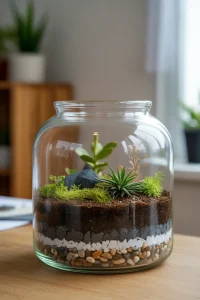
You can design it as a fully aquatic setup (filled with water like a miniature aquarium) or a semi-aquatic terrarium (part water, part land). The latter allows you to combine water plants with mosses and small terrestrial greenery for a more layered, natural look.
Popular choices for semi-aquatic terrariums include:
- Mini glass jars with moss islands and pebbles
- Bowl terrariums featuring water-loving plants like Anubias or Java fern
- Layered vases with sand, stones, and driftwood for artistic aquascaping
Essential Supplies You’ll Need
Creating a DIY water terrarium is easier than it looks. You can build one in less than an hour with a few simple materials:
- Glass container – A jar, vase, or fish bowl works beautifully.
- Aquarium gravel or sand – The base layer for structure and drainage.
- Rocks, stones, and driftwood – For decoration and natural texture.
- Moss – Java moss, Christmas moss, or sphagnum moss thrive in humidity.
- Aquatic plants – Try Anubias nana, Java fern, or water wisteria.
- Freshwater shrimp or snails (optional) – For a lively, self-cleaning ecosystem.
- Dechlorinated or filtered water – Tap water must be treated before use.

Pro Tip: Choose clear, wide-mouth jars to make it easier to arrange your aquascape and maintain water circulation.
How to Build Your Mini Aquascape
- Prepare your container.
Clean it thoroughly and make sure it’s free from soap residue or harsh chemicals. - Add your substrate.
Pour in a thin layer of sand or gravel — this anchors your plants and creates a natural bed. - Arrange stones and wood.
Create visual balance with different heights and textures. This step defines your aquascape design. - Add moss and plants.
Gently tuck moss between rocks or attach it to driftwood using thread or glue. Plant the aquatic greenery around your layout. - Pour in water slowly.
Use a spoon or your hand to diffuse the flow and avoid disturbing your setup. Fill the container about three-quarters full for a semi-aquatic terrarium, or all the way for a fully aquatic look. - Introduce your shrimp or snails.
Let the water settle for 24 hours before adding any live creatures. Start with just a few — they’ll help keep algae and debris in check. - Place your terrarium in soft, indirect light.
Avoid direct sunlight to prevent overheating or algae bloom.
Caring for Your Aquatic Terrarium
Maintenance is surprisingly minimal — another reason aquatic terrariums are trending among plant lovers and minimalist decorators.
- Top up water weekly to make up for evaporation.
- Trim moss and plants every few weeks to prevent overgrowth.
- Wipe glass gently with a soft cloth to keep it clear.
- Feed shrimp once or twice a week using specialized shrimp food or algae wafers.
If your terrarium has a lid, open it occasionally to allow air exchange and prevent mold in semi-aquatic setups.
Decorating Ideas for Water Terrariums
Here’s where you can get creative! A water terrarium doubles as both a living ecosystem and a décor accent. Try these ideas:
- Zen-inspired aquascape with smooth river stones and minimalist driftwood
- Forest pond theme featuring mossy logs and creeping plants
- Boho glass bowl with colored gravel and LED fairy lights underneath
- Nature-core display combining moss, shells, and tiny shrimp for movement

Pair your terrarium with natural wood trays, woven coasters, or ceramic planters to enhance its earthy aesthetic.
Why Water Terrariums Are Worth Trying
These little ecosystems represent the perfect balance between design and nature. A DIY mini aquascape lets you experiment with composition, color, and life — all within a small, sustainable glass world.
Plus, they’re ideal for those who want to enjoy the calming presence of an aquarium without the heavy upkeep. You’ll find yourself gazing into your mini underwater garden during quiet evenings or work breaks, feeling instantly grounded.
Whether you call it a moss water terrarium, aquatic garden jar, or shrimp terrarium, it’s more than décor — it’s a reminder of nature’s peaceful rhythm.
FAQ: DIY Water Terrarium
Are water terrariums easy for beginners?
Yes! Water terrariums are surprisingly beginner-friendly because they’re low-maintenance and don’t require complicated aquascaping tools. As long as you choose hardy moss, clean stones, and stable water parameters, the ecosystem stays healthy with very little intervention. Most beginners find them easier than traditional planted aquariums.
Do water terrariums need a filter?
No — most small water terrariums don’t require a filter. The key is to choose plants and mosses that naturally improve water quality. If your terrarium includes shrimp, they also help keep surfaces clean by grazing on algae and detritus. However, if your setup is larger, you may add a mini sponge filter for extra stability.
How often do I need to change the water?
For small setups, a 20–30% water change every 2–4 weeks is usually enough.
If you notice cloudiness or algae buildup, you can increase the frequency slightly. In my experience, moss-only setups stay clearer for longer, while shrimp tanks benefit from more regular refreshes.
Can I keep shrimp in any water terrarium?
Shrimp thrive only if the terrarium is stable.
You’ll need:
Proper water conditioning (chlorine-free)
A stable temperature
Hiding spots between stones and moss
Zero copper in fertilizers or tap water
Neo shrimp, cherry shrimp, and small Caridina varieties are commonly used, but always research their specific requirements before adding them.
What types of moss work best in water terrariums?
Some of the easiest and most beautiful mosses include:
Java moss
Christmas moss
Peacock moss
Flame moss
These varieties attach well to stones and driftwood and continue growing underwater without demanding light or CO₂ injections.
How much light does a water terrarium need?
Moderate, indirect light works best.
Avoid direct sunlight, which overheats the water and causes algae. If your room is dim, a small LED lamp or desk light (set for 6–8 hours a day) will help plants stay green and vibrant.
Why is my water terrarium turning cloudy?
Are water terrariums easy for beginners?
Yes! Water terrariums are surprisingly beginner-friendly because they’re low-maintenance and don’t require complicated aquascaping tools. As long as you choose hardy moss, clean stones, and stable water parameters, the ecosystem stays healthy with very little intervention. Most beginners find them easier than traditional planted aquariums.
Do water terrariums need a filter?
No — most small water terrariums don’t require a filter. The key is to choose plants and mosses that naturally improve water quality. If your terrarium includes shrimp, they also help keep surfaces clean by grazing on algae and detritus. However, if your setup is larger, you may add a mini sponge filter for extra stability.
How often do I need to change the water?
For small setups, a 20–30% water change every 2–4 weeks is usually enough.
If you notice cloudiness or algae buildup, you can increase the frequency slightly. In my experience, moss-only setups stay clearer for longer, while shrimp tanks benefit from more regular refreshes.
Can I keep shrimp in any water terrarium?
Shrimp thrive only if the terrarium is stable.
You’ll need:
Proper water conditioning (chlorine-free)
A stable temperature
Hiding spots between stones and moss
Zero copper in fertilizers or tap water
Neo shrimp, cherry shrimp, and small Caridina varieties are commonly used, but always research their specific requirements before adding them.
What types of moss work best in water terrariums?
Some of the easiest and most beautiful mosses include:
Java moss
Christmas moss
Peacock moss
Flame moss
These varieties attach well to stones and driftwood and continue growing underwater without demanding light or CO₂ injections.
How much light does a water terrarium need?
Moderate, indirect light works best.
Avoid direct sunlight, which overheats the water and causes algae. If your room is dim, a small LED lamp or desk light (set for 6–8 hours a day) will help plants stay green and vibrant.
Can I add fish to a water terrarium?
Fish are not recommended for small water terrariums.
Most terrarium bowls are too small and lack filtration and oxygenation for fish to live healthily. Stick with shrimp, snails, or plant-only setups.
How long do water terrariums last?
With proper care, they can last months to several years.
Moss-based terrariums often last the longest because moss adapts well to confined underwater environments. Shrimp terrariums also stay stable for a long time, as long as you maintain water quality.
Can I use tap water in a water terrarium?
Yes — but always dechlorinate it first. Chlorine and chloramine can harm shrimp, snails, and delicate plants. A simple water conditioner makes tap water safe within minutes.
Why is algae growing in my terrarium?
Algae is usually caused by:
Too much light
Excess nutrients
Direct sunlight
Reduce light exposure, limit feeding, and remove algae manually during water changes. A couple of tiny snails can also help keep surfaces clean.
How can I make my water terrarium look more aesthetic?
Some easy styling ideas include:
Layering stones in different sizes
Using dark pebbles to contrast green moss
Adding one sculptural driftwood branch
Leaving open “negative space” for a minimal, zen look
Positioning shrimp-friendly hiding nooks
Even small adjustments can make the layout feel more intentional and artistic.
Conclusion: Why Water Terrariums Feel Like Living Art
After creating several water terrariums over the years, I’ve realized that these tiny aquascapes are more than just décor — they’re calming, ever-changing pieces of living art. Each one becomes a small world of its own, where moss gently sways in the water, shrimp explore tiny caves between stones, and micro-ecosystems quietly shape themselves day by day. What surprised me most is how soothing it is to watch these little habitats grow. Even five minutes of observing a water terrarium feels like a mini escape from the everyday rush.
One thing I learned through trial and error is that balance matters much more than perfection. My first aquascape was too crowded, and the shrimp didn’t have enough room to explore. But once I simplified the layout, the terrarium instantly looked more natural — and the shrimp behaved more comfortably. That experience taught me that less is often more in aquatic designs, and letting the plants “breathe” creates a cleaner, more peaceful environment.
For beginners, don’t be afraid to experiment and adjust your setup as you go. Water terrariums evolve over time. Moss settles differently, stones shift slightly, and shrimp develop their own routines. You don’t need to create a perfect layout on the first try. Start simple, keep an eye on water clarity, and let the ecosystem teach you what it needs. A small trim, a gentle cleaning, or a repositioned plant can make a huge difference.
If you’re setting up your first mini aquascape, my biggest piece of advice is to enjoy the process. Building these tiny underwater scenes is incredibly rewarding — not just visually, but emotionally. They add a calming presence to your workspace, shelf, or bedside table, and they’re especially fun to watch during quiet moments. Whether you choose a moss-only setup or a full micro-habitat with stones and shrimp, your water terrarium becomes a peaceful reminder of nature’s beauty.
As someone who loves creating cozy, aesthetic home décor, I find water terrariums to be one of the most unique and low-maintenance ways to bring nature indoors. They’re simple to care for, beautiful to style, and endlessly satisfying to observe. And the best part? Every water terrarium tells its own story — shaped by your choices, your care, and your creativity.
If you try one, let yourself enjoy the learning curve, celebrate the small changes, and have fun designing a tiny world that reflects your style. Your home will feel a little greener, calmer, and more alive — one glass bowl at a time.
Related
Full Series:
- Step-by-Step: How to Make a DIY Terrarium at Home
- Troubleshooting Terrariums
- Terrarium Care & Maintenance
- My Favorite Terrarium Tools and Materials
- Water Terrariums
- 10 Creative Terrarium Decoration Ideas
- Terrarium Trends in 2025
- The Best Plants for Closed Terrariums
- Gardens Under Glass: The Rise of Terrariums and Greenhouses