Terrarium Care & Maintenance: Watering, Light & Common Problems
Introduction: Why Terrarium Care Matters
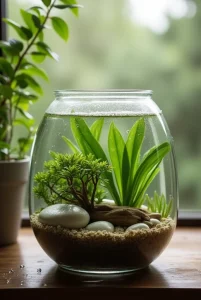
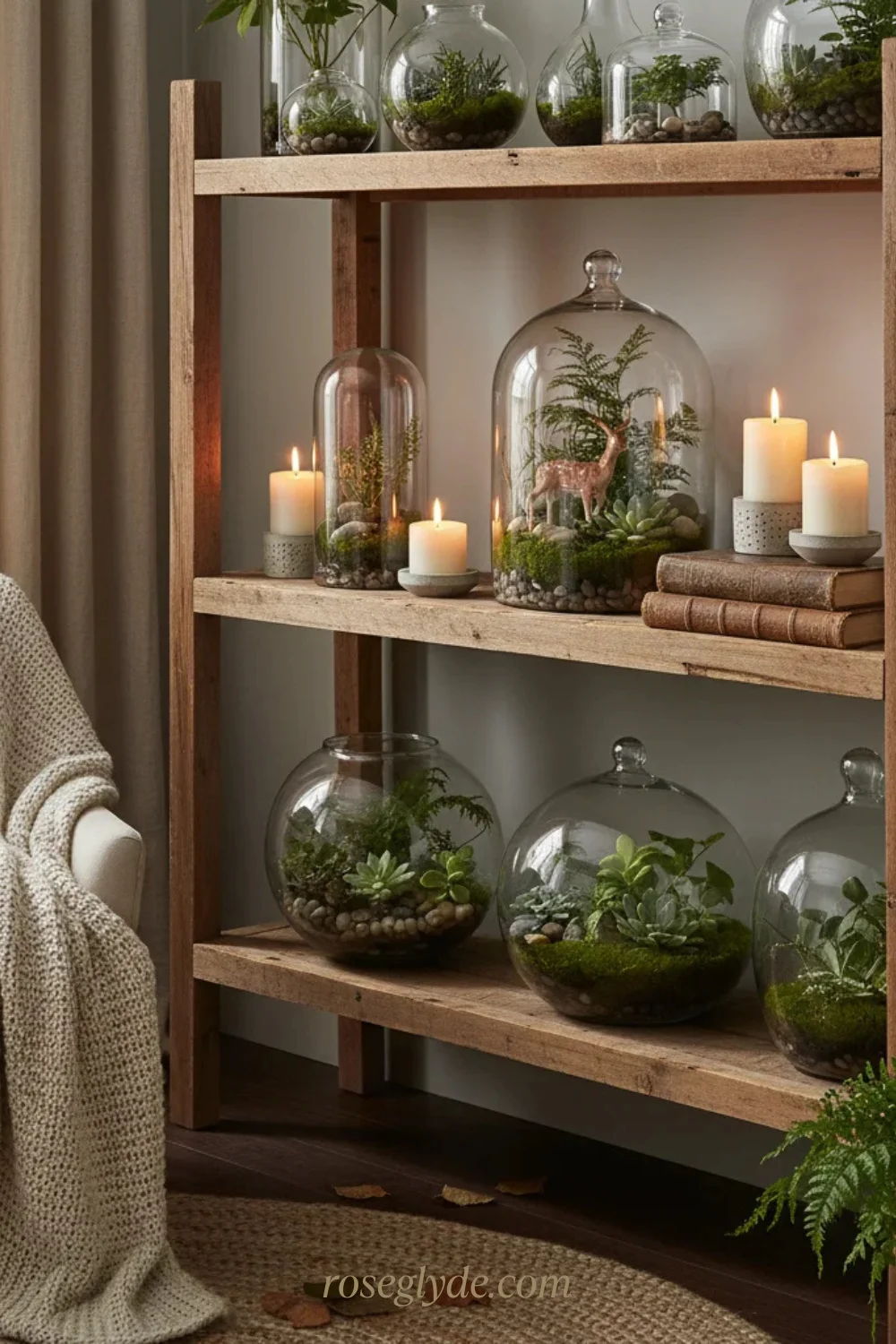
A terrarium is like a tiny, self-contained world—a miniature garden that brings the beauty of nature indoors. Whether you’ve crafted an open glass bowl filled with succulents or a closed jar lush with moss and ferns, your terrarium requires ongoing care to stay healthy and vibrant. Proper terrarium care and maintenance ensures that your plants thrive, your glass remains crystal clear, and your little ecosystem remains balanced for years to come.
In this guide, we’ll cover everything you need to know about watering, lighting, cleaning, and troubleshooting common terrarium problems, along with practical tips for keeping your mini garden looking fresh and full of life.
1. Understanding Your Terrarium Type
- Before diving into care routines, it’s essential to know which type of terrarium you have—because their needs differ dramatically.
- Open Terrariums:
Best for succulents, cacti, and air plants. These dry-loving species need good airflow and minimal watering.
Think sunny windowsills and low humidity. - Closed Terrariums:
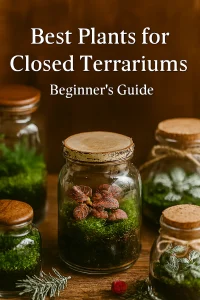
Perfect for moisture-loving plants like ferns, moss, and fittonia. The lid traps humidity and creates a self-sustaining mini rainforest.
Think low to medium light and a moist environment.
Knowing your terrarium type will determine how often to water, where to place it, and how to handle issues like mold or condensation.
2. Watering Your Terrarium
Watering is one of the trickiest parts of terrarium care and maintenance—too much, and you risk rot; too little, and your plants dry out.
How Often to Water
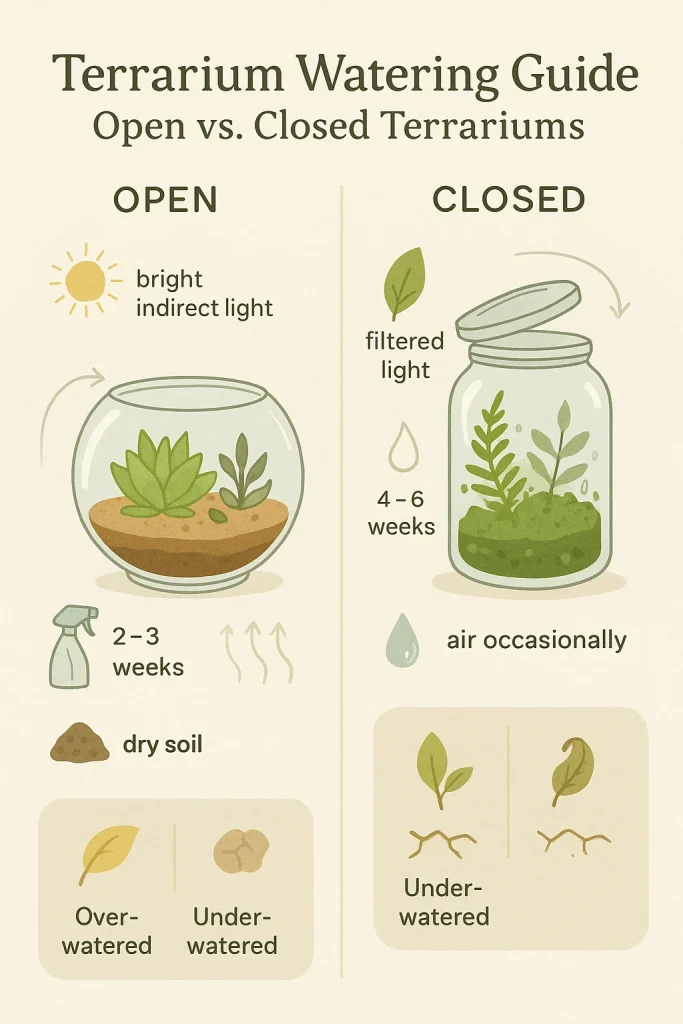
- Open Terrariums:
Water lightly every 2–3 weeks, allowing the soil to dry completely between waterings. Use a spray bottle or pipette to avoid overdoing it. - Closed Terrariums:
Water every 4–6 weeks or only when the soil appears dry. If condensation is constantly visible on the glass, it likely doesn’t need more water.
Best Watering Techniques
- Misting: Use a fine mist spray for moss or humidity-loving plants.
- Soil Drip: For larger plants, use a dropper or squeeze bottle to deliver water directly to the roots.
- Avoid Standing Water: Drainage layers (pebbles or charcoal) should prevent soggy soil. If you notice water pooling, absorb excess moisture using a paper towel.
Pro Tip: Always water in the morning so the plants can absorb moisture before the cooler evening temperatures set in.
3. Light Requirements for a Healthy Terrarium
Light plays a vital role in keeping your plants green and growing. However, terrariums are sensitive to too much direct light.
For Open Terrariums (Succulents, Cacti, Air Plants)
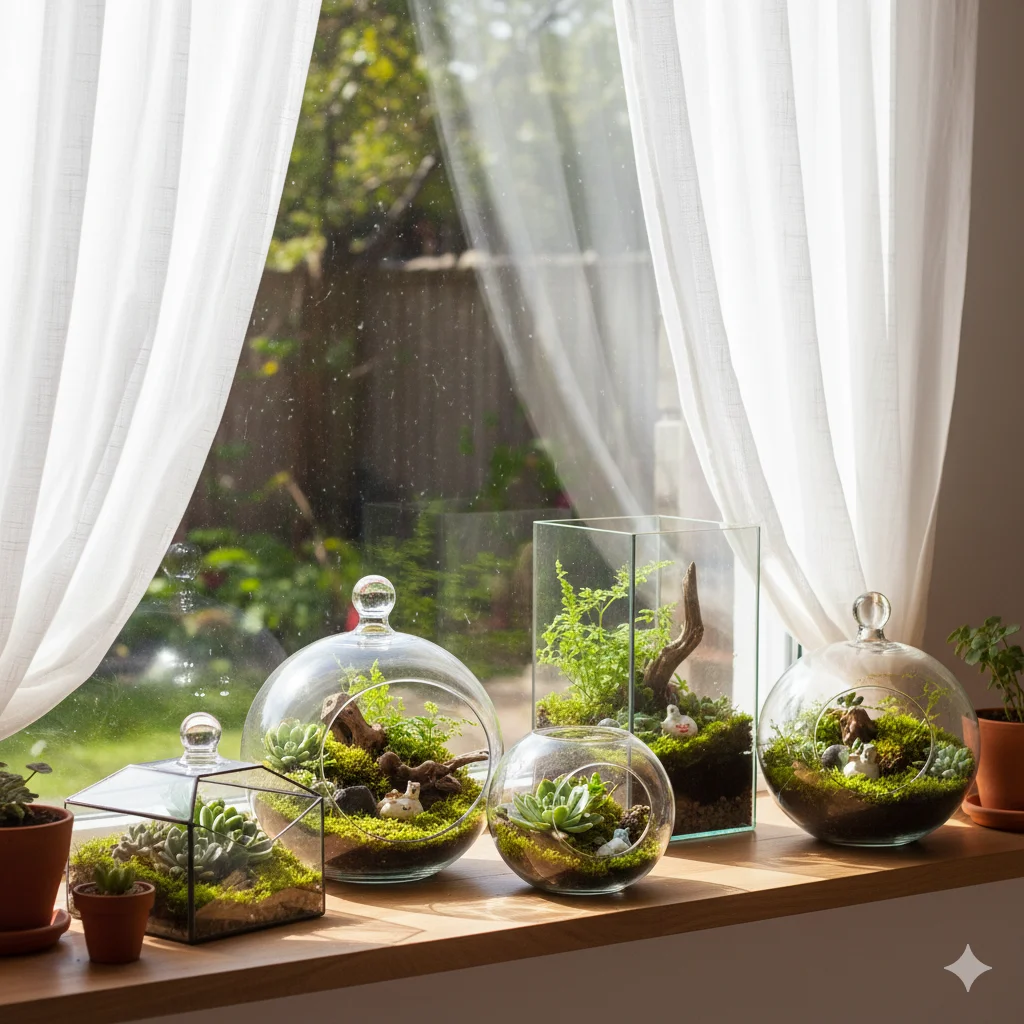
- Place near a bright, sunny window with indirect light.
- South or west-facing windows are best.
- Avoid direct harsh sun through glass—it can burn the leaves.
For Closed Terrariums (Moss, Ferns, Tropical Plants)
- Use bright but indirect light or filtered sunlight.
- North or east-facing windows work perfectly.
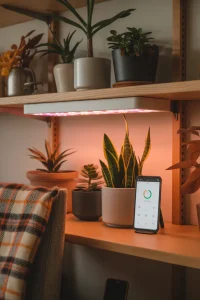
- Artificial grow lights are great if you lack natural light—use them for 8–10 hours a day.
Pro Tip: Rotate your terrarium every few weeks so plants grow evenly toward the light.
4. Cleaning & General Maintenance
Even miniature gardens need regular upkeep! Keeping your terrarium clean helps prevent pests, algae, and plant disease.
Glass Cleaning
- Wipe the inside and outside of the glass with a soft cloth or microfiber towel.
- Use a 1:1 mix of water and white vinegar for gentle cleaning (avoid getting it on the plants).
Plant Maintenance
- Trim dead or yellowing leaves regularly to encourage new growth.
- Remove fallen leaves or debris that could decompose and cause mold.
- Prune overgrown plants to prevent them from touching the glass.
Soil Refreshing
Over time, soil can compact or lose nutrients. If your terrarium is more than a year old, consider replacing the top layer of soil or replanting entirely.
5. Common Terrarium Problems & How to Fix Them
Even with careful maintenance, issues can pop up. Here’s how to identify and correct the most common ones:
Problem 1: Mold or Fungal Growth
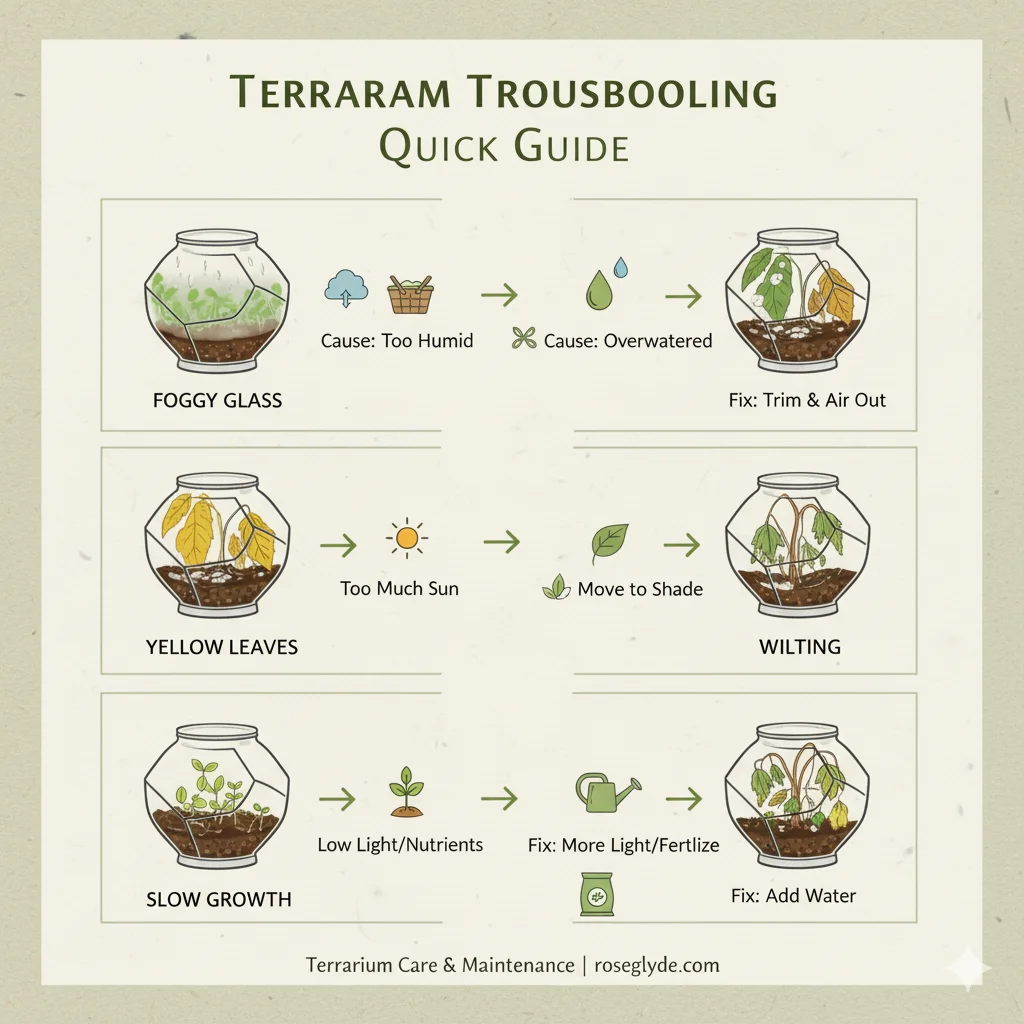
- Cause: Too much humidity or decaying plant material.
- Fix: Air out the terrarium for a few hours, remove moldy parts, and sprinkle activated charcoal on the soil.
Problem 2: Yellowing Leaves
- Cause: Overwatering or poor light conditions.
- Fix: Reduce watering frequency and adjust light exposure. Trim affected leaves.
Problem 3: Condensation on Glass
- Cause: Excess moisture trapped inside (in closed terrariums).
- Fix: Leave the lid off for a few hours to balance humidity levels.
Problem 4: Wilting or Dry Plants
- Cause: Underwatering or too much sunlight.
- Fix: Water lightly and move the terrarium to a spot with indirect light.
Problem 5: Pests (Gnats, Mites, or Aphids)
- Cause: Overwatering or contaminated soil.
- Fix: Let the soil dry out, remove affected plants, and use a natural pest solution like neem oil spray.
6. Seasonal Terrarium Care Tips
- Spring/Summer: Plants grow faster; increase airflow and trim regularly.
- Autumn/Winter: Reduce watering and move away from cold drafts or heaters.
- Year-Round: Keep an eye on humidity—especially in closed terrariums where moisture levels change with temperature.
7. Bonus: How to Revive a Dying Terrarium
If your terrarium looks tired or overgrown, it might just need a little refresh.
- Remove unhealthy plants and replant with fresh, healthy ones.
- Replace the top layer of soil and add new moss or decorative stones.
- Clean the glass thoroughly.
- Reassess its location—light and temperature matter more than you think.
Sometimes, a small adjustment can bring your mini garden back to life!
Frequently Asked Questions: Terrarium Care & Maintenance
Q1: How do I know if my terrarium needs water?
Check the soil—if it looks dry and slightly pulling away from the glass, it’s time to water. For closed terrariums, watch the condensation; if there’s none for several days, add a few drops of water.
Q2: Can I use tap water for my terrarium?
It’s best to use filtered or distilled water to avoid mineral buildup and white spots on the glass. If you must use tap water, let it sit overnight to allow chlorine to evaporate.
Q3: What’s the ideal temperature for terrariums?
Most terrariums thrive in normal indoor temperatures between 65–75°F (18–24°C). Avoid placing them near heaters or air conditioners.
Q4: Do terrariums need fertilizer?
Generally, no. Terrariums are low-maintenance and don’t require frequent feeding. If you want to boost growth, use a diluted liquid fertilizer once or twice a year.
Q5: How long does a terrarium last?
With proper care, an open terrarium can last several years, while a closed terrarium can sustain itself indefinitely—some have lasted decades!
Conclusion: Keeping Your Mini World Alive
With the right balance of watering, light, and maintenance, your terrarium can remain a thriving piece of living art. Think of it as a gentle, ongoing ritual—checking the glass for condensation, pruning a few leaves, or watching new sprouts appear. It’s not just a plant display; it’s a little world you nurture and grow.
So, take a moment each week to tend your terrarium—it’ll reward you with endless greenery and calm energy in your space.
Explore the Full Terrarium Series
- Step-by-Step: How to Make a DIY Terrarium at Home
- Troubleshooting Terrariums
- Terrarium Care & Maintenance
- My Favorite Terrarium Tools and Materials
- Water Terrariums
- 10 Creative Terrarium Decoration Ideas
- Terrarium Trends in 2025
- The Best Plants for Closed Terrariums
- Gardens Under Glass: The Rise of Terrariums and Greenhouses